Was That a Let? Controversial Badminton and Tennis Decisions Explained! 😮
In the high-stakes world of professional sports, a single millisecond can change the course of a match. Whether it is a high-intensity badminton rally at the India Open or a nail-biting tie-break at Wimbledon, the word "Let" often sparks immediate debate. Fans frequently scream at their TV screens: "Was that really a let, or just a bad call?"
Understanding the nuances of the "Let" rule is essential for any sports enthusiast in India. Today, we break down why these calls are so controversial in both badminton and tennis.
The "Let" in Badminton: More Than Just a Net Touch
In badminton, a "Let" is called by the umpire to halt play. Unlike a fault, a let results in the rally being replayed with no change to the score. However, controversy usually arises during service or interference.
According to the BWF (Badminton World Federation) rules, a let can be called if the receiver is not ready during a serve, or if the shuttle gets caught on the net after passing over it. The most debated moments occur when there is "accidental interference"—such as a shuttle from an adjacent court drifting onto the field of play. Indian fans might remember tense moments where a crucial point was wiped out because of a stray shuttle, leaving players like PV Sindhu or Lakshya Sen visibly frustrated.
The Tennis "Let": The End of an Era?
In tennis, the most common "Let" occurs when a serve hits the net tape but still lands in the correct service box. While this is a standard rule, the ATP and WTA have seen heated discussions about its necessity. Many argue that tennis should follow the lead of NCAA (American College Tennis) and "play on" if the ball hits the net, much like during a normal rally.
The controversy in tennis often surrounds the Electronic Review System. At times, the "Net" sensor is so sensitive that it triggers a let call even when the ball barely grazed the tape, breaking the server’s rhythm. For Indian tennis fans following the likes of Rohan Bopanna, these interruptions can feel like momentum-killers during high-pressure doubles matches.
Why the Controversy?
The core of the controversy lies in human element vs. technology. In badminton, the umpire’s discretion plays a huge role. Was the player truly "not ready," or were they just trying to delay the serve? In tennis, the inconsistency between tournaments that use electronic net sensors and those that rely on the umpire’s ear creates a lack of uniformity.
Furthermore, "Lets" are often called at peak moments—like a match point. When a player is on the verge of victory, a let call feels like a "robbery" to the fans, leading to viral social media trends and heated post-match interviews.
Conclusion
Whether it’s the feather-light shuttlecock or the heavy yellow tennis ball, the "Let" rule exists to ensure fairness. While it can be frustrating and controversial, it prevents players from gaining an unfair advantage through accidental circumstances. As technology like Hawk-Eye and advanced sensors become more integrated into Indian sports venues, we can expect "Let" calls to become more accurate, even if they remain a point of contention among fans.
Frequently Asked Questions (FAQs)
1. Does a "Let" count as a serve in tennis?
No. If a "Let" is called on a serve, that specific serve does not count. The server gets to retake that particular serve (First or Second) without penalty.
2. Can a player call a "Let" in Badminton?
A player can signal for a let (for example, if they are not ready or if there is an obstruction), but only the umpire has the final authority to call it. Playing on despite an obstruction can sometimes lead to the point standing.
3. What happens if the shuttle hits the net during a rally in badminton?
If the shuttle hits the net during a rally and goes over, it is not a let; the play continues. A let is only called during a rally if the shuttle gets caught in the net or on top of it.
4. Is the "Let" rule the same in Table Tennis?
Similar to tennis, in Table Tennis (Ping Pong), if the ball hits the net during a serve and lands on the opponent's side, it is a let. There is no limit to how many lets can occur in a row.
5. Why don't they just remove the Let rule in tennis?
Some smaller circuits have removed it to speed up the game. However, Grand Slams keep it to maintain the traditional "purity" of the serve, ensuring the receiver isn't disadvantaged by a lucky net cord.
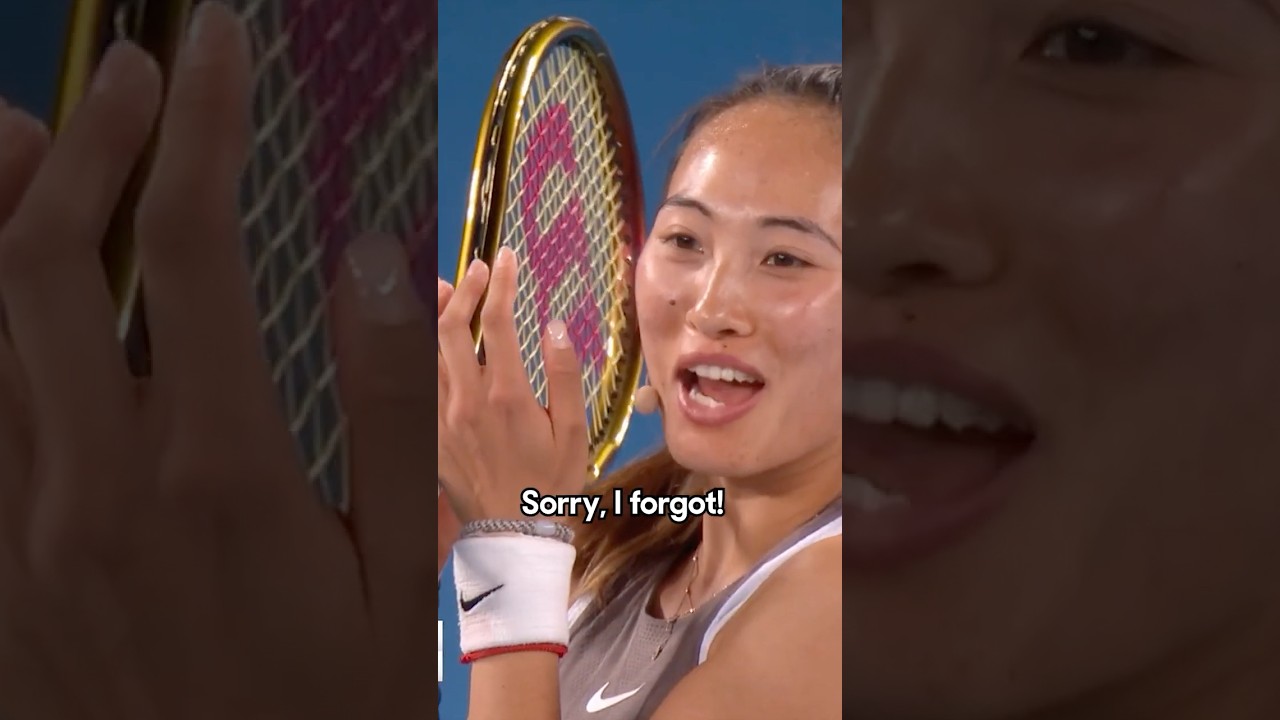
Zheng Qinwen forgets that they weren't playing lets during her exhibition match alongside Novak Djokovic in the opening week of Australian Open 2025.Subscribe to keep up with the latest from the Australian Open:Welcome to the official Australian Open TV YouTube channel. The Australian Open 2025 main draw runs from 12-26 January in Melbourne. The tournament takes place for the 113th time and is the first Grand Slam of the year. Jannik Sinner is the men’s singles reigning champion and Aryna Sabalenka is the women’s singles reigning champion. The tournament takes place on 25 hard courts, including Rod Laver Arena, Margaret Court Arena and John Cain Arena. Look out for highlights, press conferences, memorable moments and much more!Facebook: X: Instagram: TikTok: Website: .Follow live coverage of all matches, breaking news, updates, highlights and more on: Nine (Australia): Eurosport (Europe): ESPN (Americas): beIN Sports (South East Asia, MENA): And visit: for all our broadcast partners worldwide