Tennis Rules: A Complete Guide to Scoring and Gameplay for Beginners
Tennis is one of the most popular individual sports in India, thanks to the legacy of legends like Leander Paes, Mahesh Bhupathi, and Sania Mirza. Whether you are heading to a local club in Mumbai or a public court in Delhi, understanding the tennis rules and the unique tennis scores system is the first step toward enjoying the game.
The Basics: Equipment and Court
Tennis is played on a rectangular court, which can be grass, clay, or hard court (the most common in India). The game is played as 'Singles' (one-on-one) or 'Doubles' (two-on-two). To start, you need a racket and a yellow felt-covered ball. The objective is simple: hit the ball over the net and into the opponent’s court in a way that they cannot return it.
Understanding Tennis Scores: The 15, 30, 40 System
The most confusing part for beginners is often the scoring. Unlike cricket or football, tennis uses a specific set of terms:
- 0 Points: Referred to as "Love".
- 1st Point: 15
- 2nd Point: 30
- 3rd Point: 40
- 4th Point: Game (End of the game)
If both players reach 40-40, it is called a Deuce. From here, a player must win two consecutive points to win the game. The first point won after deuce is called "Advantage." If that player wins the next point, they win the game. If they lose it, the score returns to Deuce.
The Structure: Game, Set, and Match
To win a match, you need to navigate through three layers of scoring:
- Games: Usually, you need to win 6 games to win a set, but you must lead by at least 2 games (e.g., 6-4).
- Sets: Most matches are "Best of Three" sets. In Grand Slams, men’s matches are "Best of Five."
- Tie-break: If the game score reaches 6-6 in a set, a tie-break is played to decide the winner of that set. In a tie-break, points are counted numerically (1, 2, 3...).
Basic Gameplay Rules
Every point starts with a Serve. The server must stand behind the baseline and hit the ball into the diagonal service box on the opponent's side. You get two chances (First Serve and Second Serve). If both hit the net or land outside, it’s a "Double Fault," and your opponent gets the point.
During a rally, the ball must stay within the boundary lines. If the ball touches the line, it is considered "In." In singles, you use the inner side-lines; in doubles, the court "widens" to the outer lines (the alleys).
Conclusion
While the tennis rules might seem complex at first glance—especially the "Love" and "Deuce" terminology—they become second nature once you hit the court. Tennis is a fantastic way to stay fit and build mental discipline. Now that you understand how tennis scores work, grab a racket and start practicing your serve!
Frequently Asked Questions (FAQs)
1. Why is zero called "Love" in tennis?
While the exact origin is debated, many believe it comes from the French word "l'oeuf," meaning egg, which represents the shape of a zero.
2. What is a "Let" in tennis?
A "Let" occurs if a serve hits the net but still lands in the correct service box. The point is replayed without any penalty.
3. How long does a typical tennis match last?
In a best-of-three format common in India, a match usually lasts between 1 to 2 hours, depending on the skill level of the players.
4. Can I play tennis if I am a complete beginner?
Absolutely! Tennis is highly accessible in India. Most sports complexes offer coaching for beginners to help master the basic strokes like the forehand and backhand.
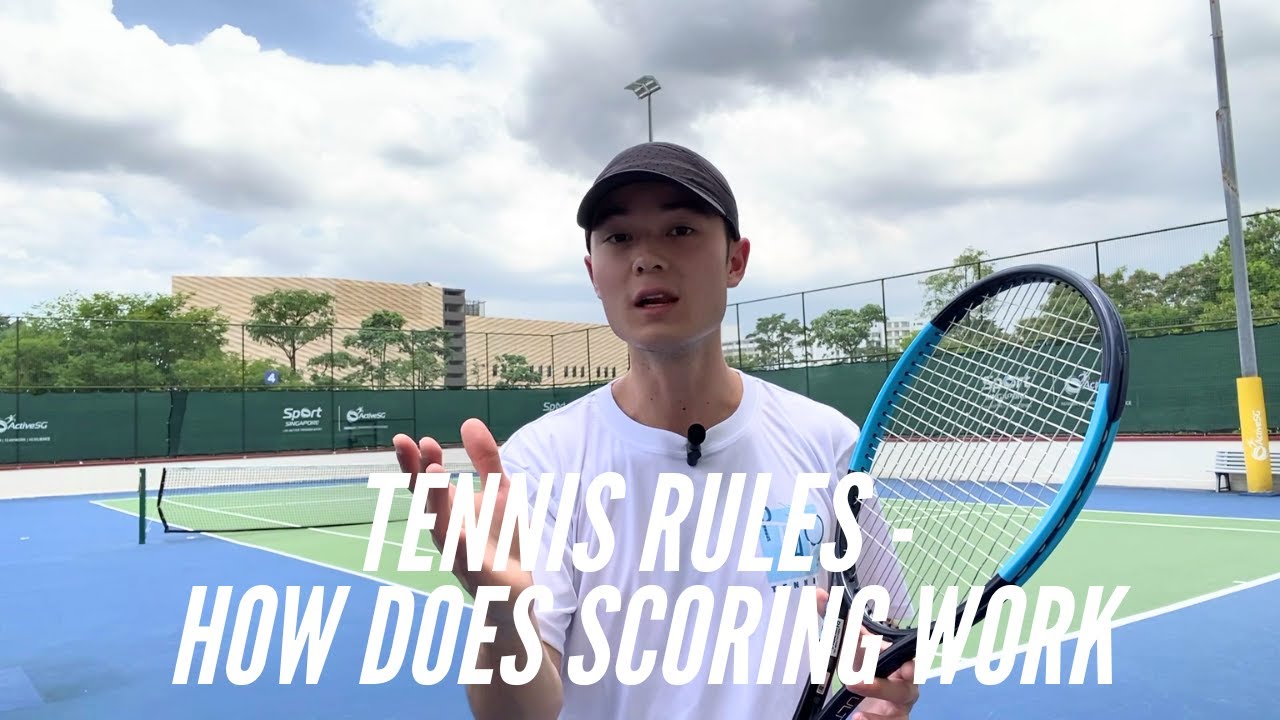
Are you new to the game of tennis? Looking for a quick and easy guide to understanding how tennis scoring works? Coach Joseph has got you covered with this comprehensive video. You’ll benefit from his straightforward explanation of tennis scoring.Visit The Play! Tennis Blog