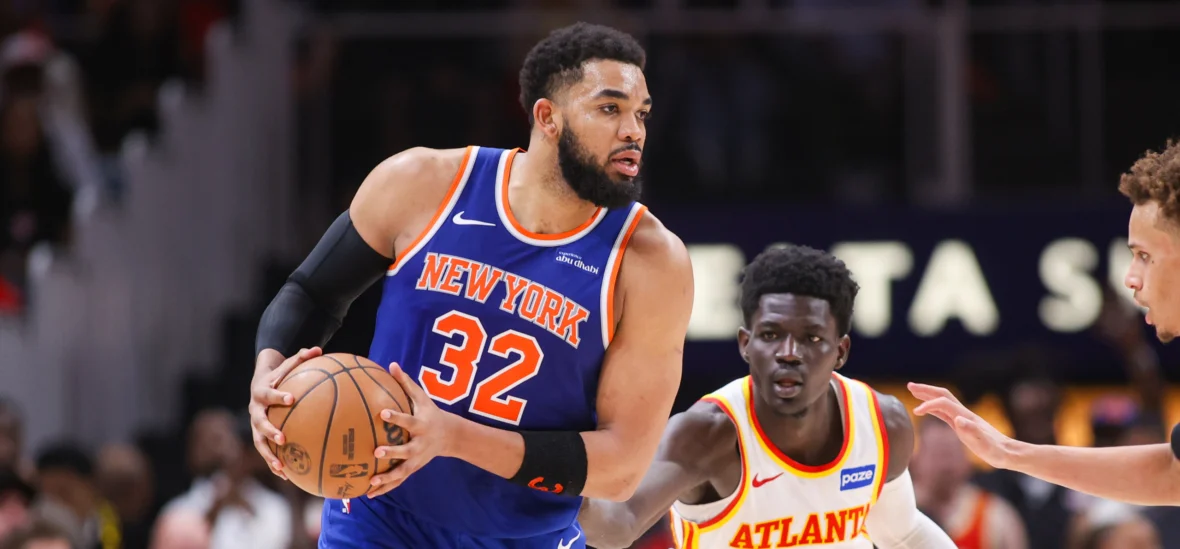
The New York Knicks now face a harsh reality: Decisions made after Game 2 may have directly contributed to their Game 3 heartbreak.
After falling 109-108 to the Atlanta Hawks and down 2-1 in the series, questions are rising over Mike Brown's rotation options, especially his decision to limit Mitchell Robinson's role.
Mike Brown, Knicks, and Mitchell Robinson Call
Context matters now more than ever. Mike Brown's statement regarding the Kat-Mitchell Robinson pairing came before Game 3.
"Combination of [KAT and Mitch] It has not been good, so I am opting not to play them together in this series because of the matchup.
That decision translated directly into the Game 3 rotation. Robinson played only 11 limited minutes and was largely absent in key stretches, especially late in the game, when defensive stops and rebounding were crucial.
Brown defended his team after the game, saying: "I liked the fight our guys showed... We gave ourselves a chance."
But the stats tell a different story: The Knicks didn't have a strong enough presence inside the paint when it really counted.
Karl-Anthony Towns vs. Mitchell Robinson Impact
Karl-Anthony Towns did his part. He finished the game with 21 points and 17 rebounds, performing consistently on both ends of the floor and gradually helped the Knicks erase the double-digit deficit.
But basketball is not a one-man show. When Mitchell Robinson wasn't on the floor long enough to lead the defense, the Knicks ran into trouble with second-chance opportunities and rim protection, two things Robinson is very good at.
Atlanta took full advantage of this. Onyeka Okongwu and other players were able to penetrate with greater ease, while guards were also more successful in attacking the paint. The Knicks may technically dominate the paint in terms of numbers, but the Hawks have played better on some very important possessions, especially late rebounds and defensive turnovers.
In such a close game these things can be the difference between victory and defeat.
Under pressure after consecutive defeats
Their anger doesn't begin and end with losing one game – it's the entire situation. Two consecutive losses, both in the final minutes, have made the Browns the subject of intense criticism.
Towns clearly acknowledged the issue: "We struggled... but we need to close the game out. We didn't do that today."
And this is the main point. The Knicks are fighting, even coming out strong, but their player substitutions and late performance are letting them down.
The decision to limit Robinson may have been a tactical move targeting the match-up, but Game 3 revealed the price.
If being a tough, rebounding, defensive team is part of your identity, not having your best interior player on the field in the final minutes is a big risk.
Currently, this is a risk that is not paying off.