JR Motorsports has always aimed high, but their 2026 vision for the NASCAR O'Reilly Auto Parts Series is taking the "Super Team" concept to a new level. Although they look absolutely unbeatable on paper, it raises an uncomfortable question: can you really dominate every race without making it impossible for your drivers to keep their championship path clear?
The answer, so far, is complicated.
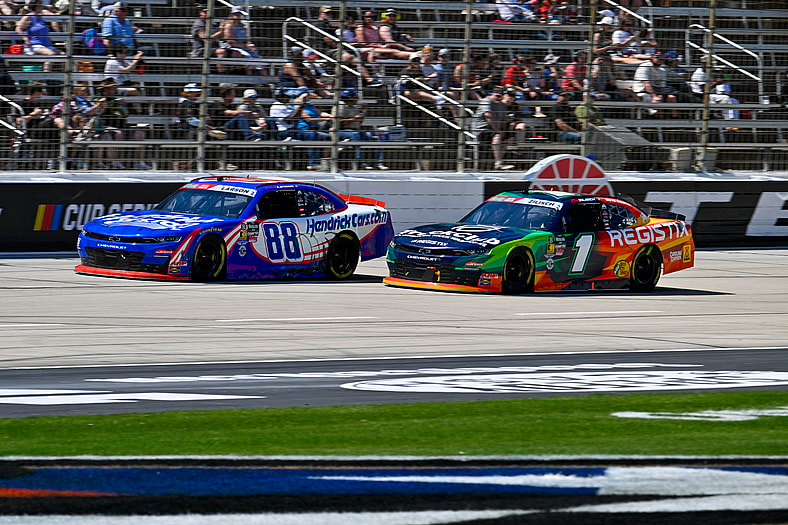
At the center of it all is the No. 88 car, which has become the poster child for JRM's seat-sharing experiment. King Carruth is handling the heavy lifting with 23 races, while the other 10 are divided among Hendrick's big names: Kyle Larson, Chase Elliott, William Byron and Alex Bowman.
The plan sounds great on paper, mixing full-time championship continuity with elite Cup-level talent. But in reality things are becoming much more complicated.
It's a similar story with the number 1 car. Working with an experienced crew chief like Rodney Childers, Carson Kvapil and Connor Zylisch are sharing the seat. This adds another layer of complexity to a system that already has a lot of moving parts and constantly changing priorities.
When teammates stop feeling like teammates
The tension is no longer theoretical, it is now visible on the track.
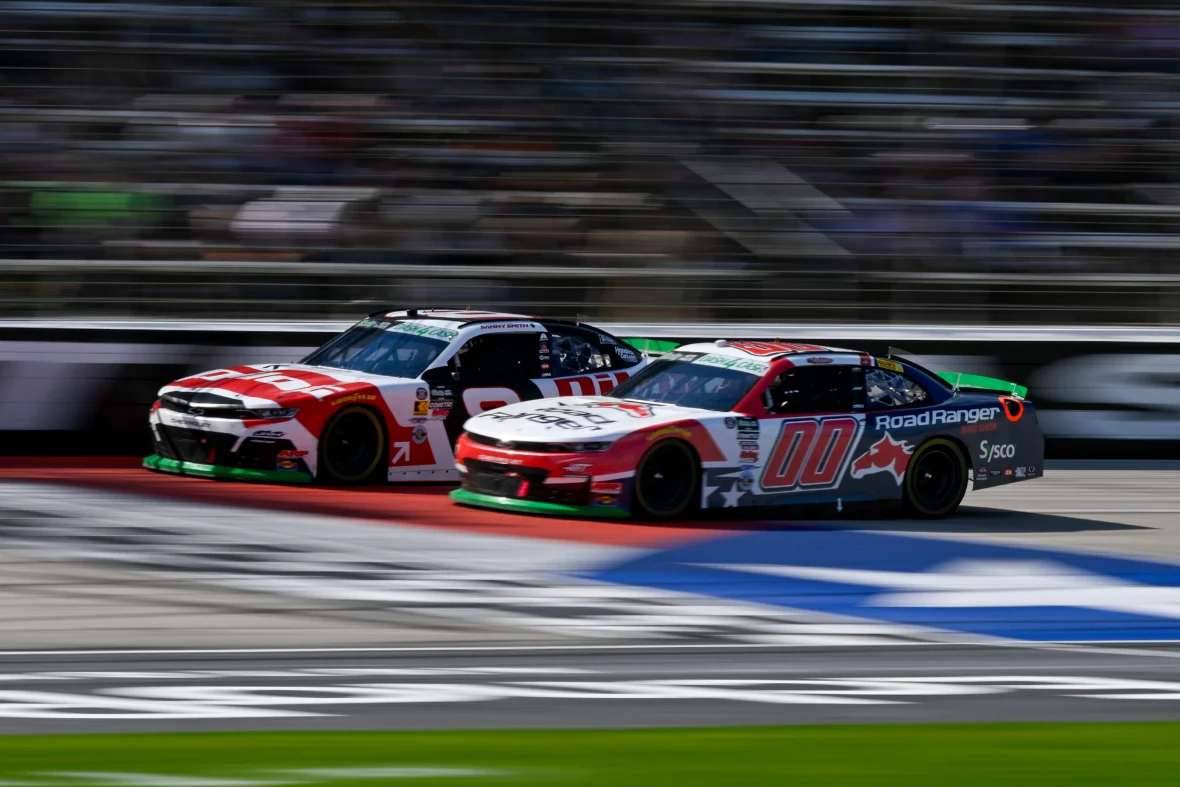
At Texas Motor Speedway, the issue became impossible to ignore when Kyle Larson, stepping into the JRM car as a guest driver, fought head-to-head with the team's full-time championship leader Justin Allgaier. The fight ended with contact.
For Allgaier, it will be an uncomfortable situation to race for a title and at the same time share space with drivers who do not have the same championship burden, yet have similar equipment and, sometimes, the same agenda: winning immediately.
This is where the contradiction lies. JR Motorsports is technically one team, but at key moments it behaves like two different racing philosophies living in the same garage.
Based on results alone, JR Motorsports is doing exactly what it set out to do.
Justin Allgaier leads the championship with 598 points and 3 wins and remains firmly in place as the team's primary title contender. Brandon Jones and Sammy Smith are also in the top six, and Carson Kvapil and Raja Carruth are also in the top 15.
It is, statistically, the strongest team in the series. JRM has already won seven of the first 11 races this season.
But the problem will be of distribution.
Any time a Cup driver gets in a JRM car and gets a win, it completely shakes up the stage points and playoff standings for the guys who are actually racing for the title every week. This is a setting where every single point counts, so these fluctuations start to get really annoying.
Hidden costs of rotation
This is exactly where people start to see things differently. Proponents of the setup argue that JR Motorsports is making the most of what they've got and giving their drivers the best possible training grounds. He believes that having Cup-level talent in the same equipment raises the level for everyone, forces young guys to step up, and basically guarantees that the team is on the front lines every weekend. Which kind of makes sense.
But critics see a bigger problem: The championship battle is actually starting to get blurry.
When your drivers constantly swap seats, the whole teammate atmosphere gets a little messy. Things like working together in drafts, helping each other defensively, or planning long-haul strategies go awry when the person you're racing against today could be sitting in your seat next Saturday.
The lack of consistency really hits hard at superspeedways like Daytona or Talladega, where being on the same page as a team matters as much as having a fast car.
A system designed to win... but what about titles?
Analysts like Frontstretch's James Cross are already flagging long-term risks here: JRM could build a race-winning machine that becomes a complete nightmare to manage once it reaches the playoffs.
The concern isn't that they won't be fast, but rather that the team's own setup could detract from the consistency you need to really seal the deal on a championship. Since Cup drivers don't gain or lose anything in these standings, their wins don't help them much, but they can certainly cause an upset in playoff points, seeding, and momentum for the full-time JRM guys. Over the course of a long season, those small margins ultimately matter.
To be fair, JR Motorsports isn't failing at this point. The team is stacked, they're fast, and statistically, they basically own the series right now.
But the question is, will it last? Is JRM creating the most advanced competitive system in NASCAR's second tier, or are they accidentally making it harder to win championships by spreading success too thinly?