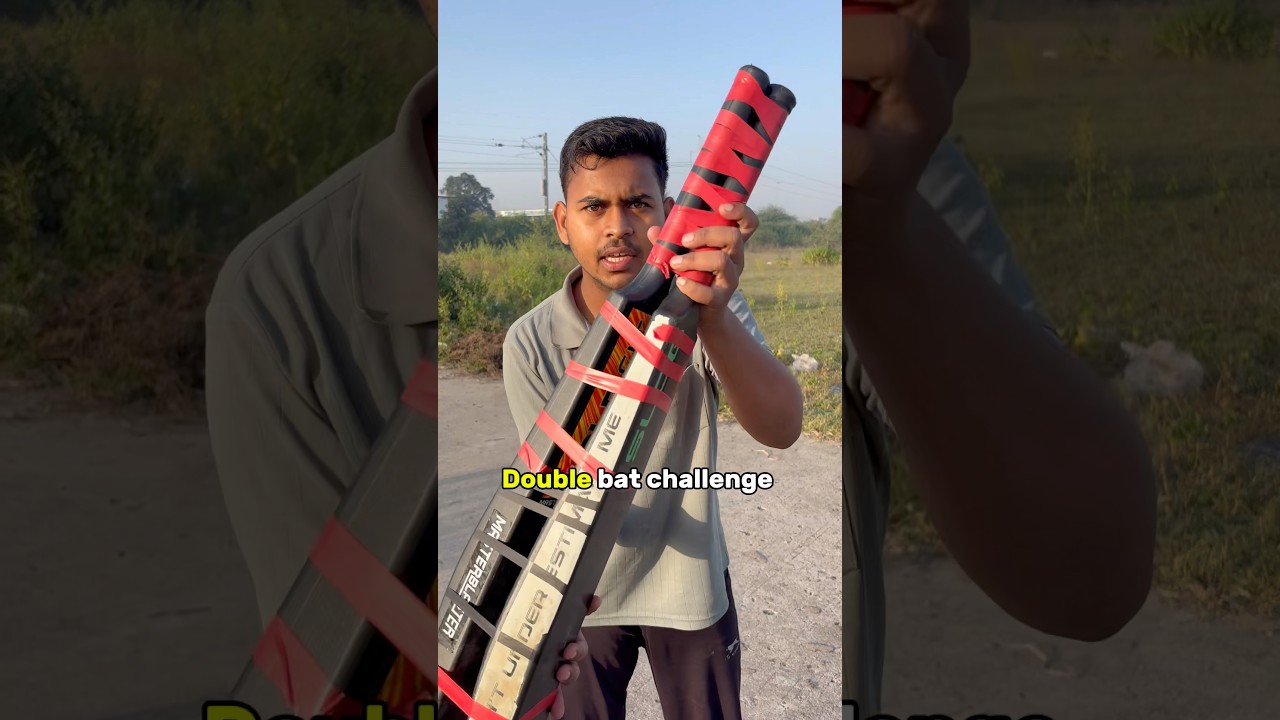
Can 1 Batsman Use 2 Bats? 🏏 The Extreme Cricket Challenge Explained
Cricket is a sport governed by tradition, discipline, and the strict MCC (Marylebone Cricket Club) Laws. From the length of the pitch to the weight of the ball, everything is documented. However, social media trends and “Extreme Cricket Challenges” often pose quirky questions. One such viral query among Indian fans is: Can 1 batsman use 2 bats at the same time?
Whether you are playing a Gully Cricket match in Mumbai or watching an IPL thriller, the rules remain the core of the game. Let’s dive into the legality, the viral trends, and what the rulebook actually says about this “Extreme Challenge.”
The Rulebook: What Does the MCC Say?
According to Law 5 of the MCC Laws of Cricket, which focuses on “The Bat,” there is no explicit sentence that says “you cannot carry two bats.” However, the rules are implicit. The law defines “the bat” in the singular. More importantly, Law 1.2 stipulates that a batsman must be able to hold the bat to be considered “in play.”
In professional cricket (ICC matches), a player is only allowed to use one bat to strike the ball. Using two bats would not only be physically impossible to manage while running between the wickets but would also be deemed a violation of “Unfair Play” under Law 41.
The “Extreme Cricket Challenge” Trend
The idea of a batsman using two bats gained traction through YouTube shorts and Instagram reels titled #ExtremeCricketChallenge. In these fun, non-professional simulations, players try to hold a bat in each hand to cover both the off-side and leg-side simultaneously.
While this makes for entertaining content, in a real match—even in high-stakes local tournaments in India—this would lead to an immediate dead ball or the batsman being penalized. Cricket requires a “grip” that usually involves both hands to generate power and control; holding two bats would result in zero power and a high risk of injury.
Why Using Two Bats is Impossible in Real Cricket
- Weight and Balance: A standard English Willow bat weighs between 1.1kg to 1.4kg. Handling two would destroy a player’s balance.
- The “Hand” Rule: The laws state that the glove is considered part of the bat only when it is in contact with the handle. Holding two bats complicates the definition of a “catch” or “LBW.”
- Running Between Wickets: How would a batsman slide the bat or hold it while sprinting for a quick single? It’s a logistical nightmare.
Conclusion
To answer the viral question: No, a batsman cannot use 2 bats in any official form of cricket. While it serves as a hilarious “Extreme Cricket Challenge” for social media influencers, the spirit of the game and the MCC laws strictly forbid it. In the world of cricket, it’s all about the timing, the technique, and the single piece of willow that defines a legend.
Frequently Asked Questions (FAQs)
1. Can a batsman change his bat in the middle of an over?
Yes, a batsman can change their bat at any time if it is broken or if they feel uncomfortable with it. Usually, a substitute player (the ’12th man’) brings out a selection of bats for the player to choose from.
2. Is there a limit on the number of bats a player can carry to the stadium?
No, professional players like Virat Kohli or Rohit Sharma often carry 10–12 bats in their kit bags for a series to ensure they have the perfect match for different pitch conditions.
3. What happens if a ball hits the hand instead of the bat?
If the hand is touching the bat’s handle, it is considered part of the bat. If the ball hits the glove and is caught, the batsman is out. If the hand is not touching the bat, it is not considered part of the bat.
4. Can a batsman use a plastic or a metal bat?
No. Following the famous “Aluminum Bat” incident involving Dennis Lillee in 1979, the rules were clarified. The blade of the bat must be made of wood (usually English or Kashmir Willow).
5. Is “Double Hit” allowed in cricket?
A batsman cannot hit the ball twice to score runs. However, they can hit it a second time solely to guard their stumps (preventing the ball from hitting the wickets), provided they don’t try to run.