Tennis Scoring System Explained: Learn How to Count Points
Tennis is one of the most popular sports in India, with stars like Sania Mirza, Leander Paes, and Rohan Bopanna putting the country on the global map. However, for a beginner, watching a match at Wimbledon or the Australian Open can be confusing. Unlike cricket or football, where points are counted linearly (1, 2, 3…), tennis uses a unique terminology: Love, 15, 30, and 40.
In this guide, we break down the tennis scoring system so you can enjoy the game like a pro.
The Three Stages of a Tennis Match
To understand the score, you must understand the hierarchy of a match:
- Game: The smallest unit of scoring.
- Set: A collection of games (usually 6).
- Match: The overall contest (usually best of 3 or 5 sets).
How to Count Points in a Game
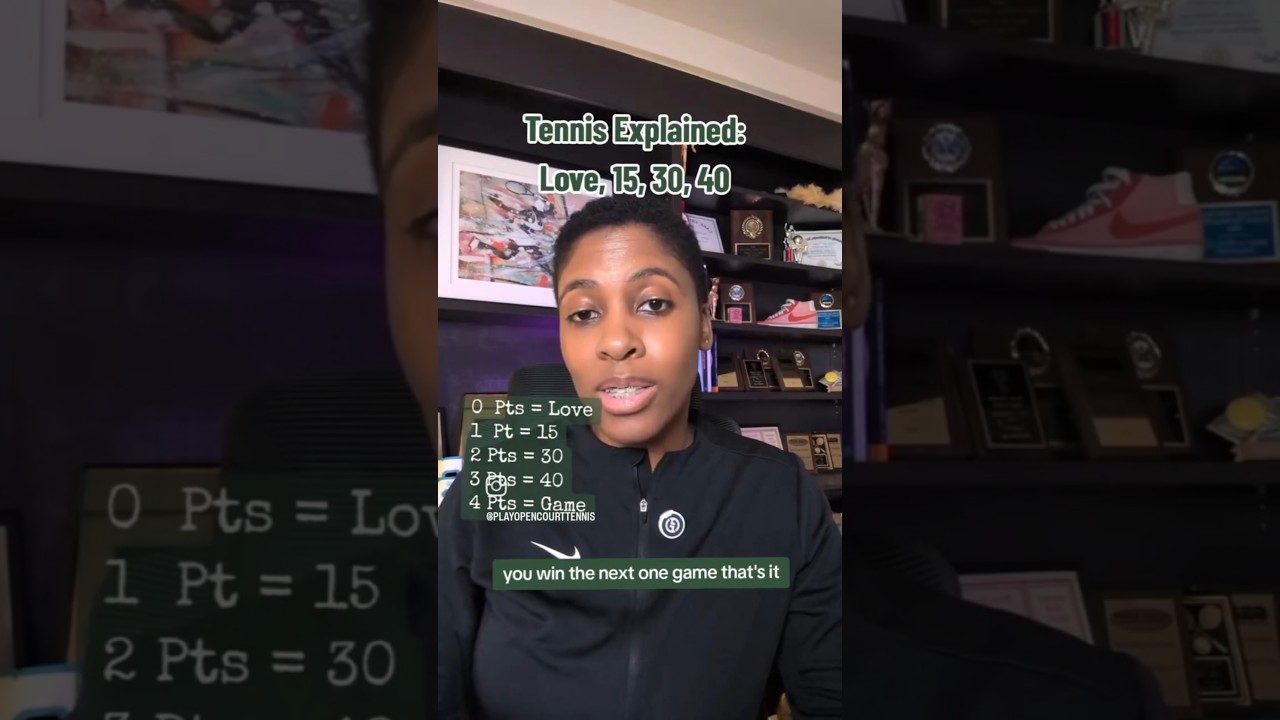
When a player serves, they are trying to win a “Game.” Instead of counting 0, 1, 2, 3, tennis uses the following scale:
- 0 Points = “Love” (Derived from the French word ‘l’oeuf’, meaning egg, representing zero).
- 1 Point = 15
- 2 Points = 30
- 3 Points = 40
- 4 Points = Game (Ends the game, provided the player is ahead by two points).
Deuce and Advantage
If both players reach a score of 40-40, it is called a Deuce. From here, a player must win two consecutive points to win the game:
- Advantage: The player who wins the first point after deuce gets the “Advantage.”
- Game: If that same player wins the next point, they win the game.
- Back to Deuce: If the opposing player wins the point, the score returns to Deuce.
Winning a Set and the Match
In most professional tournaments, a player must win 6 games to win a set. However, there is a “two-game lead” rule. If the score is 5-5, the set continues until one person wins 7-5. If the score reaches 6-6, a Tie-break is played.
For the match itself:
- Best of 3: Common in women’s matches and ATP Masters. First to 2 sets wins.
- Best of 5: Common in Men’s Grand Slams. First to 3 sets wins.
Conclusion
While the tennis scoring system might seem complicated at first with terms like “Love” and “Deuce,” it becomes second nature once you start playing or watching regularly. Whether you hit the clay courts at your local club in Bangalore or watch the French Open from your living room in Delhi, understanding tennis scores enhances the excitement of every rally.
Frequently Asked Questions (FAQs)
1. Why is zero called “Love” in tennis?
The most popular theory is that it comes from the French word ‘l’oeuf’ (the egg), which looks like a zero. Others believe it comes from the phrase “to play for the love of the game” (playing for nothing).
2. What does “All” mean in tennis scores?
If the score is tied (except for 40-40), the umpire uses the word “All.” For example, 15-15 is called “15-All,” and 30-30 is “30-All.”
3. What is a “Golden Set” in tennis?
A Golden Set occurs when a player wins every single point in a set (24 points to 0), without losing a single point to the opponent. This is extremely rare in professional tennis.
4. Who serves first in a match?
A coin toss (or a racket spin) determines who serves first. The winner can choose to serve, receive, or pick a side of the court.
5. What is the difference between Ad-In and Ad-Out?
When the score is at Deuce, “Ad-In” (Advantage In) means the server has the lead. “Ad-Out” (Advantage Out) means the receiver has the lead.
Ever wonder how tennis scoring works with “Love,” “15,” “30,” and “40”? 🤔 This quick Short explains how to understand tennis scores simply! Learn what each term means and how to win a game in tennis.
Perfect for new players or anyone looking to master basic tennis scoring.
Boost your tennis confidence! Hit SUBSCRIBE for more easy tennis tips & rules explained. 👉 @playopencourttennis
#TennisScoring #EasyTennis #BeginnerTennis #TennisRules #TennisBasics #tennistips #tennistip #learntennis #PlayTennis
Tennis rules explained | how to keep score in tennis | tennis rules and scoring | tennis scoring for beginners | tennis match explained | tennis point system explained | tennis points explained | scoring in tennis explained