How to Hit the Perfect Tennis Dropshot: A Step-by-Step Guide


How to Hit the Perfect Tennis Dropshot: A Step-by-Step Guide

In the world of tennis, power often takes the spotlight. However, on the hot, baked clay courts of Delhi or the humid hard courts of Mumbai, finesse can be just as lethal as a 120 kmph serve. The tennis dropshot is a touch play designed to catch your opponent off guard, forcing them to sprint forward when they least expect it.

Whether you are a club player or an aspiring pro, mastering the dropshot adds a new dimension to your game. Here is your comprehensive guide to hitting the perfect tennis dropshot.

Step 1: Choose the Right Moment

The biggest mistake many players make is attempting a dropshot from behind the baseline. To execute this move effectively, you should ideally be inside the baseline or moving toward short balls. Use the dropshot when your opponent is deep behind their baseline, struggling to recover from a wide shot. In India’s slower court conditions, waiting for a high-bouncing ball that sits up can give you the perfect window to “kill” the pace.

Step 2: The Continental Grip

Success starts with the hands. While you might use a Western or Semi-Western grip for your heavy topspin forehands, the dropshot requires a Continental grip (the same grip used for volleys and serves). This allows you to “open” the racquet face and create the necessary backspin to make the ball die upon impact.

Step 3: Disguise is Key

If your opponent knows the dropshot is coming, they will reach it with ease. To hit a perfect dropshot, your preparation must look identical to a standard deep drive or slice. Keep your backswing similar to your normal groundstroke, and only at the final millisecond, relax your grip and change the racquet angle.

Step 4: The “High-to-Low” Path with Soft Hands

As you make contact, move the racquet in a steep high-to-low motion. Instead of hitting “through” the ball, you want to “cup” the ball. Imagine you are catching the ball with your strings. Most Indian coaches refer to this as “touch” or “feel.” Relax your wrist to absorb the pace of the incoming ball, ensuring it clears the net by a small margin and lands short in the opponent’s service box.

Step 5: Follow Through and Recovery

Unlike a power shot, the follow-through for a dropshot is short and finished low. Immediately after hitting the shot, don’t just stand and watch. Move forward slightly to cover a potential counter-drop or lob. Because the ball has heavy backspin, it should ideally bounce twice before the opponent can reach it.

Conclusion

The dropshot is more than just a shot; it is a psychological weapon. It disrupts the rhythm of “baseliners” and tests their fitness. By mastering the Continental grip, maintaining disguise, and developing soft hands, you can turn a defensive situation into a winning point. Next time you hit the courts at your local club, practice these steps to leave your rivals stranded at the back of the court.

Frequently Asked Questions (FAQs)

1. When is the best time to use a dropshot in a match?

The best time is when your opponent is far behind the baseline or moving laterally. It is also highly effective on clay courts or when the weather is hot, as the ball may feel softer and easier to manipulate.

2. Can I hit a dropshot with a two-handed backhand?

While possible, most professional players (like Novak Djokovic) prefer to switch to a one-handed slice grip for the backhand dropshot to get better reach and feel.

3. My dropshots always hit the net. What am I doing wrong?

You are likely hitting too “flat.” Ensure you are using a high-to-low motion to create backspin. Also, aim for at least a foot or two above the net; the backspin will pull the ball down once it crosses.

4. Is the dropshot effective on Indian hard courts?

Yes. Although hard courts provide a consistent bounce, a well-disguised dropshot with heavy backspin will stay low, making it very difficult for an opponent to flick it back over the net.

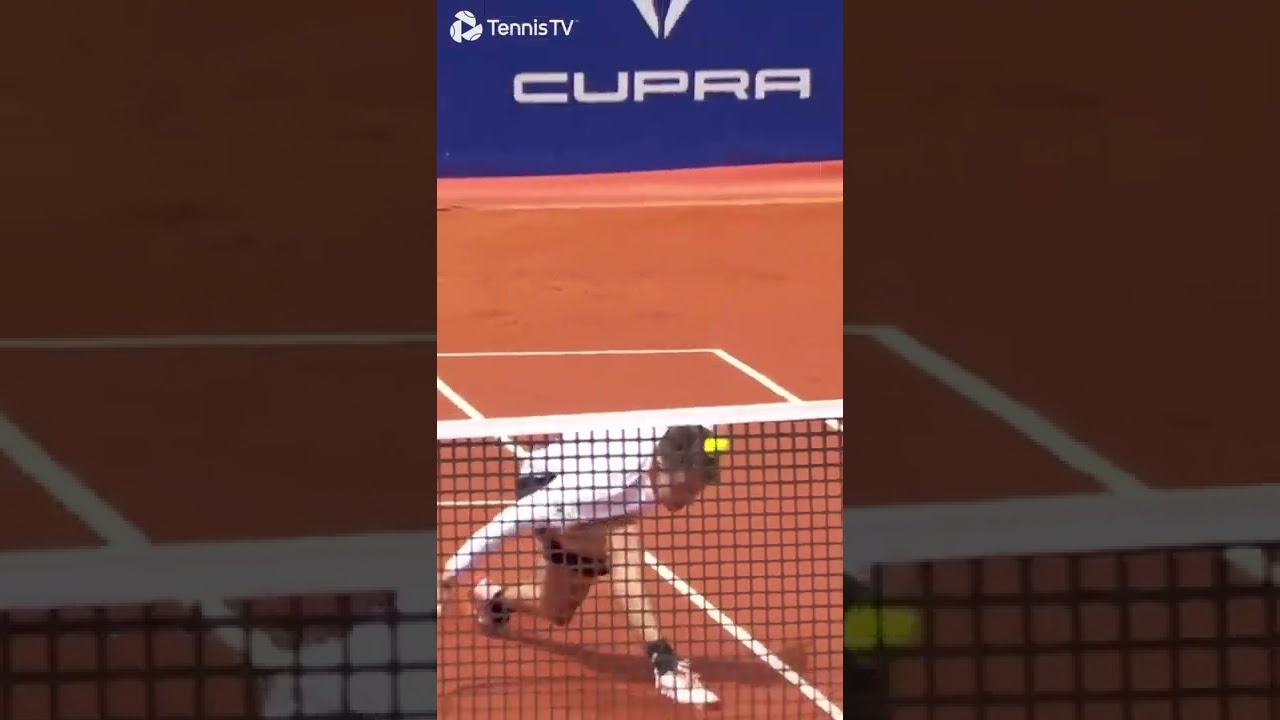
#Shorts Alex De Minaur with an absolutely stunning counter drop shot in Barcelona, 2021…SUBSCRIBE to our channel for the best ATP tennis videos and tennis highlights:

Watch official ATP tennis streams from every tournament:

Tennis TV is the OFFICIAL live streaming service of the ATP Tour.

Tennis TV features live streaming and video on demand of ATP tennis matches in full on PC, Mac, mobile & tablet apps on iOS & Android. Download the app to stream on your device:

Plus Tennis TV is also available to stream tennis on your TV on Apple TV, Roku, Amazon Fire TV, Samsung Smart TV, LG Smart TV, Android TV, PlayStation 4, Xbox One and Chromecast.

To enquire about licensing ATP Tour footage contact IMG Replay:

#tennis #tennistv #sports
Unbelievable Longest Rally in Tennis History! 😱🔥


The Unbelievable Longest Rally in Tennis History: A Test of Pure Will! 😱🔥

Tennis is often a game of explosive power, lightning-fast aces, and quick volleys. However, every now and then, the sport delivers a moment of sheer endurance that leaves fans breathless. If you think a 20-shot rally between Djokovic and Nadal is long, wait until you hear about the longest rally in professional tennis history.

For Indian tennis fans who grew up watching the grit of Leander Paes or the baseline consistency of Somdev Devvarman, the concept of “never giving up” is familiar. But this particular record takes “never giving up” to a whole new, almost unbelievable level.

The 29-Minute Point: Nelson vs. Hepburn (1984)

The record for the longest rally in a professional match occurred in 1984 at a tournament in Richmond, Virginia. The players were Vicki Nelson and Jean Hepburn. While they weren’t global superstars, they etched their names into the history books by playing a single point that lasted—believe it or not—29 minutes.

During this marathon point, the ball crossed the net an incredible 643 times. To put that in perspective, most modern professional points end within 4 to 8 shots. This wasn’t just tennis; it was a psychological war of attrition where neither player was willing to blink first.

How Did It Happen?

The match was played on a slow surface, and both players adopted a “moonball” strategy—hitting the ball high and deep to avoid making unforced errors. As the rally crossed the 500-shot mark, the crowd reportedly fell into a stunned silence, realizing they were witnessing a statistical anomaly. Nelson eventually won the point when Hepburn hit a shot long.

The match itself lasted 6 hours and 22 minutes, which remains the longest women’s match played in a single day.

Why This Record Might Never Be Broken

In today’s era of modern tennis, several factors make a 643-shot rally nearly impossible:

  • Power & Technology: Modern rackets and strings allow players to generate massive spin and pace, making it harder to keep the ball in play for hundreds of shots.
  • Aggressive Coaching: Players are now trained to “finish the point” rather than wait for an error.
  • Physical Fatigue: The aerobic intensity of today’s game is much higher; a player would collapse from exhaustion before hitting 600 high-intensity shots.

Conclusion

The 29-minute rally between Nelson and Hepburn remains one of the most unbelievable moments in tennis history. It serves as a reminder that while talent and speed are essential, mental toughness and the refusal to lose are the true foundations of the sport. Whether you are a casual fan in Mumbai or an aspiring player in Delhi, this record stands as the ultimate benchmark for endurance.


Frequently Asked Questions (FAQs)

1. What is the longest rally in men’s tennis?

While the 643-shot rally is the pro record, the longest rally in a competitive men’s pro match is often cited as a 71-shot rally between Björn Borg and Guillermo Vilas (1978). However, amateur records exist for much longer durations.

2. How long did the longest tennis match ever last?

The longest match in history was between John Isner and Nicolas Mahut at Wimbledon 2010. It lasted 11 hours and 5 minutes, played over three days.

3. What does “moonballing” mean in tennis?

Moonballing is a defensive tactic where a player hits the ball with high topspin and a high arc, making it difficult for the opponent to attack while minimizing the chance of hitting the net.

4. Has any Indian player been part of a record-breaking rally?

While no Indian holds the world record for the longest rally, Indian players like Somdev Devvarman were famous on the ATP tour for their incredible fitness and ability to engage in grueling 30+ shot baseline exchanges.

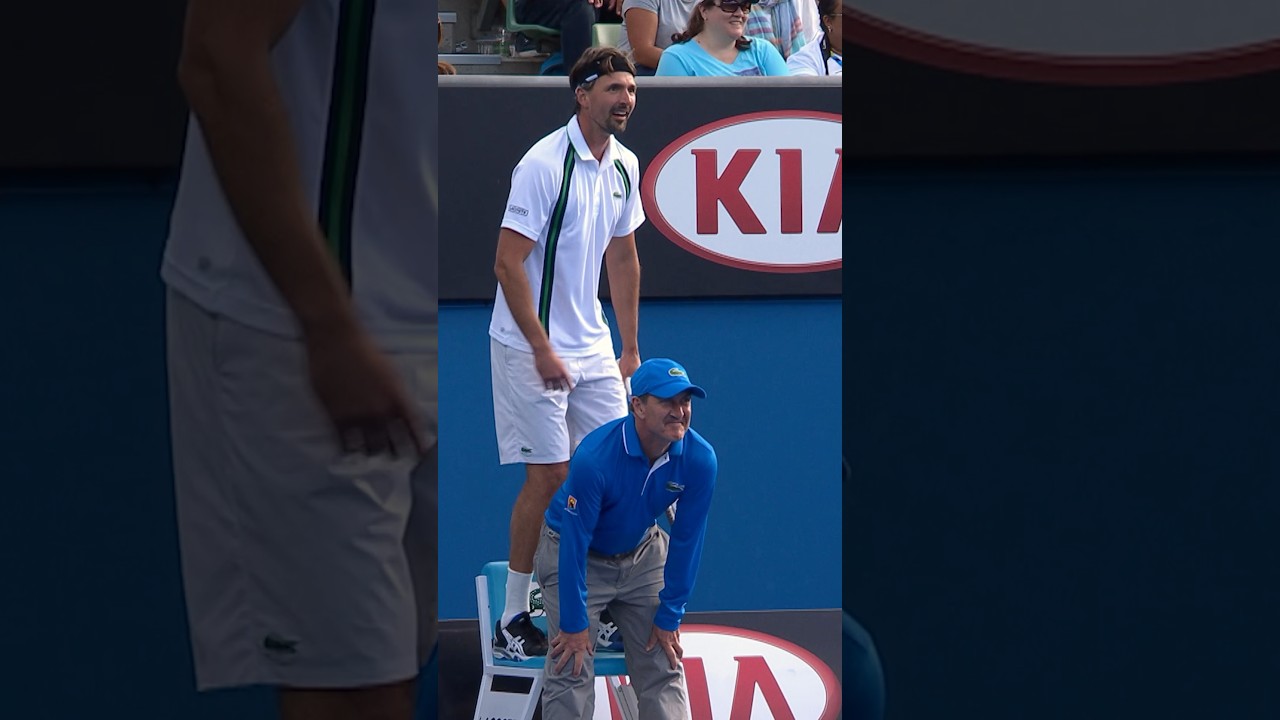
It’s always an advantage getting a better view of the ball. In this Australian Open exhibition match, Goran Ivanisevic gets a view from the line judges chair! #Shorts

Subscribe to keep up with the latest from the Australian Open:

Welcome to the official Australian Open TV YouTube channel. The Australian Open is the first Grand Slam of the year and takes place in Melbourne. Novak Djokovic is the men’s singles reigning champion and Aryna Sabalenka is the women’s singles reigning champion. The tournament takes place on 25 hard courts, including Rod Laver Arena, Margaret Court Arena and John Cain Arena. Look out for highlights, press conferences, memorable moments and much more!

Facebook:
Twitter:
Instagram:
TikTok:
Website:

Follow breaking news, updates, highlights and more on:
Nine (Australia):
Eurosport (Europe):
ESPN (Americas):
beIN Sports (South East Asia, MENA):
And visit: for all our broadcast partners worldwide