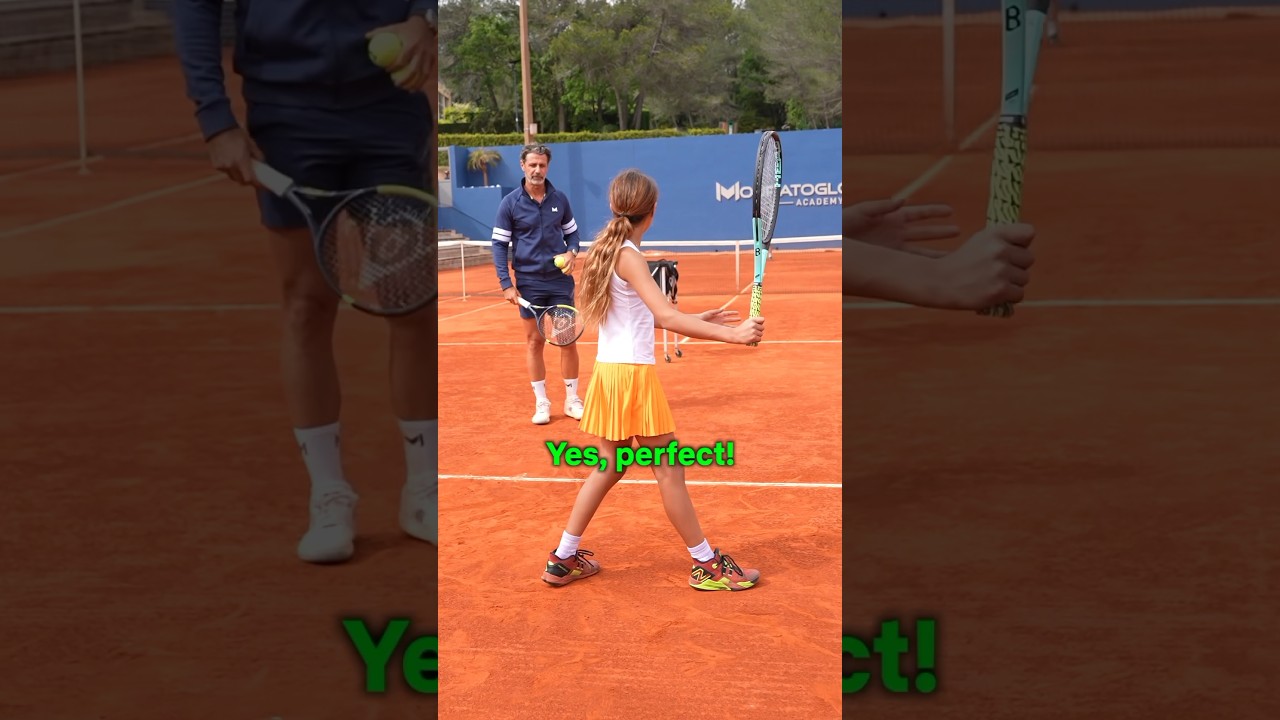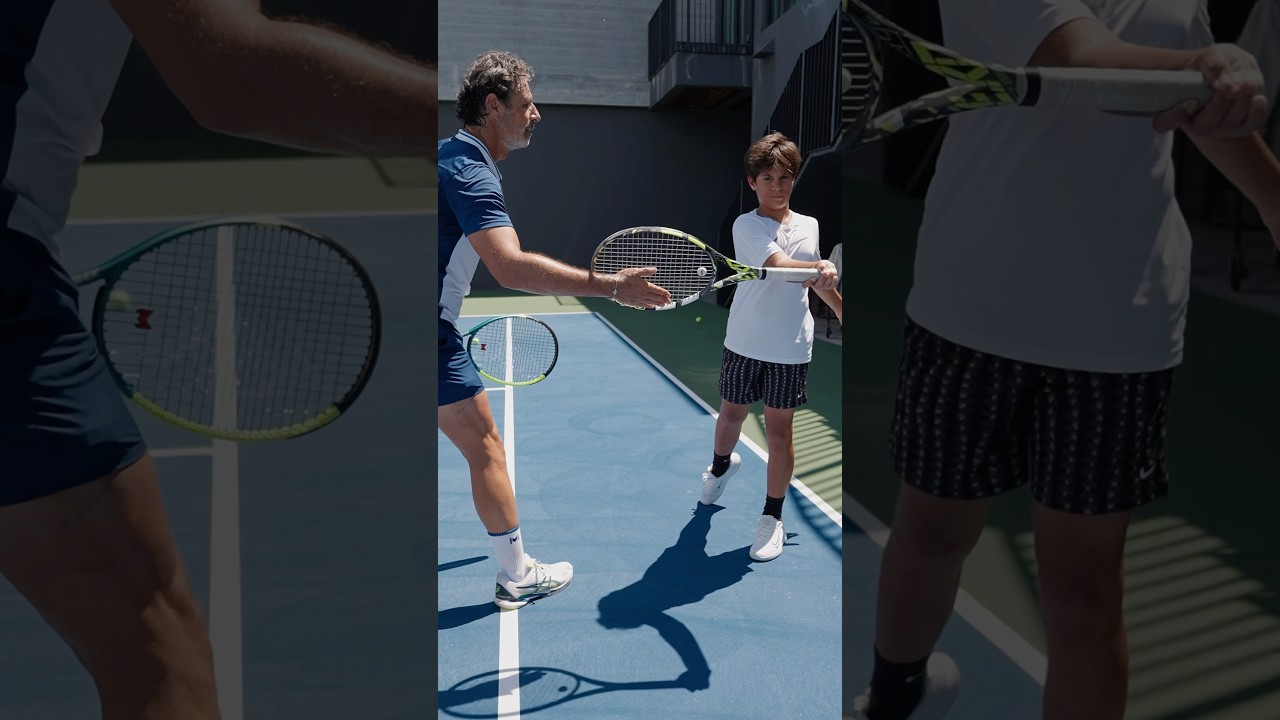
Power Forehand Secret: How Tennis Pros Generate Effortless Power ⚡🎾 #tennis #forehand #tips


Power Forehand Secret: How Tennis Pros Generate Effortless Power ⚡🎾

How many times have you watched champions like Novak Djokovic or Carlos Alcaraz hit a forehand winner that looks completely effortless? If you are a tennis enthusiast in India, playing on the typical hard courts found in academies from Delhi to Bangalore, you know that trying to “muscling” the ball often leads to errors or, worse, tennis elbow.

The secret to professional-level power isn’t big muscles; it’s Physics. In this guide, we break down the kinetic chain secrets that turn a slow swing into a lightning-fast forehand.

1. The Kinetic Chain: Power Starts at the Feet

The biggest mistake amateur players make is thinking the power comes from the arm. Pros know that power starts from the ground up. In India, most local courts are hard courts (cement or synthetic), which provide great friction. You must use this to your advantage.

  • Load the Legs: As the ball approaches, bend your knees and “load” your back leg.
  • The Transfer: Push off the ground. That energy travels from your legs, through your hips, into your torso, and finally out through your arm.

2. The Unit Turn and Coiling

Think of your body like a giant rubber band. To get power, you need to stretch it. This is called the Unit Turn. Instead of just pulling your racket back with your hand, turn your entire upper body. Your non-dominant hand should reach across your body to help pull your shoulders around. When you uncoil, that stored energy snaps forward like a whip.

3. Relaxation is Key (The “Noodle” Arm)

If you grip the racket too tight (we call this a “death grip”), you kill the vibration and the speed. To generate effortless power, your wrist and forearm must be relaxed. Think of your arm as a piece of cooked noodle or a whip. The racket should lag behind your hand during the forward swing, creating a “snap” effect at the point of contact.

4. Use Your Non-Dominant Arm

Many club players let their left arm (for right-handers) hang uselessly. Tennis pros use the non-dominant arm to balance and then “tuck” it into the body during the hit. This tucking motion accelerates the rotation of the shoulders, much like a figure skater pulls their arms in to spin faster.

Conclusion

Generating a pro-level forehand isn’t about how hard you can squeeze the racket; it’s about how efficiently you can move energy from the Indian soil up into the tennis ball. By focusing on leg drive, shoulder rotation, and a relaxed arm, you will find that the ball starts traveling faster with half the effort. Next time you head to the court, stop hitting with your arm and start hitting with your whole body!

Frequently Asked Questions (FAQs)

1. Why does my forehand lack power even though I swing hard?

You are likely “muscling” the ball with your arm only. Real power comes from the Kinetic Chain—starting from the legs and moving through the hips and shoulders. If your arm is tense, it slows down the racket head speed.

2. What is the best grip for a power forehand?

Most modern pros use the Semi-Western grip. It allows for a great balance of topspin and raw power, which is ideal for the high-bouncing hard courts commonly found in India.

3. How can I practice this at home without a court?

You can practice the “Unit Turn” and “Coiling” in front of a mirror. Focus on turning your shoulders until your chin touches your lead shoulder, then practice the explosive rotation of the hips without using your arm muscles.

4. Can better strings help with effortless power?

Yes. If you want more “pop,” consider using a Multifilament string or a lower tension. In India’s hot climate, strings can lose tension quickly, so ensure your racket is re-strung every 3-4 months if you play regularly.

#tennis #forehand #tips #IndianTennis #TennisCoaching #PowerForehand
Mansour Bahrami’s Magical Tennis Skills: The Ultimate Trick Shot Master!


Mansour Bahrami’s Magical Tennis Skills: The Ultimate Trick Shot Master!

In a sport often defined by intense discipline and robotic precision, Mansour Bahrami stands out as a breath of fresh air. Known globally as the “Court Jester” or the “Magician,” Bahrami has turned the tennis court into his personal theater. For tennis enthusiasts in India, who grew up watching the elegant touch of stars like Leander Paes and Mahesh Bhupathi, Bahrami’s style of play resonates deeply.

The Man Behind the Magic

Mansour Bahrami’s journey is as incredible as his trick shots. Born in Iran, he faced years of being unable to play tennis due to political restrictions in his home country. He eventually moved to France as a refugee with nothing but his passion. This hardship gave him a unique perspective on the game: for Bahrami, tennis isn’t just a competition; it’s a celebration of life.

Unbelievable Skills: Beyond the Rules of Physics

What makes Mansour Bahrami the ultimate trick shot master? It is his ability to invent shots that shouldn’t technically be possible. Here are a few hallmarks of his magical skills:

  • The Fake Smash: Bahrami is famous for leaping high for a powerful overhead smash, only to gently drop the ball over the net with a soft touch at the last millisecond.
  • Underarm Serves with a Twist: Long before it became a tactical weapon for modern players, Bahrami used the underarm serve to confuse opponents and entertain the crowd.
  • The “Invisible” Recovery: He can hit a winning shot while sitting on a chair, lying on the ground, or even while holding five tennis balls in one hand.
  • Backspin Mastery: Bahrami can hit the ball with so much backspin that it bounces on the opponent’s side and then hops back over the net to his own side.

Why Indian Tennis Fans Adore Him

India has a rich history of “touch” tennis. While the modern game is dominated by power and baseline grinding, Indian fans have always appreciated the art of the volley and the clever drop shot. Seeing Mansour Bahrami at exhibition matches, often playing alongside legends like Vijay Armitraj, has solidified his status as a cult hero in the Indian subcontinent. His charisma, sense of humour, and ability to connect with the audience transcend the scoreline.

The Spirit of Entertainment

While Bahrami did reach a French Open doubles final in 1989, his legacy isn’t measured in Grand Slam trophies. Instead, it is measured in the smiles and laughter of the thousands who watch him play on the ATP Champions Tour. He reminds us that at its core, tennis is a game meant to be enjoyed. He doesn’t just play tennis; he performs it.

Conclusion

Mansour Bahrami is more than just a tennis player; he is a living legend who proves that creativity has no limits. His magical skills and trick shots have inspired generations of players to experiment and find joy in the sport. Whether he is serving underarm or hitting a lob through his legs, the ultimate trick shot master continues to prove that magic is very much real on the tennis court.

Frequently Asked Questions (FAQs)

1. Did Mansour Bahrami ever win a Grand Slam?
While he never won a Grand Slam title, he reached the Men’s Doubles final at the French Open in 1989, which remains a career highlight.

2. Is Mansour Bahrami still playing tennis?
Yes, he is a regular fixture in the “Invitational” and “Legends” events at major tournaments like Wimbledon and the French Open.

3. Why is he called the “Court Jester”?
He earned this nickname because of his humorous antics, funny facial expressions, and his tendency to prioritize entertaining the crowd over winning the point.

4. Can I learn Bahrami’s trick shots?
While some shots require years of professional feel and “touch,” basics like the underarm serve or the fake smash can be practiced by any club player looking to add some fun to their game.

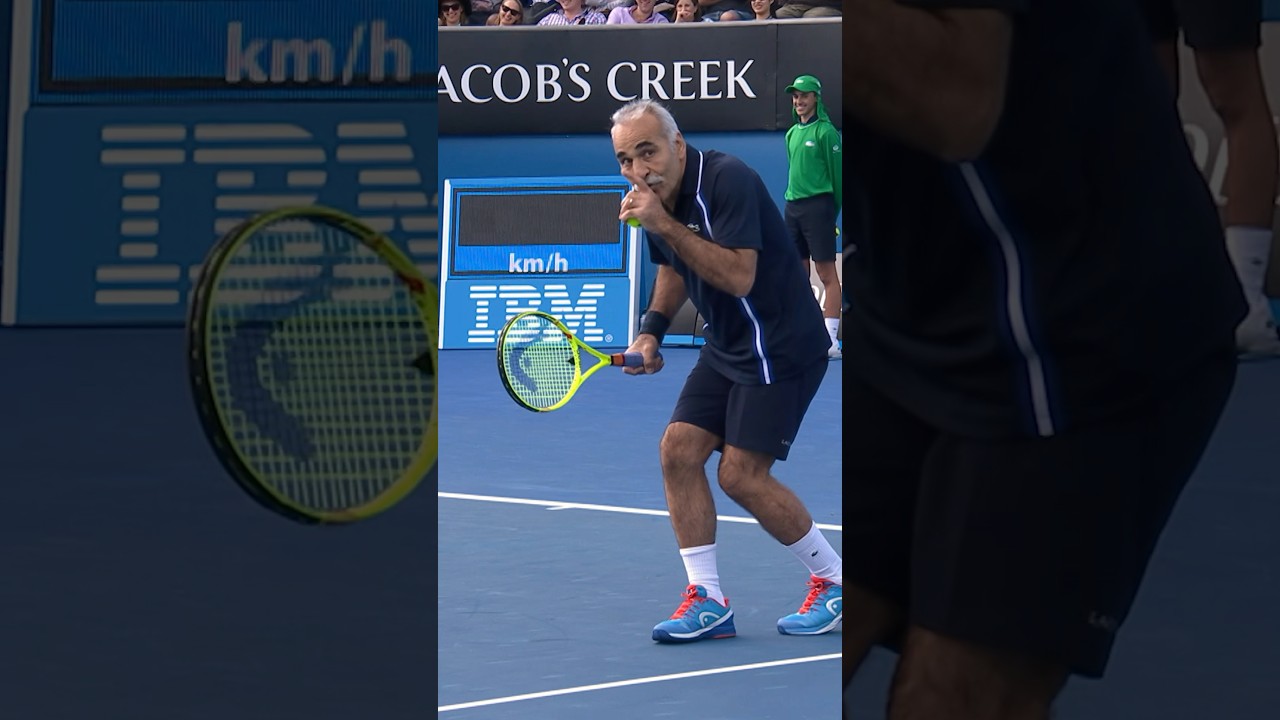
Mansour Bahrami creeps towards the service line in order to catch Mark Woodforde and Pat Cash out in an exhibition match at the Australian Open 2019. #Shorts

Subscribe to keep up with the latest from the Australian Open:

Welcome to the official Australian Open TV YouTube channel. The Australian Open is the first Grand Slam of the year and takes place in Melbourne. Novak Djokovic is the men’s singles reigning champion and Aryna Sabalenka is the women’s singles reigning champion. The tournament takes place on 25 hard courts, including Rod Laver Arena, Margaret Court Arena and John Cain Arena. Look out for highlights, press conferences, memorable moments and much more!

Facebook:
Twitter:
Instagram:
TikTok:
Website:

Follow breaking news, updates, highlights and more on:
Nine (Australia):
Eurosport (Europe):
ESPN (Americas):
beIN Sports (South East Asia, MENA):
And visit: for all our broadcast partners worldwide

Master Your Forehand Finish: Best Tennis Tips for Indian Players | Improve Your Game


Master Your Forehand Finish: Best Tennis Tips for Indian Players

In the vibrant world of Indian tennis, from the local clubs of Mumbai to the elite academies in Bangalore, the forehand remains the ultimate weapon. However, many Indian players struggle with consistency because they overlook the most crucial part of the swing: the finish. If you want to improve your tennis scores and dominate the baseline, mastering your forehand follow-through is non-negotiable.

Why the Finish Matters for Your Tennis Scores

In tennis, the finish is the roadmap of your swing. It dictates the ball’s trajectory, spin, and depth. For Indian players playing on varied surfaces—from dusty “cow-dung” courts to modern synthetic hard courts—a polished finish ensures the ball clears the net with enough topspin to stay in play, leading to fewer unforced errors and higher match scores.

Top Tips to Master the Forehand Finish

1. The “Catch the Racket” Technique

A common mistake among beginners is a “choppy” stroke that stops abruptly. To fix this, aim to catch the neck of the racket with your non-dominant hand over your opposite shoulder. This ensures a full range of motion, providing better control and safety for your joints.

2. Windshield Wiper Finish for Topspin

On the slower hard courts often found in India, generating topspin is key. Instead of a classic high finish, try the “windshield wiper” finish. Your racket should move across your body in an arc, similar to a car’s wiper. This creates heavy topspin, making the ball dip quickly and kick high, which is notoriously difficult for opponents to return.

3. Relaxed Shoulders and Fluidity

Indian summers can be grueling, leading to fatigue and muscular tension. Tension is the enemy of a good forehand. Keep your grip loose (think 4 out of 10 in terms of pressure) and ensure your finish is fluid. A relaxed follow-through prevents injuries like tennis elbow, which is common among club players in the circuit.

4. Eye on the Target

Don’t look up too early to see where the ball is going. Keep your head still and focus on the point of contact until your finish is complete. This stability ensures that your body weight transfers correctly into the shot, adding “put-away” power to your forehand.

Adapting to Indian Court Conditions

If you are playing on clay or smoother hard courts in cities like Delhi or Chennai, the ball might stay lower. In these cases, ensure your finish starts from a low-to-high path. Dropping the racket head below the ball before accelerating into the finish will help you handle lower bounces effectively without hitting the net.

Conclusion

Mastering your forehand finish is the quickest way to evolve from a defensive player to an aggressive baseliner. By focusing on a full, relaxed follow-through and incorporating topspin techniques, you will see a significant improvement in your consistency and power. Remember, the way you end your stroke determines how your point ends. Practice these tips, keep your footwork sharp, and watch your tennis scores climb in your next local tournament.

Frequently Asked Questions (FAQs)

1. Where should my racket end up after a forehand?

For a standard drive, your racket should finish over your opposite shoulder. For a heavy topspin shot, it may finish lower, near your opposite bicep or even your waist (the “buggy whip” finish).

2. How can I improve my tennis scores quickly?

The fastest way to improve scores is to reduce unforced errors. A consistent forehand finish ensures more balls land inside the lines, forcing your opponent to take more risks.

3. Is the windshield wiper finish better than the classical finish?

Neither is “better,” but the windshield wiper is more effective for modern baseline play and generating spin, whereas the classical finish offers more depth and linear drive.

4. How do I stop my forehand from going out of the court?

Ensure you are brushing up on the back of the ball and that your finish is high enough. If the ball is sailing long, you likely need more topspin, which comes from a more pronounced low-to-high swing path.

Field Hockey Goal Scoring: Back To Goal Tutorial | HertzbergerTV


Field Hockey Goal Scoring: Mastering the ‘Back to Goal’ Technique

In the high-octane world of field hockey, especially in a country with a rich legacy like India, goal scoring is an art form. While every striker dreams of a clean run-in, the reality of modern defense is that you will often find yourself in the “D” with your back to the net. Inspired by the legendary insights from HertzbergerTV, this guide explores how to master the “Back to Goal” technique to boost your hockey scores.

Why Scoring with Back to Goal is Essential

Modern defenders are faster and more physical. Often, a striker receives the ball while shielding it from a defender, meaning they aren’t facing the target. Instead of wasting time turning around and losing the ball, elite players like Jeroen Hertzberger use specific mechanics to strike instantly. Mastering this allows you to catch the goalkeeper off-guard and convert half-chances into winning points.

Key Technical Tips from HertzbergerTV

To improve your finishing when you aren’t facing the net, focus on these three pillars:

1. The “Blind” Navigation

Before you even receive the ball, you must have a mental map of where the goalposts are. Hertzberger emphasizes “peripheral awareness.” In the Indian domestic circuit, where turfs can be fast, knowing your position relative to the P-spot (penalty spot) is crucial. If you know where the goal is without looking, you can shoot faster.

2. Footwork and Body Shielding

Keep your body between the ball and the defender. When playing with your back to the goal, use a “low center of gravity.” Use your non-dominant shoulder to feel where the defender is pressing. This physical feedback tells you which way to turn—if they press left, you spin right.

3. The Quick Release Smash

The “Back to Goal” shot isn’t about a long wind-up. It’s about a short, punchy movement. Use your wrists to generate power. Most hockey scores at the international level come from these “snap shots” that leave the keeper with zero reaction time.

Strategies for Improving Your Hockey Scores

  • Practice the 180-degree Turn: Drill receiving the ball at the edge of the circle, turning, and hitting in one fluid motion.
  • Focus on the Corners: Even when you can’t see the goal clearly, aim for the far bottom corners. Statistically, these are the hardest for goalkeepers to reach.
  • Follow the Rebounds: In Indian field hockey, many goals are scored on the second attempt. If your “back to goal” shot is saved, be the first to react to the rebound.

Conclusion

Scoring with your back to the goal is what separates a good striker from a world-class poacher. By implementing the techniques shared by HertzbergerTV—focusing on spatial awareness, physical shielding, and quick execution—you can significantly increase your goal tally. Whether you are playing a local tournament in Sansarpur or dreaming of the Olympics, these fundamentals remain the same. Keep practicing, stay low, and always know where the goal is.

Frequently Asked Questions (FAQs)

1. How can I improve my shooting accuracy in field hockey?

Consistency is key. Practice hitting moving targets and focus on your follow-through. Keeping your head down over the ball during the strike ensures better control and accuracy.

2. What is the best position for a striker in the ‘D’?

The “danger zone” is usually between the penalty spot and the goal line. Positioning yourself here, even with your back to the goal, puts immense pressure on the defense.

3. Where can I find the latest hockey scores for Indian matches?

You can follow official sports news portals, the Hockey India website, or international apps like Flashscore and Olympic Channels for real-line updates on Indian men’s and women’s hockey scores.

4. Is the ‘Back to Goal’ technique suitable for beginners?

Yes, but beginners should first master basic ball control. Once you are comfortable handling the ball under pressure, you can start practicing turns and “blind” shots to enhance your scoring ability.

How to score in field hockey. Here is a video on how to score with your back to the goal. Welcome to HertzbergerTV,!
This is the coolest hockey youtube channel in the world!
My name is Jeroen Hertzberger, field hockey player for HC Rotterdam 3-time olympian!
This is the official Youtube channel where I post different types of field hockey videos every week.
Tutorials, Tips & Tricks, Interviews & Challenges! I love hockey and i want to help the younger generation to become better hockey players and let the fans see what it’s like to play at the highest level!
Enjoy the channel and make sure you subscribe!
Xx Jeroen
Check out HertzbergerTV Premium Online Field Hockey Courses!
Hit the link to unleash your full potential!

B-LIKE
Do you want to mirror my skills & challenge your friends? Take a look at the B-Like app!

objectType=PROFILE&objectId=62ecd3141fcc300beabd678a

Follow me on Instagram:
Check out my TikTok page:

I am sponsored by Osaka and you can use this link to order you sticks, shoes and other gear!

Discount code for 15% : JEROEN-15

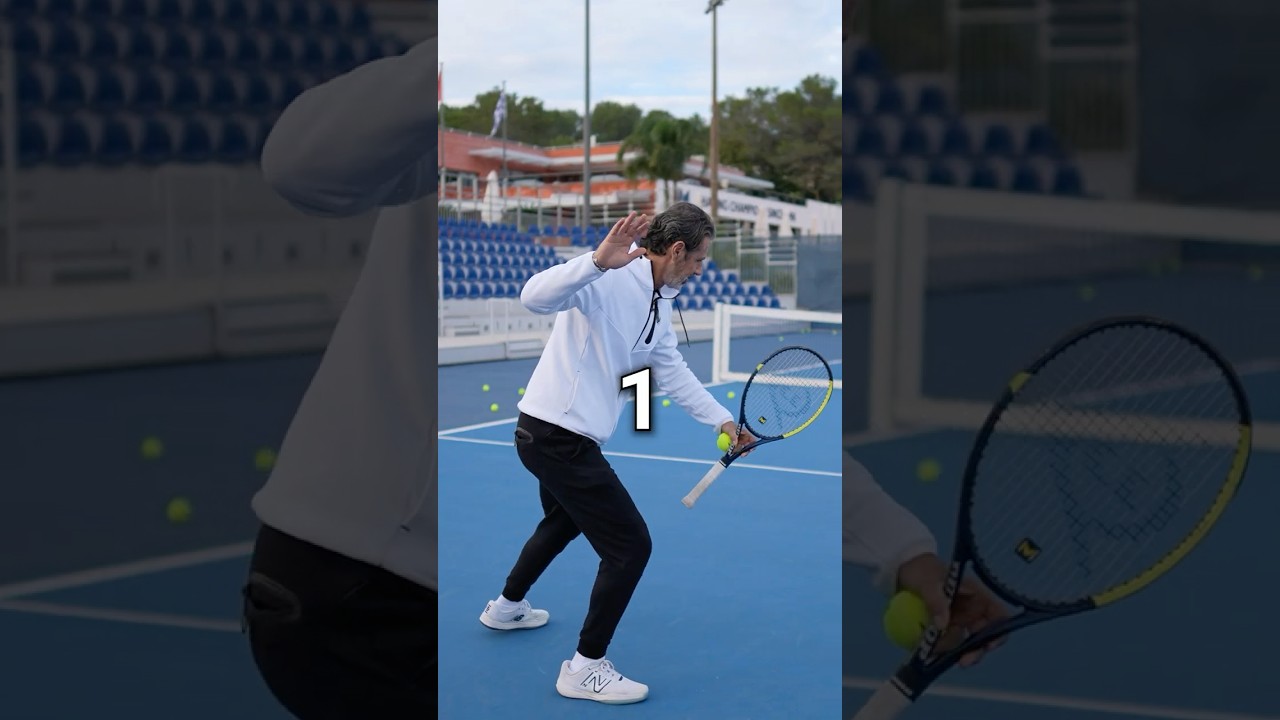
Master your Tennis Forehand Weight Transfer: 3 Simple Drills! 🎾🇮🇳


Master Your Tennis Forehand Weight Transfer: 3 Simple Drills! 🎾🇮🇳

In the vibrant tennis community across India—from the clay courts of Chennai to the hard courts of Delhi—every aspiring player dreams of a “weapon” forehand. While many focus on grip or swing speed, the true secret to explosive power lies beneath your waist. Mastering your tennis forehand weight transfer is the difference between an effortless winner and a ball that finds the net.

If you feel like your shots lack “depth” or you are muscling the ball with just your arm, these three simple drills will help you use the ground to your advantage.

Why Weight Transfer Matters

In tennis, power is generated from the ground up (Kinetic Chain). Proper weight transfer ensures that your body weight moves forward through the ball, rather than falling backward or staying static. For players in India, where courts can vary in bounce and speed, having a stable base and forward momentum allows you to control the point effectively.

Drill 1: The “Step-In” Shadow Swing

This is the foundation of a classic neutral stance forehand. Most beginners in India tend to stay flat-footed. This drill fixes that.

  • How to do it: Stand in your ready position. As you turn your shoulders (unit turn), deliberately step forward with your non-dominant foot (left foot for right-handers).
  • Focus: Ensure your weight shifts from your back leg to your front leg before you complete the swing.
  • Result: This builds the habit of moving into the court, making your shots much heavier for your opponent to return.

Drill 2: The “Back-Leg Kick” Drill

Have you noticed how professionals like Sumit Nagal or Novak Djokovic sometimes have their back leg kick out after a big forehand? This isn’t just for show; it’s a sign of complete weight transfer.

  • How to do it: Hit a standard forehand, but as you follow through, allow your back leg to swing around to the front naturally.
  • Focus: Do not force the leg; let the momentum of your hip rotation carry it. You should end up facing the net with your back foot now ahead of your starting position.
  • Result: This drill ensures you aren’t “getting stuck” on your back leg, which is a common cause of short balls.

Drill 3: The Low-to-High Lunging Drill

In the heat of an Indian summer, matches can get exhausting. This drill builds leg strength and forces weight transfer on low balls.

  • How to do it: Have a coach or partner feed you low balls. You must drop your back knee close to the ground and “push” forward and upward through the contact zone.
  • Focus: Drive your weight from your quads. Imagine you are pushing off a starting block in a race.
  • Result: This creates the “topspin” needed to clear the net while maintaining aggressive pace.

Conclusion

Mastering the tennis forehand weight transfer isn’t about hitting harder; it’s about hitting smarter. By incorporating these three drills—the Step-In, the Back-Leg Kick, and the Low-to-High Lunge—into your weekly practice, you will develop a more consistent and powerful game. Whether you are playing at your local club or competing in an AITA tournament, a solid foundation will always set you apart. Grab your racket, head to the court, and start moving that weight forward!

Frequently Asked Questions (FAQs)

1. Why do I lose balance when I try to transfer my weight?

Loss of balance usually happens because your base is too narrow. Keep your feet at least shoulder-width apart and ensure you are bending your knees to maintain a low center of gravity.

2. Is weight transfer different for an open stance forehand?

Yes. In an open stance, the weight transfer is more “lateral” (side-to-side) and rotational. You load the outside leg and explode upward and forward, rather than stepping into the ball.

3. How often should I practice these drills?

For Indian club players, spending 15 minutes on these drills during your warm-up twice a week is enough to see a significant improvement in your shot depth within a month.

4. Can these drills help prevent tennis elbow?

Absolutely. By using your legs and body weight to generate power, you take the physical strain off your elbow and wrist, significantly reducing the risk of injury.

Subscribe to my channel for more immersive tennis coaching sessions.

For even more tips, join my email list 👉 patrick.mouratoglou.com

Follow me on social media 👇

Instagram:
Facebook:
TikTok:
Twitter:
LinkedIn:

THE COACH
Patrick

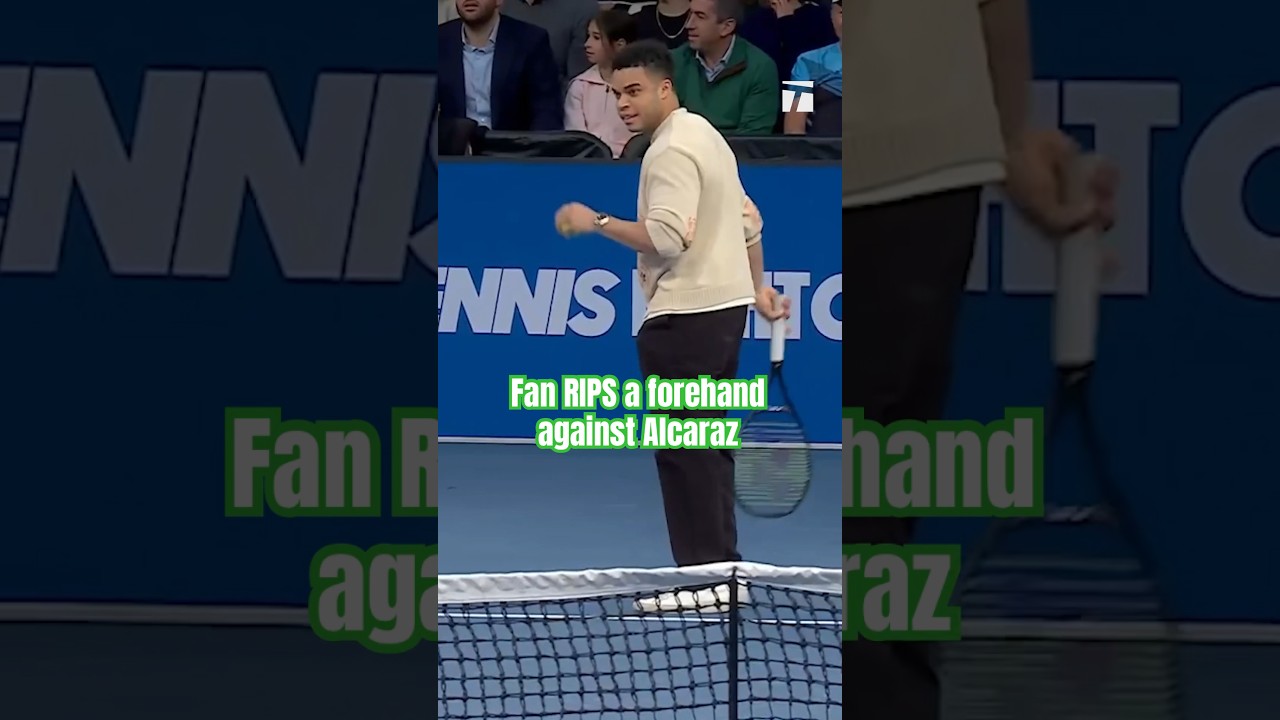
Fan smashes a forehand winner against Carlos Alcaraz at MSG 🔥 #thegardencup #tennis


Fan Smashes a Forehand Winner Against Carlos Alcaraz at MSG: A Night to Remember at #TheGardenCup

Madison Square Garden (MSG) has witnessed some of the greatest sporting spectacles in history, but few moments were as unexpected and electrifying as what transpired during The Garden Cup. While the world came to see the mastery of 4-time Grand Slam champion Carlos Alcaraz, it was a lucky fan who stole the spotlight by smashing a sensational forehand winner against the Spanish superstar.

The Moment That Fast-Tracked to Viral Status

During an exhibition match designed to bring tennis back to the heart of New York City, Alcaraz—known for his sportsmanship and flair—invited a fan from the stands to play a point. For most, the pressure of standing across the net from the world number 2 would be paralyzing. However, this particular fan seized the moment.

After a brief rally, the fan stepped into the court and unleashed a blistering inside-out forehand winner that left Alcaraz stranded and the crowd in ruptures. The video, tagged with #thegardencup, has since gone viral across social media platforms in India, with fans praising the sheer audacity of the shot.

Tennis Scores and Match Context

While the exhibition focused on entertainment, the level of tennis remained high. The Garden Cup featured high-profile clashes, including matchups involving Alcaraz and Ben Shelton. For Indian fans following tennis scores, these exhibition matches serve as a crucial barometer for player fitness ahead of the ATP tour’s rigorous schedule.

Alcaraz, despite the “loss” of that specific point to the fan, showed why he is the face of the next generation. His movement and shot-making remain elite, but his willingness to engage with the audience cemented his status as a fan favourite in NYC and beyond.

Why The Garden Cup Matters for Indian Tennis Fans

In India, where tennis icons like Leander Paes and Sania Mirza have paved the way, the appetite for global tennis is at an all-time high. Events like The Garden Cup at MSG demonstrate the sport’s move toward “tennis-tainment”—blending high-stakes skill with fan engagement. Watching a “regular” person compete with an icon like Alcaraz inspires the millions of young players currently training at academies in Delhi, Mumbai, and Bangalore.

Conclusion

The Garden Cup was a reminder that while tennis is a game of margins and intensity, it is also a game of joy. The image of Carlos Alcaraz smiling after being outplayed by a spectator is exactly what the sport needs to grow its global footprint. As we track the upcoming live tennis scores for the next ATP Masters, this MSG moment will remain a highlight of the season—a testament to the fact that on any given day, anyone can hit a winner.

Frequently Asked Questions (FAQs)

1. What was The Garden Cup?

The Garden Cup is a high-profile tennis exhibition event held at Madison Square Garden in New York City, featuring top ATP stars like Carlos Alcaraz and Ben Shelton.

2. Did a fan really beat Carlos Alcaraz?

A fan won a single point against Carlos Alcaraz during a lighthearted exhibition segment. While Alcaraz won the match, the fan’s forehand winner became the viral highlight of the night.

3. Where can I check live tennis scores in India?

Indian fans can check live tennis scores on platforms like SonyLIV, the ATP Tour website, or popular sports apps like Flashscore and ESPN.

4. What is Carlos Alcaraz’s current world ranking?

As of late 2024, Carlos Alcaraz is consistently ranked among the top 3 players in the world according to the ATP rankings.

Emma Raducanu’s STUNNING Win: Highlights & Full Match Analysis! 🎾🇮🇳


Emma Raducanu’s STUNNING Win: Highlights & Full Match Analysis! 🎾🇮🇳

The tennis world is once again buzzing as Emma Raducanu delivers a masterclass on the court, reminding fans why she is one of the most exciting talents in the sport today. For the growing community of tennis enthusiasts in India, Raducanu’s latest victory isn’t just a win on the scoreboard; it is a testament to resilience, technical evolution, and the classic “never-say-die” spirit that resonates deeply with Indian sports fans.

The Match Breakdown: A Tactical Masterclass

From the opening serve, Raducanu demonstrated a level of aggression that kept her opponent on the back foot. Unlike her previous defensive baseline rallies, this match saw a more proactive Emma. She utilized her cross-court backhand to open up the angles, a move that left commentators and fans in awe.

Key highlights of the match included:

  • First Serve Precision: Raducanu maintained a high first-serve percentage, stifling any chance for an early break.
  • Net Play: Her transition from the baseline to the net was seamless, showing a newfound confidence in her volleying skills.
  • Mental Fortitude: Despite a mid-set pressure point, she remained composed, a trait that Indian fans often compare to the calmness of cricket legends.

Why This Win Matters to Indian Tennis Fans

Tennis in India has seen a massive surge in viewership, with fans following Grand Slams and WTA events with fervor. Emma Raducanu, with her multicultural background, has always enjoyed a dedicated following in India. Her ability to bounce back from injuries and setbacks serves as an inspiration to young athletes in cities like Mumbai, Delhi, and Bangalore who are picking up rackets for the first time.

The “Emma Raducanu stunning win” trended across social media platforms in India, with local fans praising her tactical shifts. Her performance proves that she is moving beyond the “one-hit-wonder” labels and establishing herself as a consistent threat on the tour.

Full Match Analysis: Technical Superiority

Analyzing the stats, Raducanu’s return game was the standout feature. She punished second serves, taking the ball early and redirecting pace with clinical accuracy. Her movement across the court looked more fluid than ever, suggesting that her off-season fitness regime is paying massive dividends. For the Indian audience watching late-night broadcasts, every rally was a lesson in modern tennis geometry.

Conclusion

Emma Raducanu’s stunning win is a celebration of hard work and strategic brilliance. For Indian supporters, watching her regain her top-tier form is a highlight of the tennis season. As she continues her journey, her impact on the global stage—and her popularity in India—only continues to grow. This match wasn’t just about the points; it was about the statement that Emma is back and ready to dominate.


Frequently Asked Questions (FAQs)

1. Where can I watch Emma Raducanu’s match highlights in India?

Indian fans can catch highlights on platforms like Sony LIV, which often broadcasts WTA events, or on the official WTA YouTube channel and social media handles.

2. Has Emma Raducanu ever played in India?

While she hasn’t played a major WTA tournament in India recently, there is a large demand from the Indian tennis community to see her participate in future events like the Chennai Open.

3. What was the turning point in Raducanu’s latest stunning victory?

The turning point was during the second set when she saved three break points with consecutive aces, shifting the momentum entirely in her favor.

4. Is Emma Raducanu popular in India?

Yes, she has a significant fan base in India due to her historic US Open win and her relatable journey of overcoming adversity in professional sports.

5. What is Emma Raducanu’s current ranking?

Her ranking fluctuates based on recent tournament performances. Following this stunning win, she is projected to climb several spots in the WTA live rankings.

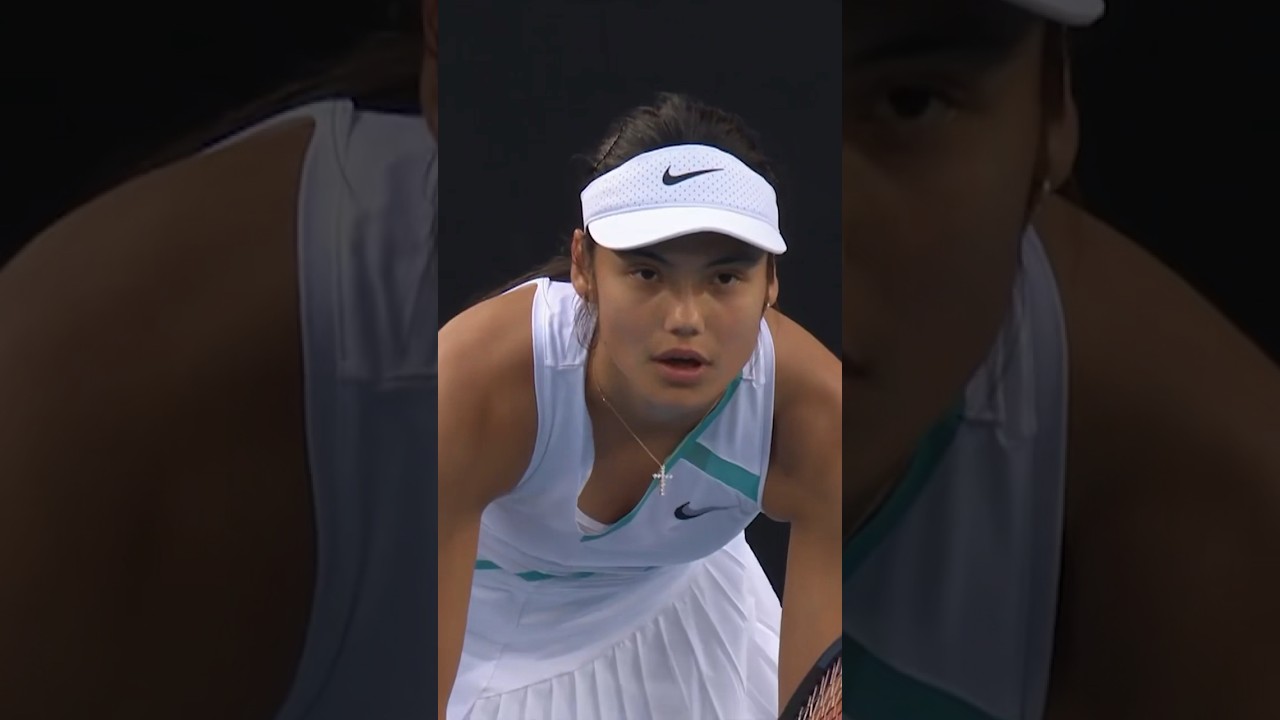
Emma Raducanu wins an amazing point against Danka Kovinic in the second round of the Australian Open 2022.

Subscribe to keep up with the latest from the Australian Open:

Welcome to the official Australian Open TV YouTube channel. The Australian Open 2025 main draw runs from 12-26 January in Melbourne. The tournament takes place for the 113th time and is the first Grand Slam of the year. Jannik Sinner is the men’s singles reigning champion and Aryna Sabalenka is the women’s singles reigning champion. The tournament takes place on 25 hard courts, including Rod Laver Arena, Margaret Court Arena and John Cain Arena. Look out for highlights, press conferences, memorable moments and much more!

Facebook:
X:
Instagram:
TikTok:
Website:

Follow breaking news, updates, highlights and more on:
Nine (Australia):
Eurosport (Europe):
ESPN (Americas):
beIN Sports (South East Asia, MENA):
And visit: for all our broadcast partners worldwide

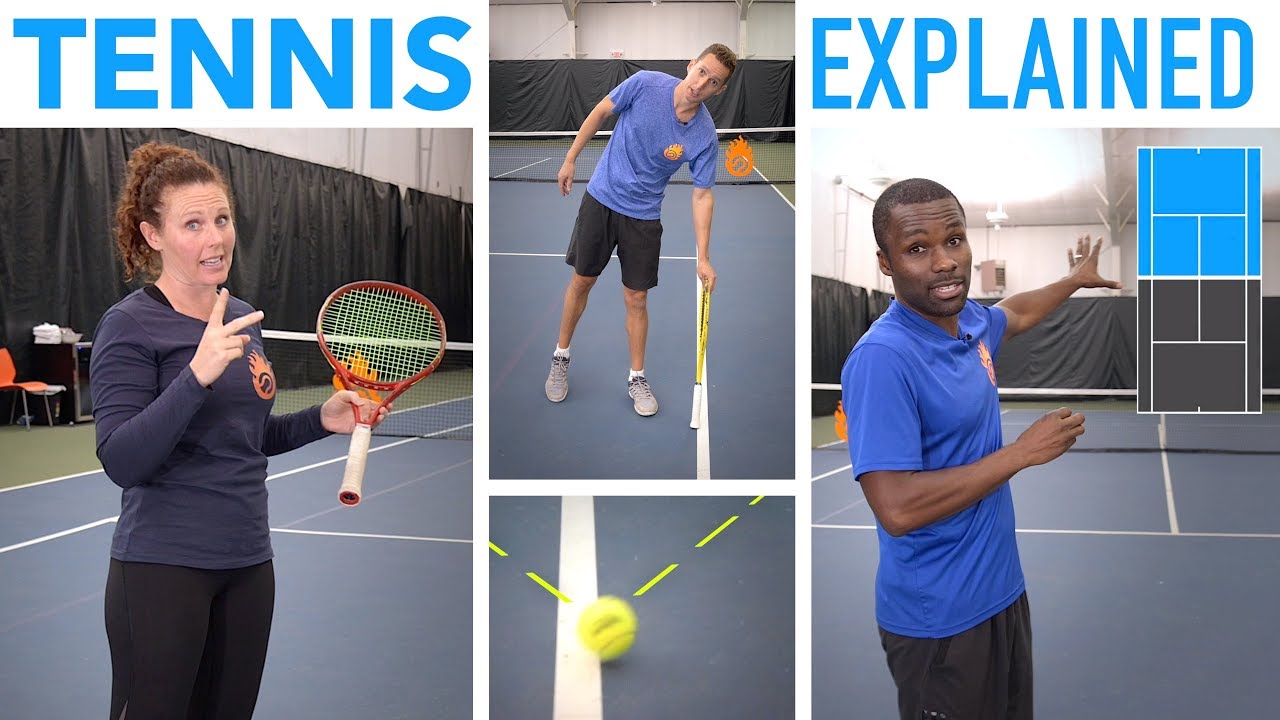
Tennis Rules Explained: Scoring, Gameplay & Key Terms (Beginner’s Guide)


Tennis Rules Explained: Scoring, Gameplay & Key Terms (Beginner’s Guide)

Tennis is one of the most popular individual sports in India, thanks to legends like Leander Paes, Sania Mirza, and Rohan Bopanna. Whether you are picking up a racket at your local club or watching Wimbledon on TV, understanding the unique tennis scores and rules is essential. This guide breaks down the basics for every beginner.

The Tennis Scoring System: Beyond Numbers

The most confusing part for newcomers is often the scoring. Tennis doesn’t use 1, 2, 3, or 4. Instead, it follows a traditional sequence:

  • 0 Points: “Love”
  • 1st Point: 15
  • 2nd Point: 30
  • 3rd Point: 40
  • 4th Point: Game

If both players reach 40-40, it is called a Deuce. To win from a deuce, a player must win two consecutive points: the “Advantage” point followed by the winning point. If the player with the advantage loses the next point, the score returns to deuce.

Sets and Matches

To win a match, you must win sets, and to win sets, you must win games. In most professional formats (and local tournaments in India):

  • A Set is won by the first player to win 6 games, with a lead of at least two games.
  • If the set score reaches 6-6, a Tie-break is played to determine the winner of the set.
  • Matches are usually “Best of Three” sets for women and most ATP events. In Grand Slams, men play “Best of Five.”

Gameplay: How the Game Starts

Every point starts with a Serve. The server stands behind the baseline and must hit the ball into the diagonally opposite service box. Players get two attempts (First Serve and Second Serve). If the ball hits the net but lands in the correct box, it is a “Let” and the serve is retaken.

Once the serve is in, the Rally begins. Players must hit the ball over the net and within the boundaries of the court. In singles, the narrower “inner” lines are used; in doubles, the wider “alleys” are included.

Key Tennis Terms to Know

  • Ace: A legal serve that the receiver does not touch.
  • Fault: A failed serve (hitting the net or landing outside the service box).
  • Double Fault: Missing both serves, resulting in a point for the opponent.
  • Volley: Hitting the ball before it touches the ground.
  • Break Point: A situation where the receiver is one point away from winning a game against the server.

Conclusion

Understanding tennis rules might seem daunting at first due to terms like “Love” and “Deuce,” but once you get the hang of the 15-30-40 rhythm, the game becomes incredibly addictive. Tennis is a fantastic way to stay fit and develop mental discipline. Now that you know the basics, grab a racket and head to the nearest court!

Frequently Asked Questions (FAQs)

1. Why is zero called “Love” in tennis?

While the exact origin is debated, many believe it comes from the French word “l’oeuf,” meaning “the egg,” representing the shape of a zero.

2. What happens if the ball hits the line?

In tennis, the lines are considered part of the court. If any part of the ball touches the white line, it is “In.”

3. How long does a typical tennis match last?

A standard best-of-three-sets match usually lasts between 90 minutes to 2 hours, though professional matches can go much longer.

4. Can I play doubles on a singles court?

Yes, but you must use the outer “doubles alleys” to ensure the court is wide enough for four players.

#1 Amazon new release for tennis book – Essential Tennis: Order your copy today and learn from my top 38 principles for tennis success!
————————————
Get your FREE membership to ET Academy and IMPROVE your game now:

Grab 15% off Diadem racquets, strings, bags and more using this discount link:
————————————
Follow this simple, free 7-Step checklist in your very next match for smarter, more effective play:
————————————
Looking for the perfect practice partner, match play partner, or qualified coach in your local area? PlayYourCourt will send them directly to the court of your choice! This is the greatest resource on the planet for passionate players looking to maximize their improvement:
————————————
MORE HELPFUL LESSONS:

Why Your Forehand is WEAK

Steal Roger’s Secret Strategy

World’s Most Annoying Tennis Opponent (and why they beat you)

Aim HERE For Easy Tennis Wins!

Stop Standing HERE In Tennis (why you’re losing)

Stop Beating YOURSELF At Tennis!

Hit WINNERS Like Djokovic

Bryan Brothers DON’T Cover This!

————————————

FOLLOW US ONLINE:

Facebook:

Instagram:

iTunes:

Google Play:

Twitter:

Stitcher:

————————————

OUR PRODUCTION GEAR:

Slow Motion Camera:

Analysis iPad:

Drone:

Wireless Mics:

Vlog Camera:

Ball Machine:

Camera Tripod:

Phone Tripod:

————————————

Essential Tennis is worldwide leader in digital tennis improvement resources. For over a decade their coaches have been publishing video, audio, and written instruction helping millions of passionate players improve at the game they love.

With content ranging from video lessons, to the first tennis podcast ever published on iTunes, to insightful long form emails giving insight into the improvement process Essential Tennis has the guidance you need to reach your goals and break through to the next level of play.

Their coaches also provide world class in person experiences including group clinics and their exclusive, Milwaukee VIP instructional package.

For more information on lessons, digital training programs, or anything else please send an email to support AT essentialtennis DOT com.

————————————

If you can read this you have an impressive scrolling game.

🙂