Why Tennis Players Grunt So Loudly: The Real Reason Explained
If you have ever watched a high-stakes match at Wimbledon or followed Indian tennis stars like Sania Mirza and Rohan Bopanna, you’ve likely noticed one thing: the loud, rhythmic grunting. To a casual observer, the screams might seem dramatic or even annoying, but in the professional world of tennis, grunting is more than just noise—it is a calculated physiological tool.
While legends like Monica Seles and Maria Sharapova famously brought the “grunt” into the spotlight, modern research suggests that these vocalisations serve a functional purpose. Let’s dive into the real reasons why tennis players grunt so loudly.
1. The Power of Forced Exhalation
The primary reason for grunting is related to breathing mechanics. When a player strikes the ball, they are performing an explosive movement. By grunting, players are essentially forcing a rapid exhalation. This action helps stabilise the core muscles. When the “inner core” is braced, it creates a solid foundation for the swing, allowing the player to transfer maximum power from their legs and torso into the racket. It is very similar to the “Kiai” shout used in martial arts like Karate.
2. Increased Ball Velocity
Scientific studies have backed the benefits of grunting. A study published in the Journal of Strength and Conditioning Research found that tennis players who grunt while hitting forehands and backhands increased their ball velocity by nearly 4% to 5%. In a professional match where every kilometre per hour counts, this “grunt-boost” can be the difference between a winner and a return.
3. Rhythm and Timing
Tennis is a sport of rhythm. Grunting helps players establish a breathing pattern. Exhaling (grunting) on the hit and inhaling during the recovery phase helps maintain oxygen flow to the muscles, reducing fatigue during long three-set or five-set matches. For many players, the sound serves as a personal internal timer for their strokes.
4. Psychological Distraction or Tactical Advantage?
There is a controversial side to the grunt. Some sports analysts argue that loud grunting masks the sound of the ball hitting the racket. Professional players use the “pop” sound of the ball to judge its spin and speed. A loud grunt can muffle this audio cue, giving the hitter a split-second advantage. While most players claim it is involuntary, the tactical benefit is undeniable.
The “Indian Perspective”: Tennis Culture in India
In India, where tennis academies are booming in cities like Bangalore, Hyderabad, and Delhi, coaches often teach young athletes to exhale audibly. It isn’t about being loud; it’s about ensuring the breath isn’t held. Holding one’s breath during a shot leads to muscle tension, which is a recipe for errors on the court.
Conclusion
While the loud shrieks may occasionally irritate the crowd, grunting is a deeply ingrained part of tennis biomechanics. It aids in core stabilisation, increases shot power, and helps maintain a consistent rhythm under pressure. So, the next time you hear a thunderous grunt during a Grand Slam, remember: it’s not just for show—it’s the sound of peak athletic performance.
Frequently Asked Questions (FAQs)
1. Is grunting in tennis against the rules?
Technically, no. However, the ATP and WTA have “hindrance” rules. If a player grunts excessively loud or long in a way that deliberately distracts the opponent, the empire can penalise them and award the point to the opponent.
2. Do all tennis players grunt?
No, not all. For example, Roger Federer was known for being a relatively “silent” player. However, the majority of modern baseline players use vocalisation to assist their power game.
3. Does grunting actually make you hit the ball harder?
Yes. Research indicates that the forced exhalation associated with grunting increases the force of muscle contraction, leading to higher ball speeds.
4. Is grunting involuntary or intentional?
For most professionals, it is a habit formed during childhood training. It becomes an involuntary part of their physical exertion, much like a weightlifter’s grunt.
5. Why is grunting louder in women’s tennis?
While often more commented upon in the women’s game, many male players (like Rafael Nadal or Novak Djokovic) grunt just as loudly. The pitch of the female voice may simply make the sound more noticeable to the audience.
🎥: @ATPTour @tennistv
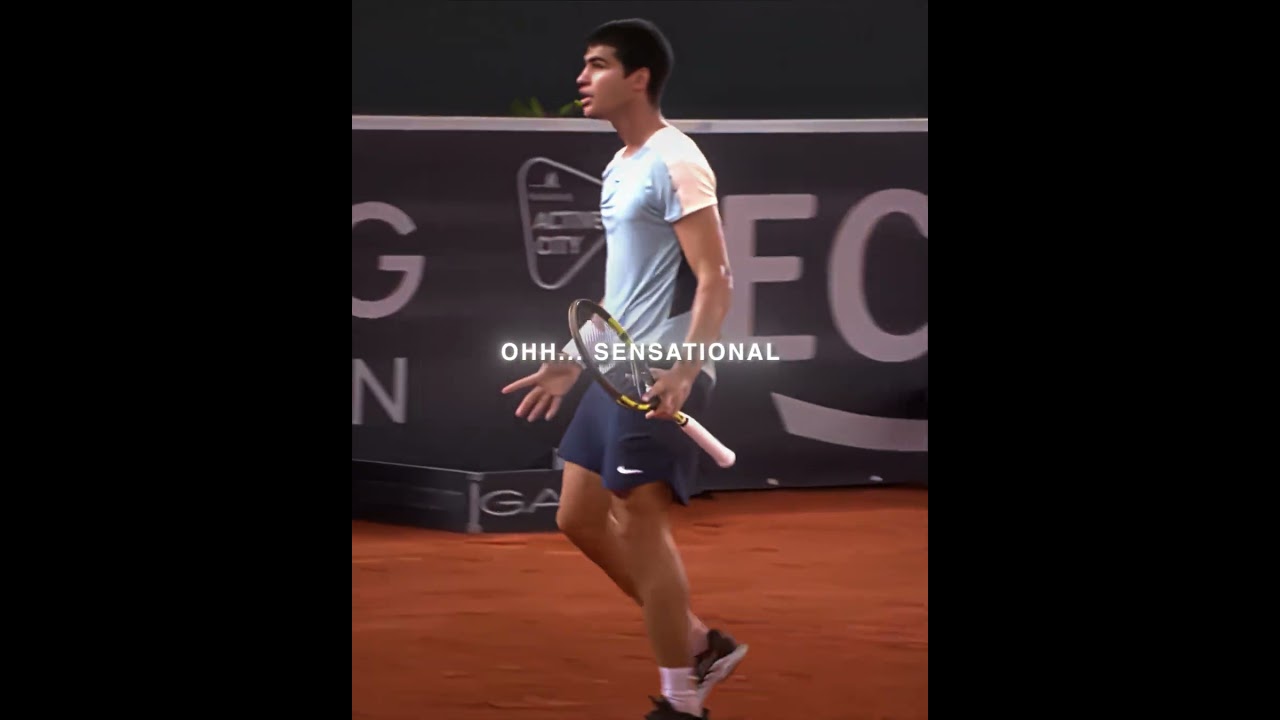
Some tennis matches get so intense that players can’t hold back their emotions, and their grunts become longer, louder, and more dramatic! 🎾😤 In this video, we’ve compiled the most epic moments where players extended their grunts during high-pressure points. Get ready for passion, power, and unforgettable sounds on the court!
#tennis #alcaraz #tennishighlights #djokovic #edit #zverev #monfils #grunt