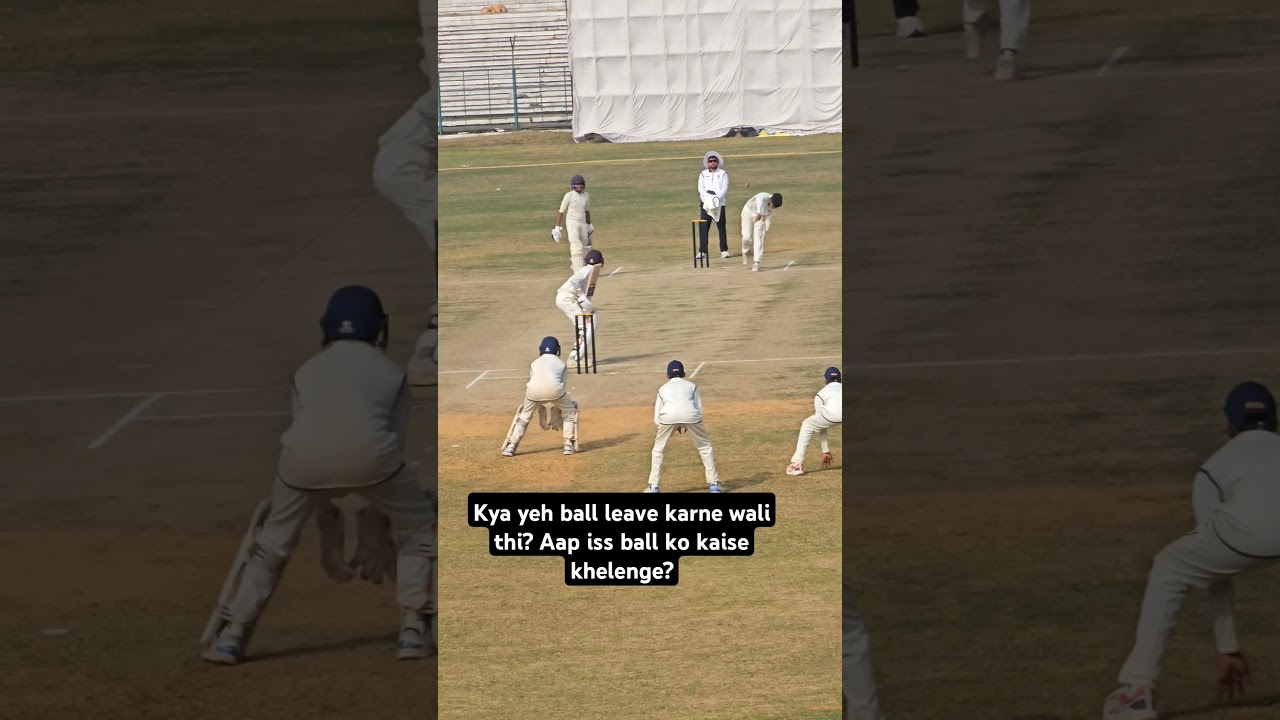
Mastering Shot Selection in Test Cricket 🏏 #CricketShorts #TeamIndia #CricketLover #Shorts


Mastering Shot Selection in Test Cricket: Small Adjustments for Big Scores

In the age of explosive T20 leagues and rapid-fire #CricketShorts, the essence of Test Cricket remains the ultimate challenge of a batsman’s temperament. Whether you are watching Team India battle it out in a World Test Championship (WTC) final or tracking a live cricket score on your phone, one thing stands out: Shot Selection.

For any #CricketLover, understanding why a player leaves a ball or chooses a defensive stroke over a boundary is the key to appreciating the “Red Ball” format. Let’s dive into the nuances of picking the right shot at the right time.

1. The Art of Leaving the Ball

In Test cricket, sometimes the best shot is the one you don’t play. Mastery over the “off-stump channel” is what separates legends like Sachin Tendulkar or Virat Kohli from the rest. Leaving the ball allows the batsman to tire out the bowler and wait for a delivery that is actually in the scoring zone. As the saying goes, “You can’t get out if you don’t play at the ball.”

2. Respecting the New Ball

When the cricket score reads 0/0 and the red cherry is swinging under overcast skies, aggression is often a recipe for disaster. Indian openers have historically succeeded when they play close to the body. Mastering the “V”—the area between mid-off and mid-on—is crucial during the first 15 overs. Avoid the flamboyant drive until the shine wears off.

3. Playing Late: The Secret to Success

Unlike white-ball cricket where you fetch the ball in front of your eyes, Test cricket requires you to play as late as possible—ideally right under your nose. This minimizes the risk of edges carrying to the slip cordon. If you follow viral #Shorts of batting drills, you’ll notice elite players focusing on their head position and late contact.

4. Capitalizing on the Loose Delivery

Patience doesn’t mean being stagnant. When the bowler errs in length—providing a half-volley or a short-pitch delivery—a master of shot selection pounces. The signature cover drive or the authoritative pull shot are essential tools, but only when the cricket score and match situation allow for that risk.

5. The Spin Challenge

On Indian sub-continent pitches, shot selection against spin is a different beast. Using your feet to reach the pitch of the ball or playing deep in the crease to use the “cut” shot is vital. For Team India, players like Rohit Sharma have mastered the art of blending caution with calculated aggression against quality spinners.

Conclusion

Test cricket is a game of chess played with a bat and ball. Mastering shot selection is not just about technique; it’s about discipline. While we all love the thrill of a 60-second #CricketShorts clip showing a flurry of boundaries, the true beauty lies in the grit of a five-day battle. Next time you check the cricket score and see a batsman on 100 off 250 balls, remember: every one of those shots was a conscious, calculated decision.


Frequently Asked Questions (FAQs)

1. Why is shot selection more important in Test cricket than T20?

In T20s, the priority is the strike rate, so batsmen take more risks. In Tests, there is no limit on overs, so staying at the crease is the priority. One wrong shot selection can end an innings that could have lasted hours.

2. How can I improve my shot selection?

Improvement comes through net practice and “shadow batting.” Focus on identifying the line and length early. Watching slow-motion tutorials or cricket shorts of professional players can also help you understand footwork better.

3. Who has the best shot selection in Team India?

While subjective, players like Virat Kohli and Cheteshwar Pujara are often cited for their exceptional discipline. In the current setup, Shubman Gill is also praised for his balanced approach in the Test format.

4. Does the pitch affect shot selection?

Absolutely. On a “green top” (grassy pitch), you avoid driving away from the body. On a “rank turner” (spinning pitch), you focus on using your feet or playing with the spin to avoid edges.

5. Where can I find real-time cricket scores and analysis?

You can follow official sports apps, news websites, or social media hashtags like #TeamIndia and #CricketLover for live updates and expert breakdowns of the game.


Mastering Classy Cricket Batting Shots in Turf: Best Batsman Skills 🏏🔥


Mastering Classy Cricket Batting Shots in Turf: Best Batsman Skills 🏏🔥

Cricket in India is not just a sport; it is an emotion. Whether you are playing in a stadium or at a local turf cricket ground, the desire to play like Virat Kohli or Babar Azam is universal. However, batting on turf is vastly different from playing on concrete or “gully” surfaces. It requires precision, timing, and a specific set of skills.

In this guide, we dive deep into how you can master classy cricket batting shots in turf environments and elevate your game to the next level.

The Fundamental Shift: Batting on Turf vs. Concrete

Unlike concrete, turf pitches offer variable bounce and turn. To master best batsman skills, you must first learn to respect the pitch. The ball might hold up in the surface or zip through after hitting the seam. Therefore, your “balance” becomes your most important asset. A stable base allows you to react to the slight deviations that a turf pitch offers.

1. The Elegant Straight Drive

Nothing says “classy” like a perfectly timed straight drive. On turf, the key is to lean into the shot. Ensure your front foot reaches the pitch of the ball and your head is directly over your knee. Avoid using excessive power; let the weight transfer and the swing of the bat do the work. Remember, on turf, timing beats force every single time.

2. Mastering the Cover Drive

The cover drive is often considered the most beautiful shot in cricket. To execute this on turf, you must judge the line early. If the ball is slightly wide of the off-stump, step out towards the delivery. Keep your bottom hand light to prevent the ball from flying into the air, ensuring it stays grounded through the infield.

3. The Art of the Backfoot Punch

Turf bowlers often use the “short of a length” delivery to exploit the bounce. The classy way to counter this is the backfoot punch. Shift your weight to the back foot, stand tall, and punch the ball through the covers or point. This shot requires exceptional wrist work and eye-hand coordination.

4. Playing the Spin: Using Your Feet

If you are playing on a traditional Indian turf, you will face spinners. To remain a classy batsman, you must learn to use your feet. Coming down the track allows you to smother the turn. If you can’t reach the pitch, stay deep in the crease and play the ball late. Mastery over the sweep shot is also a vital skill for any modern turf batsman.

Key Skills to Improve Your Batting

  • Soft Hands: Especially useful when defending on turf to ensure the ball doesn’t carry to the slips.
  • High Elbow: Maintaining a high leading elbow ensures the bat face stays vertical, leading to straighter shots.
  • Fitness & Agility: Turf matches often last longer; staying fit helps maintain focus during long innings.

Conclusion

Mastering classy cricket batting shots in a turf environment is a journey of patience and practice. It’s about merging the traditional aesthetics of the game with the technical requirements of a natural surface. By focusing on your balance, timing, and footwork, you can transform from a hard-hitter to a sophisticated batsman who commands respect on the field. So, grab your kit, head to the nearest turf, and start practicing those drives! 🏏🔥


Frequently Asked Questions (FAQs)

1. What is the best bat for turf cricket?

For turf cricket, a Grade 1 or Grade 2 English Willow bat is ideal. It provides the necessary “ping” and shock absorption required for a leather ball on a natural surface.

2. How can I improve my timing on turf pitches?

Practice “shadow batting” and spend more time in the nets facing bowlers rather than bowling machines. This helps your brain adjust to the natural variations in bounce.

3. Is the sweep shot safe to play on turf?

Yes, but it requires practice. On turf, you must ensure you are picking the length correctly. If the ball is too full or too short, the sweep can be risky.

4. Why is head position important in batting?

Your head is the heaviest part of your body. Where your head goes, your weight follows. Keeping your head still and leaning into the ball ensures perfect balance and shot execution.

5. How do I deal with fast bowlers on a green turf?

On a green turf (which offers more swing), try to play as close to your body as possible. Avoid reaching for the ball and wait for it to come to you.