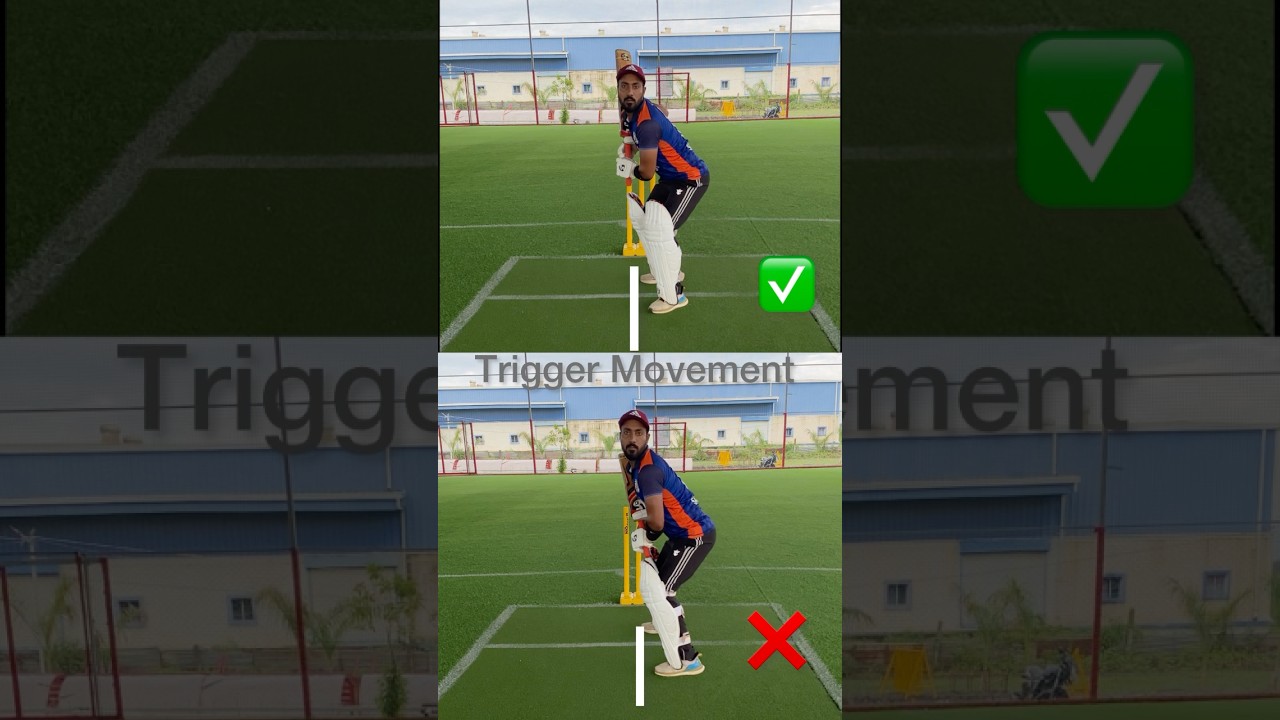
Master Cricket Batting: Perfect Trigger Movement Tips to Improve Your Timing 🏏
In the high-intensity world of Indian cricket, whether you are playing a local gully match or representing your club at the Maidan, timing is everything. You might have the strength of a powerhouse, but without the right rhythm, finding the boundary becomes a struggle. The secret weapon used by legends like Virat Kohli and Sachin Tendulkar to achieve flawless timing is the Trigger Movement.
What is a Trigger Movement in Cricket?
A trigger movement is a small, instinctive pre-delivery motion a batsman makes just before the bowler releases the ball. Think of it as “starting the engine” before you accelerate. It helps you transition from a static stance into an active state, allowing you to react faster to the line and length of the delivery.
Why Every Indian Batsman Needs a Trigger Movement
On Indian pitches, where the bounce can be unpredictable and spinners often dominate, a trigger movement provides several advantages:
- Overcomes Inertia: It is easier to move when you are already in motion than from a standstill.
- Balance Boost: It aligns your head and weight over your toes, ensuring you don’t get stuck on the crease.
- Improved Hand-Eye Coordination: By syncing your movement with the bowler’s load-up, your brain processes the ball’s trajectory more effectively.
Top Tips to Perfect Your Trigger Movement
1. Keep it Subtle and Small
The most common mistake young players make is over-triggering. A massive shuffle towards the off-side can leave your leg stump exposed. Keep your movement small—usually a slight press with the back foot or a tiny stride forward. The goal is “readiness,” not a full-blown stroke.
2. Perfect the Timing
Your trigger movement should be completed just as the bowler enters their delivery stride. If you finish your movement too early, you become static again. If you do it too late, you’ll be rushed and late on the shot. Practice in the nets to find that “sweet spot” of synchronization.
3. Head Stability is Key
Regardless of how your feet move, your head must remain perfectly still. If your head bobbles during the trigger, your vision of the ball will be blurred, leading to poor timing and edges. Eyes should stay level at all times.
4. Adapt to the Format
In T20 cricket, many Indian batsmen use a “shuffle” to get into a position to lap or scoop. However, for longer formats or facing swinging new balls, a simple back-and-across movement is often safer to maintain a solid defensive technique.
Common Mistakes to Avoid
Avoid “planting” your front foot too early. If you commit to a forward trigger before the ball is released, you will be a candidate for a plumb LBW if the ball is short or skiddy. Always stay “light” on your feet.
Conclusion
Mastering the trigger movement is a transformative step in any cricketer’s journey. It bridges the gap between being a “good” batsman and a “great” one. Remember, there is no one-size-fits-all approach; while Kohli prefers a slight press, others might prefer a back-and-across shuffle. Spend time in the nets, record your movements, and find what feels natural. With a perfected trigger, your timing will improve, and you’ll find yourself finding the gaps with ease.
Frequently Asked Questions (FAQs)
1. Is it mandatory to have a trigger movement?
No, it isn’t mandatory. Some greats like Brian Lara had very little movement. However, for modern cricket where bowlers are consistently hitting 140kmph+, a trigger movement helps significantly with reaction time.
2. Will a trigger movement make me vulnerable to LBW?
Only if you move too far across your stumps or if your front foot gets “locked.” If you keep your movement aligned towards the ball and maintain balance, it actually reduces the risk of LBW by putting you in a better position.
3. How can I practice this at home?
Shadow batting is the best way. Stand in front of a mirror, visualize a bowler’s run-up, and practice your small trigger movement. Focus on keeping your head still and your weight balanced.
4. Which trigger movement is best against fast bowlers?
A “back and across” movement is generally preferred against pace. It pushes your weight slightly back, giving you an extra millisecond to judge the bounce and react to short-pitched deliveries.