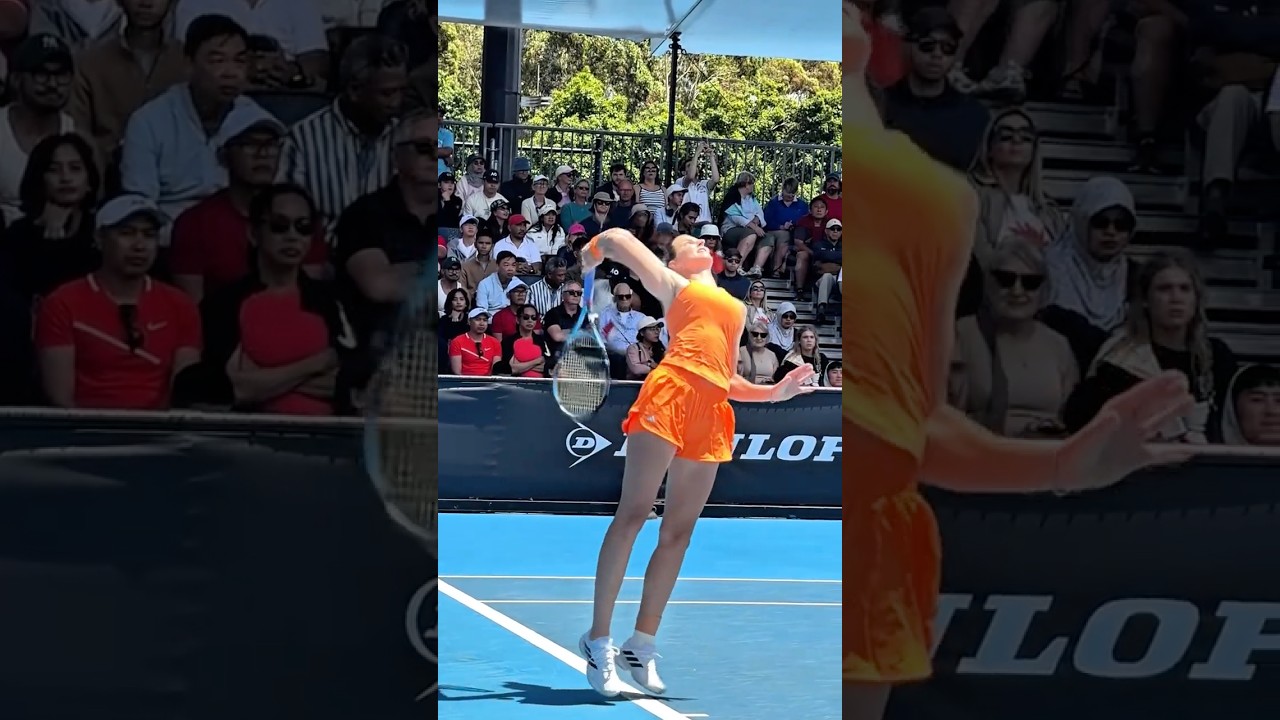
Karolina Pliskova Slow Motion Serve Analysis: Learn Pro Tennis Serve Technique


Karolina Pliskova Slow Motion Serve Analysis: Learn Pro Tennis Serve Technique

In the world of professional women’s tennis, few serves are as feared and respected as that of Czech star Karolina Pliskova. Known as the “Ace Queen,” Pliskova’s serve is a masterclass in efficiency, rhythm, and technical precision. For aspiring tennis players in India—where the sport is rapidly growing in popularity—studying a slow-motion analysis of her serve provides a blueprint for improving your own game.

The Foundation: Grip and Stance

The journey to a pro-level serve begins even before the ball is tossed. Pliskova utilizes a classic Continental Grip, which is essential for generating both power and spin. In slow-motion footage, you will notice her relaxed stance. She stays calm, keeping her weight slightly on the front foot before beginning the rocking motion that initiates her rhythm. For Indian club players, maintaining this “controlled calm” is the first step toward consistency.

The Toss and “Trophy Phase”

Watching Pliskova in slow motion reveals a perfectly vertical ball toss. She releases the ball at eye level, ensuring it reaches a peak height that allows her to fully extend her 186cm frame.

As the ball rises, she enters the “Trophy Position.” Her elbow is back, her knees are bent (creating a “leg drive”), and her left arm is pointing straight up. This phase is crucial because it stores potential energy. Most amateur players rush this step; Pliskova, however, demonstrates a brief “pause” that allows for perfect timing.

The Loading and Leg Drive

Pliskova uses a platform stance, meaning her feet stay relatively still during the serve. In slow motion, you can see her deep knee bend. This is where her power originates. By pushing off the ground, she transfers energy from her legs, through her core, and finally into the racket head. For Indian juniors looking to increase their serve speed, focusing on this leg drive—rather than just arm strength—is a game-changer.

The Contact Point and Pronation

The beauty of the Pliskova serve is the contact point. She hits the ball at the highest possible point of her reach. Slow-motion analysis shows her “snapping” her wrist through the ball—a technical move called pronation. This allows her to hit “down” on the ball, creating a sharp angle that makes the ball bounce high and wide, away from the opponent.

Final Follow-Through

A serve doesn’t end at contact. Pliskova’s follow-through is smooth, with her racket finishing across her body. This ensures her shoulder is protected from injury and that the momentum of the serve carries her forward into the court, ready for the next shot.

Conclusion

The Karolina Pliskova slow-motion serve analysis highlights that power isn’t about brute force; it’s about timing and technique. By breaking down her serve into the toss, trophy position, leg drive, and pronation, Indian tennis enthusiasts can refine their own mechanics. Whether you are playing on the clay courts of Kolkata or the hard courts of Mumbai, adopting these professional cues will undoubtedly help you hold serve with more confidence.


Frequently Asked Questions (FAQs)

1. Why is Karolina Pliskova’s serve considered one of the best?

Her serve is highly effective due to its consistency and disguise. She uses the same toss for flat, slice, and kick serves, making it incredibly difficult for opponents to read her direction.

2. What grip does Pliskova use for her serve?

Like almost all professionals, she uses the Continental Grip (often referred to as the “Hammer Grip”). This grip is essential for achieving the wrist snap (pronation) required for power and spin.

3. Can amateur players learn from her platform stance?

Yes. Many players find the platform stance (feet apart) more stable than the pinpoint stance (sliding the back foot forward). It provides a solid base and helps in maintaining balance throughout the service motion.

4. How can I increase my serve speed like Pliskova?

Focus on your racket head speed and leg drive. Slow-motion analysis shows that the power comes from the ground up. Don’t try to “muscle” the ball; instead, stay relaxed and use your whole body.

5. Where can I watch slow-motion videos of her serve?

You can find numerous technical breakdowns on YouTube or official ATP/WTA platforms. Searching for “Pliskova Serve Slow Motion Analysis” will provide various angles to study.

4K Karolina Pliskova Serve Slow Motion Court Level Front Side View
World No. 1 in women’s singles by the WTA.
Two-time Grand Slam finalist at the 2016 US Open and at 2021 Wimbledon
Unbelievable Longest Rally in Tennis History! 😱🔥


The Unbelievable Longest Rally in Tennis History: A Test of Pure Will! 😱🔥

Tennis is often a game of explosive power, lightning-fast aces, and quick volleys. However, every now and then, the sport delivers a moment of sheer endurance that leaves fans breathless. If you think a 20-shot rally between Djokovic and Nadal is long, wait until you hear about the longest rally in professional tennis history.

For Indian tennis fans who grew up watching the grit of Leander Paes or the baseline consistency of Somdev Devvarman, the concept of “never giving up” is familiar. But this particular record takes “never giving up” to a whole new, almost unbelievable level.

The 29-Minute Point: Nelson vs. Hepburn (1984)

The record for the longest rally in a professional match occurred in 1984 at a tournament in Richmond, Virginia. The players were Vicki Nelson and Jean Hepburn. While they weren’t global superstars, they etched their names into the history books by playing a single point that lasted—believe it or not—29 minutes.

During this marathon point, the ball crossed the net an incredible 643 times. To put that in perspective, most modern professional points end within 4 to 8 shots. This wasn’t just tennis; it was a psychological war of attrition where neither player was willing to blink first.

How Did It Happen?

The match was played on a slow surface, and both players adopted a “moonball” strategy—hitting the ball high and deep to avoid making unforced errors. As the rally crossed the 500-shot mark, the crowd reportedly fell into a stunned silence, realizing they were witnessing a statistical anomaly. Nelson eventually won the point when Hepburn hit a shot long.

The match itself lasted 6 hours and 22 minutes, which remains the longest women’s match played in a single day.

Why This Record Might Never Be Broken

In today’s era of modern tennis, several factors make a 643-shot rally nearly impossible:

  • Power & Technology: Modern rackets and strings allow players to generate massive spin and pace, making it harder to keep the ball in play for hundreds of shots.
  • Aggressive Coaching: Players are now trained to “finish the point” rather than wait for an error.
  • Physical Fatigue: The aerobic intensity of today’s game is much higher; a player would collapse from exhaustion before hitting 600 high-intensity shots.

Conclusion

The 29-minute rally between Nelson and Hepburn remains one of the most unbelievable moments in tennis history. It serves as a reminder that while talent and speed are essential, mental toughness and the refusal to lose are the true foundations of the sport. Whether you are a casual fan in Mumbai or an aspiring player in Delhi, this record stands as the ultimate benchmark for endurance.


Frequently Asked Questions (FAQs)

1. What is the longest rally in men’s tennis?

While the 643-shot rally is the pro record, the longest rally in a competitive men’s pro match is often cited as a 71-shot rally between Björn Borg and Guillermo Vilas (1978). However, amateur records exist for much longer durations.

2. How long did the longest tennis match ever last?

The longest match in history was between John Isner and Nicolas Mahut at Wimbledon 2010. It lasted 11 hours and 5 minutes, played over three days.

3. What does “moonballing” mean in tennis?

Moonballing is a defensive tactic where a player hits the ball with high topspin and a high arc, making it difficult for the opponent to attack while minimizing the chance of hitting the net.

4. Has any Indian player been part of a record-breaking rally?

While no Indian holds the world record for the longest rally, Indian players like Somdev Devvarman were famous on the ATP tour for their incredible fitness and ability to engage in grueling 30+ shot baseline exchanges.

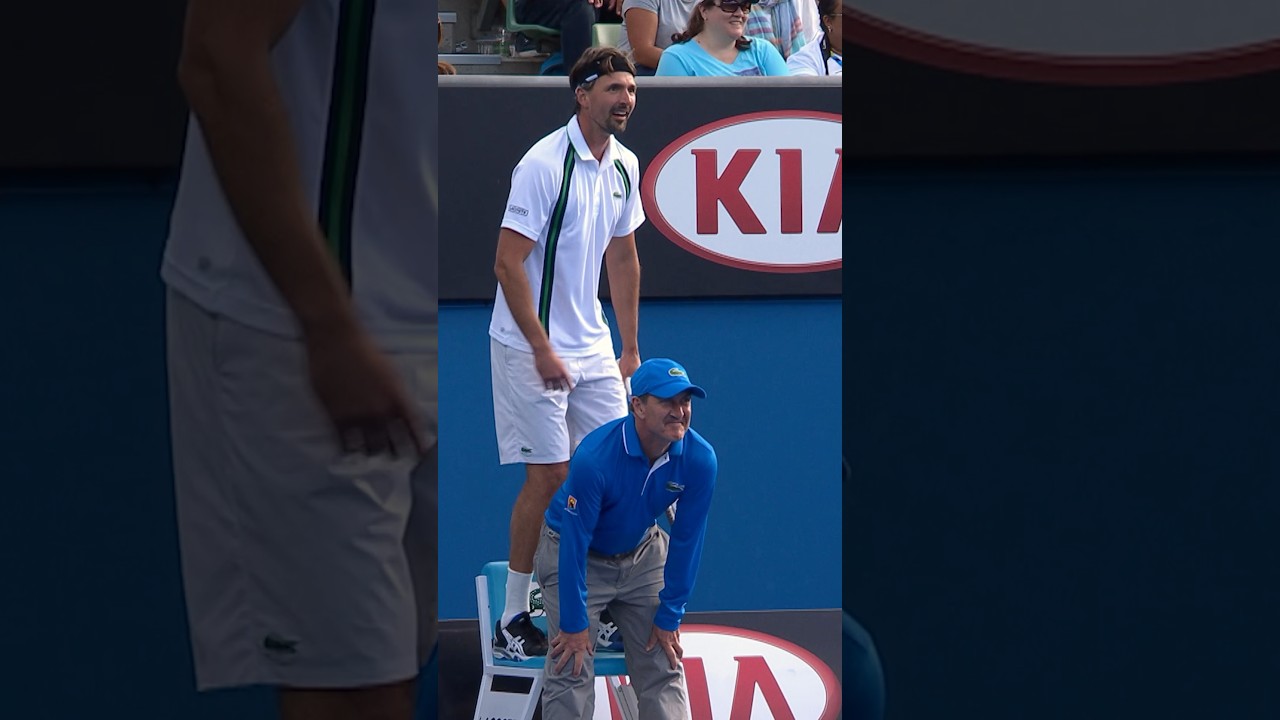
It’s always an advantage getting a better view of the ball. In this Australian Open exhibition match, Goran Ivanisevic gets a view from the line judges chair! #Shorts

Subscribe to keep up with the latest from the Australian Open:

Welcome to the official Australian Open TV YouTube channel. The Australian Open is the first Grand Slam of the year and takes place in Melbourne. Novak Djokovic is the men’s singles reigning champion and Aryna Sabalenka is the women’s singles reigning champion. The tournament takes place on 25 hard courts, including Rod Laver Arena, Margaret Court Arena and John Cain Arena. Look out for highlights, press conferences, memorable moments and much more!

Facebook:
Twitter:
Instagram:
TikTok:
Website:

Follow breaking news, updates, highlights and more on:
Nine (Australia):
Eurosport (Europe):
ESPN (Americas):
beIN Sports (South East Asia, MENA):
And visit: for all our broadcast partners worldwide

Mansour Bahrami’s Magical Tennis Skills: The Ultimate Trick Shot Master!


Mansour Bahrami’s Magical Tennis Skills: The Ultimate Trick Shot Master!

In a sport often defined by intense discipline and robotic precision, Mansour Bahrami stands out as a breath of fresh air. Known globally as the “Court Jester” or the “Magician,” Bahrami has turned the tennis court into his personal theater. For tennis enthusiasts in India, who grew up watching the elegant touch of stars like Leander Paes and Mahesh Bhupathi, Bahrami’s style of play resonates deeply.

The Man Behind the Magic

Mansour Bahrami’s journey is as incredible as his trick shots. Born in Iran, he faced years of being unable to play tennis due to political restrictions in his home country. He eventually moved to France as a refugee with nothing but his passion. This hardship gave him a unique perspective on the game: for Bahrami, tennis isn’t just a competition; it’s a celebration of life.

Unbelievable Skills: Beyond the Rules of Physics

What makes Mansour Bahrami the ultimate trick shot master? It is his ability to invent shots that shouldn’t technically be possible. Here are a few hallmarks of his magical skills:

  • The Fake Smash: Bahrami is famous for leaping high for a powerful overhead smash, only to gently drop the ball over the net with a soft touch at the last millisecond.
  • Underarm Serves with a Twist: Long before it became a tactical weapon for modern players, Bahrami used the underarm serve to confuse opponents and entertain the crowd.
  • The “Invisible” Recovery: He can hit a winning shot while sitting on a chair, lying on the ground, or even while holding five tennis balls in one hand.
  • Backspin Mastery: Bahrami can hit the ball with so much backspin that it bounces on the opponent’s side and then hops back over the net to his own side.

Why Indian Tennis Fans Adore Him

India has a rich history of “touch” tennis. While the modern game is dominated by power and baseline grinding, Indian fans have always appreciated the art of the volley and the clever drop shot. Seeing Mansour Bahrami at exhibition matches, often playing alongside legends like Vijay Armitraj, has solidified his status as a cult hero in the Indian subcontinent. His charisma, sense of humour, and ability to connect with the audience transcend the scoreline.

The Spirit of Entertainment

While Bahrami did reach a French Open doubles final in 1989, his legacy isn’t measured in Grand Slam trophies. Instead, it is measured in the smiles and laughter of the thousands who watch him play on the ATP Champions Tour. He reminds us that at its core, tennis is a game meant to be enjoyed. He doesn’t just play tennis; he performs it.

Conclusion

Mansour Bahrami is more than just a tennis player; he is a living legend who proves that creativity has no limits. His magical skills and trick shots have inspired generations of players to experiment and find joy in the sport. Whether he is serving underarm or hitting a lob through his legs, the ultimate trick shot master continues to prove that magic is very much real on the tennis court.

Frequently Asked Questions (FAQs)

1. Did Mansour Bahrami ever win a Grand Slam?
While he never won a Grand Slam title, he reached the Men’s Doubles final at the French Open in 1989, which remains a career highlight.

2. Is Mansour Bahrami still playing tennis?
Yes, he is a regular fixture in the “Invitational” and “Legends” events at major tournaments like Wimbledon and the French Open.

3. Why is he called the “Court Jester”?
He earned this nickname because of his humorous antics, funny facial expressions, and his tendency to prioritize entertaining the crowd over winning the point.

4. Can I learn Bahrami’s trick shots?
While some shots require years of professional feel and “touch,” basics like the underarm serve or the fake smash can be practiced by any club player looking to add some fun to their game.

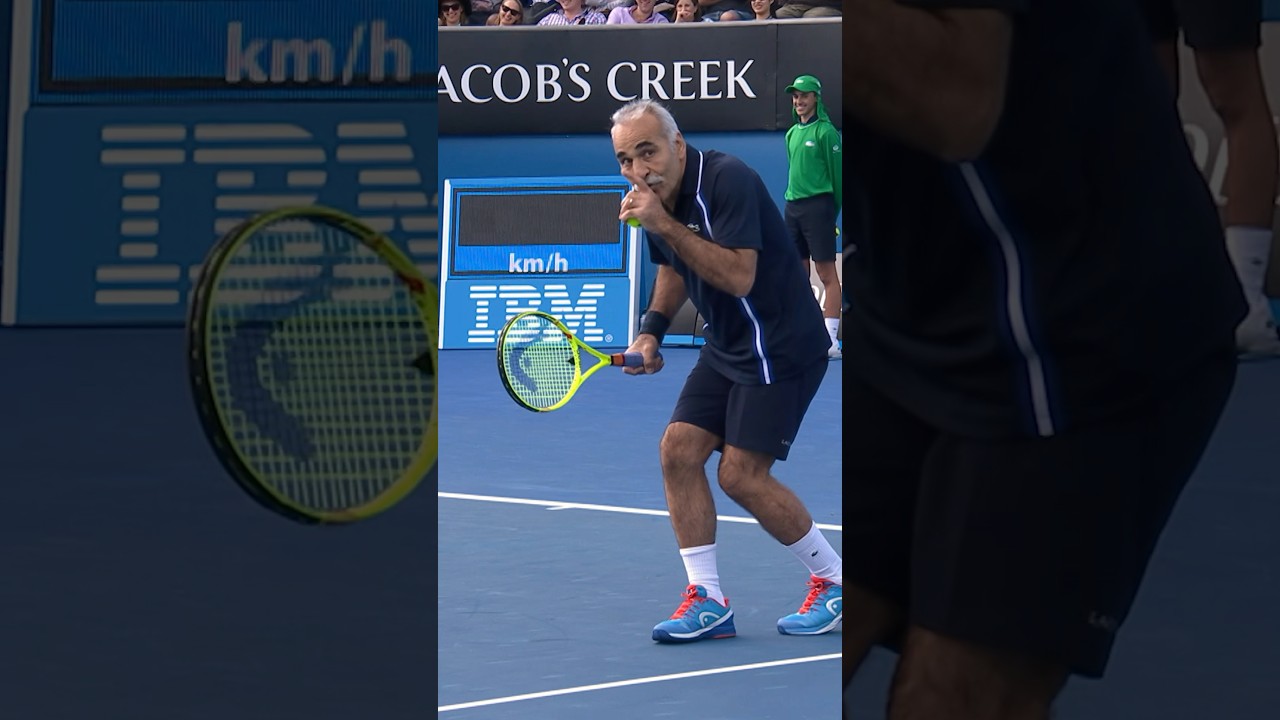
Mansour Bahrami creeps towards the service line in order to catch Mark Woodforde and Pat Cash out in an exhibition match at the Australian Open 2019. #Shorts

Subscribe to keep up with the latest from the Australian Open:

Welcome to the official Australian Open TV YouTube channel. The Australian Open is the first Grand Slam of the year and takes place in Melbourne. Novak Djokovic is the men’s singles reigning champion and Aryna Sabalenka is the women’s singles reigning champion. The tournament takes place on 25 hard courts, including Rod Laver Arena, Margaret Court Arena and John Cain Arena. Look out for highlights, press conferences, memorable moments and much more!

Facebook:
Twitter:
Instagram:
TikTok:
Website:

Follow breaking news, updates, highlights and more on:
Nine (Australia):
Eurosport (Europe):
ESPN (Americas):
beIN Sports (South East Asia, MENA):
And visit: for all our broadcast partners worldwide

Who is the King of Aces? The Biggest Serve in Men’s Tennis Right Now 🚀


<header>
    <h1>Who is the King of Aces? The Biggest Serve in Men's Tennis Right Now 🚀</h1>
</header>

<section>
    <p>In the high-octane world of professional tennis, the "Ace" remains the ultimate weapon. It is the only shot in the game that gives a player a point without the opponent even touching the ball. For Indian tennis fans who have grown up watching the precision of Leander Paes or the power of Rohan Bopanna, the fascination with the "Big Serve" is eternal.</p>

    <p>But as we move into the 2024-25 season, the era of the "Serve Bots" is evolving. Gone are the days when Isner and Karlovic dominated purely through height. Today, the <strong>King of Aces</strong> needs more than just stature; they need tactical brilliance and frightening consistency.</p>
</section>

<section>
    <h2>The Reigning Monarch: Hubert Hurkacz</h2>
    <p>If you are looking for the statistical <strong>King of Aces</strong> right now, look no further than Poland’s <strong>Hubert Hurkacz</strong>. In 2024, "Hubi" consistently topped the ATP charts for the most aces served in a single season, often crossing the 1,000-ace mark.</p>
    <p>What makes Hurkacz dangerous isn't just the 220 km/h speed. It is his ability to hit all four corners of the service box with the same ball toss. For a returner, reading his serve is like trying to solve a Rubik’s cube in under a second. In India, where many young players struggle with service speed, Hurkacz’s rhythmic motion is often cited by coaches as a textbook example of efficiency.</p>
</section>

<section>
    <h2>The Speed Demon: Giovanni Mpetshi Perricard</h2>
    <p>While Hurkacz is the king of volume, 21-year-old Frenchman <strong>Giovanni Mpetshi Perricard</strong> is the new king of raw power. Standing at 6'8", Perricard has taken the tennis world by storm, recently winning the Basel Open while barely dropping a service game.</p>
    <p>Perricard is currently the biggest server in Men’s tennis when it comes to "unreturnable" factors. He frequently clocks second serves at speeds (210 km/h) that most players can't even reach on their first serve. He is the modern spiritual successor to John Isner, and he is a name every tennis enthusiast in India should track.</p>
</section>

<section>
    <h2>The All-Rounders: Nick Kyrgios & Ben Shelton</h2>
    <p>We cannot discuss the biggest serves without mentioning <strong>Nick Kyrgios</strong> and <strong>Ben Shelton</strong>. Although Kyrgios has been sidelined by injuries, his "slap" serve remains one of the most naturally gifted shots in history. </p>
    <p>American youngster Ben Shelton, on the other hand, brings left-handed variety. His serve doesn't just go fast; it "kicks" and "curls" away from the opponent. At the US Open, he famously clocked a 149 mph (240 km/h) serve, proving that the future of the ace is in good hands.</p>
</section>

<section>
    <h2>Why the Serve Matters for Indian Tennis</h2>
    <p>In India, tennis is traditionally played on slower hard courts or clay, emphasizing baseline rallies. However, as Indian players like Sumit Nagal climb the ATP rankings, the necessity of a "free point" (the Ace) has become clear. Developing a big serve is no longer an option; it is a survival tool in the modern power game.</p>
</section>

<section>
    <h2>Conclusion</h2>
    <p>So, who is the King of Aces? While **Hubert Hurkacz** holds the crown for consistency and total numbers, **Giovanni Mpetshi Perricard** is the new heir-apparent bringing terrifying speed to the court. Whether you prefer the surgical precision of Hurkacz or the brute force of Shelton, there is no denying that the "Big Serve" remains the most exciting spectacle in men's tennis today.</p>
</section>

<hr>

<section>
    <h2>Frequently Asked Questions (FAQs)</h2>

    <h3>1. Who has hit the most aces in tennis history?</h3>
    <p>Ivo Karlovic and John Isner hold the records for the most career aces, with Isner leading the official ATP tally at over 14,000 aces.</p>

    <h3>2. What is the fastest serve ever recorded?</h3>
    <p>The fastest serve ever recorded is 263.4 km/h (163.7 mph) by Sam Groth in 2012, though it occurred at a Challenger event. The fastest ATP-recognized serve is by John Isner at 253 km/h.</p>

    <h3>3. Who is the best Indian server right now?</h3>
    <p>In the doubles circuit, **Rohan Bopanna** remains one of the most formidable servers in the world. In singles, players like Ramkumar Ramanathan are known for their big serve-and-volley style.</p>

    <h3>4. Can a short player be a 'King of Aces'?</h3>
    <p>While height helps, players like Pete Sampras (6'1") and Nick Kyrgios (6'4") have proven that timing, shoulder flexibility, and disguise are more important than just being tall.</p>
</section>

<footer>
    <p><em>Stay tuned for more updates on the ATP Tour and tennis news in India!</em></p>
</footer>

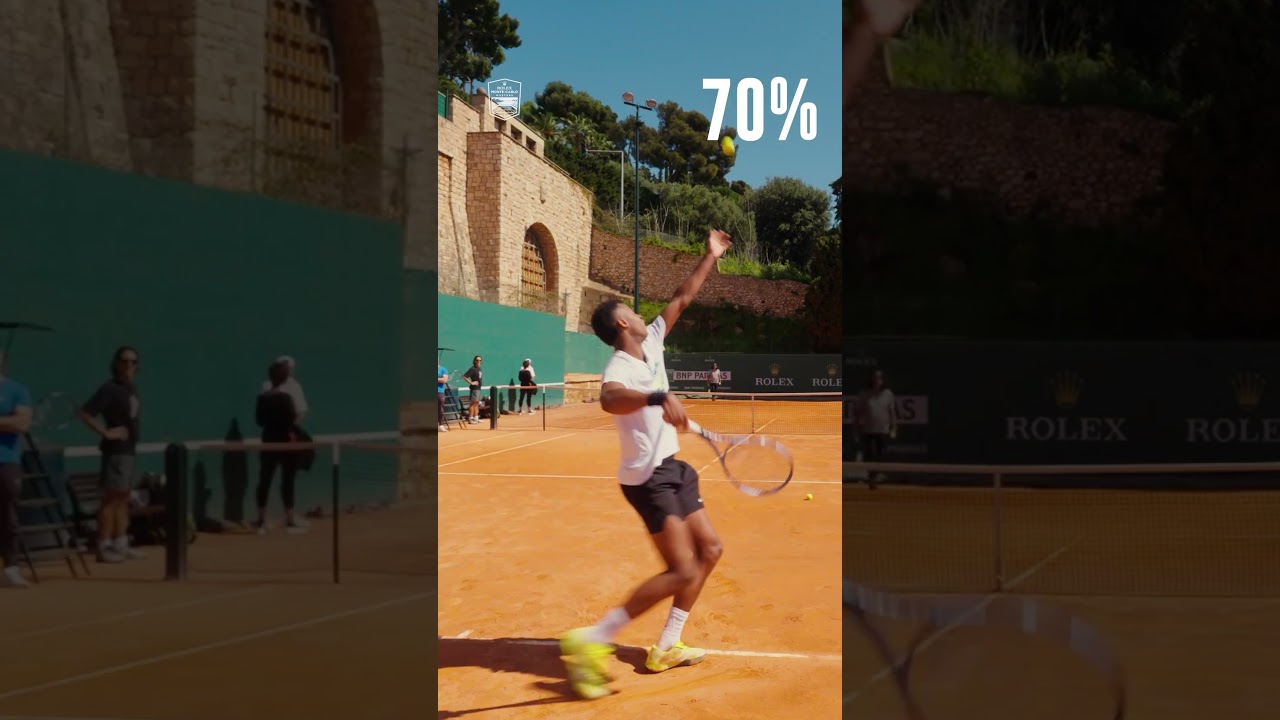
Which % of Mpetshi Perricard’s serve could you return?

SUBSCRIBE to our channel for the best ATP tennis videos and tennis highlights:

Watch official ATP tennis streams from every tournament:

Tennis TV is the OFFICIAL live streaming service of the ATP Tour.

Tennis TV features live streaming and video on demand of ATP tennis matches in full on PC, Mac, mobile & tablet apps on iOS & Android. Download the app to stream on your device:

Plus Tennis TV is also available to stream tennis on your TV on Apple TV, Roku, Amazon Fire TV, Samsung Smart TV, LG Smart TV, Android TV, Xbox One as well as AirPlay and Chromecast.

Get help on Tennis TV with our virtual assistant:

Buy Tennis TV merchandise in our store:

Watch the ATP Tour via your local TV broadcaster:

To enquire about licensing ATP Tour footage contact IMG Replay:

#tennis #tennistv #sports #shorts

Emma Raducanu’s STUNNING Win: Highlights & Full Match Analysis! 🎾🇮🇳


Emma Raducanu’s STUNNING Win: Highlights & Full Match Analysis! 🎾🇮🇳

The tennis world is once again buzzing as Emma Raducanu delivers a masterclass on the court, reminding fans why she is one of the most exciting talents in the sport today. For the growing community of tennis enthusiasts in India, Raducanu’s latest victory isn’t just a win on the scoreboard; it is a testament to resilience, technical evolution, and the classic “never-say-die” spirit that resonates deeply with Indian sports fans.

The Match Breakdown: A Tactical Masterclass

From the opening serve, Raducanu demonstrated a level of aggression that kept her opponent on the back foot. Unlike her previous defensive baseline rallies, this match saw a more proactive Emma. She utilized her cross-court backhand to open up the angles, a move that left commentators and fans in awe.

Key highlights of the match included:

  • First Serve Precision: Raducanu maintained a high first-serve percentage, stifling any chance for an early break.
  • Net Play: Her transition from the baseline to the net was seamless, showing a newfound confidence in her volleying skills.
  • Mental Fortitude: Despite a mid-set pressure point, she remained composed, a trait that Indian fans often compare to the calmness of cricket legends.

Why This Win Matters to Indian Tennis Fans

Tennis in India has seen a massive surge in viewership, with fans following Grand Slams and WTA events with fervor. Emma Raducanu, with her multicultural background, has always enjoyed a dedicated following in India. Her ability to bounce back from injuries and setbacks serves as an inspiration to young athletes in cities like Mumbai, Delhi, and Bangalore who are picking up rackets for the first time.

The “Emma Raducanu stunning win” trended across social media platforms in India, with local fans praising her tactical shifts. Her performance proves that she is moving beyond the “one-hit-wonder” labels and establishing herself as a consistent threat on the tour.

Full Match Analysis: Technical Superiority

Analyzing the stats, Raducanu’s return game was the standout feature. She punished second serves, taking the ball early and redirecting pace with clinical accuracy. Her movement across the court looked more fluid than ever, suggesting that her off-season fitness regime is paying massive dividends. For the Indian audience watching late-night broadcasts, every rally was a lesson in modern tennis geometry.

Conclusion

Emma Raducanu’s stunning win is a celebration of hard work and strategic brilliance. For Indian supporters, watching her regain her top-tier form is a highlight of the tennis season. As she continues her journey, her impact on the global stage—and her popularity in India—only continues to grow. This match wasn’t just about the points; it was about the statement that Emma is back and ready to dominate.


Frequently Asked Questions (FAQs)

1. Where can I watch Emma Raducanu’s match highlights in India?

Indian fans can catch highlights on platforms like Sony LIV, which often broadcasts WTA events, or on the official WTA YouTube channel and social media handles.

2. Has Emma Raducanu ever played in India?

While she hasn’t played a major WTA tournament in India recently, there is a large demand from the Indian tennis community to see her participate in future events like the Chennai Open.

3. What was the turning point in Raducanu’s latest stunning victory?

The turning point was during the second set when she saved three break points with consecutive aces, shifting the momentum entirely in her favor.

4. Is Emma Raducanu popular in India?

Yes, she has a significant fan base in India due to her historic US Open win and her relatable journey of overcoming adversity in professional sports.

5. What is Emma Raducanu’s current ranking?

Her ranking fluctuates based on recent tournament performances. Following this stunning win, she is projected to climb several spots in the WTA live rankings.

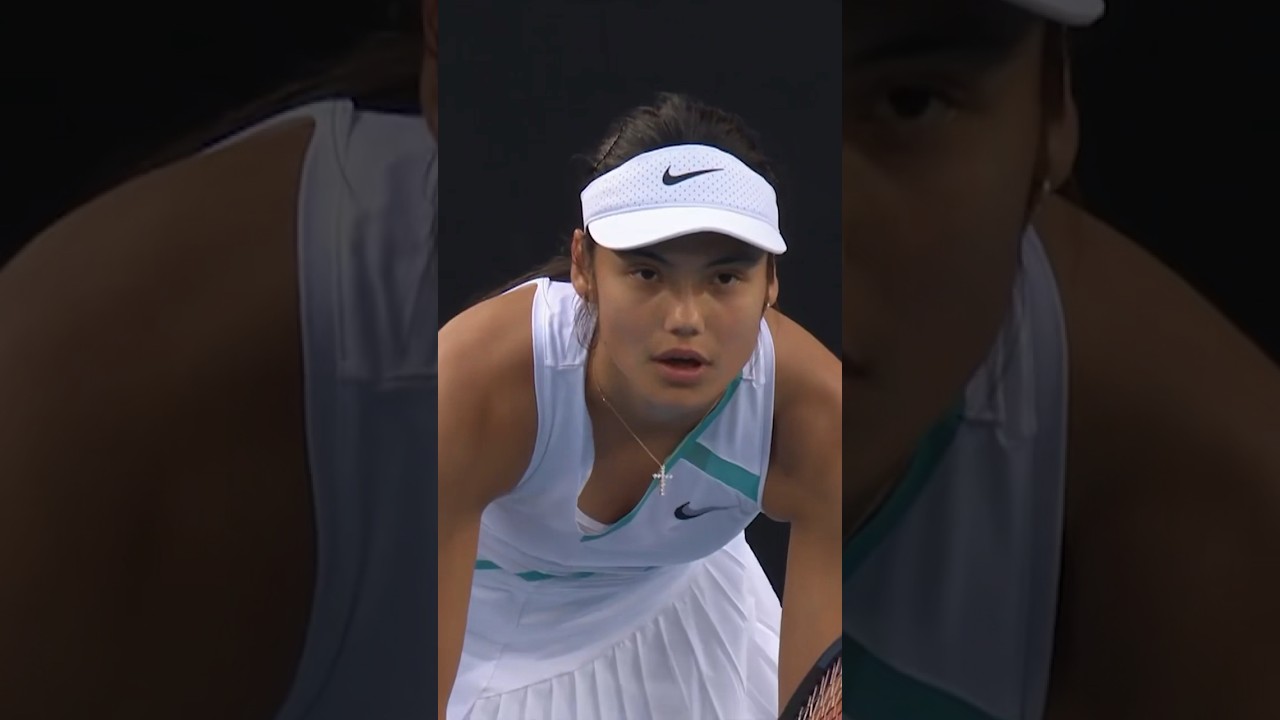
Emma Raducanu wins an amazing point against Danka Kovinic in the second round of the Australian Open 2022.

Subscribe to keep up with the latest from the Australian Open:

Welcome to the official Australian Open TV YouTube channel. The Australian Open 2025 main draw runs from 12-26 January in Melbourne. The tournament takes place for the 113th time and is the first Grand Slam of the year. Jannik Sinner is the men’s singles reigning champion and Aryna Sabalenka is the women’s singles reigning champion. The tournament takes place on 25 hard courts, including Rod Laver Arena, Margaret Court Arena and John Cain Arena. Look out for highlights, press conferences, memorable moments and much more!

Facebook:
X:
Instagram:
TikTok:
Website:

Follow breaking news, updates, highlights and more on:
Nine (Australia):
Eurosport (Europe):
ESPN (Americas):
beIN Sports (South East Asia, MENA):
And visit: for all our broadcast partners worldwide

Tennis Rules Explained: Scoring, Gameplay & Key Terms (Beginner’s Guide)


Tennis Rules Explained: Scoring, Gameplay & Key Terms (Beginner’s Guide)

Tennis is one of the most popular individual sports in India, thanks to legends like Leander Paes, Sania Mirza, and Rohan Bopanna. Whether you are picking up a racket at your local club or watching Wimbledon on TV, understanding the unique tennis scores and rules is essential. This guide breaks down the basics for every beginner.

The Tennis Scoring System: Beyond Numbers

The most confusing part for newcomers is often the scoring. Tennis doesn’t use 1, 2, 3, or 4. Instead, it follows a traditional sequence:

  • 0 Points: “Love”
  • 1st Point: 15
  • 2nd Point: 30
  • 3rd Point: 40
  • 4th Point: Game

If both players reach 40-40, it is called a Deuce. To win from a deuce, a player must win two consecutive points: the “Advantage” point followed by the winning point. If the player with the advantage loses the next point, the score returns to deuce.

Sets and Matches

To win a match, you must win sets, and to win sets, you must win games. In most professional formats (and local tournaments in India):

  • A Set is won by the first player to win 6 games, with a lead of at least two games.
  • If the set score reaches 6-6, a Tie-break is played to determine the winner of the set.
  • Matches are usually “Best of Three” sets for women and most ATP events. In Grand Slams, men play “Best of Five.”

Gameplay: How the Game Starts

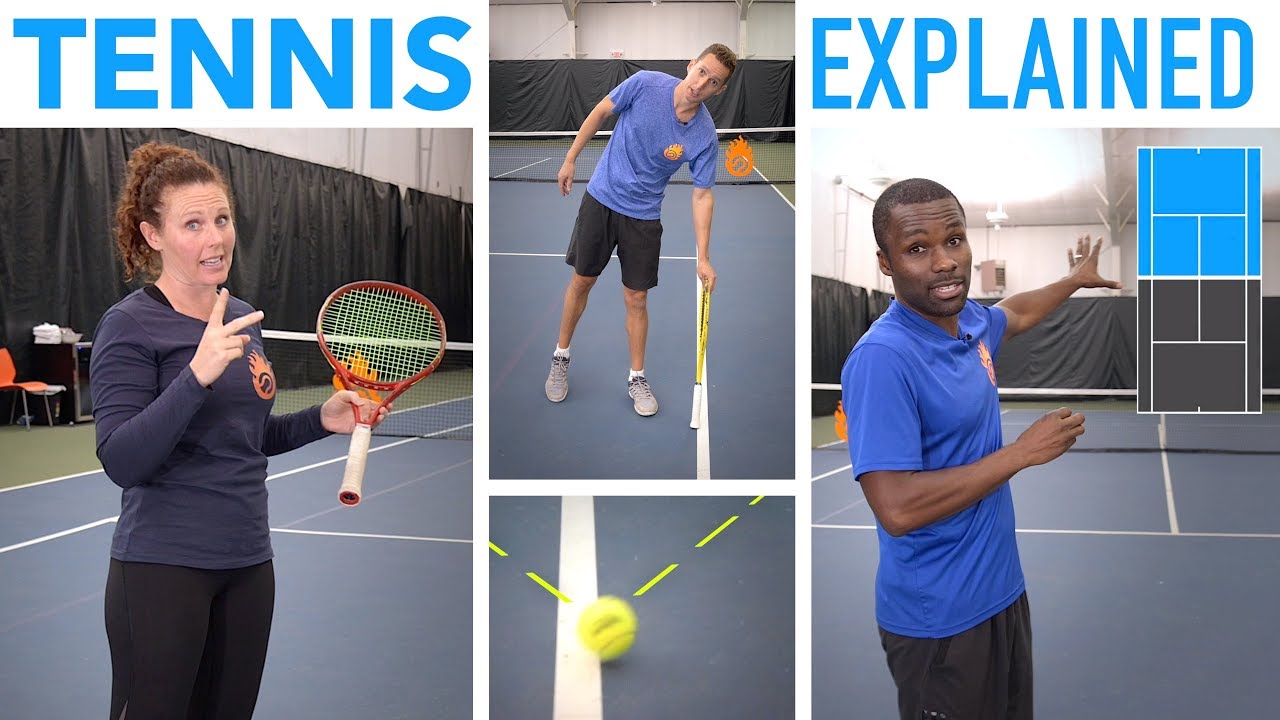
Every point starts with a Serve. The server stands behind the baseline and must hit the ball into the diagonally opposite service box. Players get two attempts (First Serve and Second Serve). If the ball hits the net but lands in the correct box, it is a “Let” and the serve is retaken.

Once the serve is in, the Rally begins. Players must hit the ball over the net and within the boundaries of the court. In singles, the narrower “inner” lines are used; in doubles, the wider “alleys” are included.

Key Tennis Terms to Know

  • Ace: A legal serve that the receiver does not touch.
  • Fault: A failed serve (hitting the net or landing outside the service box).
  • Double Fault: Missing both serves, resulting in a point for the opponent.
  • Volley: Hitting the ball before it touches the ground.
  • Break Point: A situation where the receiver is one point away from winning a game against the server.

Conclusion

Understanding tennis rules might seem daunting at first due to terms like “Love” and “Deuce,” but once you get the hang of the 15-30-40 rhythm, the game becomes incredibly addictive. Tennis is a fantastic way to stay fit and develop mental discipline. Now that you know the basics, grab a racket and head to the nearest court!

Frequently Asked Questions (FAQs)

1. Why is zero called “Love” in tennis?

While the exact origin is debated, many believe it comes from the French word “l’oeuf,” meaning “the egg,” representing the shape of a zero.

2. What happens if the ball hits the line?

In tennis, the lines are considered part of the court. If any part of the ball touches the white line, it is “In.”

3. How long does a typical tennis match last?

A standard best-of-three-sets match usually lasts between 90 minutes to 2 hours, though professional matches can go much longer.

4. Can I play doubles on a singles court?

Yes, but you must use the outer “doubles alleys” to ensure the court is wide enough for four players.

#1 Amazon new release for tennis book – Essential Tennis: Order your copy today and learn from my top 38 principles for tennis success!
————————————
Get your FREE membership to ET Academy and IMPROVE your game now:

Grab 15% off Diadem racquets, strings, bags and more using this discount link:
————————————
Follow this simple, free 7-Step checklist in your very next match for smarter, more effective play:
————————————
Looking for the perfect practice partner, match play partner, or qualified coach in your local area? PlayYourCourt will send them directly to the court of your choice! This is the greatest resource on the planet for passionate players looking to maximize their improvement:
————————————
MORE HELPFUL LESSONS:

Why Your Forehand is WEAK

Steal Roger’s Secret Strategy

World’s Most Annoying Tennis Opponent (and why they beat you)

Aim HERE For Easy Tennis Wins!

Stop Standing HERE In Tennis (why you’re losing)

Stop Beating YOURSELF At Tennis!

Hit WINNERS Like Djokovic

Bryan Brothers DON’T Cover This!

————————————

FOLLOW US ONLINE:

Facebook:

Instagram:

iTunes:

Google Play:

Twitter:

Stitcher:

————————————

OUR PRODUCTION GEAR:

Slow Motion Camera:

Analysis iPad:

Drone:

Wireless Mics:

Vlog Camera:

Ball Machine:

Camera Tripod:

Phone Tripod:

————————————

Essential Tennis is worldwide leader in digital tennis improvement resources. For over a decade their coaches have been publishing video, audio, and written instruction helping millions of passionate players improve at the game they love.

With content ranging from video lessons, to the first tennis podcast ever published on iTunes, to insightful long form emails giving insight into the improvement process Essential Tennis has the guidance you need to reach your goals and break through to the next level of play.

Their coaches also provide world class in person experiences including group clinics and their exclusive, Milwaukee VIP instructional package.

For more information on lessons, digital training programs, or anything else please send an email to support AT essentialtennis DOT com.

————————————

If you can read this you have an impressive scrolling game.

🙂

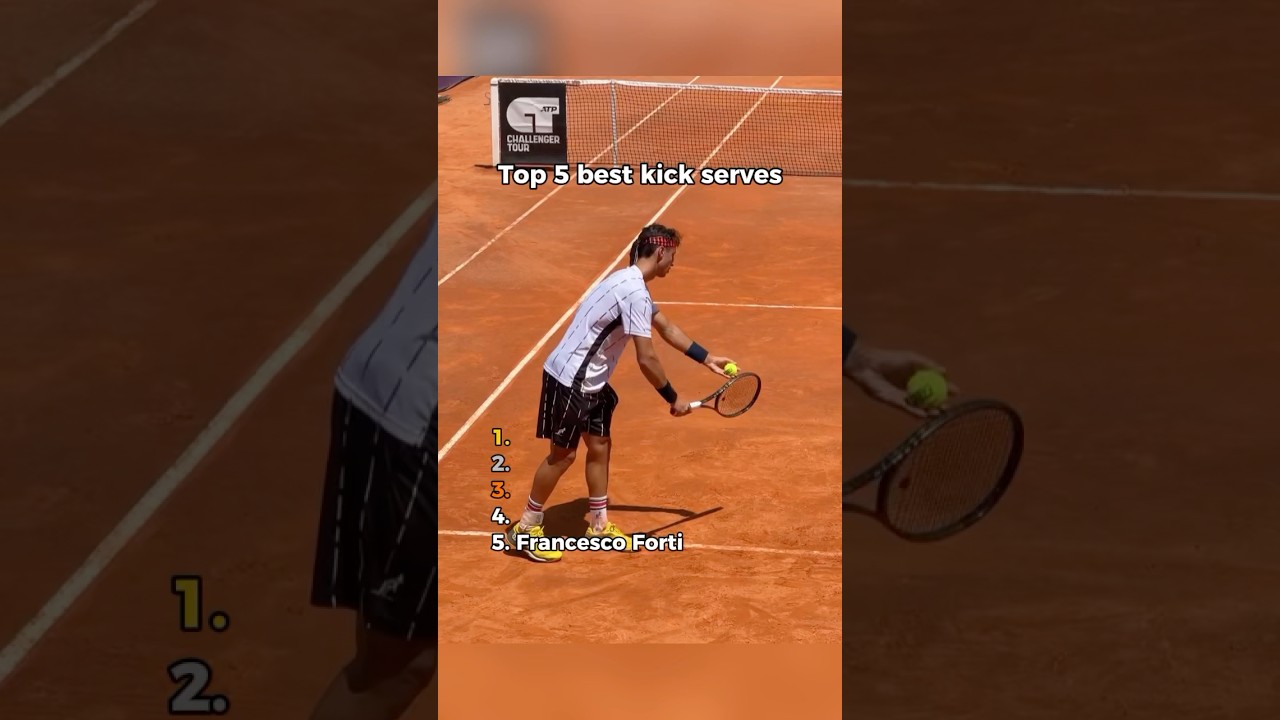
Top 5 Best Kick Serves in Tennis: Master the Kick Serve Like Federer & Alcaraz


Top 5 Best Kick Serves in Tennis: Master the Art of the “Twist”

In the world of professional tennis, the kick serve is often considered the ultimate weapon. Unlike a flat serve that relies on raw power, or a slice serve that curves sideways, the kick serve uses extreme topspin to jump high and away from the opponent after hitting the court. For Indian tennis enthusiasts playing on high-bouncing hard courts or clay, mastering this shot is a game-changer.

Whether you are watching the ATP tour or training at your local academy in Delhi or Mumbai, understanding who sets the gold standard for this shot is essential. Let’s dive into the top 5 best kick serves in tennis history and how you can emulate legends like Roger Federer and Carlos Alcaraz.

1. Roger Federer: The Gold Standard of Precision

Roger Federer’s kick serve wasn’t just about the bounce; it was about the disguise. Federer used the same toss for his flat, slice, and kick serves, making it impossible for opponents to read his intent. His ability to hit the “kicker” on second serves under pressure allowed him to pull opponents off the court, opening up the space for his legendary forehand.

2. Carlos Alcaraz: The Modern Power Kicker

Carlos Alcaraz represents the evolution of the kick serve. He generates immense racket head speed, creating a ball that doesn’t just bounce—it explodes. Alcaraz often uses the kick serve as a tactical tool to push his opponents way behind the baseline, especially on clay courts, proving that youth and athleticism can turn a defensive second serve into an offensive weapon.

3. Stefan Edberg: The Serve-and-Volley Legend

You cannot talk about the kick serve without mentioning Stefan Edberg. The Swede had perhaps the most exaggerated “twist” in history. His back would arch significantly, allowing him to brush up the back of the ball and rush to the net. His kick serve bounced so high to the opponent’s backhand that he always had an easy volley waiting for him.

4. John Isner: Height Meets Topspin

At 6’10”, John Isner already has a natural advantage. However, his kick serve is a nightmare because of the angle. When Isner hits a kick serve, the ball often crosses the opponent’s shoulder height, forcing them to hit a “heavy” return from a position of weakness. It is one of the most unreturnable second serves in the history of the sport.

5. Pete Sampras: The “Pistol” Pete Reliability

Pete Sampras is often credited with having the best second serve ever. His kick serve had so much “heavy” spin that even if opponents guessed the direction, the weight of the ball would force an error. His rhythmic motion and leg drive are still studied by coaches across India today.

How to Master the Kick Serve: Key Tips

  • The Toss: Throw the ball slightly behind your head (around 11 o’clock for right-handers).
  • The Brush: Focus on brushing the ball from “6 to 12” or “7 to 1” on a clock face.
  • Leg Drive: Use your legs to explode upwards, helping create the vertical lift needed for the bounce.

Conclusion

The kick serve is more than just a safe second serve; it is a tactical masterpiece. By studying the precision of Federer, the power of Alcaraz, and the mechanics of Sampras, Indian players can add a new dimension to their game. Remember, the goal isn’t just to get the ball in—it’s to dictate the point from the very first strike.

Frequently Asked Questions (FAQs)

1. What is the difference between a slice serve and a kick serve?

A slice serve moves sideways (curving away from or into the body), while a kick serve has topspin, causing it to bounce high and jump in the opposite direction after hitting the surface.

2. Why is the kick serve effective on clay courts?

Clay courts are slower and allow the ball to grip the surface better. This amplifies the topspin, making the “kick” or jump even higher and harder to return.

3. Is the kick serve hard on the back?

It can be if your technique is wrong. It requires a bit more back arch than a flat serve, so it is crucial to use your legs and core to generate power rather than relying solely on your lower back.

4. Can beginners learn the kick serve?

Beginners should first master the flat and slice serves. Once you have a consistent ball toss and racket head control, you can start practicing the upward “brushing” motion required for a kick serve.