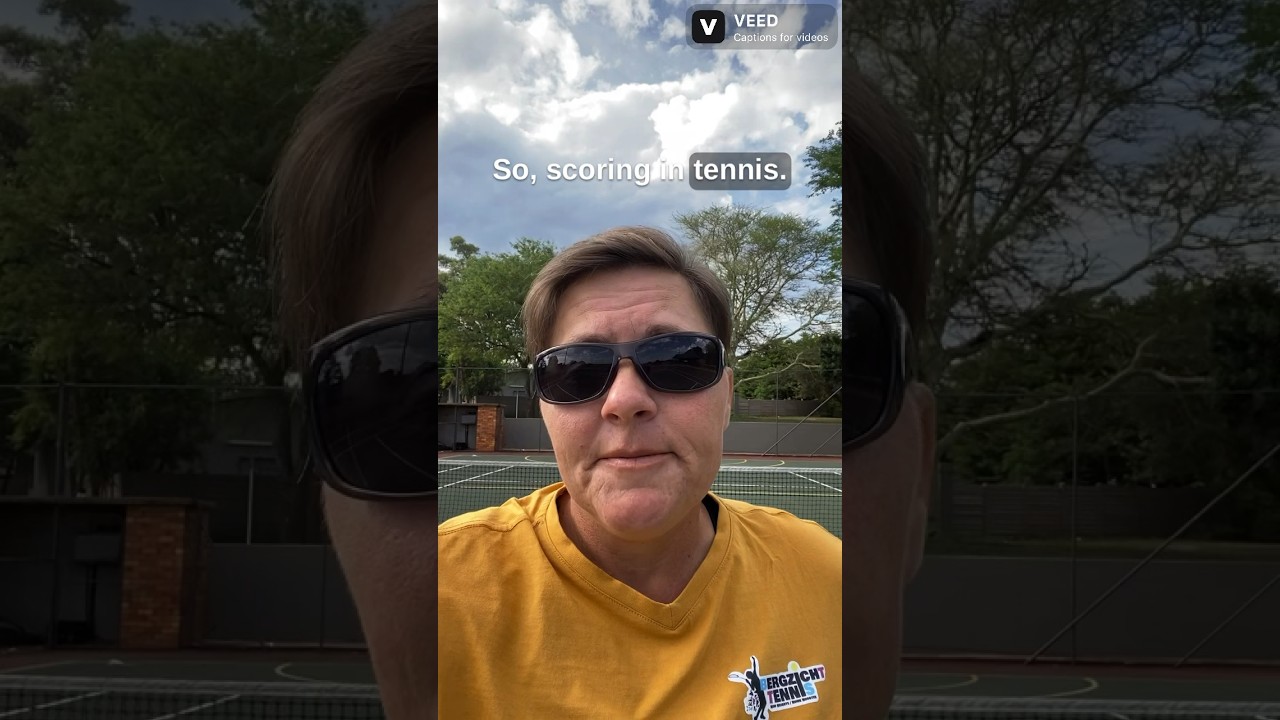
How Tennis Scoring Works: Points, Games, and Sets Explained in Detail


How Tennis Scoring Works: Points, Games, and Sets Explained in Detail

Tennis is one of the most popular individual sports in India, with legends like Leander Paes, Mahesh Bhupathi, and Sania Mirza inspiring millions. However, for a beginner watching the Australian Open or Wimbledon, the tennis scores can seem like a complex mathematical puzzle. Unlike cricket, where runs are linear, tennis follows a unique hierarchy of points, games, and sets.

In this guide, we break down exactly how tennis scoring works so you can follow the next big match with ease.

1. The Unusual Point System (0, 15, 30, 40)

A tennis match starts at “Love” (which means zero). The points progress as follows:

  • No point: Love
  • First point: 15
  • Second point: 30
  • Third point: 40
  • Fourth point: Game (End of the game)

If the score reaches 40-40, it is called a Deuce. From here, a player must win two consecutive points to win the game. The first point won after deuce is called “Advantage.” If that player wins the next point, they win the game; if they lose it, the score returns to Deuce.

2. Winning a Game and a Set

To win a Set, a player must be the first to win at least six games. However, there is a catch: you must win by a margin of at least two games (e.g., 6-0, 6-4).

If the score reaches 5-5 in a set, the players continue until someone wins 7-5. If the score reaches 6-6, a Tie-break is played to decide the winner of the set (resulting in a 7-6 scoreline).

3. The Match Structure

Depending on the tournament, tennis matches are played in two formats:

  • Best of Three Sets: Common in women’s matches and most ATP/WTA tour events. The first player to win 2 sets wins the match.
  • Best of Five Sets: Reserved for men’s singles in Grand Slams (like Wimbledon or the US Open). The first player to win 3 sets wins the match.

4. Special Tennis Score Terms to Know

While watching tennis scores live, you might hear these terms:

  • Break Point: When the player receiving the serve is one point away from winning the game.
  • Hold: When the player serving wins their game.
  • Bagel: Winning a set 6-0.
  • Golden Set: Winning a set without losing a single point (extremely rare!).

Conclusion

While the “Love-15-30-40” system feels strange at first, it adds a layer of psychological pressure that makes tennis one of the most exciting sports in the world. Whether you are hitting the courts in Delhi or Mumbai, or just tracking tennis scores on your phone, understanding these rules helps you appreciate the tactical depth of the game. Now that you know the difference between a Deuce and a Set point, you’re ready to enjoy the next Grand Slam!


Frequently Asked Questions (FAQs)

1. Why is zero called “Love” in tennis?

The most popular theory is that it comes from the French word “l’oeuf,” meaning “the egg,” because an egg looks like a zero.

2. What happens if a match is tied at 6-6 in the final set?

In most modern Grand Slams, a “10-point tie-break” is played. The first player to reach 10 points (with a 2-point lead) wins the final set and the match.

3. Does the server always call the score?

Yes, in casual play, the server should call the score before every serve, starting with their own score first (e.g., “30-15”). In professional matches, the Chair Umpire handles this.

4. How long does a 3-set tennis match usually last?

On average, a 3-set match lasts between 90 minutes to 2 hours, though it can go longer if there are many long rallies or tie-breaks.

Keeping score in tennis is easy once you get the hamg of ot#tennisscore#deuce#advantage#tennis#tennismatch#tennisplayer#shorts@Beyondthebaseline-coach
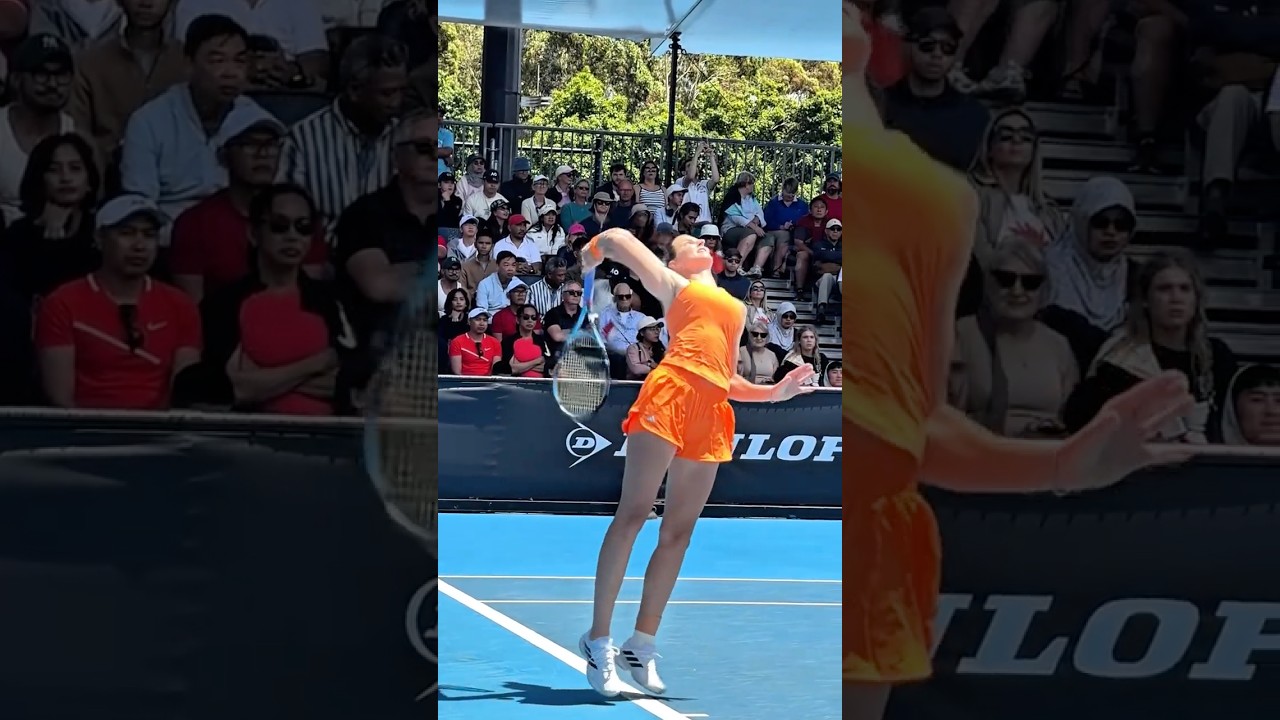

Karolina Pliskova Slow Motion Serve Analysis: Learn Pro Tennis Serve Technique


Karolina Pliskova Slow Motion Serve Analysis: Learn Pro Tennis Serve Technique

In the world of professional women’s tennis, few serves are as feared and respected as that of Czech star Karolina Pliskova. Known as the “Ace Queen,” Pliskova’s serve is a masterclass in efficiency, rhythm, and technical precision. For aspiring tennis players in India—where the sport is rapidly growing in popularity—studying a slow-motion analysis of her serve provides a blueprint for improving your own game.

The Foundation: Grip and Stance

The journey to a pro-level serve begins even before the ball is tossed. Pliskova utilizes a classic Continental Grip, which is essential for generating both power and spin. In slow-motion footage, you will notice her relaxed stance. She stays calm, keeping her weight slightly on the front foot before beginning the rocking motion that initiates her rhythm. For Indian club players, maintaining this “controlled calm” is the first step toward consistency.

The Toss and “Trophy Phase”

Watching Pliskova in slow motion reveals a perfectly vertical ball toss. She releases the ball at eye level, ensuring it reaches a peak height that allows her to fully extend her 186cm frame.

As the ball rises, she enters the “Trophy Position.” Her elbow is back, her knees are bent (creating a “leg drive”), and her left arm is pointing straight up. This phase is crucial because it stores potential energy. Most amateur players rush this step; Pliskova, however, demonstrates a brief “pause” that allows for perfect timing.

The Loading and Leg Drive

Pliskova uses a platform stance, meaning her feet stay relatively still during the serve. In slow motion, you can see her deep knee bend. This is where her power originates. By pushing off the ground, she transfers energy from her legs, through her core, and finally into the racket head. For Indian juniors looking to increase their serve speed, focusing on this leg drive—rather than just arm strength—is a game-changer.

The Contact Point and Pronation

The beauty of the Pliskova serve is the contact point. She hits the ball at the highest possible point of her reach. Slow-motion analysis shows her “snapping” her wrist through the ball—a technical move called pronation. This allows her to hit “down” on the ball, creating a sharp angle that makes the ball bounce high and wide, away from the opponent.

Final Follow-Through

A serve doesn’t end at contact. Pliskova’s follow-through is smooth, with her racket finishing across her body. This ensures her shoulder is protected from injury and that the momentum of the serve carries her forward into the court, ready for the next shot.

Conclusion

The Karolina Pliskova slow-motion serve analysis highlights that power isn’t about brute force; it’s about timing and technique. By breaking down her serve into the toss, trophy position, leg drive, and pronation, Indian tennis enthusiasts can refine their own mechanics. Whether you are playing on the clay courts of Kolkata or the hard courts of Mumbai, adopting these professional cues will undoubtedly help you hold serve with more confidence.


Frequently Asked Questions (FAQs)

1. Why is Karolina Pliskova’s serve considered one of the best?

Her serve is highly effective due to its consistency and disguise. She uses the same toss for flat, slice, and kick serves, making it incredibly difficult for opponents to read her direction.

2. What grip does Pliskova use for her serve?

Like almost all professionals, she uses the Continental Grip (often referred to as the “Hammer Grip”). This grip is essential for achieving the wrist snap (pronation) required for power and spin.

3. Can amateur players learn from her platform stance?

Yes. Many players find the platform stance (feet apart) more stable than the pinpoint stance (sliding the back foot forward). It provides a solid base and helps in maintaining balance throughout the service motion.

4. How can I increase my serve speed like Pliskova?

Focus on your racket head speed and leg drive. Slow-motion analysis shows that the power comes from the ground up. Don’t try to “muscle” the ball; instead, stay relaxed and use your whole body.

5. Where can I watch slow-motion videos of her serve?

You can find numerous technical breakdowns on YouTube or official ATP/WTA platforms. Searching for “Pliskova Serve Slow Motion Analysis” will provide various angles to study.

4K Karolina Pliskova Serve Slow Motion Court Level Front Side View
World No. 1 in women’s singles by the WTA.
Two-time Grand Slam finalist at the 2016 US Open and at 2021 Wimbledon