Karolina Pliskova Slow Motion Serve Analysis: Learn Pro Tennis Serve Technique


Karolina Pliskova Slow Motion Serve Analysis: Learn Pro Tennis Serve Technique

In the world of professional women’s tennis, few serves are as feared and respected as that of Czech star Karolina Pliskova. Known as the “Ace Queen,” Pliskova’s serve is a masterclass in efficiency, rhythm, and technical precision. For aspiring tennis players in India—where the sport is rapidly growing in popularity—studying a slow-motion analysis of her serve provides a blueprint for improving your own game.

The Foundation: Grip and Stance

The journey to a pro-level serve begins even before the ball is tossed. Pliskova utilizes a classic Continental Grip, which is essential for generating both power and spin. In slow-motion footage, you will notice her relaxed stance. She stays calm, keeping her weight slightly on the front foot before beginning the rocking motion that initiates her rhythm. For Indian club players, maintaining this “controlled calm” is the first step toward consistency.

The Toss and “Trophy Phase”

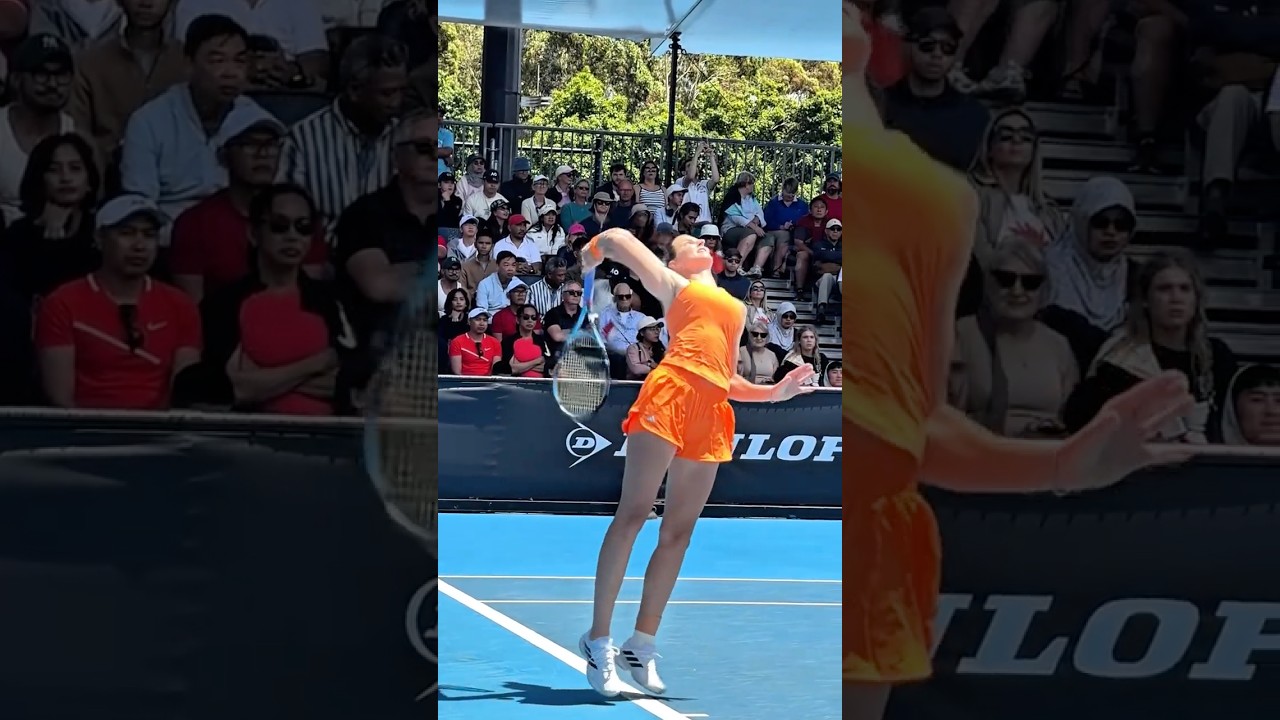
Watching Pliskova in slow motion reveals a perfectly vertical ball toss. She releases the ball at eye level, ensuring it reaches a peak height that allows her to fully extend her 186cm frame.

As the ball rises, she enters the “Trophy Position.” Her elbow is back, her knees are bent (creating a “leg drive”), and her left arm is pointing straight up. This phase is crucial because it stores potential energy. Most amateur players rush this step; Pliskova, however, demonstrates a brief “pause” that allows for perfect timing.

The Loading and Leg Drive

Pliskova uses a platform stance, meaning her feet stay relatively still during the serve. In slow motion, you can see her deep knee bend. This is where her power originates. By pushing off the ground, she transfers energy from her legs, through her core, and finally into the racket head. For Indian juniors looking to increase their serve speed, focusing on this leg drive—rather than just arm strength—is a game-changer.

The Contact Point and Pronation

The beauty of the Pliskova serve is the contact point. She hits the ball at the highest possible point of her reach. Slow-motion analysis shows her “snapping” her wrist through the ball—a technical move called pronation. This allows her to hit “down” on the ball, creating a sharp angle that makes the ball bounce high and wide, away from the opponent.

Final Follow-Through

A serve doesn’t end at contact. Pliskova’s follow-through is smooth, with her racket finishing across her body. This ensures her shoulder is protected from injury and that the momentum of the serve carries her forward into the court, ready for the next shot.

Conclusion

The Karolina Pliskova slow-motion serve analysis highlights that power isn’t about brute force; it’s about timing and technique. By breaking down her serve into the toss, trophy position, leg drive, and pronation, Indian tennis enthusiasts can refine their own mechanics. Whether you are playing on the clay courts of Kolkata or the hard courts of Mumbai, adopting these professional cues will undoubtedly help you hold serve with more confidence.


Frequently Asked Questions (FAQs)

1. Why is Karolina Pliskova’s serve considered one of the best?

Her serve is highly effective due to its consistency and disguise. She uses the same toss for flat, slice, and kick serves, making it incredibly difficult for opponents to read her direction.

2. What grip does Pliskova use for her serve?

Like almost all professionals, she uses the Continental Grip (often referred to as the “Hammer Grip”). This grip is essential for achieving the wrist snap (pronation) required for power and spin.

3. Can amateur players learn from her platform stance?

Yes. Many players find the platform stance (feet apart) more stable than the pinpoint stance (sliding the back foot forward). It provides a solid base and helps in maintaining balance throughout the service motion.

4. How can I increase my serve speed like Pliskova?

Focus on your racket head speed and leg drive. Slow-motion analysis shows that the power comes from the ground up. Don’t try to “muscle” the ball; instead, stay relaxed and use your whole body.

5. Where can I watch slow-motion videos of her serve?

You can find numerous technical breakdowns on YouTube or official ATP/WTA platforms. Searching for “Pliskova Serve Slow Motion Analysis” will provide various angles to study.

4K Karolina Pliskova Serve Slow Motion Court Level Front Side View
World No. 1 in women’s singles by the WTA.
Two-time Grand Slam finalist at the 2016 US Open and at 2021 Wimbledon
Tennis Scoring System Explained: Learn How to Count Points (Love, 15, 30, 40)


Tennis Scoring System Explained: Learn How to Count Points

Tennis is one of the most popular sports in India, with stars like Sania Mirza, Leander Paes, and Rohan Bopanna putting the country on the global map. However, for a beginner, watching a match at Wimbledon or the Australian Open can be confusing. Unlike cricket or football, where points are counted linearly (1, 2, 3…), tennis uses a unique terminology: Love, 15, 30, and 40.

In this guide, we break down the tennis scoring system so you can enjoy the game like a pro.

The Three Stages of a Tennis Match

To understand the score, you must understand the hierarchy of a match:

  • Game: The smallest unit of scoring.
  • Set: A collection of games (usually 6).
  • Match: The overall contest (usually best of 3 or 5 sets).

How to Count Points in a Game

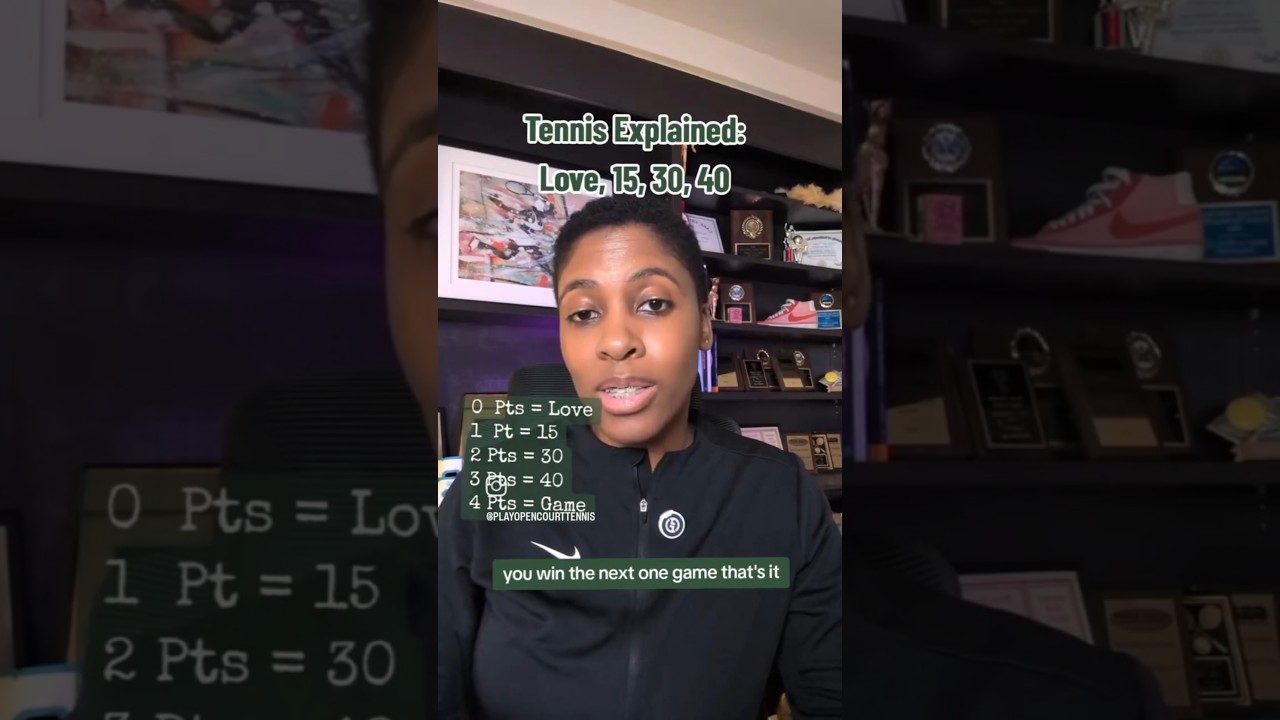
When a player serves, they are trying to win a “Game.” Instead of counting 0, 1, 2, 3, tennis uses the following scale:

  • 0 Points = “Love” (Derived from the French word ‘l’oeuf’, meaning egg, representing zero).
  • 1 Point = 15
  • 2 Points = 30
  • 3 Points = 40
  • 4 Points = Game (Ends the game, provided the player is ahead by two points).

Deuce and Advantage

If both players reach a score of 40-40, it is called a Deuce. From here, a player must win two consecutive points to win the game:

  1. Advantage: The player who wins the first point after deuce gets the “Advantage.”
  2. Game: If that same player wins the next point, they win the game.
  3. Back to Deuce: If the opposing player wins the point, the score returns to Deuce.

Winning a Set and the Match

In most professional tournaments, a player must win 6 games to win a set. However, there is a “two-game lead” rule. If the score is 5-5, the set continues until one person wins 7-5. If the score reaches 6-6, a Tie-break is played.

For the match itself:

  • Best of 3: Common in women’s matches and ATP Masters. First to 2 sets wins.
  • Best of 5: Common in Men’s Grand Slams. First to 3 sets wins.

Conclusion

While the tennis scoring system might seem complicated at first with terms like “Love” and “Deuce,” it becomes second nature once you start playing or watching regularly. Whether you hit the clay courts at your local club in Bangalore or watch the French Open from your living room in Delhi, understanding tennis scores enhances the excitement of every rally.


Frequently Asked Questions (FAQs)

1. Why is zero called “Love” in tennis?

The most popular theory is that it comes from the French word ‘l’oeuf’ (the egg), which looks like a zero. Others believe it comes from the phrase “to play for the love of the game” (playing for nothing).

2. What does “All” mean in tennis scores?

If the score is tied (except for 40-40), the umpire uses the word “All.” For example, 15-15 is called “15-All,” and 30-30 is “30-All.”

3. What is a “Golden Set” in tennis?

A Golden Set occurs when a player wins every single point in a set (24 points to 0), without losing a single point to the opponent. This is extremely rare in professional tennis.

4. Who serves first in a match?

A coin toss (or a racket spin) determines who serves first. The winner can choose to serve, receive, or pick a side of the court.

5. What is the difference between Ad-In and Ad-Out?

When the score is at Deuce, “Ad-In” (Advantage In) means the server has the lead. “Ad-Out” (Advantage Out) means the receiver has the lead.

Ever wonder how tennis scoring works with “Love,” “15,” “30,” and “40”? 🤔 This quick Short explains how to understand tennis scores simply! Learn what each term means and how to win a game in tennis.

Perfect for new players or anyone looking to master basic tennis scoring.

Boost your tennis confidence! Hit SUBSCRIBE for more easy tennis tips & rules explained. 👉 @playopencourttennis

#TennisScoring #EasyTennis #BeginnerTennis #TennisRules #TennisBasics #tennistips #tennistip #learntennis #PlayTennis

Tennis rules explained | how to keep score in tennis | tennis rules and scoring | tennis scoring for beginners | tennis match explained | tennis point system explained | tennis points explained | scoring in tennis explained

Learn How to Play Tennis: Rules, Scoring & Tips for Beginners in India


Learn How to Play Tennis: Rules, Scoring & Tips for Beginners in India

Tennis is one of the most prestigious and physically engaging sports in India. From the success of legends like Leander Paes and Sania Mirza to the growing popularity of local clubs, more Indians are picking up the racket than ever before. If you are looking to step onto the court for the first time, this guide will walk you through the essential rules, scoring systems, and pro tips to get you started.

The Basics: Equipment and Court

To start playing tennis in India, you need three basic items: a tennis racket, tennis balls (usually yellow pressurized balls), and non-marking sports shoes. Most Indian residential complexes and academies offer synthetic (hard) courts or clay courts.

  • Singles: Played between two players.
  • Doubles: Played between two teams of two.

Understanding Tennis Rules

The objective of tennis is simple: hit the ball over the net and into the opponent’s court in a way that they cannot return it. Here are the core rules:

  • The Serve: Every point starts with a serve. In India, most beginners start with an underarm serve, but the “overhead” serve is the standard. You must serve diagonally into the opponent’s service box.
  • In or Out: If the ball hits the line, it is “in.” If it lands outside the boundary lines, it is “out.”
  • One Bounce: The ball can only bounce once on your side before you must hit it back.

The Tennis Scoring System Explained

Tennis scoring can be confusing for beginners. Instead of 1, 2, 3, it uses a unique terminology:

  • 0 Points = “Love”
  • 1st Point = 15
  • 2nd Point = 30
  • 3rd Point = 40
  • 4th Point = Game

If both players reach 40-40, it is called a Deuce. From here, a player must win two consecutive points (Advantage and then Game) to win. A Set is won when a player wins six games (with a margin of two), and a Match is usually decided by the best of three sets.

Keeping Up with Tennis Scores

For enthusiasts in India, keeping track of tennis scores is vital, especially during Grand Slams like Wimbledon or the Australian Open. Because of the time zone differences, Indian fans often use live score apps to follow Indian stars like Rohan Bopanna. Understanding live scores helps you grasp the momentum shifts in a professional match, which can improve your own tactical thinking on the court.

Tips for Beginners in India

  1. Hydration is Key: Given the Indian climate, always carry a bottle of water or electrolytes. Playing in the early morning or late evening is recommended to avoid heat exhaustion.
  2. Focus on Footwork: Tennis is played with your feet as much as your hands. Small, quick steps will help you reach the ball in time.
  3. Join a Local Academy: Cities like Delhi, Mumbai, Bangalore, and Hyderabad have excellent tennis academies (like the Mahesh Bhupathi Tennis Academies) that offer foundational coaching.

Conclusion

Tennis is a lifelong sport that offers incredible health benefits, including improved cardiovascular health and better coordination. By mastering the basic rules and understanding the unique scoring system, you are well on your way to enjoying your first match. Whether you’re playing for fitness or looking to compete in local tournaments, the most important thing is to stay consistent and keep an eye on professional tennis scores to learn from the pros.

Frequently Asked Questions (FAQs)

1. What is the standard size of a tennis court?

A standard singles court is 78 feet long and 27 feet wide. For doubles, the width increases to 36 feet.

2. Why is zero called “Love” in tennis?

While there are many theories, the most popular is that it comes from the French word “l’oeuf,” meaning “the egg,” which represents the shape of a zero.

3. What are the best tennis brands available in India?

Popular and accessible brands in India include Wilson, Babolat, Head, and Decathlon’s Artengo for beginners.

4. Where can I check live tennis scores in India?

You can check live scores on major sports websites like ESPN, the ATP/WTA official apps, or dedicated sports news portals in India.

5. Can I play tennis if I have no previous experience?

Absolutely! Tennis is beginner-friendly. Start with “wall practice” to get a feel for the racket before moving to a full court.

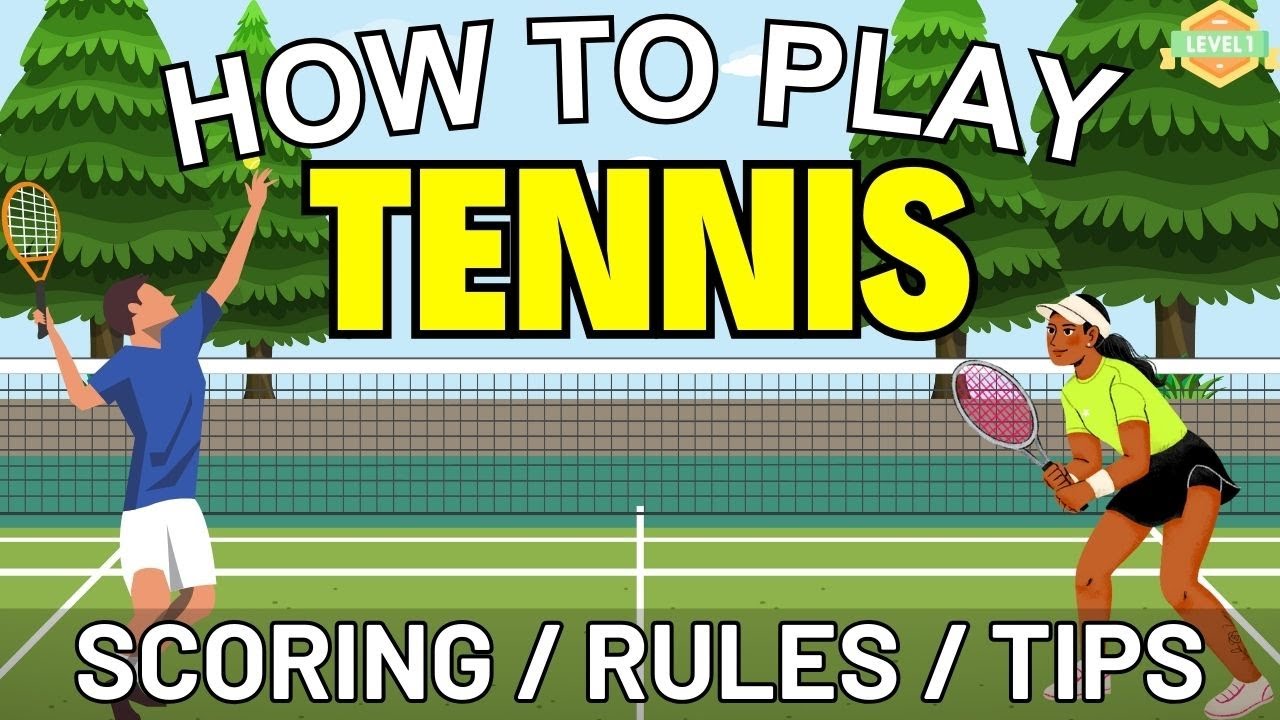
Want to learn how to play tennis but don’t know where to start? This beginner-friendly video breaks it all down — rules, scoring, serving, and more — with fun analogies and clear visuals to help you finally “get” the game.

Whether you’re brand new to tennis or just trying to understand the difference between Love, Deuce, and Advantage — this is your crash course.

In this video you’ll learn:

How the court works
What counts as in or out
How scoring works (and why it’s so weird)
What “deuce” really means
How serving and rotation works
And what you need to start playing today

Perfect for first-time players, parents of junior players, or anyone trying to follow a match.

Like, subscribe, and drop a comment if this helped!

Inner: By Voo de Mar – CC BY-SA 2.0,
————–
Want your own Pace S Pro Ball Machine?
Use my link below for a discount and to help support the channel:

Code for 5% off: Alfred

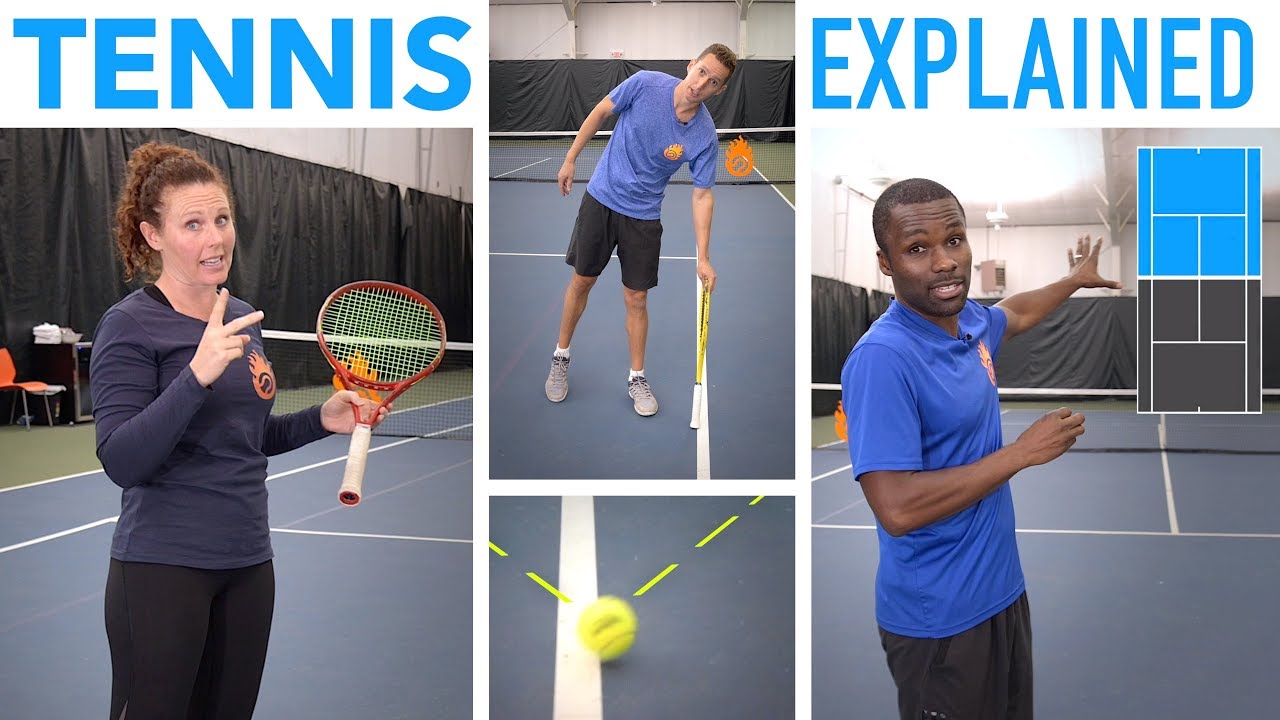
Tennis Rules Explained: Scoring, Gameplay & Key Terms (Beginner’s Guide)


Tennis Rules Explained: Scoring, Gameplay & Key Terms (Beginner’s Guide)

Tennis is one of the most popular individual sports in India, thanks to legends like Leander Paes, Sania Mirza, and Rohan Bopanna. Whether you are picking up a racket at your local club or watching Wimbledon on TV, understanding the unique tennis scores and rules is essential. This guide breaks down the basics for every beginner.

The Tennis Scoring System: Beyond Numbers

The most confusing part for newcomers is often the scoring. Tennis doesn’t use 1, 2, 3, or 4. Instead, it follows a traditional sequence:

  • 0 Points: “Love”
  • 1st Point: 15
  • 2nd Point: 30
  • 3rd Point: 40
  • 4th Point: Game

If both players reach 40-40, it is called a Deuce. To win from a deuce, a player must win two consecutive points: the “Advantage” point followed by the winning point. If the player with the advantage loses the next point, the score returns to deuce.

Sets and Matches

To win a match, you must win sets, and to win sets, you must win games. In most professional formats (and local tournaments in India):

  • A Set is won by the first player to win 6 games, with a lead of at least two games.
  • If the set score reaches 6-6, a Tie-break is played to determine the winner of the set.
  • Matches are usually “Best of Three” sets for women and most ATP events. In Grand Slams, men play “Best of Five.”

Gameplay: How the Game Starts

Every point starts with a Serve. The server stands behind the baseline and must hit the ball into the diagonally opposite service box. Players get two attempts (First Serve and Second Serve). If the ball hits the net but lands in the correct box, it is a “Let” and the serve is retaken.

Once the serve is in, the Rally begins. Players must hit the ball over the net and within the boundaries of the court. In singles, the narrower “inner” lines are used; in doubles, the wider “alleys” are included.

Key Tennis Terms to Know

  • Ace: A legal serve that the receiver does not touch.
  • Fault: A failed serve (hitting the net or landing outside the service box).
  • Double Fault: Missing both serves, resulting in a point for the opponent.
  • Volley: Hitting the ball before it touches the ground.
  • Break Point: A situation where the receiver is one point away from winning a game against the server.

Conclusion

Understanding tennis rules might seem daunting at first due to terms like “Love” and “Deuce,” but once you get the hang of the 15-30-40 rhythm, the game becomes incredibly addictive. Tennis is a fantastic way to stay fit and develop mental discipline. Now that you know the basics, grab a racket and head to the nearest court!

Frequently Asked Questions (FAQs)

1. Why is zero called “Love” in tennis?

While the exact origin is debated, many believe it comes from the French word “l’oeuf,” meaning “the egg,” representing the shape of a zero.

2. What happens if the ball hits the line?

In tennis, the lines are considered part of the court. If any part of the ball touches the white line, it is “In.”

3. How long does a typical tennis match last?

A standard best-of-three-sets match usually lasts between 90 minutes to 2 hours, though professional matches can go much longer.

4. Can I play doubles on a singles court?

Yes, but you must use the outer “doubles alleys” to ensure the court is wide enough for four players.

#1 Amazon new release for tennis book – Essential Tennis: Order your copy today and learn from my top 38 principles for tennis success!
————————————
Get your FREE membership to ET Academy and IMPROVE your game now:

Grab 15% off Diadem racquets, strings, bags and more using this discount link:
————————————
Follow this simple, free 7-Step checklist in your very next match for smarter, more effective play:
————————————
Looking for the perfect practice partner, match play partner, or qualified coach in your local area? PlayYourCourt will send them directly to the court of your choice! This is the greatest resource on the planet for passionate players looking to maximize their improvement:
————————————
MORE HELPFUL LESSONS:

Why Your Forehand is WEAK

Steal Roger’s Secret Strategy

World’s Most Annoying Tennis Opponent (and why they beat you)

Aim HERE For Easy Tennis Wins!

Stop Standing HERE In Tennis (why you’re losing)

Stop Beating YOURSELF At Tennis!

Hit WINNERS Like Djokovic

Bryan Brothers DON’T Cover This!

————————————

FOLLOW US ONLINE:

Facebook:

Instagram:

iTunes:

Google Play:

Twitter:

Stitcher:

————————————

OUR PRODUCTION GEAR:

Slow Motion Camera:

Analysis iPad:

Drone:

Wireless Mics:

Vlog Camera:

Ball Machine:

Camera Tripod:

Phone Tripod:

————————————

Essential Tennis is worldwide leader in digital tennis improvement resources. For over a decade their coaches have been publishing video, audio, and written instruction helping millions of passionate players improve at the game they love.

With content ranging from video lessons, to the first tennis podcast ever published on iTunes, to insightful long form emails giving insight into the improvement process Essential Tennis has the guidance you need to reach your goals and break through to the next level of play.

Their coaches also provide world class in person experiences including group clinics and their exclusive, Milwaukee VIP instructional package.

For more information on lessons, digital training programs, or anything else please send an email to support AT essentialtennis DOT com.

————————————

If you can read this you have an impressive scrolling game.

🙂