
Tennis Tie Break Rules: Scoring and Format Explained Simply


Tennis Tie Break Rules: Scoring and Format Explained Simply

Tennis is a game of precision, endurance, and strategy. For many Indian fans who follow global icons like Novak Djokovic or homegrown heroes like Rohan Bopanna, the most heart-racing moment of any match is the tie-break. But how exactly do tennis scores work when a set reaches 6-6? If you have ever been confused by the sudden change in serving order or the numerical scoring, this guide is for you.

What is a Tennis Tie-Break?

In a standard tennis set, a player must win six games to win the set. However, if the score reaches 5-5, the set continues. If it then reaches 6-6, a “tie-break” is played to decide the winner of the set. The winner of the tie-break wins the set 7-6.

The Scoring System: How It Differs

Unlike regular games where we use “15, 30, 40, and Game,” a tie-break uses simple numerical scoring: 1, 2, 3, 4, 5, 6, 7, and so on.

  • The Target: The first player to reach 7 points wins the tie-break and the set.
  • The Two-Point Margin: You cannot win a tie-break at 7-6. There must be a margin of at least two points (e.g., 7-5, 8-6, or 10-8).

The Serving Format: Who Serves When?

The serving rotation in a tie-break can be tricky for beginners. Here is the step-by-step breakdown:

  1. Point 1: The player whose turn it was to serve starts the tie-break. They serve only one point from the Deuce (right) side.
  2. Points 2 & 3: The serve moves to the opponent. They serve two points, starting from the Ad (left) side, then the Deuce side.
  3. Points 4 & 5: The first server returns to serve two points.

This “ABBA” pattern (1 serve, then 2, then 2) continues until a winner is decided. Players switch ends of the court every 6 points (e.g., when the score is 3-3, 6-6, or 9-3).

The 10-Point Tie-Break (The “Super Tie-Break”)

In recent years, major tournaments like Wimbledon and the Australian Open have adopted the 10-point tie-break to decide the final set (third set for women, fifth set for men). The rules remain the same, but the target is 10 points instead of 7, still requiring a two-point lead. This format is also very common in doubles matches on the ATP and WTA tours instead of a full third set.

Conclusion

Understanding the tennis tie break rules adds a layer of excitement to watching the sport. While the scoring switches from the traditional “Love-15-30” to simple numbers, the pressure doubles. Whether you are playing at your local club in Delhi or Mumbai, or watching a Grand Slam final on TV, knowing how tennis scores work during these crucial moments ensures you never miss a beat of the action.

Frequently Asked Questions (FAQs)

1. Who serves first in the next set after a tie-break?

The player who received the first serve of the tie-break becomes the first server in the opening game of the following set.

2. When do players change ends in a tie-break?

In a tennis tie-break, players change ends every 6 points (e.g., at 4-2, 6-6, or 10-8). This ensures that neither player has a permanent advantage due to wind or sun.

3. Is a tie-break used in every set?

In most modern professional formats, a tie-break is used in every set if the score reaches 6-6. However, some amateur formats or specific tournaments may have different rules for the final set.

4. What is the highest score possible in a tie-break?

Theoretically, there is no limit. As long as the score remains within one point (e.g., 15-14), the tie-break continues until someone achieves a two-point lead.

Ever been tied 6–6 in tennis and wondered what happens next? That’s when the tie break comes in — a mini-game that decides the set.

In this video, I’ll walk you step-by-step through how a tie break works:
– How scoring changes (1, 2, 3 instead of 15, 30, 40)
– Who serves first and why
– The unique serving pattern (Deuce start, then Ad → Deuce)
– Why the system keeps things fair
– When players switch sides
– Tie break variations you might see in different formats

By the end, you’ll know exactly how to play a tie break and never be confused at 6–6 again.
————–
Want your own Pace S Pro Ball Machine?
Use my link below for a discount and to help support the channel:

Code for 5% off: Alfred
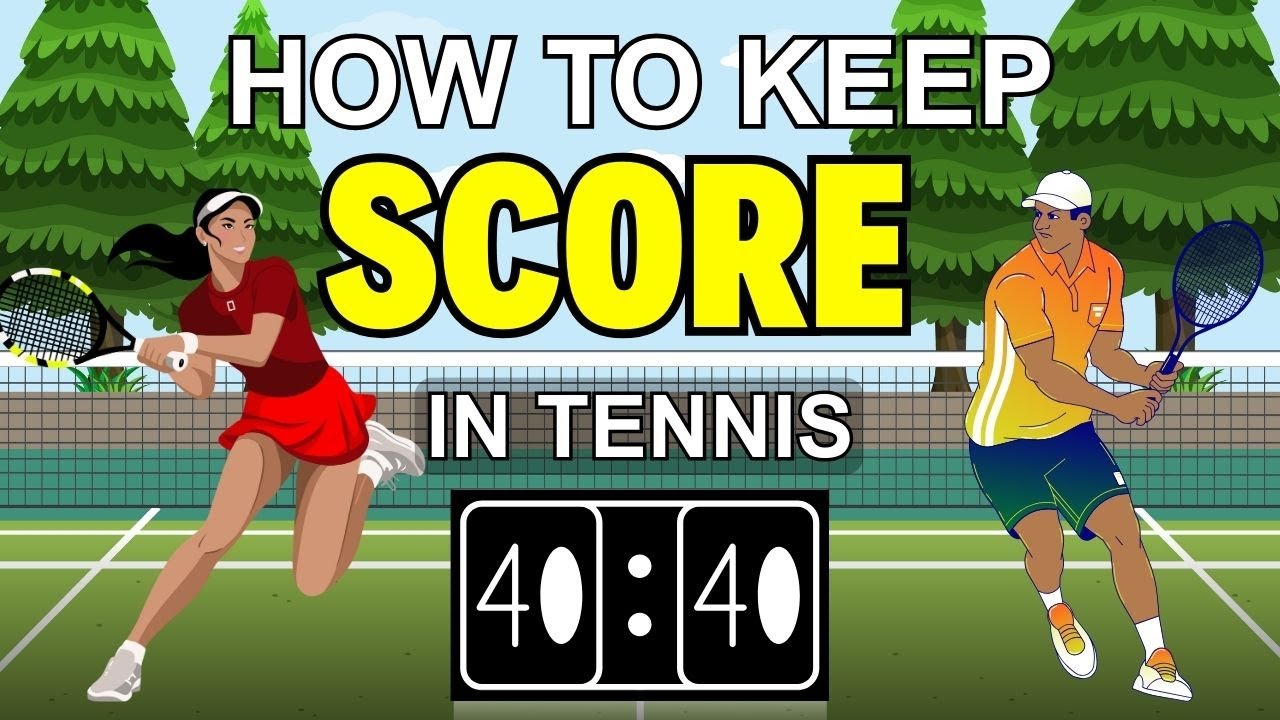
Tennis Scoring Rules Explained: Simple Guide for Beginners in India


Tennis Scoring Rules Explained: A Simple Guide for Beginners in India

Tennis is rapidly gaining popularity across India. From the clay courts of local clubs to the iconic grass of Wimbledon watched on TV, the game is thrilling but can be confusing for a newcomer. If you have ever wondered why the commentator says “Love” instead of zero or why 40 isn’t the final point, this guide is for you.

Understanding tennis scores is the first step to enjoying the game, whether you are playing at a local academy in Delhi or tracking Sania Mirza and Rohan Bopanna’s legacy. Let’s break down the system into simple steps.

1. The Four Points: 15, 30, 40, and Game

In a standard game of tennis, the scoring doesn’t go 1, 2, 3. Instead, it follows a unique sequence:

  • Love: 0 points
  • 15: 1 point won
  • 30: 2 points won
  • 40: 3 points won
  • Game: 4 points won (and you win the game)

Note: The server’s score is always called out first. If the server has 30 and the receiver has 15, the score is “30-15”.

2. Deuce and Advantage

What happens if both players reach 40-40? This is called a Deuce. To win from a deuce, a player must win two consecutive points:

  1. Advantage: The player who wins the first point after deuce gets the “Advantage.”
  2. If that same player wins the next point, they win the Game.
  3. If they lose the point, the score goes back to Deuce.

3. From Games to Sets

Tennis scoring is hierarchical. Winning points helps you win a Game, and winning Games helps you win a Set.

  • To win a Set, a player must win at least six games.
  • There must be a margin of at least two games (e.g., 6-4).
  • If the set reaches a 6-6 tie, a Tie-break is played to decide the winner (7-6).

4. Winning the Match

In most professional tournaments (ATP/WTA) and local Indian tournaments:

  • Best of Three Sets: The first person to win two sets wins the match. Most women’s matches and regular men’s matches follow this format.
  • Best of Five Sets: Common in Men’s Grand Slams (like Wimbledon or the French Open), where the first to win three sets wins.

Conclusion

While tennis scores might seem complicated at first with terms like “Love” and “Deuce,” they follow a logical rhythm once you hit the court. Whether you are practicing your serve in Mumbai or watching a high-stakes match, knowing these rules makes the sport much more engaging. Tennis is a game of mental strength and physical endurance—now that you know the rules, it’s time to pick up a racket!

Frequently Asked Questions (FAQs)

1. Why is zero called “Love” in tennis?

The most popular theory is that it comes from the French word “l’oeuf,” meaning “the egg,” because an egg looks like a zero. Over time, it was anglicized to “Love.”

2. What is a “Golden Set” in tennis?

A Golden Set occurs when a player wins a set without losing a single point (24 points to 0). This is extremely rare in professional tennis.

3. Is a tie-break scored differently?

Yes. In a tie-break, points are counted simply as 1, 2, 3, etc. The first person to reach 7 points with a 2-point lead wins the set 7-6.

4. Are tennis rules the same in India as internationally?

Yes, the All India Tennis Association (AITA) follows the International Tennis Federation (ITF) rules, so the scoring is identical globally.

5. What does “All” mean (e.g., 15-All)?

If both players have the same number of points, the score is followed by “All.” Example: 15-15 is called “15-All.” However, 40-40 is exclusively called “Deuce.”

“Love, 15, 30, 40… wait, what?

Tennis scoring can feel confusing at first, but once you learn the system, it makes perfect sense.

In this video, I’ll walk you through how to keep score in tennis step by step:
– Points within a game (Love, 15, 30, 40, Deuce, Advantage)
– Games within a set
– How tiebreakers work
– When to switch sides
– The history behind tennis scoring and why it uses such unusual numbers

By the end, you’ll be able to follow any match—whether you’re just starting out, watching the pros, or playing your first match yourself.

Watch next: How to Play a Tiebreaker (coming soon)
————–
Want your own Pace S Pro Ball Machine?
Use my link below for a discount and to help support the channel:

Code for 5% off: Alfred

How to Score Points in Tennis: Rules & Scoring System Explained


How to Score Points in Tennis: Rules & Scoring System Explained

Tennis is one of the most popular individual sports in India, with stars like Sania Mirza, Leander Paes, and Rohan Bopanna making the nation proud. However, for a beginner, tennis scores can be a bit confusing. Why do they count “15, 30, 40” instead of “1, 2, 3”? And what on earth does “Love” mean?

In this guide, we break down the complex tennis scoring system into simple steps so you can follow the next Grand Slam or local tournament with ease.

The Three Tiers of Tennis Scoring

To understand a tennis match, you need to look at it in three stages: Points make up Games, Games make up Sets, and Sets make up the Match.

1. Scoring a Game: 15, 30, 40, and Deuce

In tennis, the points climb in a unique sequence. Both players start at zero, referred to as “Love.” From there, the progression is as follows:

  • No points: Love
  • 1st point: 15
  • 2nd point: 30
  • 3rd point: 40
  • 4th point: Game (the player wins the game)

What is Deuce? If both players reach 40-40, it is called a “Deuce.” To win the game from Deuce, a player must win two consecutive points. The first point won is called Advantage. If that player wins the next point, they win the game. If they lose it, the score goes back to Deuce.

2. Winning a Set

To win a set, a player must be the first to win 6 games. However, there is a catch: you must win by a margin of at least two games (e.g., 6-4). If the score reaches 5-5, players continue until 7-5. If the score reaches 6-6, a Tie-break is played to determine the winner of the set (usually the first to reach 7 points wins the tie-break).

3. Winning the Match

In most professional tournaments (ATP/WTA), matches are “Best of Three.” This means the first person to win 2 sets wins the match. In Men’s Grand Slams (like Wimbledon or the Australian Open), matches are “Best of Five,” requiring a player to win 3 sets.

Common Tennis Scoring Terms

  • Love: Derived from the French word “l’oeuf” (meaning egg, which looks like a zero).
  • All: Used when the score is tied (e.g., 15-all or 30-all).
  • Break Point: When the player who is not serving is one point away from winning the game.
  • Double Fault: When the server fails both serve attempts, giving a point to the opponent.

Conclusion

While the tennis scoring system may seem intimidating at first, it becomes second nature once you start playing or watching. Whether you are hitting the courts at your local club in Mumbai or Delhi, or cheering for India’s doubles teams, knowing how tennis scores work enhances the excitement of the game. Now that you know the rules, grab a racket and start your journey towards your first “Game, Set, Match!”


Frequently Asked Questions (FAQs)

1. Why is zero called “Love” in tennis?

The most widely accepted theory is that it comes from the French word for egg, “l’oeuf,” because an egg resembles the number zero. Another theory is that it represents “playing for the love of the game,” even when scoring nothing.

2. How long does a typical tennis match last?

A best-of-three set match usually lasts between 90 minutes to 2 hours. However, matches can vary greatly; some finish in under an hour, while marathon matches can go over 4 hours.

3. What happens if the score reaches 40-40?

This is called a “Deuce.” A player must then win two points in a row to win the game: the “Advantage” point followed by the winning point.

4. Is the scoring the same for doubles and singles?

Yes, the 15, 30, 40 system remains the same. However, in some professional doubles tournaments, a “Deciding Point” (No-Ad scoring) is used at Deuce to speed up the game.

5. What is a “Golden Set” in tennis?

A Golden Set occurs when a player wins every single point in a set (24 points to 0), without losing a single point to their opponent. This is extremely rare in professional tennis.

Smash over the Net like Serena with these Tennis Goodies:
Wilson US Open Tournament Tennis Ball:
Wilson Tour Adult Tennis Racket:
Tennis Rebound Net Trainer:
Tennis PowerBase Trainer:
Open by Andre Agassi (Kindle & Print):
Jumbo Tennis Ball Dog Toy:

Watch more Introduction to Tennis videos:

How to Score Points in Tennis Games | Tennis

Taking up tennis? Learn how to score points in tennis games with this online tennis lesson.

Hi, my name is Angelina Zdorovytska. Right now we’re in the beautiful city of Los Angeles in Beverly Hills. I started playing tennis when I was 7 years old. I was ranked number 1 tennis player in the Ukraine. 350 in the world ranking. I run my own business; it’s besttennisever.com. I train very good players. Also, I train beginners, intermediate players. Tennis is my life and my passion. I live for it and now I would like to talk to you about tennis.
I’d like to talk to you about how to score and how to count in tennis when you’re playing a match. For example, when you’re serving, you’re starting the point and if you win the point, you get 15 points. So, you serve, you win the point, it’s 15-love. Next thing, for example, if again you’re serving and you lose the next point, so, you’re losing 15 points and we go to 15-all.

So the points go from the beginning, we have 15-love, 30-love, after 30 we don’t have the 45, we go to 40. So 15-love, 30-love, 40-love. If you’re losing the point, then your opponent, someone you’re playing against, is going to have the 15 points. So for example, you’re serving, you win the point, you’re going to have 15-love. Next one you lose, it’s going to be 15-all. If you win the next one, it’s 30-15.

We have the situation when we get to 40-all, we don’t have the 40-all. We’re using the terminology, we say deuce. Deuce is if I have 40, your opponent is having 40 as well. So you’re going to ask a question, what are you going to do next? We’re using the terminology where we say add in or add out. For example, if I’m serving, and we’re at deuce, if I win the point, it’s going to be add in. If I lose the point, it’s going to be add out. Having the add in for me to win the next point, I’m winning the game, one game. If I’m losing the point, we’re going back to deuce

💌 Let’s stay Connected 💌
➡️ our website:
➡️ Facebook:
➡️

✨ If you liked this video, I’m sure you’ll like these videos as well
▶️
▶️

About us:-
Emphasizing high-quality instructional video production, Howcast brings you leading experts and accurate, reliable information on makeup tutorials, cute hairstyles, and nail art designs to soccer tricks, parkour, and skateboarding, plus how to Dougie, how to kiss, and much, much more. Howcast empowers people with engaging, useful how-to information wherever, whenever they need to know-how

#Howcast #tennis

Related searches:
how to score in tennis
how to score tennis
how do you score in tennis
how does scoring work in tennis

How to Count Tennis Points: A Simple Guide for Beginners


How to Count Tennis Points: A Simple Guide for Beginners

Tennis is one of the most popular individual sports in India, thanks to the legacies of stars like Sania Mirza, Leander Paes, and Rohan Bopanna. However, for a beginner, walking onto a court at your local club can be confusing when you hear terms like “Love,” “Deuce,” and “Advantage.”

If you are wondering why tennis scores don’t go 1, 2, 3, and 4, you aren’t alone. Understanding tennis scores is the first step to enjoying the game. This guide breaks down the scoring system into simple steps.

The Structure: Points, Games, and Sets

Think of a tennis match like a ladder. You must climb three rungs to win:

  • Points make up a Game.
  • Games make up a Set.
  • Sets make up the Match.

1. Scoring a Single Game

Instead of 1, 2, and 3, tennis uses a unique numerical progression. Both players start at zero, which is called “Love.”

  • No points: Love
  • 1st point: 15
  • 2nd point: 30
  • 3rd point: 40
  • 4th point: Game (End of game)

In tennis, the server’s score is always announced first. If the server has 30 and the receiver has 15, the score is “30-15.”

What is Deuce?

If both players reach 40-40, it is called a Deuce. From here, one player must win two consecutive points to win the game:

  • The first point won after deuce is called Advantage.
  • If the same player wins the next point, they win the game.
  • If they lose the point, the score returns to Deuce.

2. Winning a Set

In most professional and amateur matches in India, you need to win six games to win a set. However, there is a catch: you must win by a margin of at least two games (e.g., 6-0, 6-4).

If the set score reaches 5-5, the set continues. If it reaches 6-6, a Tie-break is played to decide the winner of the set (7-6).

3. Winning the Match

Most matches are played as “Best of Three.” This means the first person to win two sets wins the match. In major Men’s Grand Slams (like Wimbledon or the Australian Open), they play “Best of Five,” requiring three sets to win.

Conclusion

While the tennis scoring system seems unconventional at first, it becomes second nature once you start playing. Whether you are playing on a clay court in Kolkata or a hard court in Mumbai, the rules remain the same. The key is to remember the 15-30-40 sequence and keep your eye on the ball!


Frequently Asked Questions (FAQs)

1. Why is zero called “Love” in tennis?

While there are many theories, the most popular one is that it comes from the French word for egg, “l’oeuf,” because an egg looks like a zero. Others believe it comes from the phrase “to play for the love of the game.”

2. What is “All” in tennis scores?

If the score is tied (except for 40-40), you use the word “All.” For example, 15-15 is “15-All,” and 30-30 is “30-All.”

3. What does “Advantage In” and “Advantage Out” mean?

During a deuce, “Advantage In” (Ad-In) means the server has the point lead. “Advantage Out” (Ad-Out) means the receiver has the point lead.

4. How long does a typical tennis match last?

A best-of-three set match usually lasts between 90 minutes to 2 hours, depending on how competitive the games are.

5. Is there a faster version of scoring?

Yes. Many local Indian tournaments use “No-Ad” scoring. If the score reaches deuce, the next single point wins the game immediately.

Learn More:

Shop Beginners Tennis Racquet:

➤Tennis Warehouse:
➤Tennis Warehouse Europe:
➤Tennis Only:

➤YouTube:
➤ Facebook:
➤ Instagram:
➤ Twitter:
➤ Improve Your Game:

Learn how to keep score in a game of Tennis!

#tenniswarehouse #tennis #scoretennis #learntennis