Tennis Tie Break Rules: Scoring and Format Explained Simply


Tennis Tie Break Rules: Scoring and Format Explained Simply

Tennis is a game of precision, endurance, and strategy. For many Indian fans who follow global icons like Novak Djokovic or homegrown heroes like Rohan Bopanna, the most heart-racing moment of any match is the tie-break. But how exactly do tennis scores work when a set reaches 6-6? If you have ever been confused by the sudden change in serving order or the numerical scoring, this guide is for you.

What is a Tennis Tie-Break?

In a standard tennis set, a player must win six games to win the set. However, if the score reaches 5-5, the set continues. If it then reaches 6-6, a “tie-break” is played to decide the winner of the set. The winner of the tie-break wins the set 7-6.

The Scoring System: How It Differs

Unlike regular games where we use “15, 30, 40, and Game,” a tie-break uses simple numerical scoring: 1, 2, 3, 4, 5, 6, 7, and so on.

  • The Target: The first player to reach 7 points wins the tie-break and the set.
  • The Two-Point Margin: You cannot win a tie-break at 7-6. There must be a margin of at least two points (e.g., 7-5, 8-6, or 10-8).

The Serving Format: Who Serves When?

The serving rotation in a tie-break can be tricky for beginners. Here is the step-by-step breakdown:

  1. Point 1: The player whose turn it was to serve starts the tie-break. They serve only one point from the Deuce (right) side.
  2. Points 2 & 3: The serve moves to the opponent. They serve two points, starting from the Ad (left) side, then the Deuce side.
  3. Points 4 & 5: The first server returns to serve two points.

This “ABBA” pattern (1 serve, then 2, then 2) continues until a winner is decided. Players switch ends of the court every 6 points (e.g., when the score is 3-3, 6-6, or 9-3).

The 10-Point Tie-Break (The “Super Tie-Break”)

In recent years, major tournaments like Wimbledon and the Australian Open have adopted the 10-point tie-break to decide the final set (third set for women, fifth set for men). The rules remain the same, but the target is 10 points instead of 7, still requiring a two-point lead. This format is also very common in doubles matches on the ATP and WTA tours instead of a full third set.

Conclusion

Understanding the tennis tie break rules adds a layer of excitement to watching the sport. While the scoring switches from the traditional “Love-15-30” to simple numbers, the pressure doubles. Whether you are playing at your local club in Delhi or Mumbai, or watching a Grand Slam final on TV, knowing how tennis scores work during these crucial moments ensures you never miss a beat of the action.

Frequently Asked Questions (FAQs)

1. Who serves first in the next set after a tie-break?

The player who received the first serve of the tie-break becomes the first server in the opening game of the following set.

2. When do players change ends in a tie-break?

In a tennis tie-break, players change ends every 6 points (e.g., at 4-2, 6-6, or 10-8). This ensures that neither player has a permanent advantage due to wind or sun.

3. Is a tie-break used in every set?

In most modern professional formats, a tie-break is used in every set if the score reaches 6-6. However, some amateur formats or specific tournaments may have different rules for the final set.

4. What is the highest score possible in a tie-break?

Theoretically, there is no limit. As long as the score remains within one point (e.g., 15-14), the tie-break continues until someone achieves a two-point lead.

Ever been tied 6–6 in tennis and wondered what happens next? That’s when the tie break comes in — a mini-game that decides the set.

In this video, I’ll walk you step-by-step through how a tie break works:
– How scoring changes (1, 2, 3 instead of 15, 30, 40)
– Who serves first and why
– The unique serving pattern (Deuce start, then Ad → Deuce)
– Why the system keeps things fair
– When players switch sides
– Tie break variations you might see in different formats

By the end, you’ll know exactly how to play a tie break and never be confused at 6–6 again.
————–
Want your own Pace S Pro Ball Machine?
Use my link below for a discount and to help support the channel:

Code for 5% off: Alfred
Tennis Scoring Rules Explained: Simple Guide for Beginners in India


Tennis Scoring Rules Explained: A Simple Guide for Beginners in India

Tennis is rapidly gaining popularity across India. From the clay courts of local clubs to the iconic grass of Wimbledon watched on TV, the game is thrilling but can be confusing for a newcomer. If you have ever wondered why the commentator says “Love” instead of zero or why 40 isn’t the final point, this guide is for you.

Understanding tennis scores is the first step to enjoying the game, whether you are playing at a local academy in Delhi or tracking Sania Mirza and Rohan Bopanna’s legacy. Let’s break down the system into simple steps.

1. The Four Points: 15, 30, 40, and Game

In a standard game of tennis, the scoring doesn’t go 1, 2, 3. Instead, it follows a unique sequence:

  • Love: 0 points
  • 15: 1 point won
  • 30: 2 points won
  • 40: 3 points won
  • Game: 4 points won (and you win the game)

Note: The server’s score is always called out first. If the server has 30 and the receiver has 15, the score is “30-15”.

2. Deuce and Advantage

What happens if both players reach 40-40? This is called a Deuce. To win from a deuce, a player must win two consecutive points:

  1. Advantage: The player who wins the first point after deuce gets the “Advantage.”
  2. If that same player wins the next point, they win the Game.
  3. If they lose the point, the score goes back to Deuce.

3. From Games to Sets

Tennis scoring is hierarchical. Winning points helps you win a Game, and winning Games helps you win a Set.

  • To win a Set, a player must win at least six games.
  • There must be a margin of at least two games (e.g., 6-4).
  • If the set reaches a 6-6 tie, a Tie-break is played to decide the winner (7-6).

4. Winning the Match

In most professional tournaments (ATP/WTA) and local Indian tournaments:

  • Best of Three Sets: The first person to win two sets wins the match. Most women’s matches and regular men’s matches follow this format.
  • Best of Five Sets: Common in Men’s Grand Slams (like Wimbledon or the French Open), where the first to win three sets wins.

Conclusion

While tennis scores might seem complicated at first with terms like “Love” and “Deuce,” they follow a logical rhythm once you hit the court. Whether you are practicing your serve in Mumbai or watching a high-stakes match, knowing these rules makes the sport much more engaging. Tennis is a game of mental strength and physical endurance—now that you know the rules, it’s time to pick up a racket!

Frequently Asked Questions (FAQs)

1. Why is zero called “Love” in tennis?

The most popular theory is that it comes from the French word “l’oeuf,” meaning “the egg,” because an egg looks like a zero. Over time, it was anglicized to “Love.”

2. What is a “Golden Set” in tennis?

A Golden Set occurs when a player wins a set without losing a single point (24 points to 0). This is extremely rare in professional tennis.

3. Is a tie-break scored differently?

Yes. In a tie-break, points are counted simply as 1, 2, 3, etc. The first person to reach 7 points with a 2-point lead wins the set 7-6.

4. Are tennis rules the same in India as internationally?

Yes, the All India Tennis Association (AITA) follows the International Tennis Federation (ITF) rules, so the scoring is identical globally.

5. What does “All” mean (e.g., 15-All)?

If both players have the same number of points, the score is followed by “All.” Example: 15-15 is called “15-All.” However, 40-40 is exclusively called “Deuce.”

“Love, 15, 30, 40… wait, what?

Tennis scoring can feel confusing at first, but once you learn the system, it makes perfect sense.

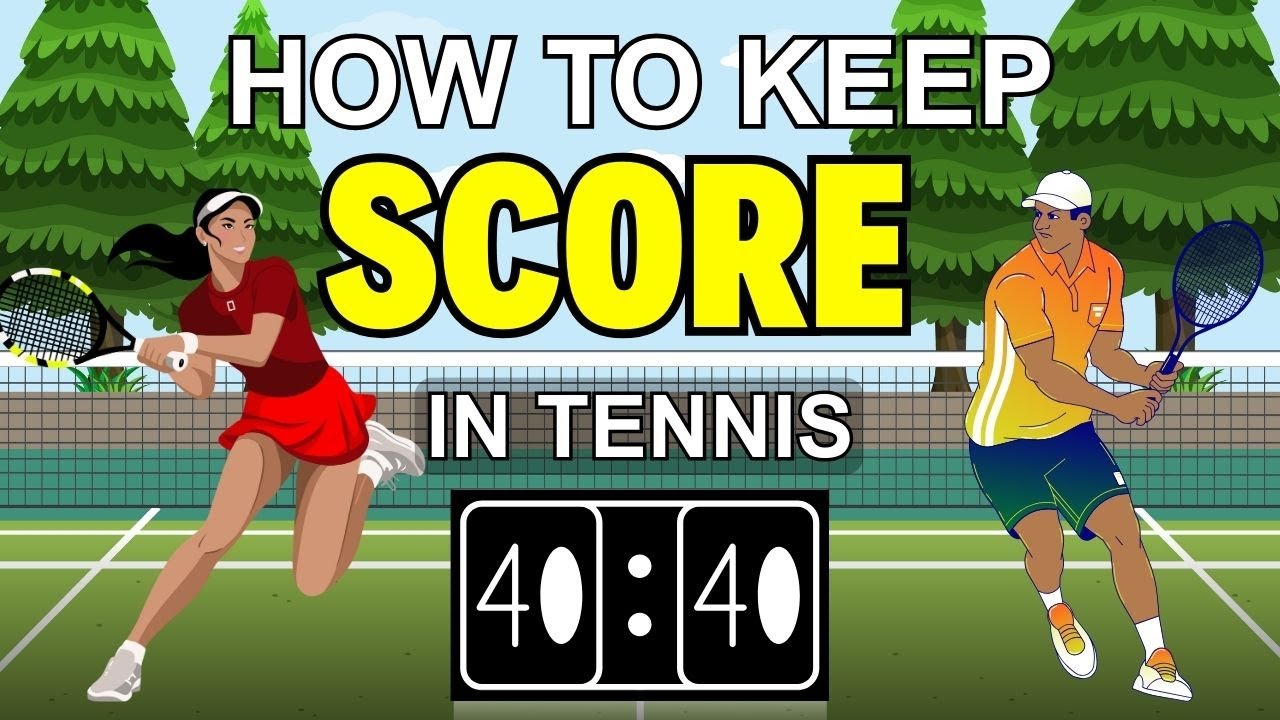
In this video, I’ll walk you through how to keep score in tennis step by step:
– Points within a game (Love, 15, 30, 40, Deuce, Advantage)
– Games within a set
– How tiebreakers work
– When to switch sides
– The history behind tennis scoring and why it uses such unusual numbers

By the end, you’ll be able to follow any match—whether you’re just starting out, watching the pros, or playing your first match yourself.

Watch next: How to Play a Tiebreaker (coming soon)
————–
Want your own Pace S Pro Ball Machine?
Use my link below for a discount and to help support the channel:

Code for 5% off: Alfred
Tennis Scoring System Explained: Learn How to Count Points (Love, 15, 30, 40)


Tennis Scoring System Explained: Learn How to Count Points

Tennis is one of the most popular sports in India, with stars like Sania Mirza, Leander Paes, and Rohan Bopanna putting the country on the global map. However, for a beginner, watching a match at Wimbledon or the Australian Open can be confusing. Unlike cricket or football, where points are counted linearly (1, 2, 3…), tennis uses a unique terminology: Love, 15, 30, and 40.

In this guide, we break down the tennis scoring system so you can enjoy the game like a pro.

The Three Stages of a Tennis Match

To understand the score, you must understand the hierarchy of a match:

  • Game: The smallest unit of scoring.
  • Set: A collection of games (usually 6).
  • Match: The overall contest (usually best of 3 or 5 sets).

How to Count Points in a Game

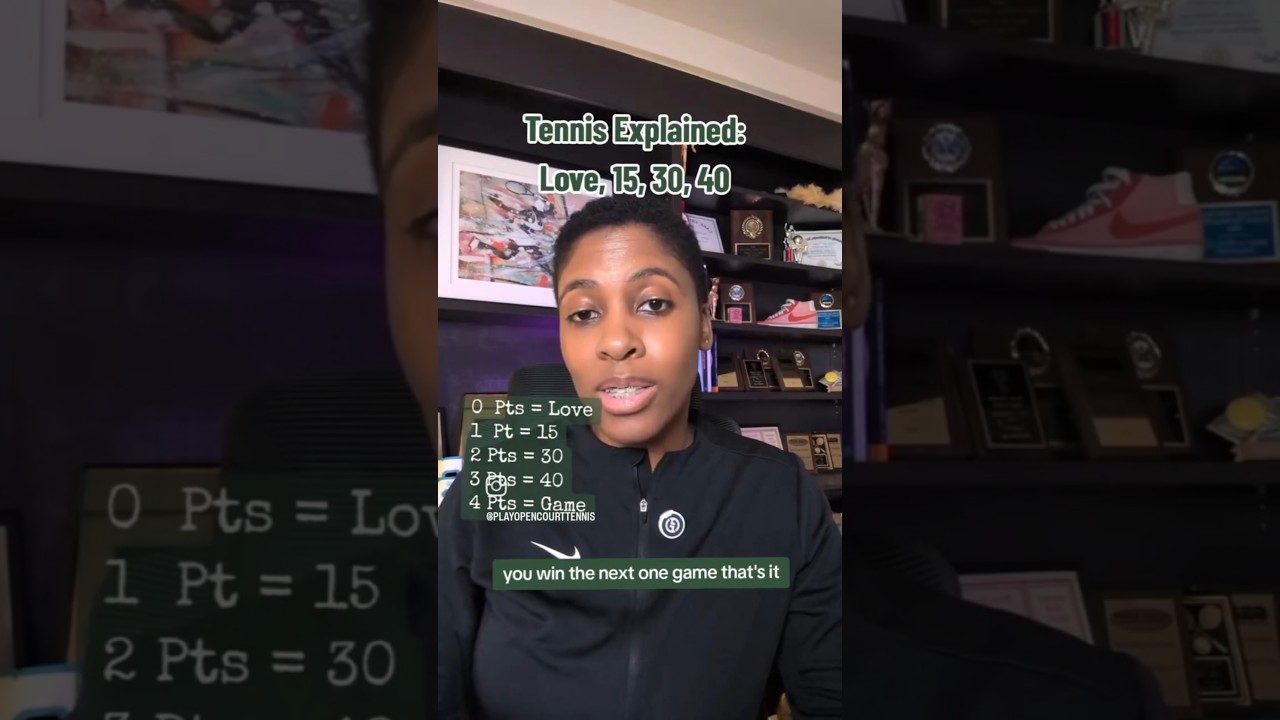
When a player serves, they are trying to win a “Game.” Instead of counting 0, 1, 2, 3, tennis uses the following scale:

  • 0 Points = “Love” (Derived from the French word ‘l’oeuf’, meaning egg, representing zero).
  • 1 Point = 15
  • 2 Points = 30
  • 3 Points = 40
  • 4 Points = Game (Ends the game, provided the player is ahead by two points).

Deuce and Advantage

If both players reach a score of 40-40, it is called a Deuce. From here, a player must win two consecutive points to win the game:

  1. Advantage: The player who wins the first point after deuce gets the “Advantage.”
  2. Game: If that same player wins the next point, they win the game.
  3. Back to Deuce: If the opposing player wins the point, the score returns to Deuce.

Winning a Set and the Match

In most professional tournaments, a player must win 6 games to win a set. However, there is a “two-game lead” rule. If the score is 5-5, the set continues until one person wins 7-5. If the score reaches 6-6, a Tie-break is played.

For the match itself:

  • Best of 3: Common in women’s matches and ATP Masters. First to 2 sets wins.
  • Best of 5: Common in Men’s Grand Slams. First to 3 sets wins.

Conclusion

While the tennis scoring system might seem complicated at first with terms like “Love” and “Deuce,” it becomes second nature once you start playing or watching regularly. Whether you hit the clay courts at your local club in Bangalore or watch the French Open from your living room in Delhi, understanding tennis scores enhances the excitement of every rally.


Frequently Asked Questions (FAQs)

1. Why is zero called “Love” in tennis?

The most popular theory is that it comes from the French word ‘l’oeuf’ (the egg), which looks like a zero. Others believe it comes from the phrase “to play for the love of the game” (playing for nothing).

2. What does “All” mean in tennis scores?

If the score is tied (except for 40-40), the umpire uses the word “All.” For example, 15-15 is called “15-All,” and 30-30 is “30-All.”

3. What is a “Golden Set” in tennis?

A Golden Set occurs when a player wins every single point in a set (24 points to 0), without losing a single point to the opponent. This is extremely rare in professional tennis.

4. Who serves first in a match?

A coin toss (or a racket spin) determines who serves first. The winner can choose to serve, receive, or pick a side of the court.

5. What is the difference between Ad-In and Ad-Out?

When the score is at Deuce, “Ad-In” (Advantage In) means the server has the lead. “Ad-Out” (Advantage Out) means the receiver has the lead.

Ever wonder how tennis scoring works with “Love,” “15,” “30,” and “40”? 🤔 This quick Short explains how to understand tennis scores simply! Learn what each term means and how to win a game in tennis.

Perfect for new players or anyone looking to master basic tennis scoring.

Boost your tennis confidence! Hit SUBSCRIBE for more easy tennis tips & rules explained. 👉 @playopencourttennis

#TennisScoring #EasyTennis #BeginnerTennis #TennisRules #TennisBasics #tennistips #tennistip #learntennis #PlayTennis

Tennis rules explained | how to keep score in tennis | tennis rules and scoring | tennis scoring for beginners | tennis match explained | tennis point system explained | tennis points explained | scoring in tennis explained

Tennis for Beginners: Tennis Scoring Rules Explained in Hindi/English


Tennis for Beginners: Tennis Scoring Rules Explained (Hinglish Guide)

Tennis points calculation logic shuruat mein thoda confusing lag sakta hai (can seem confusing at first). Unlike cricket or football where points go 1, 2, 3, tennis follows a unique system: 15, 30, 40, and Game. If you are an Indian sports fan looking to understand tennis scores and how a match is won, this guide is for you.

The Basics of Tennis Scoring (The Hierarchy)

Tennis scoring structure teen levels mein divided hoti hai:

  • Points: Smallest unit (15, 30, 40).
  • Games: Points se milkar Games bante hain.
  • Sets: Games se milkar Sets bante hain.
  • Match: Sets win karne par Match khatam hota hai.

1. Understanding “Points” within a Game

Ek Game jitne ke liye player ko minimum 4 points score karne hote hain. Lekin unhe numbering ke bajaye special names diye gaye hain:

  • 0 Points: Love (Tennis mein zero ko ‘Love’ kehte hain).
  • 1st Point: 15
  • 2nd Point: 30
  • 3rd Point: 40
  • 4th Point: Game (Over)

The ‘Deuce’ Rule

Agar dono players 40-40 par tie ho jayein, toh use Deuce kehte hain. Yahan se game jitne ke liye kisi ek player ko consecutive 2 points lene honge:

  • Advantage: Deuce ke baad pehla point lene wala player ‘Advantage’ par hota hai.
  • Agar wahi player agla point bhi jeet jaye, toh Game over.
  • Agar opponent point jeet jaye, toh score wapas Deuce ho jata hai.

2. Winning a Set

Ek ‘Set’ jitne ke liye player ko kam se kam 6 Games jitne hote hain, with a lead of at least 2 games (e.g., 6-4 or 6-0).

Agar score 5-5 ho jaye, toh match 7 games tak jata hai. Agar score 6-6 ho jaye, toh ek Tie-break khela jata hai takki set winner decide ho sake.

3. Winning the Match

International tennis matches do types ke hote hain:

  • Best of 3 Sets: Jo player 2 sets pehle jitega, wo winner hai. (Used in Women’s matches and most ATP events).
  • Best of 5 Sets: Jo player 3 sets pehle jitega, wo winner hai. (Used in Men’s Grand Slams like Wimbledon or French Open).

General Tennis Terms for Beginners

Match dekhte waqt aap ye terms zaroor sunenge:

  • Server: Jo player ball start karta hai.
  • Receiver: Jo ball return karta hai.
  • Ace: Jab serve itni fast ho ki opponent touch bhi na kar paye.
  • Double Fault: Jab server do baar serve miss kar de (Opponent gets a point).

Conclusion

Tennis scoring shuru mein mushkil lagti hai, par practice ke saath easy ho jati hai. Just remember: points lead to games, games lead to sets, and sets lead to a match win. Ab jab aap agli baar Sania Mirza ya Rohan Bopanna ka match dekhenge, toh tennis scores samajhna aapke liye bache ka khel hoga!

Frequently Asked Questions (FAQs)

1. Tennis mein zero ko ‘Love’ kyun kehte hain?

It is believed to come from the French word ‘l’oeuf’, which means egg (representing zero shape). English speakers pronounced it as ‘Love’.

2. Tennis match kitne der tak chalta hai?

Iska koi fixed time nahi hota. Best of 3 match 1.5 – 2 ghante chal sakta hai, jabki Grand Slam matches 3 se 5 ghante tak bhi ja sakte hain.

3. What is a ‘Break Point’?

Jab receiver (jo serve nahi kar raha) ko game jitne ke liye sirf ek point chahiye ho, toh use Break Point kehte hain.

4. Is there a difference between Men’s and Women’s scoring?

The point and game system is identical. The only major difference is that Men play ‘Best of 5 sets’ in Grand Slams, while Women play ‘Best of 3’.

Watch this Tennis for dummies explainer video to understand tennis, so next time you watch a match, you will know what the scoring is all about.

Are you curious what does a break point or rules for tie break mean?

In short:

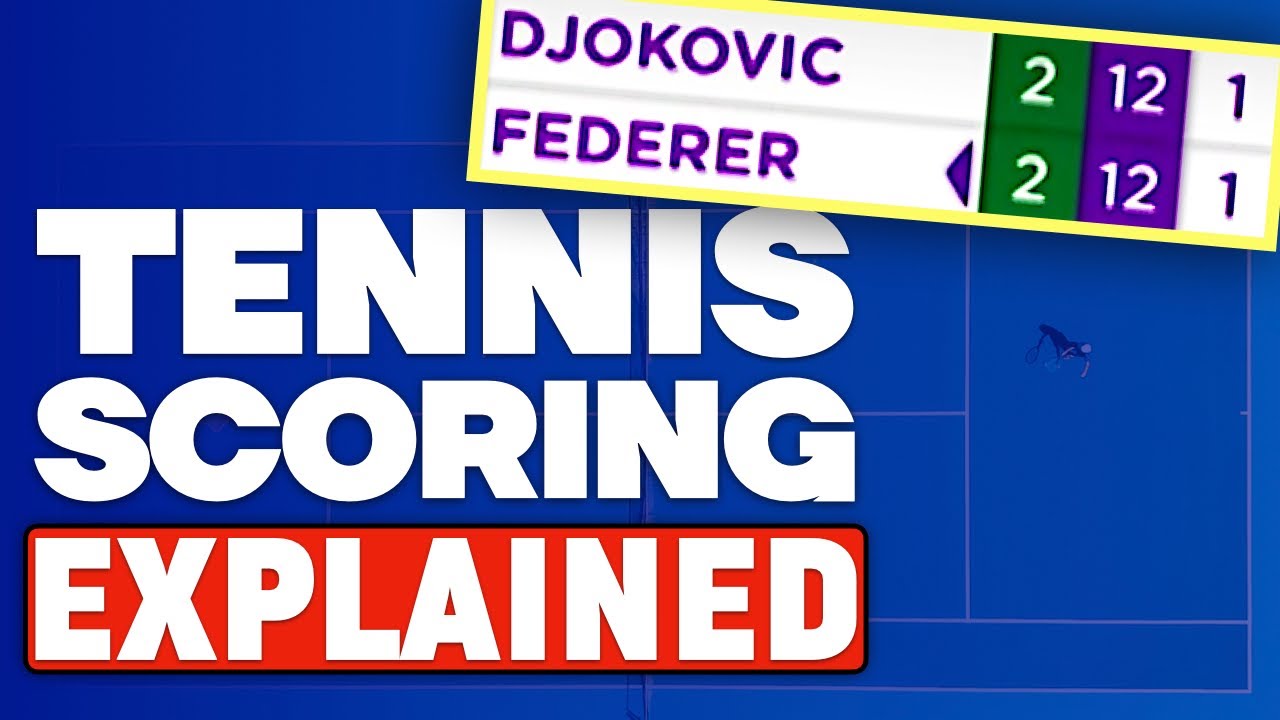
A key aspect is that points are always counted from the point of view of the server in a game. So If you see a tennis ball, yellow circle, or line or arrow near a players name, that means they are serving and the points are from their perspective.

We have points that make up a game. Games making up a set and sets making up a match. For points we have 0 or love as its called, 15, 30, 40. If the server wins the first point, its 15 – 0. If the opponent wins the second, 15 -15. If the opponent wins another, its 15 -30. If player one wins the next, its 30 – 30. If again the next one, its 40 – 30. After 40, if the server wins, they win the game. If there is deuce, 40-40, and the server wins a point, that will make the score A – 40. If the server wins another point, wins the game.

There are 6 games to be won in a set where the winner needs to win by at least 2 games. If there is a tie at 5-5, it means that players need to compete for another 2 games and whoever wins that two game, making the set to be 7-5 wins the set. If both players won 6 games in a set and its 6-6, a tie break is introduced to the set to close it quicker than using the game scoring method. In the tie break, the first player to win 7 points, by two, wins the tie break and that set as a result. If both players have 6 points in the tie break, it continues until someone wins two points consecutively.

When they say a match is played for best of 3 sets, that means that whoever wins 2 sets first, wins the match so there can be a maximum of 3 sets. Grand Slam men’s singles and doubles matches differ in two ways from the rest of the matches in tennis.

One, matches are played for 3 won sets or the best of 5 sets, making it a maximum of 5 sets in a match. And two, for some time, if the score is 6-6 in set number 5, there is no tie break, but a player only wins that set and the match if they win by 2 games. There are various limitations for the 5th set tie break in the Grand Slams.

#tennisscoring #tennisscoringexplained #tennisfordummiesvideo