How to Hit the Perfect Tennis Dropshot: A Step-by-Step Guide


How to Hit the Perfect Tennis Dropshot: A Step-by-Step Guide

In the world of tennis, power often takes the spotlight. However, on the hot, baked clay courts of Delhi or the humid hard courts of Mumbai, finesse can be just as lethal as a 120 kmph serve. The tennis dropshot is a touch play designed to catch your opponent off guard, forcing them to sprint forward when they least expect it.

Whether you are a club player or an aspiring pro, mastering the dropshot adds a new dimension to your game. Here is your comprehensive guide to hitting the perfect tennis dropshot.

Step 1: Choose the Right Moment

The biggest mistake many players make is attempting a dropshot from behind the baseline. To execute this move effectively, you should ideally be inside the baseline or moving toward short balls. Use the dropshot when your opponent is deep behind their baseline, struggling to recover from a wide shot. In India’s slower court conditions, waiting for a high-bouncing ball that sits up can give you the perfect window to “kill” the pace.

Step 2: The Continental Grip

Success starts with the hands. While you might use a Western or Semi-Western grip for your heavy topspin forehands, the dropshot requires a Continental grip (the same grip used for volleys and serves). This allows you to “open” the racquet face and create the necessary backspin to make the ball die upon impact.

Step 3: Disguise is Key

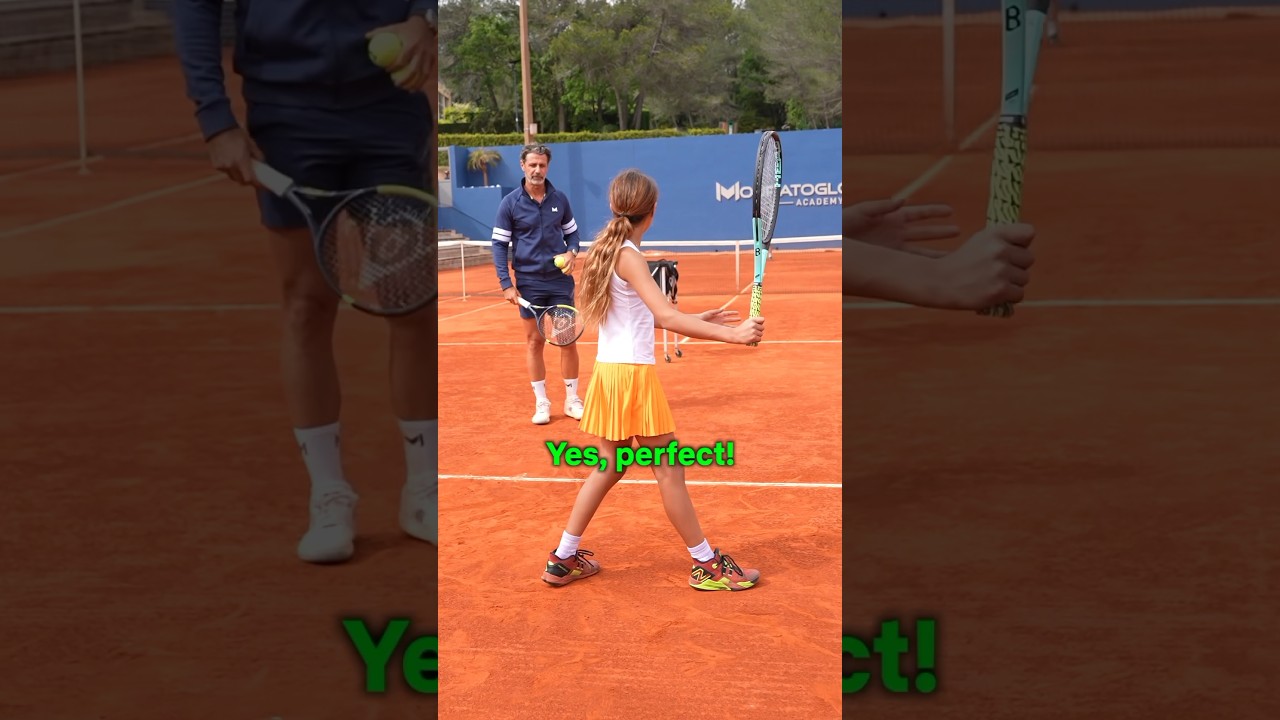
If your opponent knows the dropshot is coming, they will reach it with ease. To hit a perfect dropshot, your preparation must look identical to a standard deep drive or slice. Keep your backswing similar to your normal groundstroke, and only at the final millisecond, relax your grip and change the racquet angle.

Step 4: The “High-to-Low” Path with Soft Hands

As you make contact, move the racquet in a steep high-to-low motion. Instead of hitting “through” the ball, you want to “cup” the ball. Imagine you are catching the ball with your strings. Most Indian coaches refer to this as “touch” or “feel.” Relax your wrist to absorb the pace of the incoming ball, ensuring it clears the net by a small margin and lands short in the opponent’s service box.

Step 5: Follow Through and Recovery

Unlike a power shot, the follow-through for a dropshot is short and finished low. Immediately after hitting the shot, don’t just stand and watch. Move forward slightly to cover a potential counter-drop or lob. Because the ball has heavy backspin, it should ideally bounce twice before the opponent can reach it.

Conclusion

The dropshot is more than just a shot; it is a psychological weapon. It disrupts the rhythm of “baseliners” and tests their fitness. By mastering the Continental grip, maintaining disguise, and developing soft hands, you can turn a defensive situation into a winning point. Next time you hit the courts at your local club, practice these steps to leave your rivals stranded at the back of the court.

Frequently Asked Questions (FAQs)

1. When is the best time to use a dropshot in a match?

The best time is when your opponent is far behind the baseline or moving laterally. It is also highly effective on clay courts or when the weather is hot, as the ball may feel softer and easier to manipulate.

2. Can I hit a dropshot with a two-handed backhand?

While possible, most professional players (like Novak Djokovic) prefer to switch to a one-handed slice grip for the backhand dropshot to get better reach and feel.

3. My dropshots always hit the net. What am I doing wrong?

You are likely hitting too “flat.” Ensure you are using a high-to-low motion to create backspin. Also, aim for at least a foot or two above the net; the backspin will pull the ball down once it crosses.

4. Is the dropshot effective on Indian hard courts?

Yes. Although hard courts provide a consistent bounce, a well-disguised dropshot with heavy backspin will stay low, making it very difficult for an opponent to flick it back over the net.

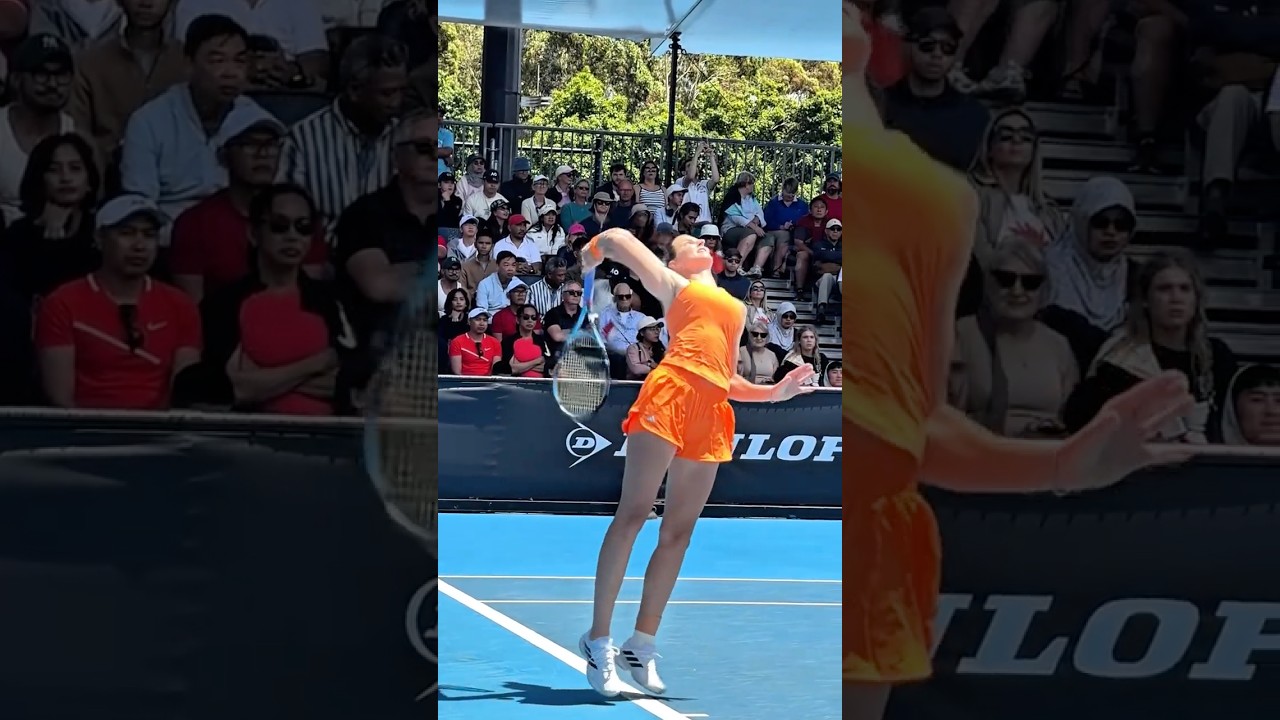
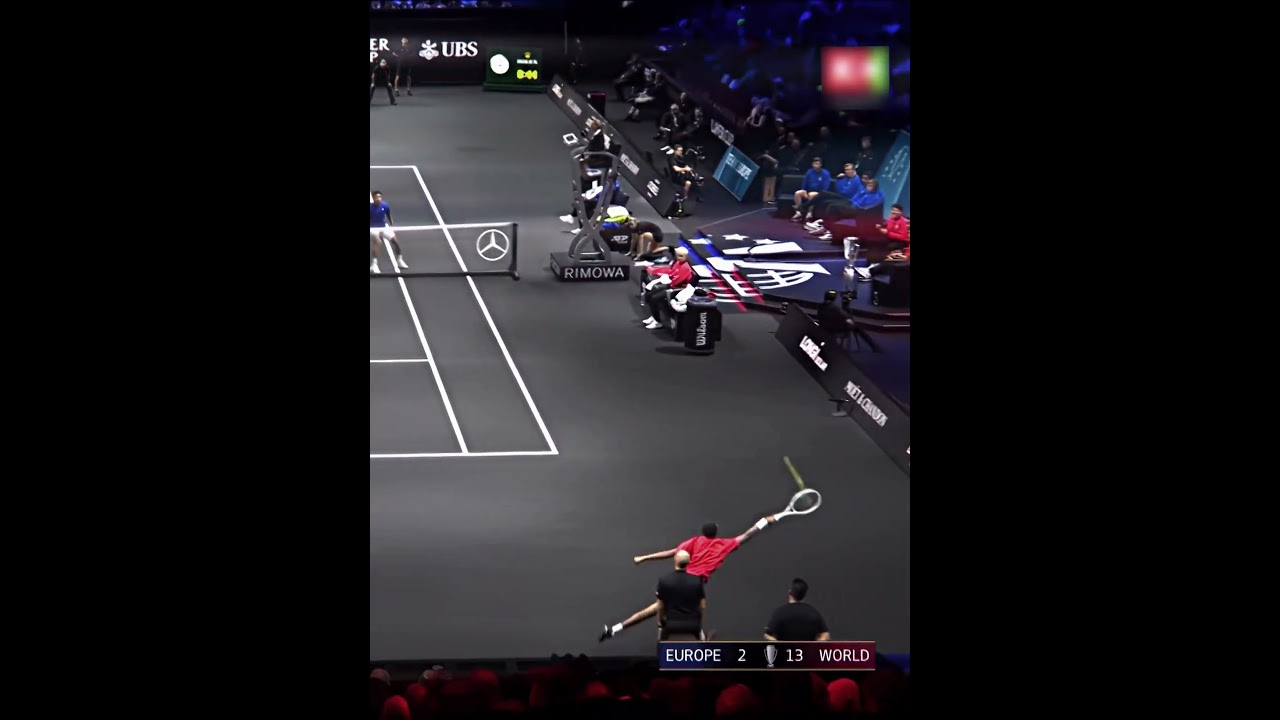
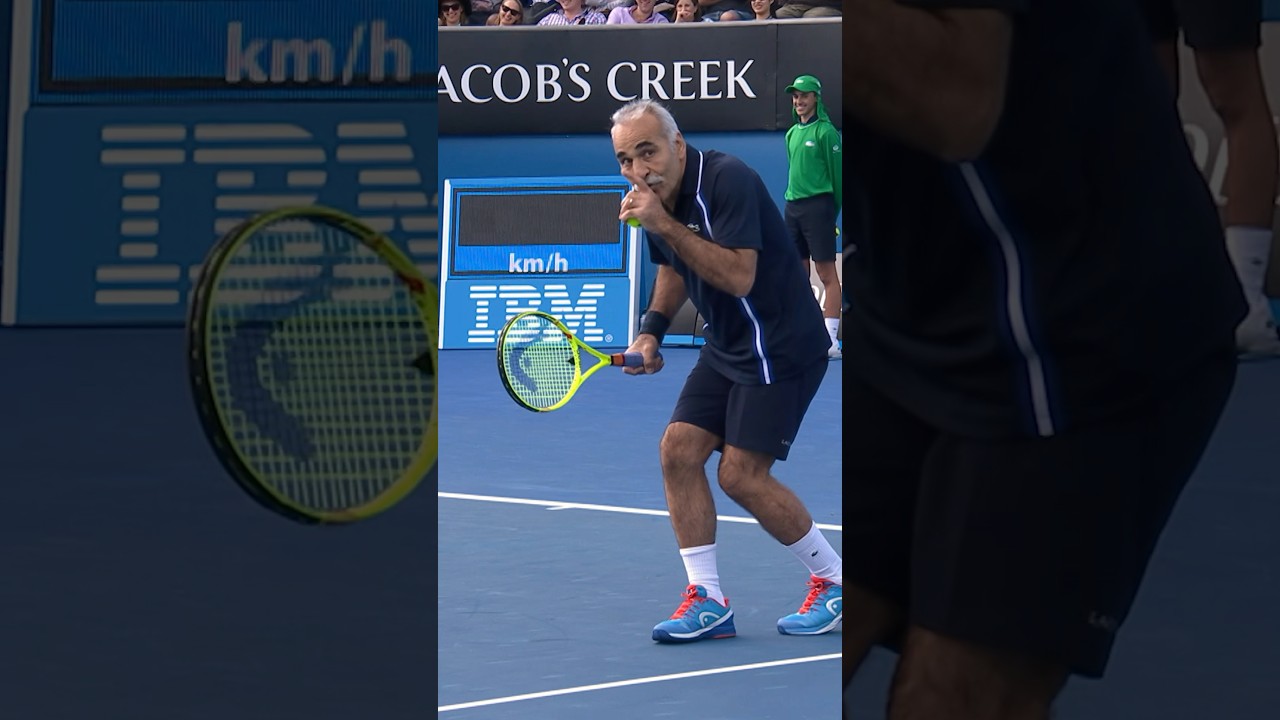
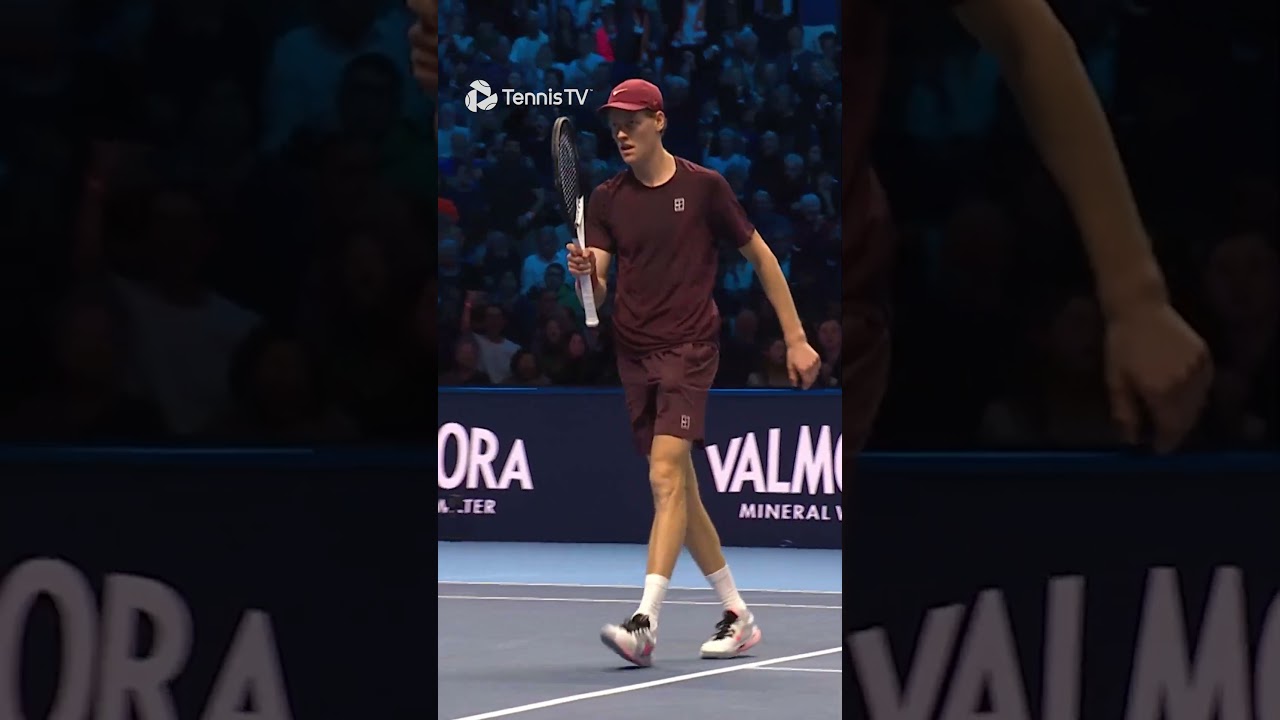
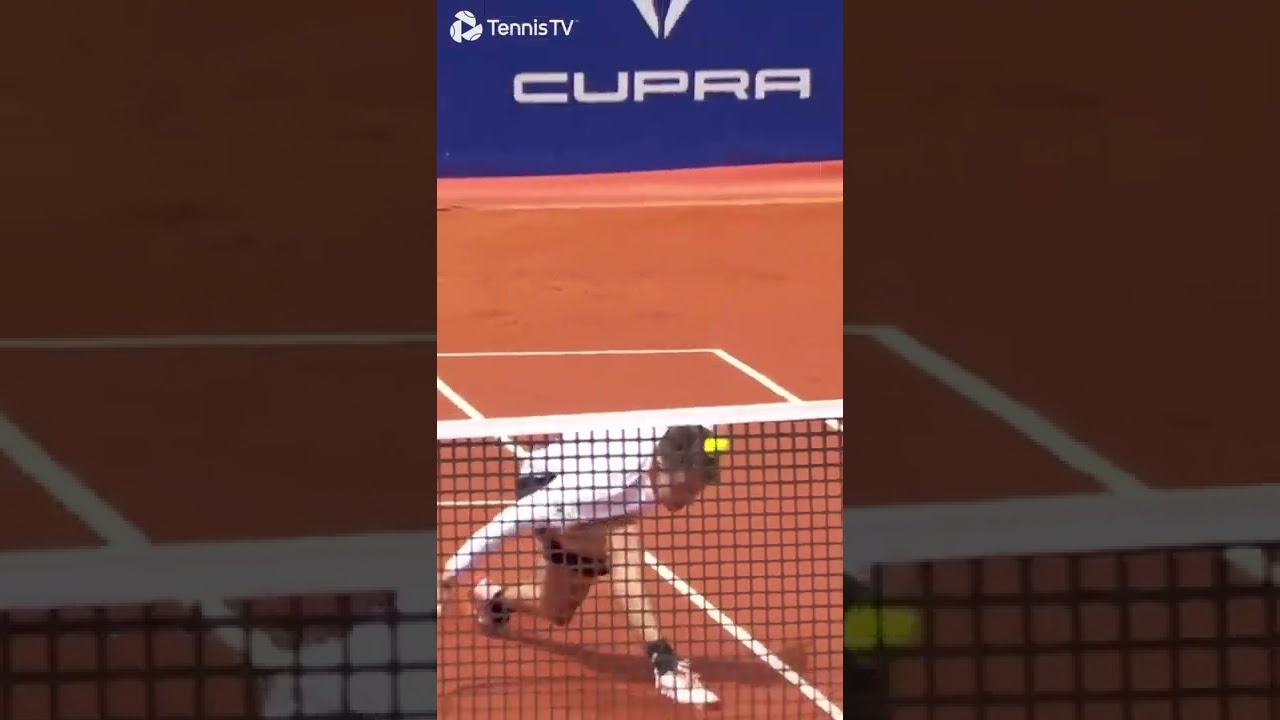
#Shorts Alex De Minaur with an absolutely stunning counter drop shot in Barcelona, 2021…SUBSCRIBE to our channel for the best ATP tennis videos and tennis highlights:

Watch official ATP tennis streams from every tournament:

Tennis TV is the OFFICIAL live streaming service of the ATP Tour.

Tennis TV features live streaming and video on demand of ATP tennis matches in full on PC, Mac, mobile & tablet apps on iOS & Android. Download the app to stream on your device:

Plus Tennis TV is also available to stream tennis on your TV on Apple TV, Roku, Amazon Fire TV, Samsung Smart TV, LG Smart TV, Android TV, PlayStation 4, Xbox One and Chromecast.

To enquire about licensing ATP Tour footage contact IMG Replay:

#tennis #tennistv #sports

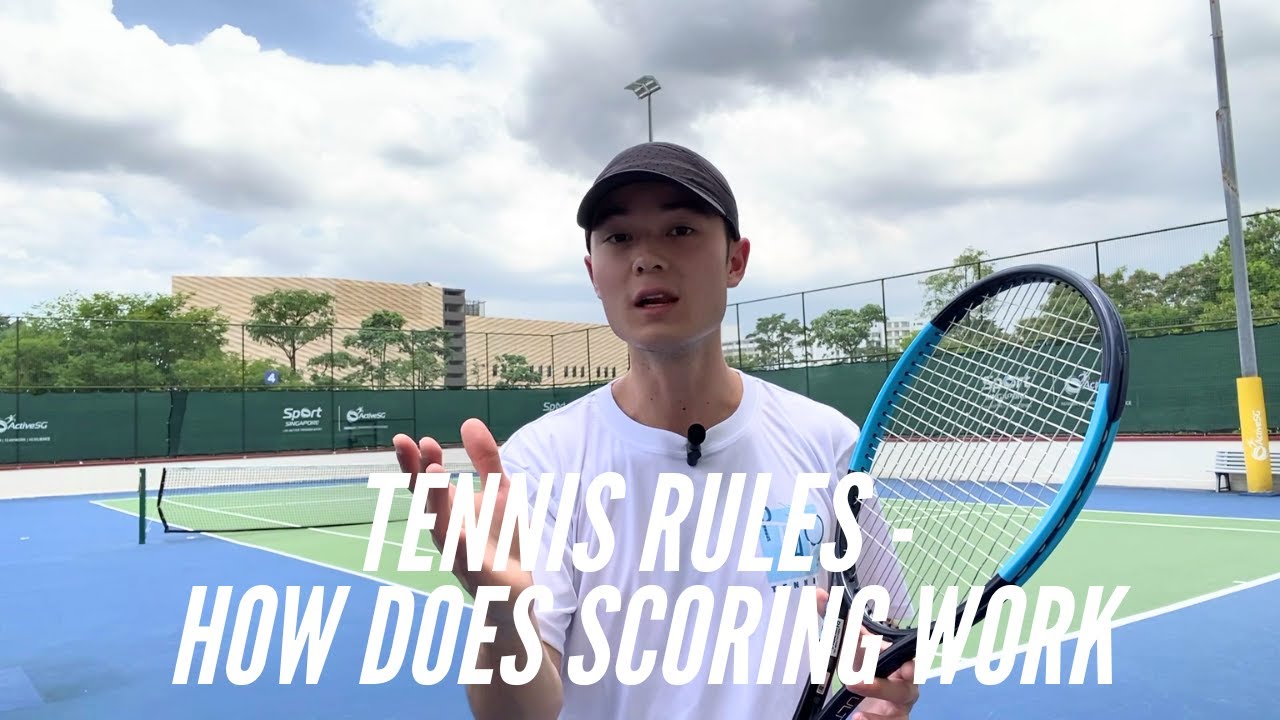
How Tennis Scoring Works: Points, Games, and Sets Explained in Detail


How Tennis Scoring Works: Points, Games, and Sets Explained in Detail

Tennis is one of the most popular individual sports in India, with legends like Leander Paes, Mahesh Bhupathi, and Sania Mirza inspiring millions. However, for a beginner watching the Australian Open or Wimbledon, the tennis scores can seem like a complex mathematical puzzle. Unlike cricket, where runs are linear, tennis follows a unique hierarchy of points, games, and sets.

In this guide, we break down exactly how tennis scoring works so you can follow the next big match with ease.

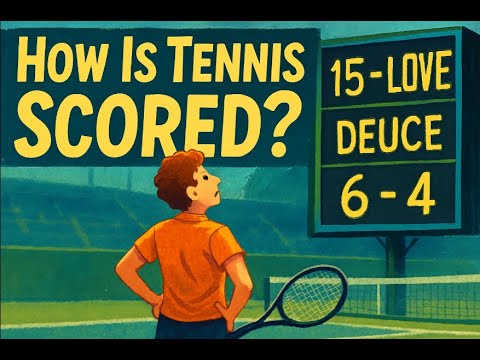
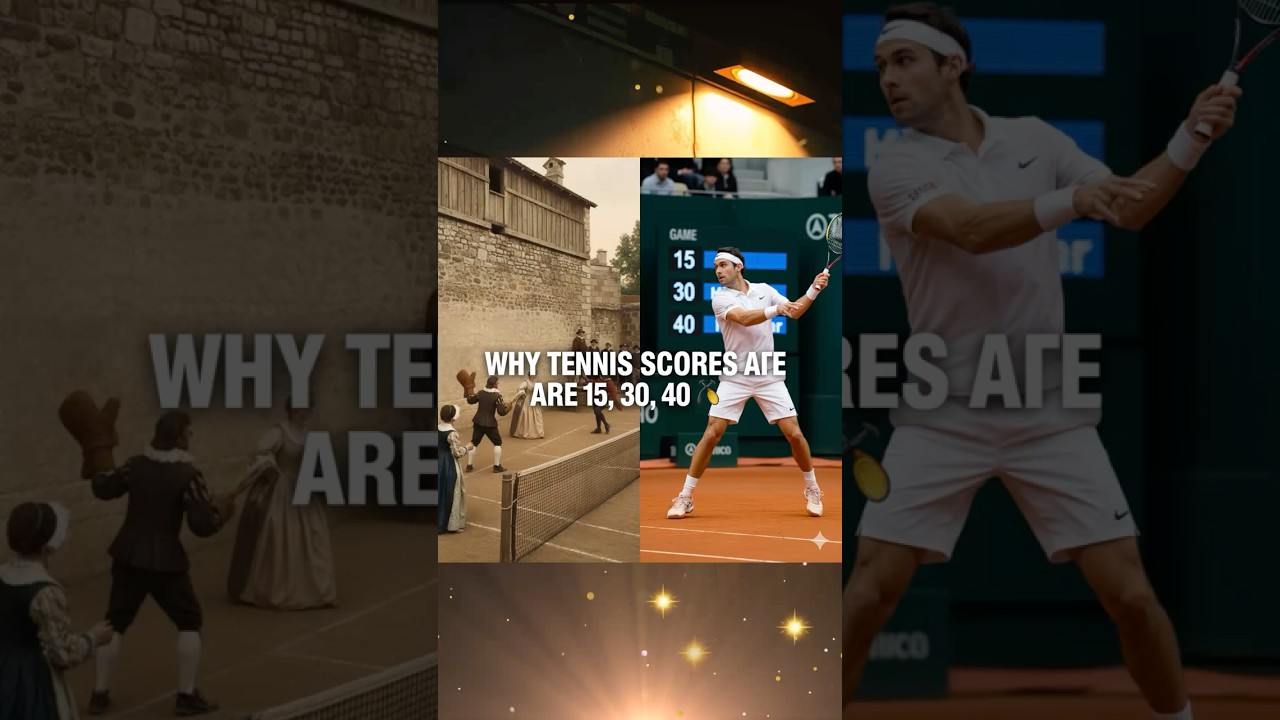
1. The Unusual Point System (0, 15, 30, 40)

A tennis match starts at “Love” (which means zero). The points progress as follows:

  • No point: Love
  • First point: 15
  • Second point: 30
  • Third point: 40
  • Fourth point: Game (End of the game)

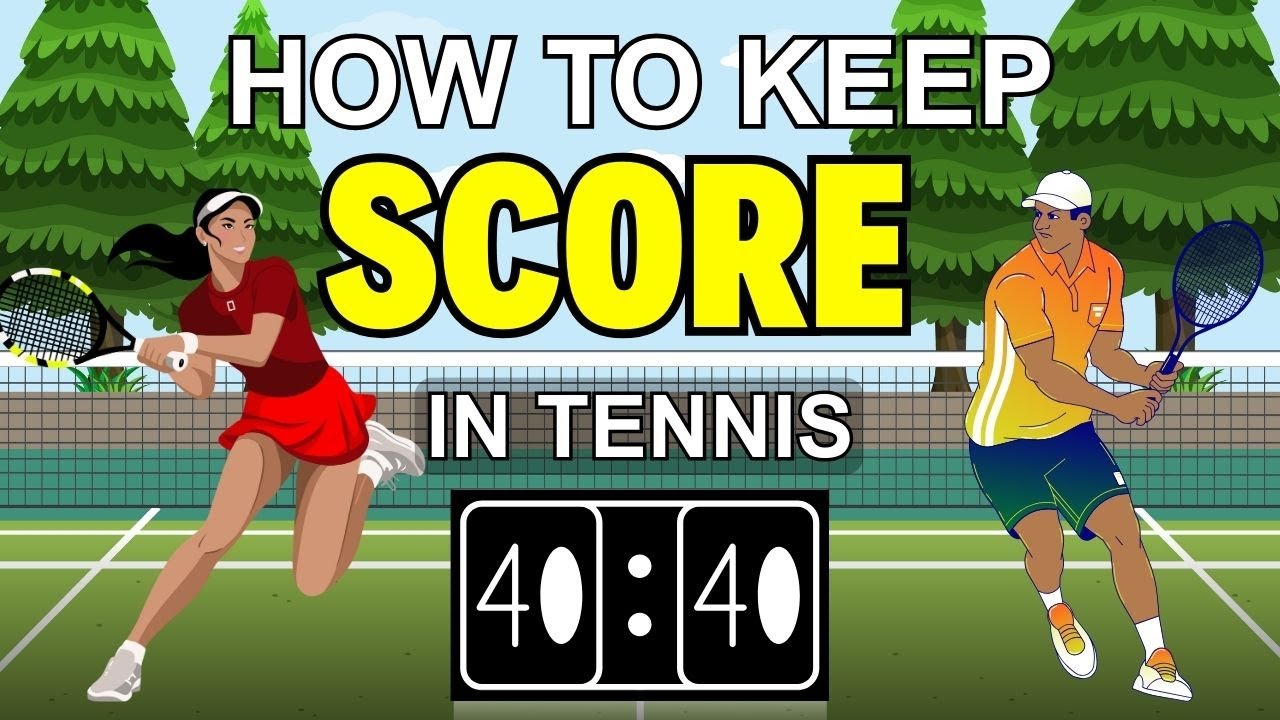
If the score reaches 40-40, it is called a Deuce. From here, a player must win two consecutive points to win the game. The first point won after deuce is called “Advantage.” If that player wins the next point, they win the game; if they lose it, the score returns to Deuce.

2. Winning a Game and a Set

To win a Set, a player must be the first to win at least six games. However, there is a catch: you must win by a margin of at least two games (e.g., 6-0, 6-4).

If the score reaches 5-5 in a set, the players continue until someone wins 7-5. If the score reaches 6-6, a Tie-break is played to decide the winner of the set (resulting in a 7-6 scoreline).

3. The Match Structure

Depending on the tournament, tennis matches are played in two formats:

  • Best of Three Sets: Common in women’s matches and most ATP/WTA tour events. The first player to win 2 sets wins the match.
  • Best of Five Sets: Reserved for men’s singles in Grand Slams (like Wimbledon or the US Open). The first player to win 3 sets wins the match.

4. Special Tennis Score Terms to Know

While watching tennis scores live, you might hear these terms:

  • Break Point: When the player receiving the serve is one point away from winning the game.
  • Hold: When the player serving wins their game.
  • Bagel: Winning a set 6-0.
  • Golden Set: Winning a set without losing a single point (extremely rare!).

Conclusion

While the “Love-15-30-40” system feels strange at first, it adds a layer of psychological pressure that makes tennis one of the most exciting sports in the world. Whether you are hitting the courts in Delhi or Mumbai, or just tracking tennis scores on your phone, understanding these rules helps you appreciate the tactical depth of the game. Now that you know the difference between a Deuce and a Set point, you’re ready to enjoy the next Grand Slam!


Frequently Asked Questions (FAQs)

1. Why is zero called “Love” in tennis?

The most popular theory is that it comes from the French word “l’oeuf,” meaning “the egg,” because an egg looks like a zero.

2. What happens if a match is tied at 6-6 in the final set?

In most modern Grand Slams, a “10-point tie-break” is played. The first player to reach 10 points (with a 2-point lead) wins the final set and the match.

3. Does the server always call the score?

Yes, in casual play, the server should call the score before every serve, starting with their own score first (e.g., “30-15”). In professional matches, the Chair Umpire handles this.

4. How long does a 3-set tennis match usually last?

On average, a 3-set match lasts between 90 minutes to 2 hours, though it can go longer if there are many long rallies or tie-breaks.

Keeping score in tennis is easy once you get the hamg of ot#tennisscore#deuce#advantage#tennis#tennismatch#tennisplayer#shorts@Beyondthebaseline-coach

Even Tennis Players Need a Chilled Pepsi to Beat the Heat 🧊🎾


Even Tennis Players Need a Chilled Pepsi to Beat the Heat 🧊🎾

In the scorching heat of the Indian summer, where temperatures often soar above 40 degrees Celsius, elite athletes and weekend warriors alike face the same formidable opponent: dehydration. While tennis is a sport of precision, endurance, and grace, the grueling sun can drain even the best players. That is where the ultimate refreshment comes in—because even tennis players need a chilled Pepsi to beat the heat.

The Intensity of Tennis in the Indian Sun

Tennis is a physically demanding sport that requires explosive movements and sustained mental focus. In India, playing at local clubs or professional courts during the daytime means battling extreme humidity and sunlight. As sweat pours and energy levels dip, the body craves more than just hydration; it craves a spark of energy and a momentary escape from the swelter.

Whether you are practicing your serve like Rohan Bopanna or engaging in a friendly rally at your local gymkhana, the intensity of the game remains the same. When the set ends and the rackets are put down, nothing compares to the pop of a cold can and that first fizzy sip of a Pepsi.

Why a Chilled Pepsi is the Ultimate Courtside Companion

While water is essential for hydration on the court, the post-match “cooling down” ritual is often about the experience of refreshment. A chilled Pepsi offers a unique combination of crisp carbonation and a sweet kick that acts as a reward after a hard-fought tie-breaker.

  • The Cooling Factor: The icy temperature of a Pepsi helps lower the perceived body heat instantly.
  • The Energy Boost: The light sugar content provides a quick glucose spike to help recover from the fatigue of long rallies.
  • The Social Connection: Sharing a round of Pepsis with your opponent after a match is a quintessential part of Indian sportsmanship and “Yaraana.”

From the Pro Circuit to Your Local Court

Pop culture and sports have long been intertwined. We often see iconic advertisements featuring athletes finding solace in a cold soft drink. For a tennis player, the rhythmic sound of the ball hitting the strings is only rivaled by the sound of a Pepsi bottle opening. In a country like India, where “Swag” and sports go hand-in-hand, a Pepsi isn’t just a drink; it’s an attitude that says, “I can handle the heat.”

Beating the Heat: Tips for Indian Tennis Players

If you are heading out to the court this season, keep these tips in mind to stay at the top of your game:

  1. Play Early or Late: Schedule your matches before 9 AM or after 5 PM to avoid the peak UV rays.
  2. Dress Right: Wear moisture-wicking fabrics and a cap to protect yourself from the sun.
  3. Perfect Your Break: During your changeovers, find some shade and have your chilled Pepsi waiting in an insulated bag.

Conclusion

Tennis is a beautiful game of power and strategy, but the Indian heat is a tough adversary. To maintain your cool and keep your spirits high, you need the right tools for recovery. Even tennis players need a chilled Pepsi to beat the heat, proving that no matter how intense the game gets, there is always time for a refreshing break. So, the next time you pack your tennis kit, don’t forget to include that icy-cold refreshment to celebrate your win!

Frequently Asked Questions (FAQs)

1. Is it okay to drink Pepsi after playing tennis?

Yes, many players enjoy a chilled Pepsi after a match as a way to refresh themselves and get a quick boost of energy after heavy physical exertion.

2. How should I keep my Pepsi chilled at the tennis court?

Use an insulated sports bag or a small ice box with gel packs to ensure your Pepsi stays ice-cold until your match or practice session ends.

3. Does Pepsi help with the heat?

The carbonation and cold temperature provide an immediate cooling sensation, making it a popular choice for beating the sweltering Indian heat post-workout.

4. What is the best time to play tennis in India to avoid the sun?

Early mornings (6:00 AM to 8:30 AM) or late evenings after sunset are the best times to play to avoid direct heat exhaustion.

SUBSCRIBE to our channel for the best ATP tennis videos and tennis highlights:

Watch official ATP tennis streams from every tournament:

Tennis TV is the OFFICIAL live streaming service of the ATP Tour.

Tennis TV features live streaming and video on demand of ATP tennis matches in full on PC, Mac, mobile & tablet apps on iOS & Android. Download the app to stream on your device:

Plus Tennis TV is also available to stream tennis on your TV on Apple TV, Roku, Amazon Fire TV, Samsung Smart TV, LG Smart TV, Android TV, Xbox One as well as AirPlay and Chromecast.

Get help on Tennis TV with our virtual assistant:

Buy Tennis TV merchandise in our store:

Watch the ATP Tour via your local TV broadcaster:

To enquire about licensing ATP Tour footage contact IMG Replay:

#tennis #tennistv #sports
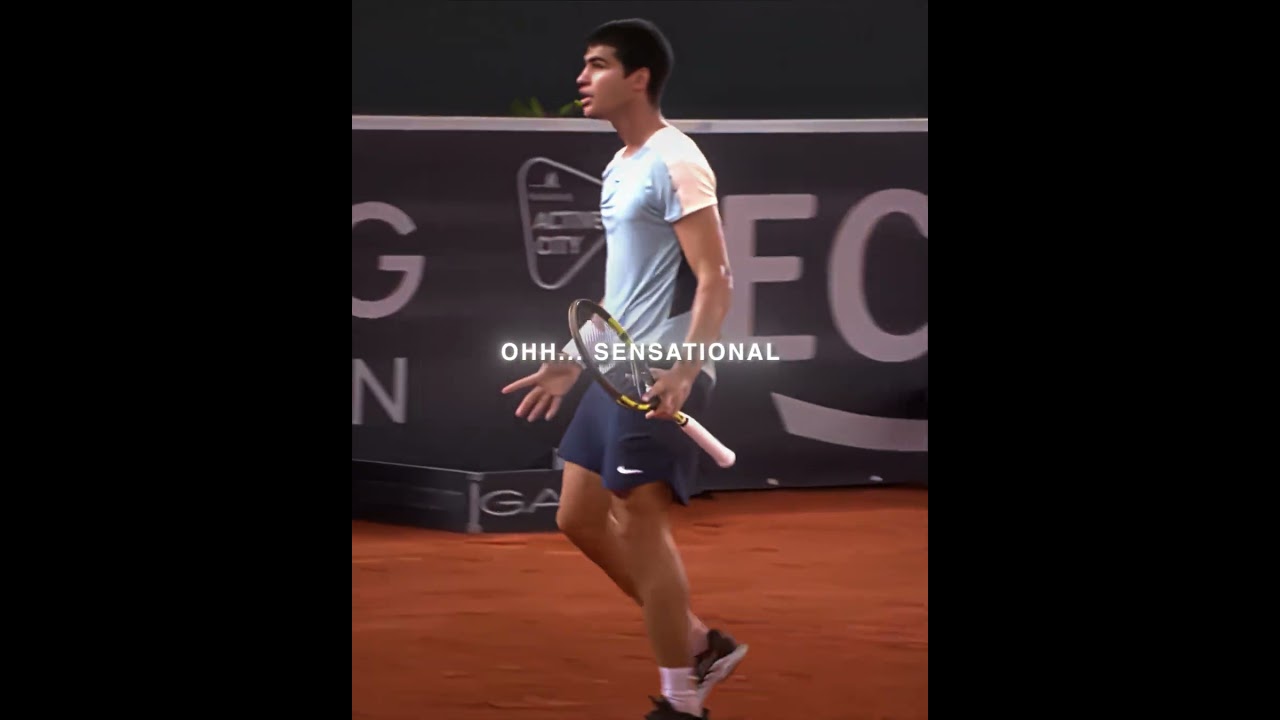
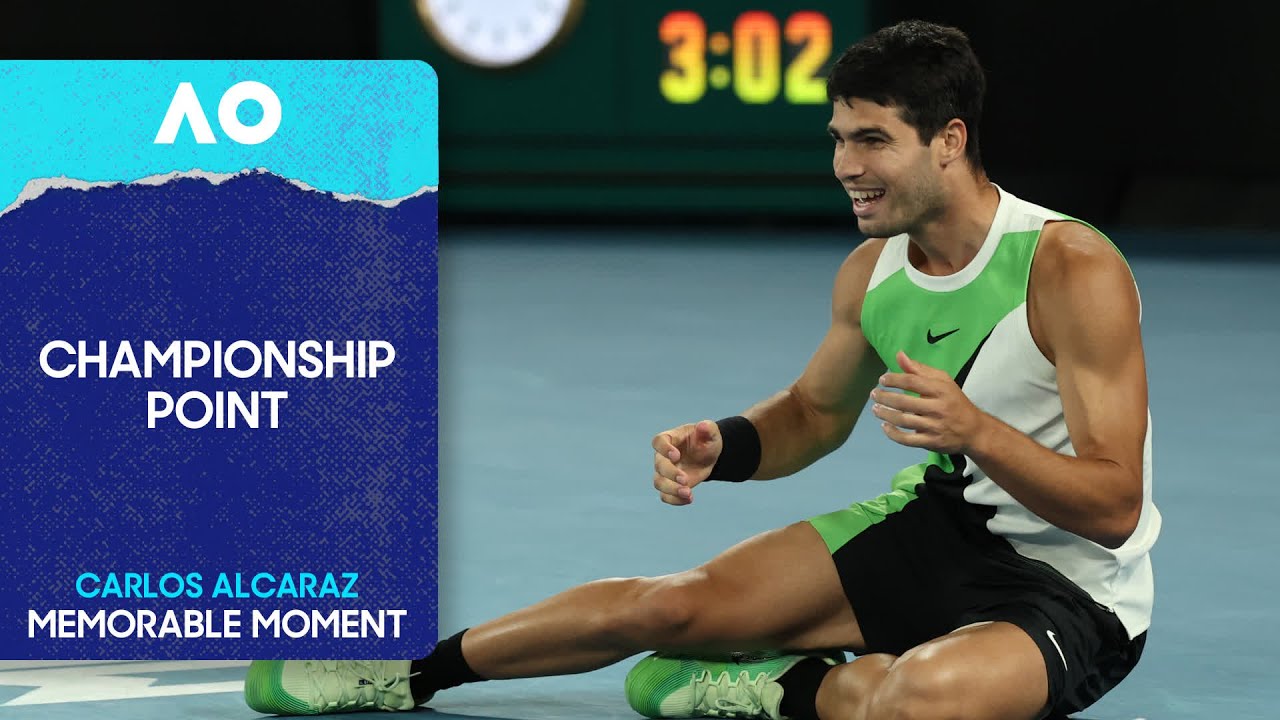
Carlos Alcaraz Wins Australian Open 2026: Career Grand Slam History & Winning Moment


Carlos Alcaraz Wins Australian Open 2026: Achieving the Historic Career Grand Slam

In a historic night at the Rod Laver Arena, Carlos Alcaraz has etched his name into the pantheon of tennis legends by winning the Australian Open 2026. With this monumental victory, the 22-year-old Spaniard has officially completed the Career Grand Slam, becoming one of the youngest players in history to win all four major titles: the US Open, Wimbledon, Roland Garros, and now, the Happy Slam in Melbourne.

The Winning Moment: A Masterclass in Melbourne

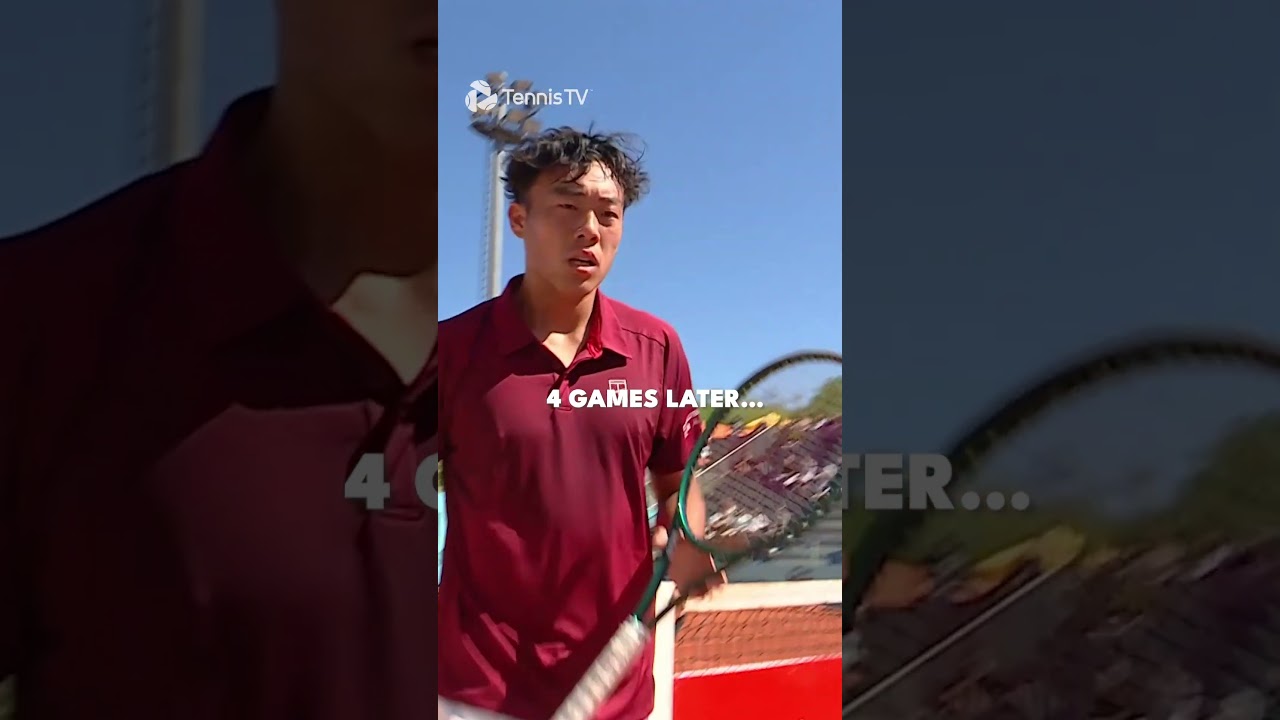
The final was a grueling five-set battle that pushed both athletes to their physical limits. Facing a resilient opponent, Alcaraz displayed his signature blend of raw power, delicate drop shots, and unmatched court coverage. The winning moment came via a blistering forehand winner down the line, followed by Alcaraz collapsing to the blue hardcourt in tears of joy.

For Indian tennis fans who stayed up late into the night to catch the live tennis scores, the atmosphere was electric. Alcaraz’s ability to find his best tennis under pressure solidified his status as the true successor to the “Big Three” era.

Road to the Career Grand Slam

Alcaraz’s journey to the Career Grand Slam has been nothing short of meteoric. By conquering the Australian Open in 2026, he joins an elite club that includes legends like Rafael Nadal, Novak Djokovic, and Roger Federer.

  • US Open (2022): The breakthrough moment as a teenager.
  • Wimbledon (2023): Overthrowing the grass-court giants.
  • French Open (2024): Proving his dominance on the red clay of Paris.
  • Australian Open (2026): The final piece of the puzzle on the Melbourne hardcourts.

Analysis of the 2026 Australian Open Final Scores

The tennis scores for the final reflected a high-octane encounter: 6-4, 3-6, 7-6(5), 4-6, 6-2. The turning point was the fifth set, where Alcaraz’s superior fitness—a hallmark of his training—allowed him to break serve twice and sprint to the finish line. His first-serve percentage remained above 70% in the deciding set, leaving little room for a comeback.

Why This Matters for Indian Tennis Fans

Tennis enjoys a massive following in India, and “Carlitos” has become a household name from Mumbai to Bengaluru. His relentless spirit resonates deeply with the Indian audience, who have long admired the grit of Rafael Nadal. With the 2026 victory, Alcaraz has ensured that the next decade of tennis will be defined by his pursuit of breaking the all-time Grand Slam record.

Conclusion

Carlos Alcaraz’s victory at the Australian Open 2026 is more than just another trophy; it is a declaration of a new era. By achieving the Career Grand Slam at such a young age, he has bridged the gap between potential and immortality. As the tennis world looks ahead, the question is no longer if he will win more, but how many records he will shatter along the way.

Frequently Asked Questions (FAQs)

1. Did Carlos Alcaraz win the Australian Open 2026?

Yes, Carlos Alcaraz defeated his opponent in a five-set thriller to claim his first Australian Open title in 2026.

2. What is a Career Grand Slam in tennis?

A Career Grand Slam is achieved when a player wins all four major tournaments (Australian Open, French Open, Wimbledon, and US Open) at least once during their career.

3. How many Grand Slams does Carlos Alcaraz have now?

Following his 2026 Australian Open win, Carlos Alcaraz has secured his 5th Grand Slam title (counting his previous wins at the US Open, Wimbledon, and Roland Garros).

4. Where can I check live tennis scores in India?

Indian fans can check live tennis scores on platforms like SonyLIV, the ATP Tour website, or major sports news portals like ESPN India and Cricbuzz (Sports section).

5. Who was the youngest player to achieve a Career Grand Slam?

While records vary, Carlos Alcaraz is now among the top three youngest men to achieve this feat, alongside Rafael Nadal and Andre Agassi.

The moment Carlos Alcaraz beat Novak Djokovic in the final of the Australian Open 2026.

Subscribe to keep up with the latest from the Australian Open:

Welcome to the official Australian Open TV YouTube channel. The Australian Open 2026 main draw runs from 18 January – 1 February in Melbourne. The tournament takes place for the 114th time and is the first Grand Slam of the year. Jannik Sinner is the men’s singles reigning champion and Madison Keys is the women’s singles reigning champion. The tournament takes place on 25 hard courts, including Rod Laver Arena, Margaret Court Arena and John Cain Arena. Look out for highlights, press conferences, memorable moments and much more!

Facebook:
X:
Instagram:
TikTok:
Website:

Follow live coverage of all matches, breaking news, updates, highlights and more on:
Nine (Australia):
Eurosport (Europe):
ESPN (Americas):
beIN Sports (South East Asia, MENA):
And visit: for all our broadcast partners worldwide

Master Tennis Basics: Simple Drills to Improve Your Game 🎾 #TennisIndia


Master Tennis Basics: Simple Drills to Improve Your Game 🎾 #TennisIndia

Tennis is rapidly gaining popularity across India, from the bustling academies in Delhi and Mumbai to local clubs in Bangalore and Chennai. Whether you are inspired by the legends of Indian doubles or the rising stars on the ATP/WTA tours, everyone starts at the same place: The Basics.

To move from a beginner to a confident club player, you don’t need expensive gadgets; you need consistent practice with foundational drills. Here is how you can master tennis basics and level up your game. #TennisIndia

1. The “Ghosting” Drill for Footwork

In the hot and humid conditions often found in India, efficiency is key. Footwork is the most critical aspect of tennis. “Ghosting” refers to practicing your movements without a ball.

  • How to do it: Stand on the baseline and shadow a forehand, then shuffle back to the center. Repeat for the backhand.
  • Why it works: It builds muscle memory and ensures you are always in the right position once the ball actually comes at you.

2. The Wall Rally: Your Best Coach

Many Indian tennis legends started their journey hitting against a simple brick wall. It is the most honest coach you will ever have—the harder you hit, the faster it comes back.

  • The Drill: Stand about 10-15 feet from a wall. Try to maintain a rally of 20 consecutive strokes using only your forehand, then switch to your backhand.
  • Focus: Keep your knees bent and focus on the “contact point” in front of your body.

3. The Service Box Target Practice

The serve is the only shot in tennis you have complete control over. Instead of just hitting balls over the net, use targets. Use old tennis ball cans or water bottles and place them in the corners of the service box.

In India’s hard-court dominant environment, a flat serve into the “T” or a wide slice can be a game-changer. Aim to knock down the targets to improve your precision and control.

4. The Figure-8 Drill

This is a classic drill to improve stamina and court coverage. It requires two players. One player hits cross-court shots, while the other hits everything down the line. This forces one player to run in a “Figure-8” pattern across the court.

This drill is excellent for building the cardiovascular endurance needed for long matches under the Indian sun.

Conclusion

Mastering tennis basics is not about hitting the ball as hard as you can; it is about consistency, rhythm, and movement. By incorporating these simple drills into your weekly routine, you will notice a significant improvement in your confidence and match-play performance. Remember, every pro was once a beginner who refused to give up on the fundamentals. Grab your racket, head to the nearest court, and let’s grow the community! #TennisIndia


Frequently Asked Questions (FAQs)

1. What is the best age to start learning tennis in India?

While many pros start between ages 5 and 8, tennis is a sport for life. In India, many adults take up the sport in their 30s and 40s for fitness and social interaction. It is never too late to start!

2. Do I need a professional racket to start these drills?

No. For beginners, a mid-range graphite racket is sufficient. As your swing speed and technique improve, you can transition to more advanced, head-light or head-heavy rackets based on your play style.

3. How often should I practice these drills?

Consistency is more important than duration. Practicing these drills for 30 to 45 minutes, three times a week, will yield better results than a single five-hour session once a month.

4. Which surface is most common in India for practice?

Hard courts are the most common in India. They are great for beginners because the ball bounce is predictable, making it easier to practice the drills mentioned above.

5. How can I find tennis partners in my city?

You can use local sports apps like Playo, join Facebook groups dedicated to Indian tennis, or simply visit your local government or private sports complex to meet fellow enthusiasts.

Wall traning infinite loop

How Tennis Scoring Works: A Simple Guide for Beginners (Points, Sets & Games)


How Tennis Scoring Works: A Simple Guide for Beginners (Points, Sets & Games)

Tennis is rapidly growing in popularity across India. From watching Grand Slam finals late at night to hitting the local courts in cities like Mumbai, Delhi, and Bangalore, more Indians are picking up the racket than ever before. However, for a beginner, the tennis scores system can seem a bit baffling. Why is the first point called 15? What on earth is ‘Love’?

In this guide, we break down the scoring system into simple steps so you can follow the next match or play your first tournament with confidence.

1. The Foundation: Points

In most sports, you count 1, 2, 3. In tennis, points have unique names. Every game starts at 0-0, which is called “Love-All”.

  • No points: Love
  • 1st point: 15
  • 2nd point: 30
  • 3rd point: 40
  • 4th point: Game (End of the game)

What is Deuce and Ad?

If both players reach 40-40, it is called a Deuce. To win from a deuce, a player must win two consecutive points:

  • The first point won after deuce is called Advantage (Ad).
  • If the player with the advantage wins the next point, they win the game.
  • If they lose it, the score returns to Deuce.

2. Winning the Game: Games & Sets

To win a Set, a player must generally win at least six games. However, there is a catch: you must win by a margin of at least two games (e.g., 6-4).

If the score reaches 5-5, the set continues. If it reaches 6-6, a Tie-break is played to decide the winner of the set (resulting in a 7-6 score).

3. The Big Picture: Winning the Match

The structure of a match depends on whether it is a Men’s or Women’s event:

  • Best of 3 Sets: Common in most ATP/WTA tours and Women’s Grand Slams. The first person to win 2 sets wins.
  • Best of 5 Sets: Played in Men’s Grand Slams (like Wimbledon or the Australian Open). The first person to win 3 sets wins.

Important Tennis Terms Every Indian Fan Should Know

  • Break Point: When the player receiving the serve is one point away from winning the game.
  • Ace: A legal serve that the opponent doesn’t touch, resulting in an immediate point.
  • Unforced Error: A mistake made by a player that wasn’t caused by the opponent’s good play.

Conclusion

While the tennis scoring system feels unusual at first, it follows a logical hierarchy: Points make Games, Games make Sets, and Sets make the Match. Whether you are watching a local talent at the RK Khanna Stadium or following Sania Mirza’s legacy, understanding these basics makes the game much more thrilling. Keep this guide handy, and you’ll be calling out the scores like a pro in no time!


Frequently Asked Questions (FAQs)

1. Why is zero called “Love” in tennis?

The most popular theory is that it comes from the French word “l’oeuf”, meaning “the egg,” because an egg looks like a zero. Over time, it evolved into the English word “Love.”

2. Who serves first in a tennis match?

A coin toss or a “spin of the racket” determines who serves first. In India, players often spin the racket and ask “up or down” regarding the logo on the handle.

3. What happens if a serve touches the net?

If the ball touches the net but still lands in the correct service box, it is called a “Let”. The server gets to retake that serve without penalty.

4. How long does a tennis match usually last?

A best-of-three-sets match usually lasts between 90 minutes to 2 hours, though some can go longer depending on how competitive the games are.

5. Is the scoring different for doubles?

The basic scoring (15, 30, 40) remains the same. However, in some professional doubles tournaments, a “Deciding Point” is played at Deuce (No-Ad scoring) to speed up the game.

Confused by tennis scores like 15-love, deuce, or tiebreak? 🤯 You’re not alone! In this video, we break down the unique scoring system of tennis from the ground up—perfect for beginners or anyone who’s ever wondered why the game starts at 15 instead of 1. 😅

Whether you’re new to the game or just want a refresher, you’ll learn:
✅ What “love” means
✅ How games, sets, and matches work
✅ What happens in a deuce
✅ How tiebreaks are played
✅ Fun facts about tennis scoring 🎾

📺 Hit play and level up your tennis knowledge in minutes!
👍 Don’t forget to like, comment, and subscribe for more sports breakdowns!

Top Tennis Coaching & Training for Beginners in India | Join Now


Top Tennis Coaching & Training for Beginners in India: Your Path to the Court

Tennis is no longer just a “gentleman’s game” in India; it has evolved into a mainstream passion. From the legendary success of Leander Paes and Mahesh Bhupathi to the trailblazing career of Sania Mirza and the rising star Sumit Nagal, India has a rich history on the court. If you are looking to pick up a racket for the first time, finding the right tennis coaching and training for beginners in India is the first step toward excellence.

Why Start Your Tennis Journey in India?

India boasts a diverse range of tennis academies equipped with synthetic, clay, and grass courts. Whether you are a young student aiming for the ATP/WTA circuit or an adult looking for a high-intensity fitness routine, tennis offers unparalleled cardiovascular benefits, improved hand-eye coordination, and mental discipline.

Top Features of Beginner Tennis Programs

If you are searching for the best training, look for academies that offer the following:

  • Certified Coaches: Training under AITA (All India Tennis Association) or ITF (International Tennis Federation) certified coaches ensures you learn the correct technique from day one.
  • Modern Infrastructure: Access to floodlit courts and modern ball machines helps in consistent practice.
  • Specialized Kids’ Programs: Many academies use “Progressive Tennis” with smaller courts and softer balls for children.
  • Fitness & Nutrition: Top-tier coaching centers provide physical conditioning and diet charts tailored for athletes.

Renowned Tennis Academies in India

While local clubs are great for hobbies, some academies have set a benchmark for professional tennis training:

  • Rohan Bopanna Tennis Academy (Bengaluru): Known for its world-class facilities and global coaching standards.
  • Sania Mirza Tennis Academy (Hyderabad): A premier destination for budding talent, especially focusing on grassroots development.
  • Mahesh Bhupathi Tennis Academies (Multiple Cities): With centers in cities like Mumbai, Delhi, and Bangalore, MBTA is accessible and highly structured.
  • Impact Tennis Academy (Chandigarh): A hub for competitive players in North India.

Essential Gear for Beginners

Before you join a session, ensure you have the basics:

  1. The Right Racket: Beginners should opt for lightweight frames with a larger head size for a bigger “sweet spot.”
  2. Tennis Shoes: Unlike running shoes, tennis shoes provide the lateral support needed for side-to-side movements on the court.
  3. Comfortable Apparel: Breathable, moisture-wicking fabrics are essential for the Indian climate.

Conclusion

Starting your journey in tennis is an investment in your health and discipline. With the rise of world-class academies across major Indian cities, professional tennis coaching and training for beginners is more accessible than ever. Whether your goal is to play professionally or simply to enjoy a weekend match, the right guidance will help you master the serves, volleys, and groundstrokes needed to dominate the court. Join now and take your first step toward becoming the next Indian tennis sensation!


Frequently Asked Questions (FAQs)

1. What is the best age to start tennis coaching in India?

While you can start at any age, most coaches recommend starting between ages 5 and 8. At this age, children develop the necessary motor skills and coordination required for the sport.

2. How much does tennis coaching cost in India?

The fees vary depending on the city and the academy. On average, beginner classes can range from ₹2,000 to ₹5,000 per month for group sessions. Private coaching may cost more.

3. Do I need to buy a racket before my first class?

Most academies provide rackets for the first few trial sessions. It is better to consult your coach before purchasing one, as they can recommend the right size and weight for your skill level.

4. Is tennis a good workout for adults?

Absolutely! Tennis is a full-body workout that improves heart health, burns calories, and builds leg strength. Many academies in India offer “Adult Beginner” batches specifically for fitness enthusiasts.

5. How many days a week should a beginner practice?

For beginners, 2 to 3 days a week is ideal to build muscle memory without overstraining the body. As you progress, you can increase the frequency of your training sessions.

Tennis Scoring Rules Explained: How Points, Games, and Sets Work (in Hindi/English)


Tennis Scoring Rules Explained: How Points, Games, and Sets Work

Tennis is one of the most popular sports globally, and its popularity is rapidly growing in India. However, for a beginner, the tennis scoring system can seem a bit confusing. Unlike cricket or football where you count 1, 2, 3, tennis uses a unique system of 15, 30, and 40.

In this guide, we will break down tennis scores in simple terms (Hindi/English mix) to help you understand how a player wins a match.

The Three Pillars of Tennis Scoring

To understand a tennis match result, you need to understand three levels of scoring:

  • Points: The smallest unit of scoring.
  • Games: A collection of points.
  • Sets: A collection of games.

1. How Points Work (Game Level)

Every game starts at 0-0. In tennis terminology, zero is called “Love.” Points progress as follows:

  • No point: Love
  • 1st point: 15
  • 2nd point: 30
  • 3rd point: 40
  • 4th point: Game (Win)

What are Deuce and Advantage?

If both players reach 40-40, it is called a Deuce. To win from a deuce, a player must win two consecutive points:

  1. Advantage: The player who wins the first point after deuce gets the “Advantage.”
  2. Game: If that same player wins the next point, they win the game. If they lose it, the score returns to Deuce.

2. How Games Work (Set Level)

To win a Set, a player must usually win at least 6 games. However, there is a rule: you must win by a margin of at least two games (e.g., 6-4 or 6-0).

If the score reaches 5-5, players continue until someone wins 7-5. If the score reaches 6-6, a Tie-break is played to decide the winner of the set.

3. How Sets Work (Match Level)

Most professional tennis matches are played in two formats:

  • Best of 3 Sets: Common in Women’s matches (WTA) and most ATP tournaments. The first player to win 2 sets wins the match.
  • Best of 5 Sets: Usually seen in Men’s Grand Slams (like Wimbledon or the Australian Open). The first to win 3 sets wins the match.

Summary of Tennis Scores terminology

English TermMeaning in Hindi (Explanation)
LoveZero (शून्य)
Deuceबराबर स्कोर (40-40)
Serviceबॉल को खेल में डालना
Break Pointजब रिसीवर को गेम जीतने के लिए सिर्फ एक पॉइंट चाहिए हो

Conclusion

Understanding tennis scoring rules might feel like learning a new language at first, but once you grasp the 15-30-40 sequence, the rest falls into place. Whether you are watching a local tournament in Delhi or cheering for Rohan Bopanna in a Grand Slam, knowing how tennis scores work makes the experience much more thrilling.

Frequently Asked Questions (FAQs)

1. Why is zero called “Love” in tennis?

It is widely believed to come from the French word “l’oeuf,” meaning “the egg,” because an egg looks like a zero.

2. What happens if the set score is 6-6?

A tie-break is played. In a tie-break, points are counted as 1, 2, 3… The first person to reach 7 points (with a 2-point lead) wins the set 7-6.

3. What does “Ad-in” and “Ad-out” mean?

Ad-in (Advantage In) means the server has the advantage. Ad-out (Advantage Out) means the receiver has the advantage.

4. How long does a tennis match last?

There is no fixed time. A match can last from 1 hour to over 5 hours, depending on how close the sets are!

The secret? It’s all about CONTEXT. But what kind of context actually changes everything?

🎾 Is it WHO’S serving?
🎾 Is it WHEN in the match?
🎾 Is it what’s at stake?
🎾 Or something else entirely?

This video breaks down multiple contexts that make identical scores mean totally different things. Learn the full explanation in my full video (link in comments) 👆

Perfect timing for US Open season! Now you’ll finally understand why commentators and players lose their minds over certain points 🏆

What tennis reactions confuse you most? Tell me below! 👇

🎾 Follow @playopencourttennis for tennis rules and scoring explanations so everyone can enjoy the game!

#tennisrules #TennisExplained #tennisscoring #TennisEducation #TennisForBeginners #LearnTennis #tennistips

Alex Eala’s Biggest Supporter: Meet the Tennis Star’s No. 1 Fan 🎾❤️✨


Alex Eala’s Biggest Supporter: Meet the Tennis Star’s No. 1 Fan 🎾❤️✨

In the high-octane world of professional tennis, talent and grit are essential, but behind every champion stands a pillar of unwavering support. For Filipino tennis sensation Alex Eala, who has been making waves across the globe—including significant performances in India—the journey to the top is a family affair. While thousands cheer her on from the stands, one person holds the title of her “No. 1 Fan.”

The Rising Icon: Alex Eala and the Indian Connection

Alex Eala is not just a name in the Philippines; she is a global brand. Having trained at the prestigious Rafa Nadal Academy, Eala has climbed the WTA rankings at a lightning pace. For Indian tennis enthusiasts, Eala became a household name following her impressive stints at the W50 Pune and W50 Indore tournaments, where she showcased her aggressive baseline play and incredible mental fortitude.

Indian fans often draw parallels between Eala’s rise and the growth of tennis in India, appreciating her humility and the strong family values she carries into every match. But who is the driving force behind this young star?

Meet the No. 1 Fan: A Family Legacy

If you look closely at the player’s box during any of Alex’s matches, you will consistently see her family. However, her biggest supporter and the person she credits for her mental strength is her mother, Rizza Maniego-Eala.

Rizza is no stranger to the demands of elite athletics; she was a 100-meter backstroke bronze medalist in the 1985 Southeast Asian Games. This athletic pedigree has allowed her to provide Alex with more than just emotional support—she provides a blueprint for professional excellence. Whether it’s a grueling three-set match in Mumbai or a Grand Slam qualifier, Rizza is the silent force ensuring Alex remains grounded and focused.

The Role of Support in Professional Tennis

Tennis is famously one of the loneliest sports. Traveling week after week to different time zones can take a toll. This is why having a “No. 1 Fan” who doubles as a mentor is vital. For Alex, her support system includes:

  • Technical Guidance: Coaches from the Nadal Academy.
  • Emotional Anchor: Her mother and father, who travel across continents.
  • The Global “Eala-Nation”: A growing fanbase in India and Southeast Asia.

During her visits to India, Eala noted the warmth of the local fans, stating that the energy in the Indian stadiums feels like a “home away from home.” This connection with the audience is what helps her push through the final sets of a demanding match.

Conclusion

Alex Eala’s journey from a young girl in Manila to a global tennis star is a testament to hard work and the power of a strong support system. Behind the trophies and the rankings is a team led by her mother, her biggest fan, who understands the sacrifice required to reach the pinnacle of sport. As Alex continues to inspire young players in India and beyond, her story reminds us that while the player holds the racket, it is the love and support from the sidelines that truly wins the game.


Frequently Asked Questions (FAQs)

1. Who is Alex Eala’s biggest supporter?

While she has a massive global fanbase, her mother, Rizza Maniego-Eala (a former SEA Games medalist), is widely considered her “No. 1 Fan” and primary mentor.

2. Has Alex Eala played professional tournaments in India?

Yes, Alex Eala has participated in several ITF and WTA-level tournaments in India, notably in cities like Pune and Indore, where she has gained a significant Indian following.

3. Where does Alex Eala train?

Alex Eala is a scholar and trainee at the Rafa Nadal Academy in Mallorca, Spain, which has been instrumental in her transition from junior to professional tennis.

4. What is Alex Eala’s highest WTA ranking?

Alex Eala has consistently broken records for Philippine tennis, reaching the top 150 in the WTA rankings and continuing to climb as she competes in major world circuits.

5. Why is Alex Eala popular among Indian tennis fans?

Indian fans admire her “never-say-die” attitude and her success as an Asian athlete on the international stage. Her frequent participation in Indian tournaments has also helped build a local fanbase.

Behind every champion is someone who believes first. Meet Miko Eala, Alex Eala’s older brother, mentor, and first tennis partner. From a standout college player to her quiet source of strength, Miko’s unwavering support helped shape one of Philippine tennis’s brightest stars. 🎾💪 #alexeala #mikoeala #tennis

FAIR USE DISCLAIMER
This video is created for educational and transformative purposes under the Fair Use Doctrine (17 U.S.C. §107). It offers original commentary, critique, and meaningful adaptation, adding value beyond the original material.

Tennis Rules & Scoring Explained: A Simple Guide for Beginners (2024)


Tennis Rules & Scoring Explained: A Simple Guide for Beginners (2024)

With the rising popularity of stars like Rohan Bopanna and Sumit Nagal, more Indians are picking up tennis rackets than ever before. However, for a beginner, the tennis scoring system can feel like a different language. Why do they say “Love” instead of zero? What exactly is a “Deuce”?

In this guide, we break down the fundamental tennis rules and the unique tennis scores system to get you match-ready in no time.

The Basics: Objective of the Game

The goal of tennis is simple: hit the ball over the net into the opponent’s court in a way that they cannot return it. A match is composed of Points, which make up Games, which make up Sets.

Understanding Tennis Scores: Point by Point

Unlike cricket or football, tennis doesn’t use 1, 2, 3, or 4. Instead, it uses a specific progression:

  • 0 Points = “Love”
  • 1 Point = 15
  • 2 Points = 30
  • 3 Points = 40
  • 4 Points = Game Over

What is Deuce and Advantage?

If both players reach a score of 40-40, it is called a Deuce. To win from a deuce, a player must win two consecutive points:

  1. Advantage: The player who wins the first point after deuce has the “Advantage.”
  2. Game: If that same player wins the next point, they win the game. If they lose it, the score goes back to Deuce.

Winning Sets and Matches

In most professional formats (and local clubs in India):

  • To win a Set: A player must win at least 6 games and be ahead by at least 2 games (e.g., 6-4).
  • Tie-break: If the score reaches 6-6 in games, a tie-break is played to decide the set winner.
  • To win a Match: Most matches are “Best of 3 Sets” (first to win 2 sets). In Men’s Grand Slams, it is “Best of 5 Sets.”

Fundamental Tennis Rules for Beginners

Before you step onto the court at your local academy, keep these essential rules in mind:

1. The Serve

The game starts with a serve from behind the baseline. The server must hit the ball into the diagonally opposite service box. You get two chances (First Serve and Second Serve). If both hit the net or land out, it’s a “Double Fault,” and your opponent gets the point.

2. In or Out?

If any part of the ball touches the line, it is considered IN. If the ball hits the net but still lands in the correct service box during a serve, it is called a “Let,” and the serve is re-taken.

3. Sides of the Court

Players switch ends of the court after every odd number of games (1, 3, 5, etc.). This ensures fairness regarding sun glare or wind direction.

Conclusion

While the 15, 30, and 40 scoring might seem confusing at first, it becomes second nature once you start playing. Whether you are watching the Australian Open on TV or playing at a court in Delhi or Mumbai, understanding these rules makes the game significantly more enjoyable. Now that you know how tennis scores work, it’s time to grab a racket and hit the court!

Frequently Asked Questions (FAQs)

1. Why is zero called “Love” in tennis?

It is widely believed to come from the French word “l’oeuf,” meaning “the egg,” because an egg looks like a zero. Others say it comes from the phrase “to play for the love of the game.”

2. What is the difference between Singles and Doubles lines?

In singles, the “alleys” (the strips on the sides of the court) are out of bounds. In doubles, the entire court—including the alleys—is considered in-bounds after the serve.

3. How long does a typical tennis match last?

A best-of-three-set match usually lasts between 90 minutes to 2 hours, though it can vary greatly depending on the players’ skill levels.

4. Can I hit the ball before it bounces?

Yes, this is called a “volley.” However, you cannot volley the ball while receiving a serve; the serve must bounce once before you can return it.

Hi everyone, Coach Zee here! In today’s video, I’m breaking down the basic rules of tennis to help kids (and parents!) understand the essentials. From learning the parts of the court to understanding scoring, I’ll walk you through each part of the game so kids can enjoy playing, watching, and even competing with a strong foundation.

We’ll cover:

Court layout for singles and doubles
Basic gameplay rules and serving
Scoring explained (points, games, sets, and even tiebreaks!)
Fun examples and an easy-to-follow scoreboard to keep it simple!
If you have any questions, drop them in the comments. And don’t forget to like and subscribe for more tennis tips. See you on the court!

Karolina Pliskova Slow Motion Serve Analysis: Learn Pro Tennis Serve Technique


Karolina Pliskova Slow Motion Serve Analysis: Learn Pro Tennis Serve Technique

In the world of professional women’s tennis, few serves are as feared and respected as that of Czech star Karolina Pliskova. Known as the “Ace Queen,” Pliskova’s serve is a masterclass in efficiency, rhythm, and technical precision. For aspiring tennis players in India—where the sport is rapidly growing in popularity—studying a slow-motion analysis of her serve provides a blueprint for improving your own game.

The Foundation: Grip and Stance

The journey to a pro-level serve begins even before the ball is tossed. Pliskova utilizes a classic Continental Grip, which is essential for generating both power and spin. In slow-motion footage, you will notice her relaxed stance. She stays calm, keeping her weight slightly on the front foot before beginning the rocking motion that initiates her rhythm. For Indian club players, maintaining this “controlled calm” is the first step toward consistency.

The Toss and “Trophy Phase”

Watching Pliskova in slow motion reveals a perfectly vertical ball toss. She releases the ball at eye level, ensuring it reaches a peak height that allows her to fully extend her 186cm frame.

As the ball rises, she enters the “Trophy Position.” Her elbow is back, her knees are bent (creating a “leg drive”), and her left arm is pointing straight up. This phase is crucial because it stores potential energy. Most amateur players rush this step; Pliskova, however, demonstrates a brief “pause” that allows for perfect timing.

The Loading and Leg Drive

Pliskova uses a platform stance, meaning her feet stay relatively still during the serve. In slow motion, you can see her deep knee bend. This is where her power originates. By pushing off the ground, she transfers energy from her legs, through her core, and finally into the racket head. For Indian juniors looking to increase their serve speed, focusing on this leg drive—rather than just arm strength—is a game-changer.

The Contact Point and Pronation

The beauty of the Pliskova serve is the contact point. She hits the ball at the highest possible point of her reach. Slow-motion analysis shows her “snapping” her wrist through the ball—a technical move called pronation. This allows her to hit “down” on the ball, creating a sharp angle that makes the ball bounce high and wide, away from the opponent.

Final Follow-Through

A serve doesn’t end at contact. Pliskova’s follow-through is smooth, with her racket finishing across her body. This ensures her shoulder is protected from injury and that the momentum of the serve carries her forward into the court, ready for the next shot.

Conclusion

The Karolina Pliskova slow-motion serve analysis highlights that power isn’t about brute force; it’s about timing and technique. By breaking down her serve into the toss, trophy position, leg drive, and pronation, Indian tennis enthusiasts can refine their own mechanics. Whether you are playing on the clay courts of Kolkata or the hard courts of Mumbai, adopting these professional cues will undoubtedly help you hold serve with more confidence.


Frequently Asked Questions (FAQs)

1. Why is Karolina Pliskova’s serve considered one of the best?

Her serve is highly effective due to its consistency and disguise. She uses the same toss for flat, slice, and kick serves, making it incredibly difficult for opponents to read her direction.

2. What grip does Pliskova use for her serve?

Like almost all professionals, she uses the Continental Grip (often referred to as the “Hammer Grip”). This grip is essential for achieving the wrist snap (pronation) required for power and spin.

3. Can amateur players learn from her platform stance?

Yes. Many players find the platform stance (feet apart) more stable than the pinpoint stance (sliding the back foot forward). It provides a solid base and helps in maintaining balance throughout the service motion.

4. How can I increase my serve speed like Pliskova?

Focus on your racket head speed and leg drive. Slow-motion analysis shows that the power comes from the ground up. Don’t try to “muscle” the ball; instead, stay relaxed and use your whole body.

5. Where can I watch slow-motion videos of her serve?

You can find numerous technical breakdowns on YouTube or official ATP/WTA platforms. Searching for “Pliskova Serve Slow Motion Analysis” will provide various angles to study.

4K Karolina Pliskova Serve Slow Motion Court Level Front Side View
World No. 1 in women’s singles by the WTA.
Two-time Grand Slam finalist at the 2016 US Open and at 2021 Wimbledon

Tennis Tie Break Rules: Scoring and Format Explained Simply


Tennis Tie Break Rules: Scoring and Format Explained Simply

Tennis is a game of precision, endurance, and strategy. For many Indian fans who follow global icons like Novak Djokovic or homegrown heroes like Rohan Bopanna, the most heart-racing moment of any match is the tie-break. But how exactly do tennis scores work when a set reaches 6-6? If you have ever been confused by the sudden change in serving order or the numerical scoring, this guide is for you.

What is a Tennis Tie-Break?

In a standard tennis set, a player must win six games to win the set. However, if the score reaches 5-5, the set continues. If it then reaches 6-6, a “tie-break” is played to decide the winner of the set. The winner of the tie-break wins the set 7-6.

The Scoring System: How It Differs

Unlike regular games where we use “15, 30, 40, and Game,” a tie-break uses simple numerical scoring: 1, 2, 3, 4, 5, 6, 7, and so on.

  • The Target: The first player to reach 7 points wins the tie-break and the set.
  • The Two-Point Margin: You cannot win a tie-break at 7-6. There must be a margin of at least two points (e.g., 7-5, 8-6, or 10-8).

The Serving Format: Who Serves When?

The serving rotation in a tie-break can be tricky for beginners. Here is the step-by-step breakdown:

  1. Point 1: The player whose turn it was to serve starts the tie-break. They serve only one point from the Deuce (right) side.
  2. Points 2 & 3: The serve moves to the opponent. They serve two points, starting from the Ad (left) side, then the Deuce side.
  3. Points 4 & 5: The first server returns to serve two points.

This “ABBA” pattern (1 serve, then 2, then 2) continues until a winner is decided. Players switch ends of the court every 6 points (e.g., when the score is 3-3, 6-6, or 9-3).

The 10-Point Tie-Break (The “Super Tie-Break”)

In recent years, major tournaments like Wimbledon and the Australian Open have adopted the 10-point tie-break to decide the final set (third set for women, fifth set for men). The rules remain the same, but the target is 10 points instead of 7, still requiring a two-point lead. This format is also very common in doubles matches on the ATP and WTA tours instead of a full third set.

Conclusion

Understanding the tennis tie break rules adds a layer of excitement to watching the sport. While the scoring switches from the traditional “Love-15-30” to simple numbers, the pressure doubles. Whether you are playing at your local club in Delhi or Mumbai, or watching a Grand Slam final on TV, knowing how tennis scores work during these crucial moments ensures you never miss a beat of the action.

Frequently Asked Questions (FAQs)

1. Who serves first in the next set after a tie-break?

The player who received the first serve of the tie-break becomes the first server in the opening game of the following set.

2. When do players change ends in a tie-break?

In a tennis tie-break, players change ends every 6 points (e.g., at 4-2, 6-6, or 10-8). This ensures that neither player has a permanent advantage due to wind or sun.

3. Is a tie-break used in every set?

In most modern professional formats, a tie-break is used in every set if the score reaches 6-6. However, some amateur formats or specific tournaments may have different rules for the final set.

4. What is the highest score possible in a tie-break?

Theoretically, there is no limit. As long as the score remains within one point (e.g., 15-14), the tie-break continues until someone achieves a two-point lead.

Ever been tied 6–6 in tennis and wondered what happens next? That’s when the tie break comes in — a mini-game that decides the set.

In this video, I’ll walk you step-by-step through how a tie break works:
– How scoring changes (1, 2, 3 instead of 15, 30, 40)
– Who serves first and why
– The unique serving pattern (Deuce start, then Ad → Deuce)
– Why the system keeps things fair
– When players switch sides
– Tie break variations you might see in different formats

By the end, you’ll know exactly how to play a tie break and never be confused at 6–6 again.
————–
Want your own Pace S Pro Ball Machine?
Use my link below for a discount and to help support the channel:

Code for 5% off: Alfred

Tennis vs Badminton: Which is Better for Your Health? (Indian Perspective)


Tennis vs Badminton: Which is Better for Your Health? (Indian Perspective)

In India, sports culture is rapidly evolving beyond cricket. Two racket sports—Tennis and Badminton—have surged in popularity, fueled by the global success of icons like Sania Mirza and P.V. Sindhu. While both sports are exhilarating, many fitness enthusiasts ask: Tennis vs Badminton—which is better for your health?

Whether you are looking to shed weight, improve heart health, or boost mental agility, choosing the right sport depends on your physical goals and the infrastructure available in your Indian city. Let’s dive into a detailed comparison.

1. Cardiovascular Endurance and Calorie Burn

Both sports are high-intensity aerobic activities, but they challenge the heart differently. Badminton is often considered the fastest racket sport in the world. Since the shuttlecock rarely stays in the air for long without a hit, it requires constant sprinting and jumping. A 60-minute session of competitive badminton can burn between 450 to 500 calories.

Tennis, on the other hand, involves longer rallies and more lateral movement across a larger court. It builds incredible stamina and explosive power. According to health experts, an hour of singles tennis can burn between 500 to 600 calories, making it slightly more effective for significant weight loss over time.

2. Muscle Tone and Flexibility

Tennis is a full-body workout. It places a heavy emphasis on core strength, leg power, and upper-body rotation to hit high-velocity serves and groundstrokes. It is excellent for building lean muscle mass.

Badminton focuses more on agility, reflexes, and lower-limb flexibility. Due to the rapid lunging required to reach the shuttle, it provides an exceptional workout for the calves, glutes, and quadriceps. If your goal is “functional fitness” and quick reflexes, badminton takes the lead.

3. The Indian Context: Accessibility and Impact

In India, the environment plays a huge role in choosing a sport. Badminton is predominantly an indoor sport, making it an ideal year-round activity regardless of the Indian monsoon or the scorching summer heat. Most residential complexes and sports clubs in cities like Hyderabad, Bengaluru, and Delhi have indoor wooden or synthetic courts.

Tennis is largely an outdoor sport. While playing under the sun provides essential Vitamin D, it can be physically draining in the Indian heat. Hard courts, common in India, can also be tougher on the knees and joints compared to the cushioned mats used in badminton.

4. Mental Health Benefits

Both sports are “lifestyle sports” that promote longevity. They require strategic thinking, which keeps the brain sharp and reduces the risk of cognitive decline. The social aspect of playing at a local Indian club also helps combat stress and anxiety, fostering a sense of community.

Conclusion

So, which is better? If you are looking for a high-speed game that improves reflexes and can be played indoors comfortably throughout the Indian year, Badminton is your best bet. However, if you want to build raw power, burn maximum calories, and enjoy the prestige of a global outdoor sport, Tennis is the winner.

Ultimately, the “better” sport is the one you enjoy most, as consistency is the key to all health benefits. Whether you pick up a Yonex or a Wilson, your heart and body will thank you!

Frequently Asked Questions (FAQs)

1. Which sport is harder on the joints, Tennis or Badminton?

Tennis is generally harder on the joints because it is mostly played on hard concrete courts, which can impact the knees and ankles. The heavy rackets also put more strain on the elbow (Tennis Elbow).

2. Is Badminton better for weight loss than Tennis?

Both are excellent for weight loss. While Tennis might burn slightly more calories per hour due to the court size, Badminton’s high-intensity rallies make it a very effective HIIT (High-Intensity Interval Training) workout.

3. Can I start playing Tennis or Badminton after the age of 40 in India?

Yes! Both sports are great for middle-aged adults. However, it is recommended to start with doubles play to reduce the physical strain and always wear proper non-marking shoes to prevent injuries.

4. Which sport is more expensive to pursue in India?

Tennis is generally more expensive due to higher coaching fees, the cost of rackets, and the frequent need to replace tennis balls. Badminton is relatively more affordable, though high-quality shuttlecocks can be a recurring expense.

🎥: @tennistv @ATPTour

If you have any issues related to this video or your credits are missing then email me at this email address ([email protected]) I will remove the video if you have any issues. Do Not Send Copyright Strike or Claim Thanks

All content on this channel is used under the Fair Use policy as outlined in Section 107 of the Copyright Act of 1976. It is used for purposes such as commentary, criticism, news reporting, teaching, scholarship, or research.
The materials included are transformed to provide original perspectives, add educational value, or entertain within the legal boundaries of Fair Use. If you believe any content infringes on your copyright, please contact me directly before taking any action. I am committed to resolving any issues promptly.

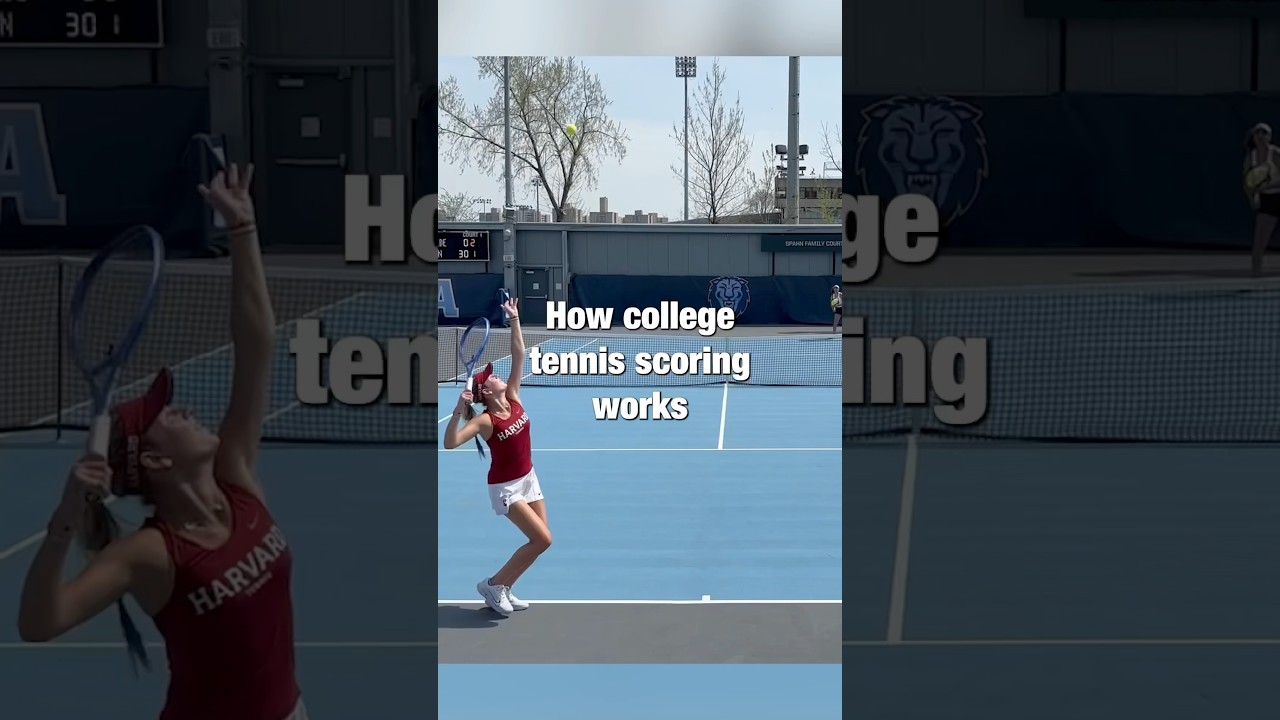
How College Tennis Scoring Works: Key Differences for Indian Players & Fans!


How College Tennis Scoring Works: Key Differences for Indian Players & Fans

For many young Indian athletes, the dream of playing competitive tennis often leads to the United States. The NCAA (National Collegiate Athletic Association) offers a unique pathway to balance world-class education with professional-level sports. However, Indian players accustomed to the standard ITF (International Tennis Federation) format often find the tennis scores and rules in college tennis a bit surprising.

Whether you are a junior player from Delhi looking for a scholarship or a fan in Mumbai following an Indian star on the US circuit, understanding the nuances of college tennis scoring is essential. Here is a breakdown of how it differs from the traditional pro tour.

The Team Format: It’s Not Just About You

In international tournaments like the ATP or ITF, results are individual. In US College Tennis, you play for a team. A typical dual match consists of 7 points in Division I (three doubles matches followed by six singles matches). To win the meet, a team must secure at least 4 points.

1. The Doubles Point (The “One-Point” Rule)

Unlike pro tennis where every match counts as a full point, in college tennis, the three doubles matches are played first to decide just one collective point.

  • In NCAA Division I, the team that wins two out of the three doubles matches earns one point for the overall scoreboard.
  • These are usually “Pro Sets” played to 6 games with a tiebreak at 6-6.
  • Crucially, there is No-Ad scoring in doubles, making the games much faster and higher-stakes.

2. No-Ad Scoring in Singles

One of the biggest shocks for Indian players transition from the AITA circuit is the No-Ad scoring system. In traditional tennis, if a score reaches 40-40 (Deuce), you must win two consecutive points. In college tennis, when the score hits Deuce, the very next point wins the game.

The receiver gets to choose which side (Deuce or Ad) they want to return from. This “sudden death” point drastically changes the pressure and the speed of the match.

3. The “Clinched” Match Rule

In a tournament setting, once a team reaches 4 points (the majority), the remaining matches are often stopped (clinched). This is done to save the athletes’ energy for the next round of the tournament. For Indian fans used to seeing every match finish to its natural conclusion, “unfinished” tennis scores can be a bit confusing initially.

4. No Let Rule

Perhaps the most controversial rule for newcomers is the “No Let” rule on serves. If the ball hits the net cord and lands in the correct service box, the ball is live. The receiver must play it. There is no re-do. This keeps the game moving and rewards players who stay alert.

Unique Atmosphere for Indian Fans

Unlike the silence required at Wimbledon, college tennis encourages “raucous” support. Indian fans will find the atmosphere more akin to a cricket stadium or a local kabaddi match. Cheering between points, chanting, and loud team support are the norms.

Conclusion

Moving from the standard international format to the US collegiate system requires a tactical shift. The combination of No-Ad scoring, the pressure of the doubles point, and the “No Let” rule makes college tennis an aggressive, fast-paced version of the sport. For Indian players, mastering these rules is the first step toward a successful collegiate career and potentially a leap into the professional ranks.

Frequently Asked Questions (FAQs)

1. Do college tennis scores count toward my ATP/WTA ranking?

No, college matches do not directly provide ATP or WTA points. However, many college players use their results to gain wildcards into pro tournaments or use the UTR (Universal Tennis Rating) to measure their progress.

2. Is there a break before the third set?

In college tennis, players usually do not get a long break between the second and third sets. The momentum is kept high to ensure matches finish within a reasonable TV or tournament window.

3. Can Indian students get full scholarships for tennis?

Yes, many Indian players receive full or partial scholarships. Performance in junior ITF tournaments and a strong UTR are the primary factors recruiters look for.

4. What is the difference between Division I and Division III scoring?

While the basics are similar, Division III often counts all three doubles matches as three separate points toward the final score (a 9-point system), whereas Division I uses the one-point doubles clinch system.

Alcaraz vs Zverev Highlights: Unbelievable Tennis Drama & Extraordinary Scenes (2024)


Alcaraz vs Zverev 2024 Highlights: Unbelievable Tennis Drama & Extraordinary Scenes

The 2024 tennis season has delivered one of its most electrifying chapters yet. When Carlos Alcaraz and Alexander Zverev step onto the court, fans expect nothing less than a tactical masterclass. However, their recent encounters have transcended sport, turning into a saga of unbelievable drama, extraordinary scenes, and a relentless quest for dominance that has resonated deeply with tennis enthusiasts in India.

The Clash of Titans: Power Meets Precision

Carlos Alcaraz, the young Spanish sensation often hailed as the successor to the ‘Big Three,’ faced off against the towering German, Alexander Zverev, in a match that redefined high-stakes tennis. In India, where tennis icons like Federer and Nadal have massive followings, the rise of Alcaraz represents the arrival of a new era. But Zverev, with his thunderous serve and improved mental fortitude, proved to be more than just a hurdle.

The highlights of their 2024 showdowns, particularly the epic battle at Roland Garros and the high-octane drama at Indian Wells, featured shots that defied the laws of physics. From Alcaraz’s signature cross-court forehands to Zverev’s impenetrable baseline defense, every point felt like a championship point.

Extraordinary Scenes: The Bee Invasion and More

What made the 2024 Alcaraz vs Zverev narrative truly “extraordinary” wasn’t just the sport—it was the bizarre occurrences. Who could forget the “Bee-mageddon” at Indian Wells? A swarm of thousands of bees forced a mid-match suspension, leaving Alcaraz stung and fans worldwide in shock. It was a moment of peak drama that proved even world-class athletes are at the mercy of nature.

Beyond the insects, the drama extended to the tactical shifts. We saw Alcaraz evolve his game, moving from raw aggression to measured patience, while Zverev showed a level of maturity that many critics thought he lacked. For Indian viewers watching late into the night, the sheer unpredictability of these matches made every second worth the sleep deprivation.

Why This Rivalry Matters for Indian Tennis Fans

India has a rich history of appreciating technical excellence in sports. The Alcaraz-Zverev rivalry is particularly fascinating because it mirrors the classic “Attacker vs. Defender” archetype. Alcaraz’s flair and “joie de vivre” on the court remind many of a young Nadal, while Zverev’s clinical efficiency represents the height of modern European tennis training.

With more Indian youngsters picking up the racket, these highlights serve as a masterclass in footwork, court coverage, and mental resilience. The 2024 highlights aren’t just entertainment; they are a blueprint for the modern game.

Conclusion

The Alcaraz vs Zverev highlights of 2024 will go down as some of the most dramatic footage in contemporary tennis. Between the incredible shot-making, the literal “sting” of the bee invasion, and the high-pressure tie-breaks, this rivalry has everything. As Carlos Alcaraz continues his ascent and Alexander Zverev remains a formidable gatekeeper, the tennis world—and specifically the growing fanbase in India—can look forward to many more chapters of this extraordinary drama.

Frequently Asked Questions (FAQs)

1. Who won the major matches between Alcaraz and Zverev in 2024?

In 2024, Carlos Alcaraz won the pivotal French Open (Roland Garros) final against Alexander Zverev in a thrilling five-set encounter. They have traded wins throughout the season across different surfaces.

2. What was the “extraordinary scene” involving bees?

During their quarterfinal match at Indian Wells 2024, a massive swarm of bees invaded the stadium, centering around the overhead camera. Carlos Alcaraz was actually stung, and the match had to be suspended for nearly two hours.

3. Where can I watch Alcaraz vs Zverev highlights in India?

In India, tennis fans can watch official highlights on the ATP Tour’s YouTube channel, Sony LIV, or the official Grand Slam YouTube channels (Wimbledon, Roland Garros, etc.).

4. Why is this rivalry called “Unbelievable Drama”?

The matches often go to deciding sets and feature dramatic momentum swings. Coupled with external factors like weather, injuries, and even nature (bees), the narrative intensity is higher than most other matchups on the tour.

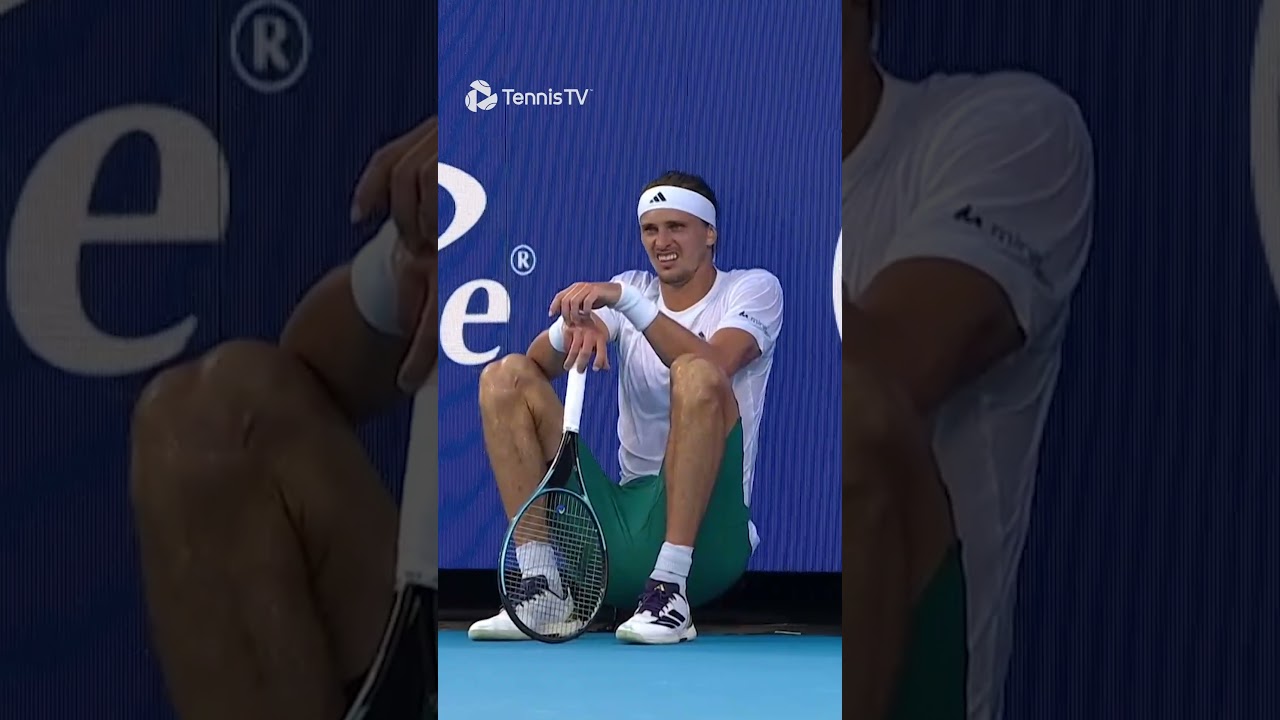
Get well soon, Sascha ❤️

#shorts SUBSCRIBE to our channel for the best ATP tennis videos and tennis highlights:

Watch official ATP tennis streams from every tournament:

Tennis TV is the OFFICIAL live streaming service of the ATP Tour.

Tennis TV features live streaming and video on demand of ATP tennis matches in full on PC, Mac, mobile & tablet apps on iOS & Android. Download the app to stream on your device:

Plus Tennis TV is also available to stream tennis on your TV on Apple TV, Roku, Amazon Fire TV, Samsung Smart TV, LG Smart TV, Android TV, Xbox One as well as AirPlay and Chromecast.

Get help on Tennis TV with our virtual assistant:

Buy Tennis TV merchandise in our store:

Watch the ATP Tour via your local TV broadcaster:

To enquire about licensing ATP Tour footage contact IMG Replay:

#tennis #tennistv #sports
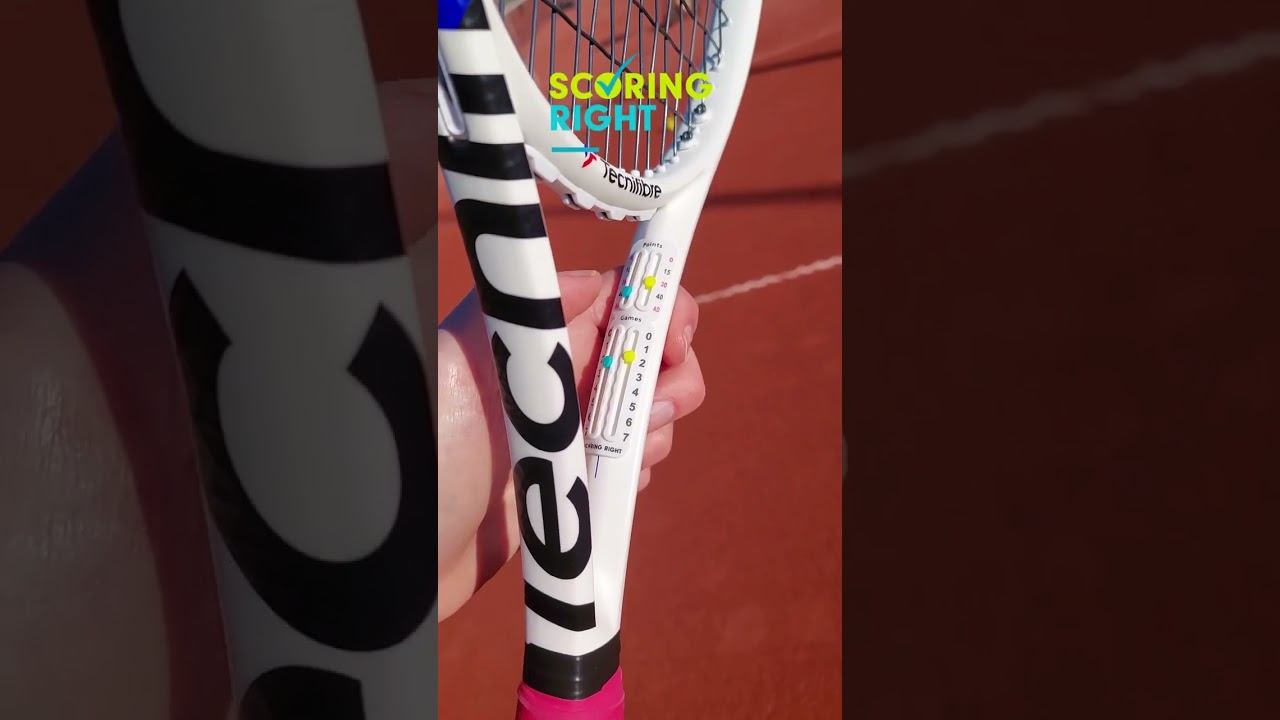
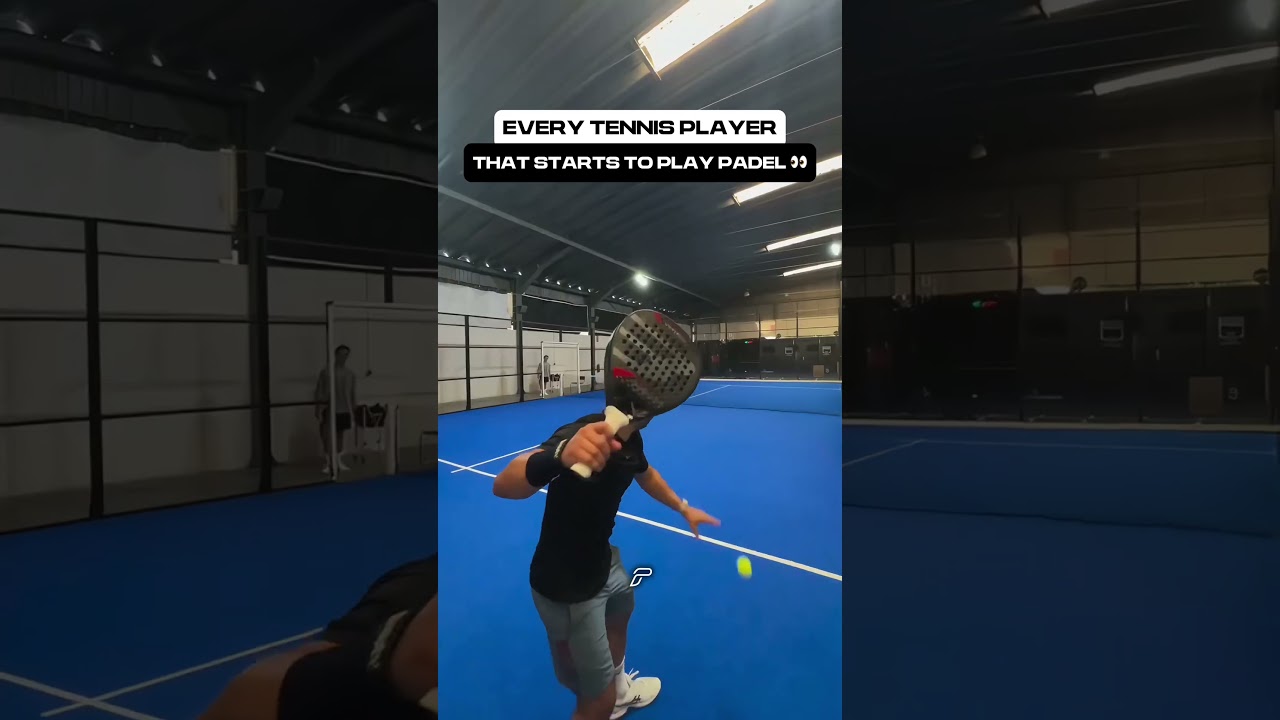
Best Tennis & Padel Scorekeeper: Lightweight & Portable Scoreboard for Players


Best Tennis & Padel Scorekeeper: Lightweight & Portable Scoreboard for Indian Players

Whether you are playing a friendly match at your local club in Mumbai or competing in a regional tournament in Delhi, keeping track of tennis scores can be a challenge. In the heat of a long rally, it’s easy to forget if the score is 30-40 or Deuce. This is where a professional, lightweight & portable scoreboard becomes an essential gear for every player.

Why Every Tennis and Padel Player Needs a Scorekeeper

In India, the popularity of Padel and Tennis is skyrocketing. However, many local courts lack digital scoreboards. Relying on memory often leads to on-court disputes that ruin the spirit of the game. A dedicated tennis scorekeeper allows you to focus entirely on your backhand and footwork rather than mental math.

The best scorekeepers today are designed with the modern athlete in mind. They are no longer bulky wooden boards but sleek, clip-on devices or compact units that fit right onto your racket or the net mesh.

Key Features of the Best Portable Scoreboards

When looking for the perfect scorekeeper in the Indian market, consider these essential features:

  • Portability: It should be light enough to carry in your kit bag without adding bulk.
  • Durability: Indian weather can be harsh. Ensure the device is weather-resistant to withstand humidity and heat.
  • Visibility: Large, high-contrast numbers are crucial so both players can see the score from opposite ends of the court.
  • Ease of Use: You should be able to change the score with a simple click or flip during the 90-second changeover.

Padel vs. Tennis Scores: Can One Device Do Both?

The short answer is yes. While tennis scores follow the traditional 15, 30, 40, and Game format, Padel often utilizes the “Golden Point” rule at Deuce. The best portable scoreboards are versatile enough to track sets, games, and points for both sports, making them a one-time investment for multi-sport enthusiasts.

Top Benefits of Using a Scorekeeper in Local Matches

1. Professionalism: Even in a casual “Sunday morning” match, using a scoreboard adds a level of professional integrity to the game.
2. Reduced Conflict: Avoid the “What was the score again?” arguments. Clear visibility means total transparency.
3. Mental Edge: Tracking the score helps you strategize. Knowing you are at “Break Point” allows you to adjust your aggression levels accordingly.

Conclusion

Elevating your game goes beyond just buying a high-end racket or the best shoes. Investing in a lightweight & portable scoreboard ensures that your matches are organized, fair, and focused. For Indian players looking to improve their court experience, a reliable tennis scorekeeper is the ultimate accessory to keep your head in the game and the tennis scores accurate.


Frequently Asked Questions (FAQs)

1. Where can I buy a portable tennis scorekeeper in India?

You can find high-quality scorekeepers on major e-commerce platforms like Amazon India, specialized sports stores like Decathlon, or dedicated tennis equipment websites.

2. Is it legal to use a scorekeeper during official tournaments?

In most amateur and club-level tournaments in India, using a manual portable scoreboard is encouraged. However, for ITF-sanctioned events, always check with the tournament referee first.

3. Can these scoreboards be attached to the net?

Yes, most portable models come with “S-hooks” or Velcro straps designed specifically to hang onto the metal mesh of the court fence or the tennis net itself.

4. How do I track Padel scores if we use the “Golden Point” rule?

Most manual scorekeepers allow you to flip directly to the “Game” point or reset to zero, making it easy to manage the sudden-death Golden Point used in Padel.

5. Are manual scoreboards better than mobile apps?

While apps are free, using a phone on the court is distracting and hard to see under the bright Indian sun. A physical portable scoreboard is much more practical and visible for both players.

#Shorts Elevate your game with our lightweight, portable Score keeper for tennis and padel.

Effortlessly track every point, anytime, anywhere—because the focus should always be on your game. 🎾💪
#game #tennis #padel #pádel #portable #scoreboard #scoringright #etsyfinds #Amazonfinds

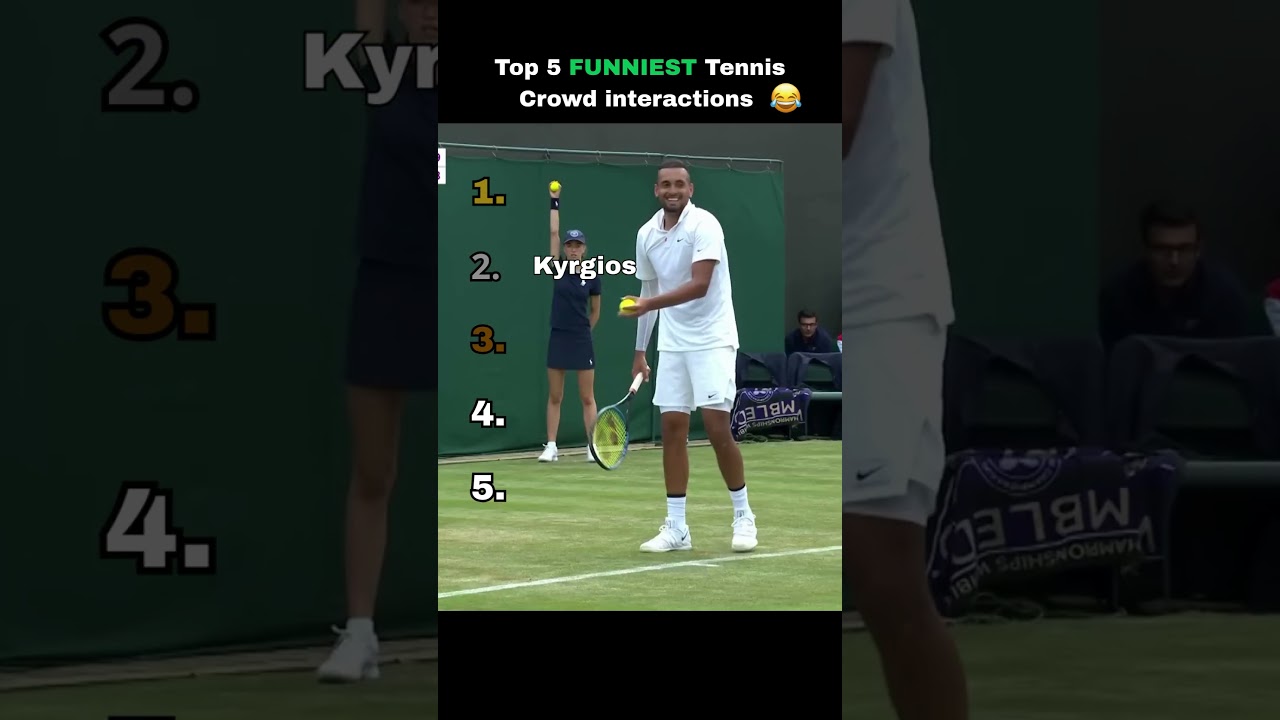
The 5 Funniest Tennis Crowd Moments That Will Make You Laugh Out Loud


The 5 Funniest Tennis Crowd Moments That Will Make You Laugh Out Loud

Tennis is often seen as a “Gentleman’s Game,” played in pin-drop silence with strict etiquette. However, every now and then, the spectators decide to break the tension. Whether it’s a witty remark from the stands or an unexpected interaction with a superstar like Roger Federer or Novak Djokovic, the crowd often becomes the star of the show.

In India, where we love our sports with a side of drama and humor, these moments resonate deeply. Let’s take a look at the top 5 funniest tennis crowd moments that will surely make you laugh out loud!

1. The “Will You Marry Me, Steffi?” Moment

Perhaps the most iconic crowd interaction in tennis history happened during a Wimbledon semi-final. As legend Steffi Graf was preparing to serve, a fan yelled at the top of his lungs, “Steffi, will you marry me?”

The stadium erupted in laughter. Graf, known for her serious demeanor, paused, looked over, and cheekily shouted back: “How much money do you have?” The sharp comeback left the commentator and the crowd in splits. It proved that even the most focused champions appreciate a good joke!

2. Novak Djokovic’s “Coach” from the Stands

Novak Djokovic is known for his incredible showmanship. During an exhibition match, a fan started shouting tactical advice at him. Instead of ignoring it, “Nole” invited the fan onto the court! He handed the fan his racket and let him play a point against his opponent. The fan’s enthusiastic (and slightly clumsy) movements turned the professional match into a comedy sketch, proving why Djoker is the ultimate entertainer.

3. The Man in the Skirt at Wimbledon

At a 2017 legends’ doubles match, Kim Clijsters asked the crowd if she should serve wide or down the middle. A fan yelled out a suggestion, and Kim jokingly invited him down to try and return her serve. However, there was a problem: the fan wasn’t wearing whites (Wimbledon’s strict rule).

To fix this, Kim pulled out a spare white skirt from her bag and helped the burly man put it on. Watching a middle-aged man struggle to fit into a tiny tennis skirt while the world’s best players rolled on the floor laughing remains one of the funniest visuals in sport.

4. Roger Federer Meets His Biggest (and Loudest) Fan

The “FedEx” has millions of fans in India and abroad, but one fan at the Australian Open took it to another level. During a quiet moment before a serve, a fan yelled, “Roger, I want to be your ball boy!” Federer, usually composed, couldn’t help but giggle, losing his focus for a second. The timing was so perfect that even the chair umpire had to hide a smile behind his hand.

5. The Accidental “Out” Call

We’ve all seen it: a ball lands near the line, and a fan instinctively yells “OUT!” before the linesman can. In one hilarious instance, the fan’s voice sounded so much like the official official that the players stopped mid-rally. When they realized it was just an enthusiastic spectator, the player pointed at the fan and joked, “You want my job?” It’s a classic reminder of how involved tennis fans get in every point.

Conclusion

While we watch tennis for the logic-defying aces and intense rallies, it is these human moments that make the sport truly special. These interactions bridge the gap between the elite athletes and the fans who travel miles to cheer for them. Whether it’s a cheeky marriage proposal or a fan wearing a skirt, humor brings a refreshing breeze to the high-stakes world of professional tennis.

Which of these moments is your favorite? For more fun tennis updates and sports news, stay tuned to our blog!


Frequently Asked Questions (FAQs)

1. Who is the funniest tennis player on tour?

Novak Djokovic is widely considered the funniest player due to his impressions of other players and his frequent jokes with the crowd. Nick Kyrgios and Mansour Bahrami are also famous for their on-court humor.

2. Is the crowd allowed to talk during a tennis match?

Officially, fans are expected to stay quiet during a point. However, cheering between points or during changeovers is encouraged, and that’s when most of these funny moments happen!

3. Has a fan ever played in a real ATP match?

While fans often participate in “exhibition” or “legends” matches for fun, they are not allowed to play in official ATP or WTA competitive matches.

4. Why is Wimbledon so strict about the dress code?

Wimbledon follows a traditional “all-white” dress code to maintain a sense of decorum and professional standards, which is why the “man in the skirt” moment was so legendary—it broke all the rules!

When Tennis Fans Took Over 🎤🤣 Top 5 Funniest Crowd Moment

Alex Eala Match Highlights: Indian Tennis Fans Cheer as She Scores at Guadalajara 125 WTA


Alex Eala Match Highlights: Indian Tennis Fans Cheer as She Scores at Guadalajara 125 WTA

The global tennis landscape is witnessing the rapid rise of a new Asian powerhouse. Alex Eala, the young sensation from the Philippines, recently made headlines at the Guadalajara 125 WTA tournament. While she hails from Southeast Asia, her recent performances have sparked a massive wave of support among Indian tennis fans, who are closely following her journey on the professional circuit.

A Thrilling Performance at Guadalajara 125 WTA

The Guadalajara Open is known for its high altitude and challenging conditions, but Alex Eala showed immense grit. In the recent match highlights, Eala displayed a sophisticated baseline game and a left-handed forehand that troubled her opponents throughout the tournament. For fans tracking tennis scores, Eala’s progression in Mexico serves as a testament to the increasing competitiveness of Asian players in female professional tennis.

Her ability to dictate play and her mental resilience during pressure points were the standout features of the Guadalajara 125 WTA. Whether it was a cross-court winner or a delicate drop shot, the highlights reel from her matches has become a viral sensation across sports forums in India.

Why Indian Tennis Fans are Backing Alex Eala

You might wonder why Indian fans are so invested in Eala’s success. The reason is twofold. First, India has a long-standing history of supporting Asian sporting talent on the world stage. Following the legendary career of Sania Mirza, Indian fans are constantly looking for the next big star from the continent who can challenge the dominance of European and American players.

Secondly, Eala’s journey through the WTA 125 and 250 circuits mirrors the path many Indian youngsters like Sahaja Yamalapalli and Shrivalli Bhamidipaty are currently navigating. Watching Eala succeed gives Indian fans hope for the future of Asian tennis at the Grand Slams.

Analyzing the Tennis Scores and Stats

Looking at the tennis scores from Guadalajara, Eala’s efficiency on her first serve and her break-point conversion rate have seen a significant uptick. In her recent matches, she has maintained a high percentage of points won on return, a crucial stat for any player looking to break into the Top 100 of the WTA rankings.

For those following live updates, her matches are often characterized by long, grueling rallies that showcase her physical fitness—a trait highly admired by the fitness-conscious Indian sporting community.

Conclusion

Alex Eala’s performance at the Guadalajara 125 WTA is more than just a win for the Philippines; it is a moment of pride for Asian tennis fans at large. As her match highlights continue to trend, she is quickly becoming a household name among Indian tennis enthusiasts who appreciate her skill, tenacity, and “never-say-die” attitude. With her eyes set on the upcoming majors, the “Eala Effect” is sure to keep fans across India glued to their screens for the latest tennis scores.

Frequently Asked Questions (FAQs)

1. Where can I watch Alex Eala match highlights?

You can catch the latest highlights from the Guadalajara 125 WTA on the official WTA social media channels, YouTube highlights packages, and major sports broadcasting apps available in India like SonyLIV or FanCode.

2. What is Alex Eala’s current WTA ranking?

Alex Eala is currently hovering around the Top 150 in the WTA rankings. Her performances in tournaments like Guadalajara are crucial for her push toward the Top 100.

3. How do Indian tennis players compare to Alex Eala?

While Eala has had significant success at the Junior Grand Slam level and early WTA entry, Indian players like Sahaja Yamalapalli are also making strides in the ITF and WTA 125 circuits. The competition remains healthy and inspiring for all Asian athletes.

4. Why is the Guadalajara 125 WTA important?

The WTA 125 series provides essential ranking points and experience for rising stars. Success here often leads to wildcards or direct entries into WTA 500 and 1000 events.

5. How can I stay updated on live tennis scores?

Indian fans can use platforms like Google Sports, Flashscore, or the official WTA website to get real-time updates and tennis scores for Alex Eala’s matches.

Hitting With Jannik Sinner: Inside the Court POV with the World No. 1 #Tennis


Hitting With Jannik Sinner: Inside the Court POV with the World No. 1

In the world of tennis, there are professional athletes, and then there is Jannik Sinner. Currently holding the World No. 1 ranking, the Italian sensation has redefined what power and precision look like on a tennis court. For tennis enthusiasts in India, where the sport is rapidly growing in popularity, watching a “Point of View” (POV) video of hitting with Sinner isn’t just entertainment—it’s a masterclass in modern sportsmanship.

The Sinner Speed: A Different Dimension

When you watch Jannik Sinner from the stands or on a television screen, you see smooth movement and rhythmic groundstrokes. However, through a court POV, the reality is much more intense. The ball doesn’t just travel; it explodes off his racquet. Sinner is known for his incredibly high average ball speed, often surpassing his peers on both the forehand and backhand wings.

For Indian junior players and academy trainees, observing this POV highlights the importance of early preparation. To return a shot from the World No. 1, your racquet must be back before the ball even crosses the net. His ability to take the ball on the rise gives his opponents zero time to breathe.

Technical Mastery from the Baseline

What makes the #Tennis world buzz when Sinner steps on the court is his flawless technique. In “Inside the Court” footage, you can hear the distinct “thwack” of the ball hitting the sweet spot every single time. Here are a few things that stand out in a Sinner POV session:

  • Balance: Even when sprinting wide, Sinner’s head remains perfectly still.
  • Compact Swings: Unlike the loopy strokes of the past, Sinner uses compact, efficient movements that generate massive power.
  • Depth: Almost every ball lands within three feet of the baseline, forcing the opponent into a defensive shell.

Why Jannik Sinner Resonates with Indian Fans

India has a long history of appreciating technical masters, from Ramanathan Krishnan to Leander Paes. Sinner’s rise to the top of the ATP rankings is built on a foundation of humility, hard work, and tactical brilliance—values that resonate deeply with the Indian sporting ethos. As more youngsters in cities like Delhi, Mumbai, and Bangalore pick up a racquet, Sinner has become the new blueprint for the “modern aggressive baseliner.”

The Mental Game: Facing the World No. 1

Hitting with a World No. 1 isn’t just a physical challenge; it’s a mental one. The POV perspective shows the intimidation factor. There are no “easy” balls. Every shot Sinner sends over the net has a purpose. His composure—often referred to as ‘ice in his veins’—is visible even in practice. He treats every rally with the same intensity as a Grand Slam final point.

Conclusion

Experiencing a hitting session with Jannik Sinner through a POV lens offers a rare glimpse into the elite world of professional tennis. It bridges the gap between being a spectator and being a player. For Indian fans and aspiring athletes, Sinner represents the pinnacle of what is possible with dedication and a refined technical approach. Whether you are watching him for his lightning-fast backhand or his calm demeanor, there is no denying that the World No. 1 has ushered in a new era for the sport.

Frequently Asked Questions (FAQs)

1. What is Jannik Sinner’s current world ranking?

As of June 2024, Jannik Sinner is the ATP World No. 1, making him the first Italian player to achieve this milestone in singles history.

2. What racquet does Jannik Sinner use?

Jannik Sinner currently uses the Head Speed MP series (often customized to his specifications), which helps him achieve his signature blend of power and control.

3. Why are POV tennis videos popular?

POV (Point of View) videos allow fans to see the true speed, spin, and trajectory of the ball from a player’s perspective, which is often lost in traditional broadcast angles.

4. How can Indian players improve their game watching Sinner?

Players should focus on Sinner’s footwork and his ability to take the ball early. Emulating his short backswing can also help players handle the faster pace of modern tennis courts.

5. Which Grand Slam did Jannik Sinner win first?

Jannik Sinner won his first Grand Slam title at the 2024 Australian Open, defeating Daniil Medvedev in a thrilling five-set final.

Why Does Tennis Scoring Start at 15, 30, 40? Explained Simply


Why Does Tennis Scoring Start at 15, 30, 40? Explained Simply

Tennis is one of the most popular sports in India, with legends like Leander Paes, Mahesh Bhupathi, and Sania Mirza inspiring generations. However, for a beginner or a casual viewer watching Wimbledon or the Australian Open, the scoring system can be incredibly confusing. Why don’t they just count 1, 2, 3? Why go from 15 to 30 and then suddenly to 40?

In this guide, we break down the mystery behind tennis scores and why this traditional system has remained unchanged for centuries.

The Clock Face Theory

The most popular theory explaining tennis scoring is the Clock Face Theory. In medieval France, where the game originated (known as Jeu de Paume), players may have used a clock face to keep score on the court.

  • The first point moved the hand to 15.
  • The second point moved it to 30.
  • The third point moved it to 45.
  • The fourth point moved it to 60, finishing the game.

Why 40 and not 45?

If the clock theory is true, why do we say “40” instead of “45”? Most historians believe it was simply for convenience. In French, forty-five (quarante-cinq) is a mouthful, whereas forty (quarante) is much shorter and easier to shout across a tennis court. Over time, “45” was abbreviated to “40” by the players.

The Deuce and Advantage Rule

The transition from 45 to 40 also helped accommodate the “Deuce” rule. If both players reach 40-40, the score is tied. To win, a player must lead by two clear points.

By stopping the score at 40, the clock hand could move to 50 for “Advantage” and then to 60 to “Win.” This ensured the game didn’t end on a single point when the scores were level.

What About ‘Love’?

In tennis, a score of zero is called “Love.” While Indians might associate the word with affection, in tennis, it has a more literal, visual origin. It is widely believed to come from the French word l’oeuf, which means “the egg.” Just as a cricket fan might call a zero a “duck’s egg,” the French referred to the zero on the scoreboard as an egg because of its shape.

Understanding the Structure of Tennis Scores

To follow a professional match effectively, you need to understand the hierarchy of points:

  1. Points: 15, 30, 40, and Game.
  2. Games: You must win at least six games (with a two-game lead) to win a Set.
  3. Sets: Most professional matches are “Best of 3” (common in Women’s and ATP matches) or “Best of 5” (Grand Slams for Men).

Conclusion

The world of tennis scores is rooted in history, tradition, and a bit of linguistic evolution. Whether it originated from a physical clock or the gambling stakes of French nobility, the 15-30-40 system adds a unique charm to the sport. Next time you’re watching a high-stakes match between Djokovic and Alcaraz, you’ll know exactly why the umpire is calling out those peculiar numbers!

Frequently Asked Questions (FAQs)

1. Why is zero called “Love” in tennis?

It most likely comes from the French word “l’oeuf” (the egg), representing the zero shape. Another theory suggests it comes from the phrase “to play for the love of the game” (playing for nothing/zero money).

2. What does “Deuce” mean?

Deuce occurs when the score is tied at 40-40. It comes from the French “deux de jeu,” meaning “two points to play” to win the game.

3. Is the scoring the same in doubles?

Yes, the 15, 30, 40 system is the same for doubles. However, some tournaments use a “No-Ad” (No Advantage) rule where the winner of the next point after deuce wins the game immediately.

4. What is a “Tie-break”?

If a set reach a score of 6-6 in games, a tie-break is played. In a tie-break, points are counted numerically (1, 2, 3…) instead of 15, 30, 40. The first to reach 7 points with a 2-point lead wins the set.

“Tennis scores aren’t random! 15, 30, 40 comes from 16th-century French courts, with clock-face-inspired scoring — a piece of history still alive in every match.”

Funny Indian Husband vs Wife Jokes: She’s Your Wife! 🤣


Funny Indian Husband vs Wife Jokes: Why Marriage is Like a Tennis Match! 🤣

In the vibrant tapestry of Indian culture, two things are universally loved: a good “Husband vs. Wife” joke and a competitive game of sports. While Cricket might be the national heartbeat, Tennis provides the perfect metaphor for the Indian marriage. It is a game of back-and-forth, powerful serves (mostly from the wife), and the occasional “love-all” score that keeps the relationship going.

If you are an Indian husband, you know that life at home is less like a walk in the park and more like facing a 140mph serve from Sania Mirza. Let’s dive into some hilarious Indian husband-wife banter that proves why being married is the ultimate grand slam.

The “Service” Fault: The Kitchen Chronicles

In tennis, a bad serve costs you a point. In an Indian household, a “bad serve” (like forgetting to bring dhaniya while coming home) can cost you the entire weekend peace.

The Joke:
Husband: “Why do you always get so angry? Look at me, I’m as calm as a tennis court before a match.”
Wife: “That’s because I’m the one doing all the running, sweating, and ‘serving’ the food while you just stand there waiting for a trophy!”

The Mixed Doubles Challenge

Every Indian wedding is basically the beginning of a lifelong “Mixed Doubles” tournament. You are a team, but sometimes you feel like you’re playing against each other. In India, the “referee” is usually the Saas (Mother-in-law), and her decisions are always final—and rarely in favor of the husband!

Imagine a husband trying to explain his late-night outing with friends. It’s like trying to hit a winner through a microscopic gap at the net. One wrong word and—SMASH!—the wife brings up a mistake you made in 2014. That’s not just a point; that’s a “Grand Slam” of guilt.

“She’s Your Wife!” – The Ultimate Reality Check

There is an old Indian joke where a friend asks a husband, “Why are you so afraid of your wife? You should be the Roger Federer of your house!”

The husband sighs and replies, “I tried, but every time I call ‘Deuce,’ she thinks I’m asking for two cups of tea. And whenever I try to ‘Net’ a profit, she spends it on a Myntra sale. Remember, she’s not just an opponent; she’s the one who owns the racket, the ball, and the court!”

Why Indian Husbands Love the “Deuce”

In Tennis, ‘Deuce’ means the score is tied. For an Indian husband, a tie is a victory. If he can survive a shopping trip to Sarojini Nagar or Commercial Street without a major argument, he feels like he’s won Wimbledon. He knows he can’t win the match, so he happily settles for a long rally of jokes and laughter.

Conclusion

At the end of the day, Indian Husband vs Wife jokes are not about conflict; they are about the special bond that only Indian couples share. Much like a high-intensity tennis match, marriage requires agility, patience, and the ability to laugh at yourself when you trip over the baseline. Whether you are “serving” tea or “smashing” a spicy curry, remember that she’s your wife—the permanent captain of your team.

Frequently Asked Questions (FAQs)

1. Why are husband-wife jokes so popular in India?

Indian culture values family dynamics and humor. These jokes are a relatable way to vent the small frustrations of daily life and find common ground through laughter.

2. What is the “Tennis Connection” in Indian marriages?

It’s a metaphor for the constant back-and-forth banter. Just like in tennis, communication in a marriage involves serves (requests), returns (responses), and the occasional “fault” (misunderstandings).

3. Are these jokes meant to be offensive?

Not at all! Most Indian husband-wife jokes are “light-hearted” and “tongue-in-cheek,” meant to celebrate the quirky reality of living in a desi household.

4. How can I use humor to improve my relationship?

Sharing a joke or laughing at a funny situation together releases endorphins and reduces stress. It helps couples realize that their petty arguments are actually quite funny when viewed from the outside.

Gael Monfils refuses to let his wife Elena Svitolina win this hilarious point while playing with Flavio Cobolli against Flavia Pennetta in Stars of the Open at the 2025 US Open.

Don’t miss a moment of the US Open! Subscribe now:

The 2025 US Open runs from August 18 – September 7 in New York City at the USTA Billie Jean King National Tennis Center. The tournament takes place for the 145th time and is the fourth and final Grand Slam of the year. Last year, Jannik Sinner and Aryna Sabalenka claimed the men’s and women’s singles titles. It was both Sinner and Sabalenka’s first US Open title and third Grand Slam title. This year, at the US Open, we’re set for another spectacular tournament as the world’s best tennis players head to New York. Look out for highlights, extended highlights, full matches, press conferences, on-court interviews, hot shots, compilations and more!

X:
Facebook:
Instagram:
Website:
TikTok:

Learn Tennis Scoring in 30 Seconds: A Simple Guide for Beginners


Learn Tennis Scoring in 30 Seconds: A Simple Guide for Beginners

Tennis is one of the most popular sports in India, thanks to icons like Sania Mirza, Leander Paes, and Rohan Bopanna. However, for a beginner, watching a match at Wimbledon or the Delhi Open can be confusing. Why do they say “Love” instead of zero? Why does the score go from 15 to 30 to 40?

If you have been scratching your head over tennis scores, don’t worry. You can master the basics of tennis scoring in just 30 seconds. This guide breaks it down into simple terms so you can enjoy your next match like a pro.

The Basics: Points, Games, and Sets

To understand tennis scoring, you need to look at it as a ladder. You win points to win a game, you win games to win a set, and you win sets to win the match.

1. Scoring a Point

Unlike cricket or football where points increment by one, tennis has a unique naming convention:

  • 0 Points = “Love”
  • 1 Point = 15
  • 2 Points = 30
  • 3 Points = 40
  • 4 Points = Game Over (Game Point)

Note: The server’s score is always called out first. If the server has 3 points and the receiver has 1, the score is “40-15”.

2. What is Deuce and Advantage?

If both players reach 40-40, it is called a Deuce. To win the game from a deuce, a player must win two consecutive points:

  • Advantage: The first point won after a deuce.
  • Game: If the player with “Advantage” wins the next point, they win the game. If they lose it, the score goes back to Deuce.

Winning the Set and Match

In most professional tournaments, players follow these rules to close out a victory:

  • To win a set: A player must win at least 6 games and be ahead by at least 2 games (e.g., 6-4).
  • Tie-break: If the set score reaches 6-6, a tie-break is played. The first to reach 7 points (with a 2-point lead) wins the set 7-6.
  • To win the match: In most matches (ATP/WTA), it is “best of three” sets. In Men’s Grand Slams, it is “best of five.”

Conclusion

Tennis scoring might seem eccentric at first—especially the use of “Love”—but it follows a very logical progression. From 15 to 40, and from games to sets, the structure ensures the game remains competitive until the very last hit. Now that you understand tennis scores, you are ready to hit the court or watch the next big tournament with full confidence!

Frequently Asked Questions (FAQs)

Q1. Why is zero called “Love” in tennis?

The most common theory is that it comes from the French word “l’oeuf”, meaning “the egg,” because an egg looks like a zero.

Q2. What does “All” mean in tennis scores?

If the score is tied (except for 40-40), the word “All” is used. For example, 15-15 is called “15-All,” and 30-30 is “30-All.”

Q3. What is a “Break Point”?

A break point occurs when the player who is receiving the serve is just one point away from winning the game. Breaking the opponent’s serve is a major advantage in tennis.

Q4. Is tennis scoring different for doubles?

The basic scoring (15, 30, 40) remains the same. however, in some professional doubles matches, a “No-Ad” (No Advantage) rule is used where the winner of the next point after deuce wins the game instantly.

Confused by “Deuce” or “Ad In” on the tennis court? You’re not alone! This quick YouTube Short gives adult beginners the essential definitions for tennis scoring terms you need to know.

You’ll be able to use the terms:

Game
Deuce (and “40 all”)
Ad In
Ad Out
Set
Match

Watch now to instantly understand the lingo and play with more confidence!

Watch Next: Your First Tennis Match Explained! ▶️

🔔 Tap that subscribe button @playopencourttennis for more beginner tennis tips and rule breakdowns that make learning tennis simple! We’re here to help you play with confidence!

🎾 Any age. Every stage. Tennis for all.

#tennisscoring #tennisrules #tennisforbeginners #learntennis #tennisbasics #beginnertennis #tennistips #tennistip #playtennis #howtoplaytennis

The Real Reason Why Rafael Nadal Plays With His “Wrong” Hand Explained #tennis


The Real Reason Why Rafael Nadal Plays With His “Wrong” Hand Explained

In the world of tennis, few sights are as iconic—and intimidating—as Rafael Nadal unleashing a ferocious, heavy-topspin forehand with his left hand. For over two decades, this “lefty” dominance helped him secure 22 Grand Slam titles and earned him the title ‘King of Clay’.

However, many Indian fans who have followed “Rafa” since his early battles with Federer might be surprised to learn a shocking secret: Rafael Nadal is actually right-handed. He writes with his right hand, eats with his right hand, and brushes his teeth with his right hand. So, why does he play tennis with his “wrong” hand? Let’s dive into the logic behind this game-changing decision.

The Toni Nadal Influence: Myth vs. Reality

For years, a popular urban legend circulated in the tennis community. It suggested that his uncle and long-time coach, Toni Nadal, forced a young Rafa to switch to his left hand to gain a tactical advantage. The theory was that lefties are harder to play against because their cross-court forehand goes to a right-hander’s backhand.

However, Toni Nadal has since clarified the truth. He didn’t force Rafa to be left-handed; he simply encouraged him to use his natural strength. When Rafa was a child (around 8 or 12 years old), he used to hit both his forehand and backhand with two hands. He wasn’t particularly strong on either side with just one hand.

The Power of the Two-Handed Evolution

Toni noticed that while Rafa was naturally right-handed for daily tasks, he was incredibly strong on his left side when playing sports. In fact, if you watch old videos of a young Nadal playing football (his other passion), he predominantly used his left foot.

Toni believed that playing with the left hand would give Rafa a massive tactical edge on the ATP tour. Since 90% of tennis players are right-handed, they aren’t used to the trajectory and “hooking” spin of a lefty’s ball. By switching to his left hand for the forehand, Rafa could exploit the weaker backhands of his opponents with relative ease.

The Technical Advantage

Because Nadal is naturally right-handed, his right arm is actually his dominant “pulling” arm on his two-handed backhand. This gives him one of the most stable and powerful backhands in tennis history. Essentially, his “wrong” hand choice gave him the best of both worlds: a lethal, high-spinning lefty forehand and a rock-solid, right-hand-dominant backhand.

Conclusion

While the decision to play left-handed may have started as an experiment in his childhood, it became the foundation of Rafael Nadal’s legendary career. It wasn’t about being “fake” left-handed; it was about strategic optimization. By using his non-dominant hand, Nadal challenged the physics of the sport and created a playing style that remains one of the most difficult to beat in the history of tennis.


Frequently Asked Questions (FAQs)

1. Is Rafael Nadal naturally left-handed?

No. Rafael Nadal is naturally right-handed. He performs almost all daily activities like writing, eating, and throwing a ball with his right hand.

2. Did Uncle Toni force Rafa to play with his left hand?

Not exactly. While Toni Nadal encouraged the switch because he saw Rafa’s strength on that side, he has clarified that he didn’t “force” him, but rather guided him toward a path that offered a tactical advantage.

3. Does Rafa play any other sports left-handed?

Interestingly, Rafa plays golf right-handed! However, when he was younger and played football, he was known to be a “lefty” with his feet as well.

4. Why is being a lefty an advantage in tennis?

Left-handed players create different angles. Their serves out wide to the “Deuce” court pull right-handed players off the court, and their forehands naturally attack a right-hander’s backhand, which is usually the weaker wing.

5. How many Grand Slams has Nadal won with his “wrong” hand?

As of his current career status, Rafael Nadal has won 22 Grand Slam titles playing with his left hand.

#Tennis #RafaelNadal #Rafa #LeftHanded #TennisFacts #GrandSlam #KingOfClay #SportsScience

This is why Nadal plays with his wrong hand… #tennis #tennisnews

Storm Hyroad 40 Review: Scoring Tennis Style in Indian Bowling Centers!


Storm Hy-Road Nano Review: Scoring Tennis-Style Leads in Indian Bowling Centers

In the vibrant sports culture of India, we often equate high-performance with the precision of a tennis ace. Whether you are playing at a high-end alley in Mumbai or a local center in Bangalore, every bowler seeks that “Grand Slam” moment. Enter the Storm Hy-Road Nano—a ball that has redefined how Indian bowlers approach the lanes, turning standard frames into high-scoring “tennis sets.”

The “Court” Surface: Indian Lane Conditions

Most Indian bowling centers feature synthetic lanes that can be notoriously unpredictable. Much like the transition from a grass court to a clay court in tennis, a bowler must adapt to changing oil patterns. The Storm Hy-Road Nano is engineered for this exact versatility. Featuring the legendary Inverted Fe2 Technology core and the Nano Reactive coverstock, it provides the traction needed when the lanes feel “greasy.”

Performance: Scoring Like a Pro

In tennis, a powerful serve sets the tone. In bowling, the “reading” of the mid-lane is your serve. The Hy-Road Nano offers a heavy mid-lane read, ensuring that even if you miss your mark slightly, the ball recovers with the agility of a baseline defender.

For Indian players used to dry heads and carry-down oil, the Nano technology provides a predictable hook. It doesn’t snap violently; instead, it arcs gracefully—much like a perfectly timed topspin lob passing over an opponent at the net. This predictability allows you to rack up “tennis scores”—moving from a 15-love start to a dominant 6-0 set in your league standings.

Why the Hy-Road Nano is a Game Changer in India

  • Durability: Indian tropical climates can be harsh on reactive equipment. The Nano coverstock is robust and maintains its “teeth” longer than standard pearls.
  • Versatility: Whether you are a “stroker” or a “cranker,” this ball adapts to your style, much like a versatile tennis racket fits different grip styles.
  • Pin Carry: The energy transfer at the pocket is unmatched, turning those stubborn 7-10 splits into satisfying strikes.

Strategic Play: The “Tennis Style” Approach

To achieve high scores in Indian centers, you must treat your frames like tennis games. Each strike is a point; a double is a “game,” and a clean 200+ series is a “set.” Using the Storm Hy-Road Nano allows you to play the long game. Because the ball handles oil so well, you won’t find yourself “out of bounds” when the transition hits mid-way through your second game.

Conclusion

The Storm Hy-Road Nano remains a gold standard for bowlers in India who demand consistency and power. By bridging the gap between heavy oil performance and controllable hook shapes, it allows players to dominate the lanes with the strategic finesse of a tennis pro. If you’re looking to boost your average and start scoring “Love-6” against your competition, this ball is your ultimate doubles partner.

Frequently Asked Questions (FAQs)

1. Is the Storm Hy-Road Nano suitable for beginners in India?

Yes. While it is a high-performance ball, its predictable motion helps beginners learn how to control a hook without the ball over-reacting on drier Indian lane conditions.

2. How do I maintain the “Nano” coverstock in oily Indian centers?

It is recommended to wipe the ball with a microfiber towel after every shot and use a dedicated lane cleaner after your session to prevent oil soak-age.

3. Can this ball help me achieve “Tennis Style” high scores?

Absolutely. “Tennis Style” scoring refers to the consistency of winning frame after frame. The Hy-Road Nano’s reliability ensures fewer “unforced errors” (splits and open frames).

4. Where can I buy the Storm Hy-Road Nano in India?

You can find it at major pro-shops located within premium bowling centers in cities like Delhi, Mumbai, Pune, and Hyderabad, or through specialized online sports retailers.

Free Coaching Video Click Here 👉

Join Our Coaching Community 👉

Free Coaching Guides 👉

Merch Link 👉

For Your Pro Shop Needs 👉

Brad and Kyle Instagram 👉 @brad_and_kyle

Kyle Instagram 👉 @k_sherm32

Brad Instagram 👉 @bradmiller.17

You want to learn how to bowl from ttwo of the BEST bowlers in the world? Brad and Kyle have been showing behind the scenes footage of the PBA and professional bowling tournaments. We have instructional bowling videos that have helped millions of bowlers level up their games and throw more strikes! You can follow our bowling careers and learn how to hook a bowling ball.

Subscribe to Brad and Kyle youtube channel:

Carlos Alcaraz resumes training in Murcia: Latest tennis update for Indian fans


Carlos Alcaraz Resumes Training in Murcia: What Indian Tennis Fans Need to Know

For tennis enthusiasts in India, the name Carlos Alcaraz has become synonymous with the new era of dominance in the ATP circuit. Following a taxing season that saw him clinch major titles and battle physical fatigue, the young Spaniard is back on the clay and hard courts of his hometown, Murcia. This return to training marks a crucial phase in his preparation for the upcoming season and major tournaments that Indian viewers follow closely.

Back to Roots: Training at the Ferrero Tennis Academy

After a brief but well-deserved hiatus following the ATP Finals and Davis Cup commitments, Alcaraz has been spotted putting in the hours at the Juan Carlos Ferrero Tennis Academy in Villena, near his home in Murcia. For Indian fans who often wake up in the early hours to watch his 3:30 AM IST matches, seeing “Carlitos” back in rhythm is a sign of his intent to reclaim the World No. 1 spot.

Reports from Spain suggest that Alcaraz is focusing heavily on physical conditioning and refining his baseline aggression. His coach, former World No. 1 Juan Carlos Ferrero, is emphasizing longevity and injury prevention—a key concern for fans who saw Alcaraz struggle with cramps and fatigue during the humid phases of the previous tour.

Impact on the Upcoming Calendar: The Australian Open and Beyond

Indian tennis followers are particularly interested in how this training block will translate into performance at the Australian Open 2025. As one of the most-watched Grand Slams in India due to relatively favorable broadcasting times, Alcaraz’s form is the talk of the town. By resuming training in Murcia early, he is looking to build the “tennis engine” required to outlast rivals like Novak Djokovic and Jannik Sinner.

Furthermore, Alcaraz has hinted at a more selective tournament schedule to ensure he stays at peak fitness. For the growing tennis community in India, this means every appearance will be high-stakes and high-energy.

Why Carlos Alcaraz Resonates with India

The “Alcaraz Mania” in India isn’t just about his wins; it’s about his style. His “never-say-die” attitude and creative shot-making resonate with a young Indian demographic that appreciates flair and athleticism. His return to training has already sparked discussions on Indian sports forums regarding his potential rivalry with Sinner, which many experts believe will define the next decade of tennis.

Conclusion

Carlos Alcaraz’s decision to resume training in the familiar environment of Murcia highlights his commitment to excellence. For the millions of tennis fans in India, this update is a precursor to what promises to be an explosive start to the new year. As he sharpens his forehand and fine-tunes his dropshots, the message is clear: the Spaniard is ready to dominate once again. Stay tuned for more updates as we track his journey from the courts of Murcia to the center courts of the world.

Frequently Asked Questions (FAQs)

1. Where is Carlos Alcaraz currently training?

Carlos Alcaraz is currently training at the Juan Carlos Ferrero Tennis Academy in the Murcia/Alicante region of Spain.

2. Will Carlos Alcaraz play any tournaments in India?

As of now, there are no ATP 250 or 500 events in India on his official schedule. However, Indian fans can watch him live on sports networks like Sony Sports or platforms like JioTV during major tournaments.

3. What is Alcaraz’s main goal for the 2025 season?

While he aims for all Grand Slams, the primary focus is maintaining physical fitness throughout the year and reclaiming the World No. 1 ranking from Jannik Sinner.

4. How can Indian fans watch Alcaraz’s matches?

In India, Grand Slams and ATP Masters 1000 events are typically broadcast on the Sony Sports Network and can be streamed on the SonyLIV app.

Tennis Tiebreaker Rules: How to Play and Score Like a Pro!


Tennis Tiebreaker Rules: How to Play and Score Like a Pro!

In the world of tennis, nothing matches the intensity of a tiebreaker. Whether you are watching Leander Paes at the Olympics or playing a weekend match at your local club in Mumbai or Delhi, understanding tennis tiebreaker rules is essential. A tiebreaker is the ultimate “sudden death” that decides the winner of a set when players are locked at 6-6 in games.

What is a Tennis Tiebreaker?

Standard tennis scores move from 15, 30, and 40 to game point. However, a tiebreaker follows a numerical scoring system (1, 2, 3, etc.). In most tournaments, including the ATP and WTA tours, a 7-point tiebreak is played to decide the set. The first player to reach seven points wins the set 7-6, provided they have a two-point lead.

How the Scoring Pattern Works

Unlike regular games where you serve for the entire duration, a tiebreaker features a unique serving rotation to ensure fairness. Here is the step-by-step breakdown:

  • Point 1: The player whose turn it was to serve starts the tiebreaker. They serve only one point from the Deuce (right) side.
  • Points 2 & 3: The serve switches to the opponent. They serve two points, starting from the Ad (left) side then the Deuce side.
  • Rotation: From here on, every player serves twice consecutively until the tiebreak ends.

The “Change of Ends” Rule

To account for wind or sun glare—common in India’s outdoor courts—players must switch sides of the court every six points (e.g., when the score is 3-3, 6-6, or 9-3). This continues until a winner is decided. This is a crucial part of professional tennis scores management that many beginners forget!

Winning the Tiebreak

To win, you must reach 7 points with a margin of at least 2 points. If the score reaches 6-6, the game continues until someone leads by two (e.g., 8-6, 10-8, or even 15-13). There is no “ceiling” to how high the score can go.

Key Tips for Indian Players

Playing in high-humidity regions like Chennai or Kolkata can lead to fatigue during long tiebreakers. To play like a pro:

  1. Focus on the First Serve: In a tiebreak, a double fault is a disaster. Aim for a high first-serve percentage.
  2. Stay Aggressive: Don’t just wait for your opponent to make a mistake. Take control of the point early.
  3. Track the Score: Always announce the score before serving to avoid confusion.

Conclusion

Mastering the tennis tiebreaker rules transforms you from a casual player into a serious competitor. It requires mental toughness, a clear understanding of the serving sequence, and the ability to stay calm under pressure. Next time you find yourself at 6-6, remember these rules, keep your focus, and play every point as if it’s match point. With practice, you’ll be managing your tennis scores like a seasoned pro!

Frequently Asked Questions (FAQs)

1. Who serves first in the next set after a tiebreaker?

The player who received the first serve of the tiebreaker will serve the first game of the following set.

2. What is a “Super Tiebreaker”?

A Super Tiebreaker is often played instead of a final third set (common in doubles). The rules are the same, but the first to 10 points wins.

3. Do we change ends after the tiebreaker ends?

Yes. If the total number of games in the set (including the tiebreak) is odd, players switch ends before starting the next set. Since a tiebreak makes the set score 7-6 (13 games), you always switch ends.

4. How is the tiebreaker score recorded?

On a scorecard, the set is recorded as 7-6. The tiebreaker points are usually written in parentheses, like 7-6(5), meaning the winner won the tiebreak 7 points to 5.

➤Tennis Workouts:
➤Tennis Warehouse Europe:
➤Tennis Only Australia:

Keeping score in tennis is super confusing, and a tiebreaker is even worst! Watch this video to learn how to keep score in a tiebreaker so you will be ready to go the next time you reach 6 games all in a set! And if you already know how to keep score, we challenge you to go practice tiebreakers this week!

* This content was filmed on a private court following all social distancing guidelines provided to us by the USTA and local government. Precautions were made to stand at least 6+ feet apart at all times, sanitize equipment before and after use, each playtester using their own overgrip/tennis balls and washing hands before and after play.

—- Shop with us all over the WORLD —–
🇺🇸 Tennis Warehouse —
🇪🇺 TW Europe —
🇦🇺 Tennis Only AUS —

More Tennis Videos:
➤TW Weekly VLOGs:

➤Tennis Racquet Reviews:

➤Tennis Shoe Reviews:

➤Tennis String Reviews:

➤Weekly Tennis Drill:

➤ SUBSCRIBE:

➤ LISTEN to our Podcast:

➤ FACEBOOK:
🇺🇸
🇪🇺
🇦🇺
➤ INSTAGRAM:
🇺🇸
🇪🇺
🇦🇺
➤ TWITTER:
🇺🇸
🇪🇺

➤ Improve Your Game:
▬▬▬▬▬▬▬▬▬▬▬▬▬▬▬▬▬▬▬▬▬▬▬▬▬▬▬▬▬▬▬▬▬▬▬▬▬▬▬▬
Always offering the latest-and-greatest, Tennis Warehouse’s ever-expanding inventory of tennis gear, reviews and content reaches well beyond what we can showcase on our website. We promise to keep you up to date with gear reviews on the newest racquets, shoes, strings, bags and more all while offering knowledge on how to improve your game with gear and technique! We also take you behind the scenes and offer you insight from touring pros and industry experts. Be sure to tune in every week for access to our Talk Tennis Podcast, our Weekly Drill, Reviews on Gear, Sneak Peeks and First Looks as well as our Weekly VLOG, which appears every Friday. Our highly knowledgeable product specialists are also players and are ultra passionate about the sport, so they always have a unique perspective when it comes to all things tennis. Tennis Warehouse is committed to offering players of any level and age the best products at the best prices no matter where you are in the world!
▬▬▬▬▬▬▬▬▬▬▬▬▬▬▬▬▬▬▬▬▬▬▬▬▬▬▬▬▬▬▬▬▬▬▬▬▬▬▬▬

#TennisWarehouse #tiebreaker #howtokeepscoretennis

UCLA Tennis is UNSTOPPABLE! 🎾🔥 #tennis #shorts


UCLA Tennis is UNSTOPPABLE! Why the Bruins are Dominating the Court

In the world of collegiate sports, few names carry as much weight as UCLA (University of California, Los Angeles). While the program is legendary across various disciplines, their recent form in tennis has fans and critics alike using one specific word: UNSTOPPABLE. From viral #shorts showcasing lightning-fast serves to strategic masterclasses on the court, the UCLA Bruins are setting a gold standard for tennis excellence.

The Legacy of UCLA Tennis

Tennis in India has seen a massive surge in popularity, thanks to icons like Sania Mirza and Leander Paes. For Indian students and aspiring athletes looking toward the US collegiate system, UCLA represents the pinnacle of success. With dozens of NCAA team championships and individual titles, the Bruins have consistently produced ATP and WTA-level talent.

The secret to their “unstoppable” status isn’t just talent; it’s the culture. The rigorous training environment at the Los Angeles campus creates players who are mentally resilient and physically peak-conditioned. Whether it’s singles dominance or synchronized doubles play, the UCLA strategy is built on high-intensity aggression.

Why the Buzz? The Viral #Shorts Factor

If you’ve been scrolling through YouTube or Instagram recently, you’ve likely seen the trending #tennis #shorts featuring UCLA athletes. These bite-sized clips highlight why this team is feared on the circuit:

  • Explosive Serves: Precision and power that leave opponents rooted to the spot.
  • Net Play: Incredible reflexes that turn defensive points into offensive winners.
  • Team Spirit: The electric atmosphere during home games that intimidates even the strongest rivals.

The Indian Connection: Collegiate Tennis as a Pathway

For many young Indian tennis players, the success of teams like UCLA serves as a roadmap. The US collegiate system is now considered a legitimate bridge to the professional tour. Seeing UCLA remain “unstoppable” inspires Indian juniors to aim for scholarships in the US, where they can balance world-class education with elite-level sports training.

The “Unstoppable” Mindset

What makes a team unstoppable? It is the ability to win even when they aren’t playing their best. Recent matches have shown the Bruins coming back from match points down, proving that their fitness levels and tactical awareness are miles ahead of the competition. Under expert coaching, the players utilize data-driven strategies to exploit their opponents’ weaknesses, a trend we are increasingly seeing in modern professional tennis.

Conclusion

The phrase “UCLA Tennis is UNSTOPPABLE!” is more than just a catchy title for a viral video; it is a testament to a legacy of excellence. For fans in India and around the world, watching the Bruins play is a lesson in grit, technique, and sportsmanship. As they continue to dominate the season, one thing is certain: the bar for collegiate tennis has been raised, and it is painted in Blue and Gold.


Frequently Asked Questions (FAQs)

1. Why is UCLA tennis considered so strong?

UCLA has one of the most successful tennis programs in NCAA history, featuring world-class coaching staff, state-of-the-art facilities, and a long history of producing professional players who compete in Grand Slams.

2. Can Indian students get a tennis scholarship at UCLA?

Yes, UCLA recruits international talent. Indian players with a high UTR (Universal Tennis Rating) and strong academic records can apply for athletic scholarships to join the Bruins.

3. Who are some famous tennis players from UCLA?

Legendary players like Arthur Ashe, Jimmy Connors, and more recently, players like Mackenzie McDonald and Jennifer Brady, have spent time at UCLA before or during their professional careers.

4. How can I watch UCLA tennis highlights?

You can follow the official UCLA Athletics YouTube channel or search for trending tags like #UCLATennis and #TennisShorts on social media platforms to see their latest performances.

5. What makes their playing style “unstoppable”?

The Bruins are known for their high-pressure baseline game combined with exceptional fitness. Their ability to maintain intensity throughout long matches makes them incredibly difficult to beat.

Excited to have Emon back on the channel and first time for Hugo! Both guys played D1 tennis, at UCLA and Columbia:

Leave some nice comments below for Emon and Hugo for playing this match on The Challenge Court!

Over 90% of you who watch the videos are not subscribed, so if you’re one of them hit the SUBSCRIBE button! Thank you everyone for helping me reach 100k SUBS!

Instagrams:

Emon’s racket:
🇺🇸
🇪🇺

Emon’s strings:
🇺🇸
🇪🇺

Hugo’s racket:
🇺🇸
🇪🇺

Hugo’s strings:
🇺🇸
🇪🇺

Timestamps
0:00 – Intro
1:44 – Game Styles
2:08 – Equipment
2:45 – LMNT
3:02 – Subscribe
3:19 – Head to head
3:41 – 8-Game Pro Set
17:09 – Outro
18:49 – Most memorable college match
19:47 – What stroke would you take from your opponent?
20:35 – Solinco shirts
20:53 – Follow Emon & Hugo
21:04 – Signing autographs!

Product Affiliates
🇺🇸 Tennis Warehouse:
🇪🇺 TW Europe:
Any sales will help the channel!

Sigrún Clothing:
“WINSTON10” at checkout for 10% off!

Liquid I.V.:
“WINSTON20” at checkout for 20% off and free shipping!

Gobi Grip:

Hyperice:
Use the link for 10% off!

GEAU Sport:
“qt@xgthl!du23” at checkout for 10% off!

Solinco: www.solincosports.com
Instagram:
Facebook:
YouTube:

Amazon Affiliates
Grrrip:
Camera:
External Battery:

#tennis #tennishighlights #ustatennis #tennismatch

Victoria Azarenka Tennis Highlights: Is 3.5/4 a Good Score? | Indian Tennis Fans Analysis


Victoria Azarenka Tennis Highlights: Is a 3.5/4 Score Good?

In the world of professional tennis, few names carry as much weight and resilience as Victoria Azarenka. For Indian tennis enthusiasts who follow the WTA tour religiously—waking up at odd hours to catch live scores from Indian Wells or the Australian Open—Azarenka remains a symbol of North-South grit. Recently, a specific performance rating of 3.5/4 has been circulating among analysts. But what does this score actually represent in the context of “Vika’s” legendary career?

Breaking Down the 3.5/4 Performance Rating

When fans discuss a 3.5/4 score (or 87.5% efficiency), they are usually referring to specific match metrics: break point conversions, first-serve percentage, or tactical execution against a top-10 opponent. For a veteran like Azarenka, achieving a 3.5 out of 4 is considered exceptional.

In tennis, maintaining such high consistency is rare. While a 2.5/4 might indicate a “gritty win,” a 3.5 suggests that Azarenka is dominating the baseline rallies, moving with the agility of her younger self, and minimizing unforced errors. For the Indian audience—who often appreciate the technical finesse of players like Sania Mirza—Azarenka’s high “score” reflects a masterclass in tactical tennis.

Why Indian Tennis Fans are Tracking These Scores

Tennis in India has seen a massive surge in viewership. With the rise of domestic tournaments and better broadcasting, Indian fans are no longer just looking at who won or lost. They are diving into the analytics.

  • The “Comeback” Narrative: Azarenka’s journey as a mother on tour resonates deeply with the Indian sporting ethos of resilience.
  • Betting and Fantasy Sports: With the rise of sports platforms in India, precise scores like 3.5/4 help fans make informed decisions.
  • Technical Learning: Aspiring juniors in academies across Mumbai and Bangalore watch Azarenka’s highlights to study her aggressive return of serve.

Highlighting Key Recent Performances

Looking at recent highlights, Azarenka has shown that she can still dismantle big hitters. Whether it is her deep, flat groundstrokes or her improved net play, a 3.5/4 rating is often justified when she plays “clean” tennis. Even when the scoreboard shows a close three-setter, the underlying metrics often reveal why she remains a threat in the second week of Grand Slams.

Conclusion

To answer the burning question: Yes, a 3.5/4 is an outstanding score. In a sport where margins are razor-thin, performing at 85% capacity or higher usually guarantees a deep run in any tournament. For Victoria Azarenka, this score proves that she isn’t just participating in the tour; she is competing for titles. Indian fans should keep a close eye on these highlights as the hard-court season progresses, as “Vika” looks poised to defy the odds once again.

Frequently Asked Questions (FAQs)

1. What does a 3.5/4 score mean in tennis analysis?

It typically refers to a performance rating based on key statistics like serve consistency, return points won, and net efficiency. It indicates a near-perfect execution of a match plan.

2. Where can Indian fans watch Victoria Azarenka’s highlights?

Highlights are usually available on the official WTA YouTube channel, Sony LIV (the official broadcaster for many tennis events in India), and the ATP/WTA websites.

3. Is Victoria Azarenka still ranked in the top 30?

Yes, Victoria Azarenka has consistently maintained a high ranking, often hovering within the top 20 to 30 globally, proving her longevity on the tour.

4. How many Grand Slams has Azarenka won?

Victoria Azarenka has won two Grand Slam singles titles, both at the Australian Open (2012 and 2013).

5. Why is Azarenka popular among Indian tennis fans?

Her fighting spirit, her vocal support for players’ rights, and her incredible record in doubles alongside legendary players have earned her a massive following in India.

Subscribe to the WTA on YouTube:
Follow the WTA on TikTok:
Follow the WTA on Instagram:
Follow the WTA on X:
Follow the WTA on Facebook:
More WTA tennis videos and match highlights:

Power Forehand Secret: How Tennis Pros Generate Effortless Power ⚡🎾 #tennis #forehand #tips


Power Forehand Secret: How Tennis Pros Generate Effortless Power ⚡🎾

How many times have you watched champions like Novak Djokovic or Carlos Alcaraz hit a forehand winner that looks completely effortless? If you are a tennis enthusiast in India, playing on the typical hard courts found in academies from Delhi to Bangalore, you know that trying to “muscling” the ball often leads to errors or, worse, tennis elbow.

The secret to professional-level power isn’t big muscles; it’s Physics. In this guide, we break down the kinetic chain secrets that turn a slow swing into a lightning-fast forehand.

1. The Kinetic Chain: Power Starts at the Feet

The biggest mistake amateur players make is thinking the power comes from the arm. Pros know that power starts from the ground up. In India, most local courts are hard courts (cement or synthetic), which provide great friction. You must use this to your advantage.

  • Load the Legs: As the ball approaches, bend your knees and “load” your back leg.
  • The Transfer: Push off the ground. That energy travels from your legs, through your hips, into your torso, and finally out through your arm.

2. The Unit Turn and Coiling

Think of your body like a giant rubber band. To get power, you need to stretch it. This is called the Unit Turn. Instead of just pulling your racket back with your hand, turn your entire upper body. Your non-dominant hand should reach across your body to help pull your shoulders around. When you uncoil, that stored energy snaps forward like a whip.

3. Relaxation is Key (The “Noodle” Arm)

If you grip the racket too tight (we call this a “death grip”), you kill the vibration and the speed. To generate effortless power, your wrist and forearm must be relaxed. Think of your arm as a piece of cooked noodle or a whip. The racket should lag behind your hand during the forward swing, creating a “snap” effect at the point of contact.

4. Use Your Non-Dominant Arm

Many club players let their left arm (for right-handers) hang uselessly. Tennis pros use the non-dominant arm to balance and then “tuck” it into the body during the hit. This tucking motion accelerates the rotation of the shoulders, much like a figure skater pulls their arms in to spin faster.

Conclusion

Generating a pro-level forehand isn’t about how hard you can squeeze the racket; it’s about how efficiently you can move energy from the Indian soil up into the tennis ball. By focusing on leg drive, shoulder rotation, and a relaxed arm, you will find that the ball starts traveling faster with half the effort. Next time you head to the court, stop hitting with your arm and start hitting with your whole body!

Frequently Asked Questions (FAQs)

1. Why does my forehand lack power even though I swing hard?

You are likely “muscling” the ball with your arm only. Real power comes from the Kinetic Chain—starting from the legs and moving through the hips and shoulders. If your arm is tense, it slows down the racket head speed.

2. What is the best grip for a power forehand?

Most modern pros use the Semi-Western grip. It allows for a great balance of topspin and raw power, which is ideal for the high-bouncing hard courts commonly found in India.

3. How can I practice this at home without a court?

You can practice the “Unit Turn” and “Coiling” in front of a mirror. Focus on turning your shoulders until your chin touches your lead shoulder, then practice the explosive rotation of the hips without using your arm muscles.

4. Can better strings help with effortless power?

Yes. If you want more “pop,” consider using a Multifilament string or a lower tension. In India’s hot climate, strings can lose tension quickly, so ensure your racket is re-strung every 3-4 months if you play regularly.

#tennis #forehand #tips #IndianTennis #TennisCoaching #PowerForehand

15 Most Impossible Lucky Shots in Tennis History | Part 2


15 Most Impossible Lucky Shots in Tennis History | Part 2

Tennis is a game of skill, strategy, and extreme fitness. However, every once in a while, the “Tennis Gods” decide to intervene. For Indian fans who grew up watching the Big Three—Federer, Nadal, and Djokovic—magic on the court is nothing new. But some shots transcend even their greatness. Following our previous list, we dive into Part 2 of the 15 most impossible lucky shots in tennis history.

The Magic of the ‘Net Cord’

In tennis, the net is usually your enemy. But sometimes, it becomes an ally. We’ve seen instances where a desperate lunging volley hits the white tape, dances on top for what feels like an eternity, and drops dead on the opponent’s side. While commentators call it “luck,” these moments often happen because players like Roger Federer or Carlos Alcaraz have the guts to go for the lines even when out of position.

1. The “No-Look” Miracle

One of the standout moments in this series involves shots played behind the back. Imagine an Indian youngster at a local academy trying to mimic a shot where the player is running toward the back fence, swings blindly, and the ball sails over the net to land exactly on the baseline. It’s not just luck; it’s a combination of spatial awareness and a massive helping of good fortune.

2. The Frame Shot Winner

We have all been there—shanking a ball off the frame. Usually, it flies into the stands. However, in professional tennis history, there are legendary clips where a “shank” turns into a perfect drop shot. Because the ball hits the frame, it gains a bizarre underspin that no human could intentionally replicate, leaving the opponent completely stranded.

3. The Sitting Volley

One of the most hilarious yet impossible shots occurs when a player trips or falls but somehow manages to stick their racket out. In Part 2 of our countdown, we highlight a moment where a player, sitting on the clay, managed to return a smash. The ball looped high and landed inside the line. Even Novak Djokovic, known for his flexibility, has had moments where his “slides” turned into accidental masterpieces.

Why Do We Love These Moments?

For the Indian tennis community, which has cheered for icons like Leander Paes and Sania Mirza, these shots represent the unpredictability of sports. It reminds us that no matter how much you practice, there is always room for a little bit of magic. These “lucky” shots often happen during high-stakes moments in Grand Slams, swinging the momentum of an entire match.

Conclusion

While the “15 Most Impossible Lucky Shots in Tennis History” might be labeled as luck, they are a testament to the “never give up” attitude of pro athletes. If you don’t swing, you’ll never get lucky. Whether it’s a ball hitting the net cord or a lucky frame winner, these moments are what make tennis the most exciting sport to watch. Stay tuned for more epic breakdowns of your favorite sporting moments!

Frequently Asked Questions (FAQs)

1. Who is considered the luckiest player in tennis history?

While no player is purely “lucky,” Roger Federer and Nick Kyrgios are often cited for making impossible shots look easy, often benefiting from gutsy plays that result in lucky outcomes.

2. Does a net cord shot count as a point?

Yes, if the ball hits the net cord and lands in the opponent’s court during a rally, the point continues or ends in favor of the person who hit it. However, during a serve, it results in a “Let” and the serve is retaken.

3. Can you hit the ball around the net post?

Yes! An “around the post” shot is legal and is considered one of the most spectacular (and occasionally lucky) shots in the game.

4. Where can I watch these 15 impossible shots?

Most of these iconic highlights are available on the official ATP Tour or Grand Slam YouTube channels. Look for “Impossible Tennis Shots Part 2” to see the visual magic.

Roger Federer Impressed by This Epic Play! 🎾 #Shorts #Wimbledon #Tennis


Roger Federer Impressed by This Epic Play! Decoding the Viral Wimbledon Moment

In the world of tennis, few things are as prestigious as a nod of approval from the ‘Swiss Maestro’ himself, Roger Federer. Recently, a viral clip from Wimbledon has been taking the internet by storm, capturing a moment of sheer brilliance on the grass courts that left even the 20-time Grand Slam champion in awe. For tennis enthusiasts in India, where Federer enjoys a god-like status similar to cricket legends, this “Epic Play” is more than just a highlight—it’s a masterclass in athleticism.

The Magic of Wimbledon and the Federer Approval

Wimbledon has always been Roger Federer’s backyard. With eight titles to his name, he understands the nuances of the grass court better than anyone. When a YouTube Short or Instagram Reel surfaces titled “Roger Federer Impressed by This Epic Play!”, the global tennis community stops to watch.

The play in question usually involves a combination of incredible court coverage, a “tweener” (between-the-legs shot), or a reflex volley that defies the laws of physics. In the high-stakes environment of SW19, such moments are rare. Seeing Federer reacting from the stands or the commentary box adds a layer of prestige to the athlete performing the feat.

Why Indian Tennis Fans are Hooked

Tennis has a massive following in India, rooted in the success of legends like Leander Paes, Mahesh Bhupathi, and Sania Mirza. Indian fans have a deep appreciation for the “graceful” side of the game—a style synonymous with Roger Federer.

Modern short-form content like #Shorts has made it easier for busy fans in Mumbai, Delhi, and Bangalore to keep up with these breathtaking rallies. Whether it’s Carlos Alcaraz’s explosive speed or a vintage sliding shot on grass, these clips provide instant inspiration for the thousands of youngsters training at local academies across the country.

Breaking Down the “Epic Play”

What exactly makes a play “Epic” enough for Federer? Usually, it involves:

  • Anticipation: Reading the opponent’s move before they even strike the ball.
  • Precision: Hitting the lines when under extreme pressure.
  • Creativity: Using an unconventional shot to turn a defensive position into an offensive one.

When these elements align at Wimbledon, the atmosphere becomes electric. The collective gasp of the crowd followed by a standing ovation is the ultimate reward for any tennis player.

The Federer Legacy Post-Retirement

Even though Roger Federer has hung up his racket, his influence on the sport remains unshakable. His presence at Wimbledon as a spectator often draws more cheers than the players on the court. Every time he is “impressed” by a new-gen player, it signifies a passing of the torch. For Indian fans who grew up watching the Federer-Nadal-Djokovic rivalry, these moments are a nostalgic bridge to the new era of tennis.

Conclusion

The viral #Shorts featuring Roger Federer’s reaction to an epic play remind us why we love tennis. It’s a sport of split-second decisions and incredible physical feats. As the game evolves, the standards set by Federer continue to be the benchmark. Whether you are a casual viewer or an aspiring pro in India, watching these highlights on the grass of Wimbledon is a reminder that in tennis, anything is possible.

Frequently Asked Questions (FAQs)

1. How many Wimbledon titles has Roger Federer won?

Roger Federer has won a record-breaking 8 Wimbledon Gentlemen’s Singles titles during his illustrious career.

2. Why is Wimbledon considered special compared to other Grand Slams?

Wimbledon is the oldest tennis tournament in the world and is the only Grand Slam still played on traditional grass, requiring unique skills and movement.

3. Where can I watch tennis highlights in India?

You can watch official highlights on the Wimbledon YouTube channel, Disney+ Hotstar, or sports news platforms that feature trending #Shorts.

4. Who are the current top Indian tennis players?

Currently, players like Rohan Bopanna (in doubles), Sumit Nagal, and Yuki Bhambri are some of the prominent names representing India on the global stage.

5. Did Roger Federer ever play in India?

Yes, Roger Federer visited India for the International Premier Tennis League (IPTL) in 2014, where he played in New Delhi and received an overwhelming reception from Indian fans.

टेनिस में स्कोरिंग इतनी अलग क्यों होती है? जानिए इसके पीछे का रोचक इतिहास


टेनिस में स्कोरिंग इतनी अलग क्यों होती है? जानिए इसके पीछे का रोचक इतिहास

टेनिस दुनिया के सबसे लोकप्रिय खेलों में से एक है, लेकिन इसके स्कोरिंग सिस्टम (15, 30, 40) ने हमेशा नए दर्शकों को हैरान किया है। क्रिकेट या फुटबॉल की तरह यहाँ 1, 2, 3 नहीं, बल्कि एक अनोखा पैटर्न चलता है। क्या आपने कभी सोचा है कि Tennis Scores इतने पेचीदा क्यों होते हैं? आइए, इस खेल के पीछे के उस दिलचस्प इतिहास को जानते हैं जो सदियों पुराना है।

टेनिस स्कोरिंग का रहस्य: 15, 30 और 40 ही क्यों?

टेनिस के स्कोरिंग सिस्टम की उत्पत्ति के पीछे कोई एक ठोस प्रमाण तो नहीं है, लेकिन इतिहासकार दो मुख्य सिद्धांतों को सबसे ज्यादा सही मानते हैं।

1. घड़ी का सिद्धांत (The Clock Theory)

माना जाता है कि मध्यकाल में फ्रांस में जब टेनिस की शुरुआत हुई, तब स्कोर रखने के लिए घड़ी के डायल (Clock Face) का उपयोग किया जाता था। एक गेम जीतने के लिए खिलाड़ी को 60 अंक तक पहुँचना होता था। इसे चार भागों में बांटा गया था: 15, 30, 45 और 60।

समय के साथ ’45’ को छोटा करके ’40’ कर दिया गया। इसके पीछे तर्क यह है कि अंपायर को ‘फोर्टी-फाइव’ बोलने के बजाय ‘फोर्टी’ बोलना ज्यादा आसान लगता था। जब खिलाड़ी 40-40 पर होते थे, तो इसे ‘ड्यूस’ कहा जाता था, और गेम जीतने के लिए खिलाड़ी को दो लगातार अंक जीतने होते थे।

2. फ्रेंच जुए का कनेक्शन

एक अन्य प्रचलित सिद्धांत के अनुसार, पुराने समय में फ्रांस में ‘ज्यू डी पॉम’ (Jeu de Paume) नामक खेल खेला जाता था, जो टेनिस का पूर्वज है। उस समय प्रति अंक पर दांव लगाया जाता था। सिक्कों की वैल्यू के आधार पर 15 ‘डेनिएर’ (Deniers) का दांव होता था, जिससे 15, 30 और 60 का क्रम बना।

‘लव’ (Love) का मतलब जीरो क्यों?

टेनिस में जब किसी खिलाड़ी का स्कोर जीरो होता है, तो उसे ‘जीरो’ नहीं बल्कि ‘लव’ (Love) कहा जाता है। इसके पीछे दो रोचक धारणाएं हैं:

  • L’oeuf (अंडा): फ्रांसीसी शब्द ‘ल’उफ’ (L’oeuf) का अर्थ है अंडा। अंडे का आकार जीरो जैसा होता है। अंग्रेजों ने इस शब्द को सुना और इसका उच्चारण बदलते-बदलते ‘लव’ कर दिया।
  • खेल के प्रति प्रेम: एक अन्य मत यह है कि यदि खिलाड़ी का स्कोर जीरो है, तब भी वह केवल खेल के प्रति अपने प्रेम (Love for the game) के लिए खेल रहा है।

‘ड्यूस’ (Deuce) और ‘एडवांटेज’ (Advantage) क्या है?

जब दोनों खिलाड़ियों के अंक 40-40 हो जाते हैं, तो इसे ‘ड्यूस’ कहा जाता है। यह शब्द फ्रांसीसी शब्द ‘Deux du jeu’ से आया है, जिसका अर्थ है ‘खेल के दो अंक बाकी’। यहाँ से गेम जीतने के लिए किसी एक खिलाड़ी को लगातार दो अंक जीतने होते हैं। पहला अंक जीतने पर ‘Advantage’ मिलता है और अगला अंक जीतने पर वह गेम जीत जाता है।

निष्कर्ष (Conclusion)

टेनिस की स्कोरिंग प्रणाली भले ही आज के दौर में थोड़ी जटिल लगे, लेकिन यह इस खेल की सदियों पुरानी परंपरा और गरिमा को संजोए हुए है। घड़ी के कांटों से लेकर फ्रांसीसी सिक्कों तक, Tennis Scores का इतिहास इस खेल को अन्य सभी खेलों से अलग और क्लासिक बनाता है। अगली बार जब आप रोजर फेडरर या राफेल नडाल का मैच देखें, तो याद रखिएगा कि आप केवल एक मैच नहीं, बल्कि इतिहास के एक रस्मो-रिवाज़ को देख रहे हैं।


अक्सर पूछे जाने वाले प्रश्न (FAQs)

1. टेनिस में 45 के बजाय 40 का उपयोग क्यों किया जाता है?

माना जाता है कि अंपायरों की सुविधा के लिए ‘फोर्टी-फाइव’ को छोटा करके ‘फोर्टी’ कर दिया गया, क्योंकि यह पुकारने में छोटा और स्पष्ट था।

2. ‘ड्यूस’ होने पर क्या होता है?

ड्यूस (40-40) होने पर खिलाड़ी को गेम जीतने के लिए लगातार दो अंक लेने होते हैं—पहला ‘एडवांटेज’ और दूसरा ‘गेम पॉइंट’।

3. क्या टेनिस के नियम हमेशा से ऐसे ही थे?

नहीं, आधुनिक टेनिस के नियम 1870 के दशक में वाल्टर क्लॉप्टन विंगफील्ड द्वारा औपचारिक रूप दिए गए थे, लेकिन स्कोरिंग सिस्टम सदियों पुराने फ्रांसीसी खेलों से प्रेरित है।

4. सेट और मैच में क्या अंतर है?

अंकों से ‘गेम’ बनता है, गेम्स के समूह से ‘सेट’ बनता है और सेट जीतने से पूरा ‘मैच’ जीता जाता है।

Do you know why tennis has such a strange scoring system. I do!

Unbelievable Longest Rally in Tennis History! 😱🔥


The Unbelievable Longest Rally in Tennis History: A Test of Pure Will! 😱🔥

Tennis is often a game of explosive power, lightning-fast aces, and quick volleys. However, every now and then, the sport delivers a moment of sheer endurance that leaves fans breathless. If you think a 20-shot rally between Djokovic and Nadal is long, wait until you hear about the longest rally in professional tennis history.

For Indian tennis fans who grew up watching the grit of Leander Paes or the baseline consistency of Somdev Devvarman, the concept of “never giving up” is familiar. But this particular record takes “never giving up” to a whole new, almost unbelievable level.

The 29-Minute Point: Nelson vs. Hepburn (1984)

The record for the longest rally in a professional match occurred in 1984 at a tournament in Richmond, Virginia. The players were Vicki Nelson and Jean Hepburn. While they weren’t global superstars, they etched their names into the history books by playing a single point that lasted—believe it or not—29 minutes.

During this marathon point, the ball crossed the net an incredible 643 times. To put that in perspective, most modern professional points end within 4 to 8 shots. This wasn’t just tennis; it was a psychological war of attrition where neither player was willing to blink first.

How Did It Happen?

The match was played on a slow surface, and both players adopted a “moonball” strategy—hitting the ball high and deep to avoid making unforced errors. As the rally crossed the 500-shot mark, the crowd reportedly fell into a stunned silence, realizing they were witnessing a statistical anomaly. Nelson eventually won the point when Hepburn hit a shot long.

The match itself lasted 6 hours and 22 minutes, which remains the longest women’s match played in a single day.

Why This Record Might Never Be Broken

In today’s era of modern tennis, several factors make a 643-shot rally nearly impossible:

  • Power & Technology: Modern rackets and strings allow players to generate massive spin and pace, making it harder to keep the ball in play for hundreds of shots.
  • Aggressive Coaching: Players are now trained to “finish the point” rather than wait for an error.
  • Physical Fatigue: The aerobic intensity of today’s game is much higher; a player would collapse from exhaustion before hitting 600 high-intensity shots.

Conclusion

The 29-minute rally between Nelson and Hepburn remains one of the most unbelievable moments in tennis history. It serves as a reminder that while talent and speed are essential, mental toughness and the refusal to lose are the true foundations of the sport. Whether you are a casual fan in Mumbai or an aspiring player in Delhi, this record stands as the ultimate benchmark for endurance.


Frequently Asked Questions (FAQs)

1. What is the longest rally in men’s tennis?

While the 643-shot rally is the pro record, the longest rally in a competitive men’s pro match is often cited as a 71-shot rally between Björn Borg and Guillermo Vilas (1978). However, amateur records exist for much longer durations.

2. How long did the longest tennis match ever last?

The longest match in history was between John Isner and Nicolas Mahut at Wimbledon 2010. It lasted 11 hours and 5 minutes, played over three days.

3. What does “moonballing” mean in tennis?

Moonballing is a defensive tactic where a player hits the ball with high topspin and a high arc, making it difficult for the opponent to attack while minimizing the chance of hitting the net.

4. Has any Indian player been part of a record-breaking rally?

While no Indian holds the world record for the longest rally, Indian players like Somdev Devvarman were famous on the ATP tour for their incredible fitness and ability to engage in grueling 30+ shot baseline exchanges.

It’s always an advantage getting a better view of the ball. In this Australian Open exhibition match, Goran Ivanisevic gets a view from the line judges chair! #Shorts

Subscribe to keep up with the latest from the Australian Open:

Welcome to the official Australian Open TV YouTube channel. The Australian Open is the first Grand Slam of the year and takes place in Melbourne. Novak Djokovic is the men’s singles reigning champion and Aryna Sabalenka is the women’s singles reigning champion. The tournament takes place on 25 hard courts, including Rod Laver Arena, Margaret Court Arena and John Cain Arena. Look out for highlights, press conferences, memorable moments and much more!

Facebook:
Twitter:
Instagram:
TikTok:
Website:

Follow breaking news, updates, highlights and more on:
Nine (Australia):
Eurosport (Europe):
ESPN (Americas):
beIN Sports (South East Asia, MENA):
And visit: for all our broadcast partners worldwide

Tennis in the UK: Hilarious Struggles That Every Indian Fan Relates To


Tennis in the UK: Hilarious Struggles That Every Indian Fan Relates To

For an Indian sports enthusiast, tennis isn’t just a sport; it’s an emotion tied to late-night coffee sessions and rooting for the underdog. However, when it comes to Tennis in the UK—specifically the grass-court season and the pinnacle that is Wimbledon—the experience for a fan in India is a unique blend of comedy, tragedy, and pure dedication.

While the British elite sip Pimm’s in the Royal Box, Indian fans are battling a completely different set of challenges. Here are the hilarious struggles every Indian tennis fan understands all too well.

1. The “Sleep is for the Weak” Time Zone Struggle

The biggest hurdle for any Indian fan watching UK tennis is theIST (Indian Standard Time) vs. GMT gap. When a match starts at 2:00 PM at SW19, it’s already late afternoon in India. But as the match enters a grueling fifth set under the lights of Centre Court, Indian fans find themselves staring at the clock at 1:30 AM, wondering if they should just call in sick the next morning.

2. The “Somdev-Sania-Bopanna” Heartbreak Loop

Every year, Indian fans tune in with a glimmer of hope that an Indian player will make a deep run in the singles draw. We reminisce about Leander Paes and Mahesh Bhupathi’s dominance. We cheer loudly for Rohan Bopanna’s volleys. But the moment an Indian player is scheduled on a peripheral court with no TV coverage, the struggle becomes real as we hunt for live score updates on low-bandwidth websites.

3. Strawberries, Cream, and… Kadak Chai?

British tennis culture is synonymous with strawberries and cream. In India, watching tennis often happens during the monsoon season. Instead of cold berries, our tennis “fuel” is usually a hot cup of Kadak Chai and some Pakoras. There’s something inherently funny about watching players compete in crisp white outfits while we avoid getting turmeric stains on our pajamas during a particularly intense tie-break.

4. The White Dress Code vs. Our Colorful Reality

Wimbledon’s strict “predominantly white” dress code is legendary. For Indian fans used to the vibrant, chaotic colors of the IPL or local football matches, the stark whiteness of UK tennis feels like watching a high-stakes meeting of angels. We often joke that if an Indian mom were the umpire, she’d spend half the time worrying about how to get the grass stains out of those expensive white shorts!

5. The British Rain: A Shared Pain

If there is one thing Indians and Brits can bond over, it’s unpredictable weather. We watch with a mix of frustration and amusement as the covers come out at the first sign of a drizzle. While Indians are used to matches being called off due to tropical monsoons, seeing a multi-million-dollar tournament halted because of a “mizzle” (misty-drizzle) is a struggle our logic just can’t grasp.

Conclusion

Despite the sleep deprivation, the confusing time zones, and the lack of strawberries in our local markets, tennis in the UK remains a highlight of the sporting calendar for Indians. There is a strange, beautiful connection between the posh courts of London and the middle-class living rooms of Mumbai or Bangalore. We might struggle, but we wouldn’t have it any other way. Because at the end of the day, a Federer backhand or a Djokovic defense is worth a few dark circles under the eyes!

FAQs

1. Why is Wimbledon so popular in India compared to other Grand Slams?

Wimbledon has a historical connection with India due to the colonial past and India’s long-standing tradition in grass-court tennis. The prestige and the timing (evening in India) make it more accessible than the Australian or US Open.

2. Where can I watch UK tennis tournaments live in India?

Most major UK tennis events, including Wimbledon, are typically broadcast on the Star Sports Network and streamed live on Disney+ Hotstar in India.

3. What is the time difference between the UK and India for tennis matches?

India (IST) is 4.5 to 5.5 hours ahead of the UK (BST/GMT). This means afternoon matches in the UK start in the late evening in India.

4. Have any Indians won at Wimbledon?

Yes! Icons like Leander Paes, Mahesh Bhupathi, and Sania Mirza have won multiple doubles and mixed doubles titles at Wimbledon, making it a very special tournament for Indian fans.

Tennis in the UK be like…

Come join the fun!

IG: @primalhealthtennis
YT: PHTennis & PHTennisCoaching
Tiktok:@PHTennis

or Visit us: www.phtennis.co.uk

Why Tennis Scoring is 15, 30, 40 Instead of 1, 2, 3: History & Rules Explained


Why Tennis Scoring is 15, 30, 40 Instead of 1, 2, 3: History & Rules Explained

If you have ever watched the Australian Open or cheered for Indian tennis legends like Sania Mirza and Leander Paes, one thing likely baffled you: the scoring system. Unlike cricket or football, where points increment by one, tennis jumps from 15 to 30 and then unexpectedly to 40. Why not 45? And why not just use 1, 2, and 3?

The tennis scoring system is one of the most unique aspects of the sport, steeped in medieval history and French tradition. In this guide, we break down the origins of these numbers and how the rules work today.

The Clock Face Theory

The most popular explanation for the 15, 30, 40 sequence dates back to the Middle Ages. It is believed that early tennis matches used a clock face as a scoreboard. To win a game, a player needed to reach 60 (a full circle). Each point moved the hand by a quarter: 15, 30, 45, and then 60.

But why did 45 become 40? Most historians agree it was simply for convenience in speech. In French, the word for 45 (quarante-cinq) is a mouthful. Over time, players shortened it to 40 (quarante). Another theory suggests that the introduction of “Deuce” necessitated 40; if the score was tied, players would move to 40, then 50 for “Advantage,” and 60 for the game.

The “Jeu de Paume” Legend

Before rackets were invented, the game was called Jeu de Paume (game of the palm). According to legend, the court was 90 feet long in total (45 feet on each side). When a player won a point, they were allowed to move forward. After the first point, they moved 15 feet; after the second, another 15 feet (total 30). For the third point, they moved only 10 feet to avoid being too close to the net, landing at the 40-foot mark.

Modern Tennis Scoring Rules

To follow a professional match today, you need to understand three layers of scoring:

  • Points: 0 (Love), 15, 30, 40. “Love” is derived from the French word l’oeuf (the egg), symbolizing zero.
  • Deuce: When the score is 40-40, it is a Deuce. A player must win two consecutive points (Advantage and then Game) to win the game.
  • Sets: A player must win at least six games to win a set, usually with a lead of two games.
  • Match: In most tournaments, matches are best-of-three sets. In Men’s Grand Slams, they are best-of-five.

Conclusion

While the 15, 30, 40 system seems over-complicated compared to modern sports, it is a nod to the rich heritage of tennis. Whether it originated from clock faces or physical movement on a French court, it adds a layer of prestige and rhythm to the game that fans in India and across the world have come to love. Understanding these quirks makes watching the next Grand Slam even more rewarding!

Frequently Asked Questions (FAQs)

1. Why is zero called “Love” in tennis?

It likely comes from the French word “l’oeuf,” meaning egg, which resembles the shape of a zero. Another theory is that it comes from the phrase “to play for the love of the game” (playing with zero stakes).

2. What happens if the score reaches 40-40?

This is called a “Deuce.” A player must win the next point to gain “Advantage.” If they win the point after that, they win the game. If they lose it, the score returns to Deuce.

3. Is the scoring the same for doubles and singles?

Yes, the 15, 30, 40 system applies to both. However, some tournaments use “No-Ad” (No-Advantage) scoring in doubles, where the winner of the first point after Deuce wins the game.

4. Why isn’t it 15, 30, 45?

Historians believe 45 was shortened to 40 because it was easier and faster to call out during a match, eventually becoming the official standard.

Shocking Twist: You Won’t Believe What Happened! 😱


Shocking Twist in Tennis: You Won’t Believe What Happened! 😱

Tennis has always been a game of elegance, precision, and endurance. From the grass courts of Wimbledon to the hard courts of the Australian Open, Indian fans have stayed awake at odd hours to cheer for legends like Roger Federer, Rafael Nadal, and our own Sania Mirza or Rohan Bopanna. However, what transpired recently on the professional circuit has left the global sporting community—and especially the passionate Indian tennis fandom—in a state of utter disbelief.

The Moment That Changed Everything

In a sport governed by “Quiet Please” and strict etiquette, we occasionally witness moments that break the internet. But this latest incident goes beyond a simple racket smash or a heated argument with the umpire. This was a shocking twist that no one saw coming.

Imagine a high-stakes match where a top-seeded veteran was cruising toward a comfortable victory. The crowd was ready to celebrate. But then, a series of unforced errors led to a medical timeout that revealed something far more complex than a physical injury. It was a tactical and psychological pivot that shifted the momentum so violently, it felt like a script from a Bollywood thriller.

Why Indian Fans are Reeling

In India, tennis isn’t just a sport; it’s an emotion. With the rise of young talents like Sumit Nagal, the Indian audience is more invested than ever in the nuances of the game. When a major upset happens, or when a “sure-shot” winner collapses under pressure, it resonates deeply across social media platforms from Mumbai to Bangalore.

The “shocking twist” involved a controversial call that led to a player walking off the court mid-set. This wasn’t just a disqualification; it was a protest against the implementation of new AI-driven line-calling technology. For many Indian enthusiasts who pride themselves on the “human element” of the game, this incident has sparked a massive debate on the future of sportsmanship versus technology.

The Tactical Meltdown: What Really Happened?

Analysts are calling it the “Greatest Collapse of the Decade.” Experts suggest that the player’s sudden change in demeanor wasn’t just due to the heat or fatigue. It was a reaction to a psychological “mind game” played by the underdog opponent. This shocking maneuver involved unconventional underarm serves and disruptive pacing that completely unraveled the champion’s focus. You won’t believe it, but by the end of the match, the scorecard looked like a typo!

Conclusion

The world of tennis is evolving, and with it, the drama is reaching new heights. This shocking twist serves as a reminder that in sports, nothing is certain until the final point is won. For Indian fans, this event is a lesson in resilience and the unpredictable nature of professional competition. Whether you side with the veteran or the disruptive underdog, one thing is for sure: tennis will never be the same again.

Frequently Asked Questions (FAQs)

1. What was the shocking twist in the recent tennis match?

The “shocking twist” refers to a top-seeded player abruptly walking off the court in protest against a controversial AI line-call, followed by a total tactical collapse against an underdog opponent.

2. Has this ever happened in Indian tennis history?

While Indian players are known for their discipline, the sport has seen heated moments. However, a protest of this scale regarding technology is a first for the modern era of the sport.

3. Is AI line-calling technology mandatory now?

Many major tournaments, including the ATP and WTA tours, are transitioning to Electronic Line Calling (ELC) to increase accuracy, though it remains a point of contention for some traditionalists.

4. How did the fans in the stadium react?

The reaction was a mix of boos and stunned silence. Many spectators were seen checking their phones to see if what they witnessed was actually happening in real-time.

5. Where can I watch the highlights of this match in India?

You can catch the dramatic highlights on major sports streaming platforms like SonyLIV, Disney+ Hotstar, or the official YouTube channels of the ATP and WTA.

Aryna Sabalenka’s match point against Leylah Fernandez in Round 3 of the 2025 US Open.

Don’t miss a moment of the US Open! Subscribe now:

The 2025 US Open runs from August 18 – September 7 in New York City at the USTA Billie Jean King National Tennis Center. The tournament takes place for the 145th time and is the fourth and final Grand Slam of the year. Last year, Jannik Sinner and Aryna Sabalenka claimed the men’s and women’s singles titles. It was both Sinner and Sabalenka’s first US Open title and third Grand Slam title. This year, at the US Open, we’re set for another spectacular tournament as the world’s best tennis players head to New York. Look out for highlights, extended highlights, full matches, press conferences, on-court interviews, hot shots, compilations and more!

X:
Facebook:
Instagram:
Website:
TikTok:

Muchova vs Sakkari Highlights: Key Moments from the Semifinals Match


Muchova vs Sakkari Highlights: Analysis of the Semifinal Showdown

In a sport defined by grit, elegance, and mental fortitude, the semifinal clash between Karolina Muchova and Maria Sakkari stood out as a masterclass in modern tennis. For Indian tennis enthusiasts following the WTA tour, this match was more than just a gateway to the finals; it was a battle of contrasting styles that kept fans on the edge of their seats until the final point.

The Tactical Chess Match: All-Court Versatility vs. Raw Power

From the opening serve, it was clear that Muchova’s variety would be tested against Sakkari’s relentless athleticism. Muchova, known for her “throwback” style featuring slice backhands and frequent net rushes, looked to disrupt Sakkari’s rhythm early. On the other hand, Greece’s Maria Sakkari relied on her heavy topspin forehand and superior baseline coverage to pressure the Czech star.

The first set saw a series of high-quality exchanges. A key highlight was Muchova’s ability to use the drop shot effectively, drawing Sakkari into the “no-man’s land” on the court. However, Sakkari’s fitness allowed her to track down seemingly impossible balls, turning defensive rallies into offensive winners.

Key Turning Points in the Match

Every great match has a few points that shift the momentum. In the Muchova vs Sakkari highlights, three moments stood out:

  • The Break in the First Set: Muchova managed to break Sakkari’s serve at 4-4, showcasing incredible defensive lobs that forced Sakkari into overhead errors.
  • Sakkari’s Resurgence: Down a set, Sakkari increased her first-serve percentage and began dictating play from the center of the court, refusing to let Muchova dictate the tempo.
  • The Final Set Tie-breaker: With both players exhausted, the match came down to mental composure. Muchova’s bravery at the net during the crucial points of the tie-break proved to be the difference maker.

Why This Match Matters for Indian Fans

Tennis has a massive following in India, and seeing athletes like Muchova—who has struggled with injuries—bounce back to defeat a top-10 stalwart like Sakkari is incredibly inspiring. As the WTA continues to gain viewership in cities like Mumbai, Delhi, and Bangalore, such high-stakes matches help grow the local appetite for professional singles tennis.

Conclusion

The Muchova vs Sakkari semifinal was a reminder of why women’s tennis is currently in a golden era of competitiveness. While Muchova walked away with the victory, Sakkari’s fighting spirit reaffirmed her status as one of the tour’s toughest competitors. For fans, these highlights represent the pinnacle of tactical tennis—a mix of power, finesse, and psychological warfare.

Frequently Asked Questions (FAQs)

1. Who won the Muchova vs Sakkari semifinal match?

Karolina Muchova emerged victorious in a hard-fought battle, showcasing her trademark variety and net play to overcome Maria Sakkari.

2. What is Karolina Muchova’s playing style?

Muchova is known for an all-court game. Unlike many modern power-hitters, she uses slices, volleys, and world-class movement to outmaneuver her opponents.

3. Where can I watch tennis highlights in India?

Indian viewers can typically watch WTA highlights on platforms like SonyLIV, the official WTA YouTube channel, or via sports news segments on Star Sports.

4. Has Maria Sakkari ever won a Grand Slam?

As of now, Maria Sakkari has reached multiple semifinals and won WTA 1000 titles, but she is still chasing her first elusive Grand Slam trophy.

Karolína Muchová defeated Maria Sakkari 3-6, 6-4, 6-1 in the semifinals of the 2026 Qatar TotalEnergies Open in Doha on Friday, February 13.
Despite Sakkari winning five straight games to open the match with a 6-3, 2-0 lead, Muchová rallied to win the second set and then dominated the third set to extend her perfect career record against Sakkari to 5–0.
Match Statistics (February 13, 2026)
Statistic Karolina Muchová [14] Maria Sakkari
Aces 4 0
Double Faults 1 2
1st Serve % 65% 63%
Break Points Won 6/17 4/10
Total Points Won 85 77
Match Duration 2 hours, 12 minutes —

Head-to-Head History
Muchová has a dominant 5–0 lead in their head-to-head series:
• 2026 Doha (Hard): Muchová won 3-6, 6-4, 6-1.
• 2023 Cincinnati (Hard): Muchová won 6-3, 2-6, 6-3.
• 2023 French Open (Clay): Muchová won 7-6, 7-5.
• 2022 French Open (Clay): Muchová won 7-6, 7-6.
• 2021 Madrid (Clay): Muchová won 6-0, 6-7, 7-5.
(Note: Some sources exclude a 2016 ITF meeting where Sakkari won, as it was not at the WTA Tour level)
Current Tournament Status
• Karolina Muchová: Advanced to the final in Doha, where she is scheduled to face 19-year-old Canadian Victoria Mboko on Saturday, February 14, 2026.
• Maria Sakkari: Her campaign ended in the semifinals. She is projected to rise to approximately No. 33 in the rankings and is scheduled to compete next in Dubai.

#qatarlife, #dohaqatar, #dohalife, #QatarTotalEnergiesOpen2026, #QatarTotalEnergiesOpen, #qatartotalenergiesopen, #QatarTennisFederation, #QatarTennis, #Doha, #Qatar, #WTA1000, #WTA, #Tennis, #WomenInTennis

How Tennis Scoring Works: Points, Games & Sets Explained Simply


How Tennis Scoring Works: Points, Games & Sets Explained Simply

Tennis is one of the most popular individual sports in India, with legends like Sania Mirza, Leander Paes, and Rohan Bopanna making us proud on the global stage. However, for a beginner, tennis scores can be quite confusing. Why is the first point called 15 and not 1? Why is zero called ‘Love’?

In this guide, we break down how tennis scoring works in simple terms, moving from the smallest unit (points) to the final result (the match).

1. The Points: 15, 30, 40, Game

Unlike cricket or football where you count 1, 2, and 3, tennis uses a unique shorthand. Every game starts at 0-0. In tennis terminology, zero is called “Love”.

  • No points: Love
  • 1st point: 15
  • 2nd point: 30
  • 3rd point: 40
  • 4th point: Game (End of the game)

What is Deuce?

If both players reach 40-40, the score is called a Deuce. To win from a deuce, a player must win two consecutive points:

  1. Ad-in (Advantage in): The server wins the point after deuce.
  2. Ad-out (Advantage out): The receiver wins the point after deuce.

If the player with the advantage wins the next point, they win the game. If they lose it, the score returns to Deuce.

2. Winning a Game and a Set

To win a Set, a player must win at least six games. However, there is a catch: you must win by a margin of at least two games (e.g., 6-4 or 6-0).

If the score reaches 5-5, the set continues. If it reaches 6-6, a Tie-break is played to decide the winner of the set (usually 7-6).

3. The Match: Best of Three vs. Best of Five

In most professional tournaments (like the ATP and WTA tours), matches are Best of Three Sets. The first person to win two sets wins the match.

In Men’s Singles at Grand Slams (like Wimbledon or the Australian Open), matches are Best of Five Sets. Here, the first person to win three sets is declared the winner.

Tennis Scores: Important Terminology

When watching a match on TV or online, you will hear the umpire announce the tennis scores. The server’s score is always called first. If the server has 30 and the receiver has 15, the umpire says “30-15”. If the scores are equal, they say “15-all” or “30-all.”

Conclusion

While tennis scoring might seem complicated at first with its “Love” and “Deuce,” it is actually a very logical system once you get the hang of it. Whether you are playing at your local club in Delhi or Bangalore, or watching a Grand Slam final on your phone, understanding these rules makes the game much more exciting to follow. So, grab a racket or tune into the next big match – now you’re a pro at reading the scoreboard!

Frequently Asked Questions (FAQs)

Q1: Why is zero called ‘Love’ in tennis?

A: While the exact origin is debated, many believe it comes from the French word “l’oeuf” (the egg), which represents the shape of a zero. Another theory is that it comes from the phrase “playing for the love of the game” (without money/points).

Q2: What is a ‘Break Point’?

A: A break point occurs when the player who is receiving the serve is one point away from winning the game. This is a crucial moment because winning a game on your opponent’s serve is a big advantage.

Q3: How many sets are there in a Grand Slam match for women?

A: Women’s matches at Grand Slams are always Best of Three Sets, meaning the first player to win two sets wins the match.

Q4: What happens if a set reaches 6-6?

A: A tie-break is played. In a standard tie-break, the first player to reach 7 points (with a 2-point lead) wins the set 7-6.

Welcome to our beginner’s guide to understanding tennis scoring! Whether you’re new to tennis or just want to brush up on the basics, this video breaks down the tennis scoring system into simple, easy-to-understand terms. From points, games, and sets, to tie-breaks and match play, you’ll learn everything you need to know to follow a tennis match like a pro.

In this video, we cover:

What do “Love,” “15,” “30,” and “40” mean in tennis?
How to win a game, set, and match.
How tie-breaks work.
Differences between a 3-set match and a 5-set match.
Tennis can seem confusing, but we’re here to make it simple and fun. Whether you’re watching the next Grand Slam or playing with friends, you’ll be keeping score like a champion!

Music Credit:
Background music provided by Sappheiros – “Lights.”
Link to original music:

Top 10 Most Entertaining Moments in Tennis History! 😍


Top 10 Most Entertaining Moments in Tennis History! 😍

Tennis is more than just racket-to-ball impact and baseline rallies; it is a sport filled with high-octane drama, hilarious antics, and breathtaking sportsmanship. For fans in India, where icons like Leander Paes and Sania Mirza have made the sport a household favorite, the love for tennis goes beyond the scoreline. Whether it’s a Grand Slam final or an exhibition match, some moments are etched forever in our memories.

Let’s dive into the Top 10 most entertaining moments in tennis history that made us laugh, cry, and cheer!

1. The Djokovic “Impersonation” Show

Novak Djokovic isn’t just the ‘GOAT’ of stats; he’s the king of comedy. Early in his career, Nole became a fan favorite by perfectly mimicking the service routines of Maria Sharapova and Rafael Nadal. His ability to find humor amidst intense pressure remains legendary.

2. Roger Federer’s “Between-the-Legs” Tweener (US Open 2009)

In the semi-final against Novak Djokovic, Federer pulled off arguably the greatest “Tweener” in history. The sheer audacity of hit a winner from behind his back left the New York crowd—and the world—in absolute shock. Pure class!

3. Mansour Bahrami’s Magical Tricks

Known as the “Court Jester,” Mansour Bahrami has turned tennis into performance art. From playing invisible balls to sitting on a chair mid-point, his exhibition matches are a masterclass in entertainment.

4. The Isner vs. Mahut Marathon (Wimbledon 2010)

Entertainment isn’t always funny; sometimes it’s the sheer absurdity of endurance. Spanning three days and lasting 11 hours and 5 minutes, this match was a test of human spirit that left fans glued to their screens.

5. Nick Kyrgios’ Underarm Serves

Love him or hate him, Nick Kyrgios brings “entertainment” to every match. His frequent use of the underarm serve to catch opponents off guard is a tactical move that always divides the crowd and sparks a social media storm.

6. Serena Williams’ “Crip Walk” Celebration

After winning the Gold at the 2012 London Olympics on the hallowed grass of Wimbledon, Serena celebrated with a spontaneous dance. It was a rare moment of raw, unscripted joy from one of the fiercest competitors ever.

7. The Nadal-Federer “Match in Africa” Humor

When the two biggest rivals in tennis history met for charity, the camaraderie was beautiful. One highlight was the duo failing to film a promo because they couldn’t stop laughing at each other’s accents.

8. Monfils’ Gravity-Defying Slides

Gaël Monfils is a human highlight reel. His 360-degree jumps and sliding shots make it look like he’s playing a video game in real life. He prioritizes entertaining the crowd over winning points sometimes!

9. Leander Paes and Mahesh Bhupathi’s Chemistry

For Indian fans, the “Indian Express” winning Grand Slams and their iconic chest-bump celebration remains one of the most entertaining and proud eras in Indian sports history.

10. Ball Girl/Boy Rescues

From Jo-Wilfried Tsonga stopping a match to help a ball girl who felt unwell, to ball boys making incredible catches, these human moments remind us why tennis is the “Gentleman’s Game.”

Conclusion

Tennis is a sport that perfectly blends physical mastery with emotional storytelling. From the legendary Federer vs. Nadal rivalry to the modern-day brilliance of Alcaraz, the entertainment never stops. These moments remind us that while the trophies are important, the memories created on the court are what truly last forever. Whether you are playing at your local club in Mumbai or watching Wimbledon from Delhi, tennis continues to be a source of pure joy.

Frequently Asked Questions (FAQs)

Q1: Who is the most entertaining tennis player of all time?
A: While subjective, Mansour Bahrami is widely considered the most entertaining exhibition player, while Gaël Monfils and Nick Kyrgios are current favorites for their flair and antics.

Q2: What is the most watched tennis match in India?
A: Historically, the Wimbledon finals featuring Roger Federer or Rafael Nadal garner the highest viewership in India, followed closely by matches involving Indian stars like Sania Mirza or Rohan Bopanna.

Q3: Why do players like Djokovic do impressions?
A: Tennis is a high-stress individual sport. Personalities like Djokovic use humor to connect with fans and lighten the atmosphere on the tour.

Q4: Where can I watch live tennis in India?
A: In India, major tournaments are usually broadcasted on the Sony Sports Network or Star Sports, with digital streaming available on platforms like SonyLIV and Disney+ Hotstar.

Mansour Bahrami is the most entertaining man in tennis and shows it in the exhibition match of the Australian Open. #Shorts

Subscribe to keep up with the latest from the Australian Open:

Welcome to the official Australian Open TV YouTube channel. The Australian Open is the first Grand Slam of the year and takes place in Melbourne. Novak Djokovic is the men’s singles reigning champion and Aryna Sabalenka is the women’s singles reigning champion. The tournament takes place on 25 hard courts, including Rod Laver Arena, Margaret Court Arena and John Cain Arena. Look out for highlights, press conferences, memorable moments and much more!

Facebook:
Twitter:
Instagram:
TikTok:
Website:

Follow breaking news, updates, highlights and more on:
Nine (Australia):
Eurosport (Europe):
ESPN (Americas):
beIN Sports (South East Asia, MENA):
And visit: for all our broadcast partners worldwide

How to Score in Tennis: Points, Games, and Sets Explained🎾


How to Score in Tennis: Points, Games, and Sets Explained

Tennis is one of the most popular sports in India, with legends like Leander Paes, Mahesh Bhupathi, and Sania Mirza inspiring millions. However, for a beginner, the tennis scoring system can seem a bit bizarre. Why is the first point called 15? What does ‘Love’ mean? And how do you actually win a match?

If you are heading to the court or watching a Grand Slam, this guide will break down the scoring system into simple steps.

1. Understanding the Points System (The Smallest Unit)

Unlike cricket or football where you count 1, 2, 3, tennis follows a unique numerical sequence for points within a game:

  • 0 Points: “Love”
  • 1st Point: 15
  • 2nd Point: 30
  • 3rd Point: 40
  • 4th Point: Game (End of that specific game)

Deuce and Advantage

If both players reach 40-40, it is called a Deuce. To win from a deuce, a player must win two consecutive points:

  1. Advantage: The player who wins the first point after deuce gets the “Advantage.”
  2. Game: If that same player wins the next point, they win the game. If they lose it, the score returns to Deuce.

2. Winning a Set

To win a Set, a player must usually win at least six games. However, there are two important rules:

  • The Two-Game Lead: You must win the set by a margin of at least two games (e.g., 6-0, 6-1, 6-4).
  • The Tie-Break: If the score reaches 6-6 in games, a tie-break is played. In a tie-break, points are counted as 1, 2, 3… and the first player to reach 7 points (with a 2-point lead) wins the set 7-6.

3. Winning the Match

In international tennis and local Indian tournaments (like AITA events), matches are typically played in one of two formats:

  • Best of Three Sets: The first player to win two sets wins the match. Most women’s matches and ATP tour events follow this.
  • Best of Five Sets: The first player to win three sets wins. This format is primarily used in Men’s Grand Slam tournaments (like Wimbledon or the Australian Open).

Summary of Tennis Scores Structure

Think of tennis scoring like a pyramid:

Points → Games → Sets → Match

Conclusion

While the terminology like “Love” and “Deuce” might feel confusing at first, the rhythm of tennis scores becomes second nature once you start playing. Whether you’re practicing at your local club in Delhi or Chennai, or cheering for Indian players on the global stage, understanding the score keeps you engaged in the strategy of the game. Now that you know the rules, grab your racket and hit the court!


Frequently Asked Questions (FAQs)

1. Why is zero called “Love” in tennis?

The most common theory is that it comes from the French word l’oeuf, which means “egg,” representing the shape of a zero. Over time, English speakers adapted it to “Love.”

2. What happens if a match is tied at one set each?

In a best-of-three-sets match, if the score is 1-1 in sets, a third “deciding” set is played to determine the winner.

3. Is the scoring different for Doubles?

The fundamental scoring is the same, but many professional doubles matches use a “Deciding Point” (No-Ad scoring) at deuce and a “Match Tie-break” (first to 10 points) instead of a full third set to speed up play.

4. Who serves first in a tie-break?

The player whose turn it was to serve normally starts the tie-break by serving one point. Then, the serve rotates every two points between players.

Novak Djokovic vs Opponent: Australian Open 2026 Semifinal Live Updates & Highlights


Novak Djokovic vs Opponent: Australian Open 2026 Semifinal Live Updates & Highlights

Welcome to our live coverage of the Australian Open 2026 Men’s Singles Semifinal. The atmosphere at Rod Laver Arena is electric as the ‘King of Melbourne,’ Novak Djokovic, takes another step toward history. For Indian tennis enthusiasts waking up early or tuning in from work, we bring you the ball-by-ball narrative and real-time tennis scores from this high-stakes encounter.

The Road to the Semifinal

Novak Djokovic entered the 2026 season looking as fit as ever, defying age and a new generation of power hitters. After cruising through the early rounds with his trademark precision, the 24+ Grand Slam champion faces a formidable opponent today who has shown exceptional form on the hard courts. This match isn’t just about a spot in the final; it’s about legacy versus the rising tide of tennis talent.

Live Match Commentary & Key Highlights

First Set: Tactical Masterclass
The match began with high-intensity rallies. Djokovic looked to exploit his opponent’s backhand early on. Despite a few unforced errors, the Serbian maestro secured a crucial break in the seventh game. The First Set score resonated across Melbourne: 6-4 in favour of Djokovic.

Second Set: The Opponent Strikes Back
The momentum shifted as the opponent started finding the corners with blistering forehands. The Indian audience, many of whom are Roger Federer or Rafael Nadal fans now rooting for the underdog, saw a fierce battle. The set went to a tie-break, where Djokovic’s legendary mental toughness was tested to the limit.

Key Stats at a Glance

  • Aces: Djokovic (8) | Opponent (12)
  • Unforced Errors: Djokovic (15) | Opponent (22)
  • Break Points Saved: 4/5
  • Fastest Serve: 205 km/h

Why This Match Matters for Indian Fans

Tennis has a massive following in India, particularly during the Australian Open due to the favourable time zone (IST). With Indian doubles players often making deep runs, the interest in the singles semi-finals remains at an all-time high. Djokovic’s resilience serves as an inspiration for many young Indian athletes training at academies across New Delhi, Mumbai, and Bengaluru.

Conclusion

As the match progresses, it is clear that Novak Djokovic remains the man to beat at the Australian Open. Whether it is his court coverage or his ability to play the “big points” better than anyone else, Djokovic continues to redefine the limits of the sport. While his opponent has provided a stern test, the experience of the veteran seems to be the deciding factor in these high-pressure moments. Stay tuned as we head into the final sets to see if the record-breaker can reach yet another final in Melbourne Park.


Frequently Asked Questions (FAQs)

1. Where can I watch the Australian Open 2026 live in India?

In India, the Australian Open is typically broadcasted on the Sony Sports Network. You can also live stream the matches on the SonyLIV app and website.

2. What time do the Australian Open matches start in IST?

The day session usually starts around 5:30 AM IST, while the night session matches (like the semifinals) typically begin around 1:30 PM or 2:00 PM IST.

3. How many Australian Open titles has Novak Djokovic won?

As of the start of the 2026 tournament, Novak Djokovic holds the record for the most Australian Open Men’s Singles titles, having won the trophy 10 times previously.

4. Is there any Indian player in the Australian Open 2026?

While singles participation varies, India is usually represented by top doubles players like Rohan Bopanna or emerging talents in the qualifying rounds and junior categories.

5. What is the prize money for the Australian Open 2026 winner?

While exact figures fluctuate, the winner of the Men’s Singles title usually takes home approximately AUD 3 million or more.

© 2026 Sports Updates India. All Rights Reserved. Track live tennis scores and Grand Slam updates daily.

Novak Djokovic wins the second set and levels the score against Jannik Sinner in the semifinals of the Australian Open 2026.

Subscribe to keep up with the latest from the Australian Open:

Welcome to the official Australian Open YouTube channel. The Australian Open 2026 main draw runs from 18 January – 1 February in Melbourne. The tournament takes place for the 114th time and is the first Grand Slam of the year. Jannik Sinner is the men’s singles reigning champion and Madison Keys is the women’s singles reigning champion. The tournament takes place on 25 hard courts, including Rod Laver Arena, Margaret Court Arena and John Cain Arena. Look out for highlights, press conferences, memorable moments and much more!

Facebook:
X:
Instagram:
TikTok:
Website:

Follow live coverage of all matches, breaking news, updates, highlights and more on:
Nine (Australia):
Eurosport (Europe):
ESPN (Americas):
beIN Sports (South East Asia, MENA):
And visit: for all our broadcast partners worldwide

Tennis Players Trying Padel for the First Time: Why It’s Going Viral 🎾


Tennis Players Trying Padel for the First Time: Why It’s Going Viral 🎾

If you have visited a sports club in Delhi, Mumbai, or Bangalore recently, you might have noticed a new sound—the distinct “pop” of a stringless racket hitting a pressurized ball. Padel tennis is taking the world by storm, and interestingly, its biggest fans are seasoned tennis players. But why is this “social version of tennis” going viral globally and across India?

The “Padel Fever” Among Tennis Enthusiasts

Tennis is a sport of grace, power, and intense cardio. However, the steep learning curve often intimidates beginners. Enter Padel. For a tennis player, picking up a Padel racket feels like playing a miniature version of their favorite game, but with a twist—the walls.

The viral trend of tennis players trying Padel stems from the immediate gratification the sport offers. Unlike tennis, where you might spend months perfecting a serve, a tennis player can become proficient at Padel in just one or two sessions.

4 Reasons Why Tennis Players are Swapping Rackets

1. The Familiarity Factor

Tennis players already possess the fundamental skills required for Padel: hand-eye coordination, volleying techniques, and net play. While the Padel racket is shorter and stringless, the physics of the swing remains similar, making the transition seamless for Indian tennis lovers.

2. Lower Physical Strain

Let’s face it, a full-sized tennis court requires a lot of “court coverage.” Padel courts are 25% smaller and are almost always played in doubles. For veteran tennis players in India who want to protect their knees while staying active, Padel offers a high-intensity workout with significantly less sprinting.

3. The “Video-Friendly” Highlights

Padel is incredibly cinematic. The use of glass walls allows for spectacular “off-the-wall” shots that look amazing on Instagram Reels and YouTube Shorts. This visual appeal is exactly why the sport is going viral. Seeing a player run out of the court door to return a smash is the kind of content that keeps sports fans hooked.

4. Social and Community Vibe

In India, sports are as much about community as they are about fitness. Padel is inherently social. The proximity of players on the court allows for constant banter, making it the perfect “after-work” sport for young professionals in urban hubs.

The Growth of Padel in India

The Indian Padel Federation and private investors are rapidly setting up courts in metropolitan cities. With celebrities and cricketers often spotted on Padel courts, the sport has shed its “niche” tag. For the average Indian tennis player, the availability of floodlit Padel courts provides a cool, evening alternative to the scorching afternoon sun often associated with outdoor tennis.

Conclusion

While tennis will always remain the “Gentleman’s Game,” Padel is proving to be the “Everyone’s Game.” Its viral nature is fueled by accessibility, the fun factor of the glass walls, and the ease with which tennis players can dominate the court. Whether you are a pro or a hobbyist, the switch to Padel is less of a replacement and more of an exciting evolution of your racket skills.

Frequently Asked Questions (FAQs)

Q1: Is Padel easier than tennis?
Yes, generally. The court is smaller, the serve is underarm, and the racket is easier to control, making it much more accessible for beginners compared to tennis.

Q2: Can I use a tennis racket to play Padel?
No. Padel uses a specific “paddle” made of composite materials with no strings and holes for aerodynamics. Using a tennis racket would be ineffective and could damage the equipment.

Q3: Where can I play Padel in India?
Padel courts are popping up fast in cities like Bangalore, Mumbai, Delhi-NCR, and Hyderabad. Many premium sports clubs and standalone Padel centers now offer hourly rentals.

Q4: Why is it played mostly in doubles?
Padel is designed as a doubles sport to emphasize strategy and quick reflexes over raw power and long-distance running. This also contributes to its highly social nature.

We have all seen that one tennis player who steps on court with his topspin serves and top spin forehands 😉 @vascomensurado is taking things a level further by hitting shots with crazy speeds and even serves that go out X3 👀

#padel

ATP Finals 2025 Semi-Finals Highlights: Alcaraz vs Auger-Aliassime, Sinner vs de Minaur


ATP Finals 2025 Semi-Finals Highlights: A Clash of Titans in Turin

The ATP Finals 2025 has reached its business end at the Inalpi Arena in Turin, and the semi-final matchups have lived up to the immense hype. For Indian tennis fans waking up to the latest tennis scores, the results signal a shifting of the guard. The final four featured a mix of explosive youth and tactical brilliance, headlined by Carlos Alcaraz, Felix Auger-Aliassime, Jannik Sinner, and Alex de Minaur.

Carlos Alcaraz vs Felix Auger-Aliassime: Power Meets Precision

In a high-octane encounter, world number 2 Carlos Alcaraz faced off against the resurgent Canadian, Felix Auger-Aliassime. Alcaraz, who has been a favorite among Indian fans since his Wimbledon heroics, started the match with his trademark aggression. However, Auger-Aliassime’s serve was a formidable weapon, keeping the Spaniard on his toes throughout the first set.

Tennis Scores: Alcaraz defeated Auger-Aliassime 7-6(5), 6-4.

The first set went to a tie-break where Alcaraz showcased his “clutch” gene, pulling off a spectacular cross-court forehand to seal the set. In the second set, Alcaraz broke early and maintained his lead, showcasing remarkable net play. Despite Felix’s 12 aces, Alcaraz’s ability to return deep into the court proved to be the difference maker, securing his spot in the final.

Jannik Sinner vs Alex de Minaur: The Pace of the Game

The second semi-final featured the reigning World No. 1 Jannik Sinner against the “Demon,” Alex de Minaur. Sinner, playing in front of his home crowd, entered the match with an intimidating winning streak. De Minaur, known for being the fastest mover on the ATP tour, attempted to frustrate Sinner with his relentless retrieval skills.

Tennis Scores: Sinner defeated de Minaur 6-2, 6-3.

The match was less a contest and more a masterclass by the Italian. Sinner dictated play from the baseline, hitting 25 winners compared to De Minaur’s 8. While the Australian chased down every ball, Sinner’s weight of shot was simply too much to handle. For Indian viewers watching the late-night broadcast, Sinner’s clinical performance solidified his status as the man to beat in 2025.

Key Takeaways for Tennis Fans

  • Elite Consistency: Sinner has reached the final without dropping a set, showcasing a level of dominance reminiscent of the “Big Three.”
  • Alcaraz’s Adaptability: After a slow start in the group stages, Alcaraz has adjusted to the fast indoor hard courts of Turin.
  • The Next Gen Dominance: With none of the older legends in the mix, the 2025 ATP Finals marks the definitive era of the Sinner-Alcaraz rivalry.

Conclusion

The ATP Finals 2025 semi-finals have set the stage for a dream finale. As Alcaraz and Sinner prepare to battle for the season-ending trophy, the tennis world is witnessing a historic rivalry that will likely define the next decade. For fans in India, the rise of these superstars provides plenty of inspiration, proving that the future of tennis is in incredibly capable hands. Whether you are tracking live tennis scores on your phone or watching the replays, the quality of play in Turin has been nothing short of world-class.

Frequently Asked Questions (FAQs)

1. Where can I watch the ATP Finals 2025 in India?

In India, the ATP Finals are typically broadcast on the Sony Sports Network and can be live-streamed on the SonyLIV app and website.

2. What was the result of Alcaraz vs Auger-Aliassime?

Carlos Alcaraz won the match in straight sets with a score of 7-6(5), 6-4.

3. Is Jannik Sinner still the World No. 1?

Yes, Jannik Sinner entered the ATP Finals 2025 as the World No. 1 and remains at the top of the rankings regardless of the final result.

4. Who has won the most ATP Finals titles?

Novak Djokovic currently holds the record for the most ATP Finals titles, having won the tournament seven times.

5. What surface is the ATP Finals played on?

The ATP Finals is played on indoor hard courts at the Inalpi Arena in Turin, Italy.

SUBSCRIBE to our channel for the best ATP tennis videos and tennis highlights:

Watch official ATP tennis streams from every tournament:

Tennis TV is the OFFICIAL live streaming service of the ATP Tour.

Tennis TV features live streaming and video on demand of ATP tennis matches in full on PC, Mac, mobile & tablet apps on iOS & Android. Download the app to stream on your device:

Plus Tennis TV is also available to stream tennis on your TV on Apple TV, Roku, Amazon Fire TV, Samsung Smart TV, LG Smart TV, Android TV, Xbox One as well as AirPlay and Chromecast.

Get help on Tennis TV with our virtual assistant:

Buy Tennis TV merchandise in our store:

Watch the ATP Tour via your local TV broadcaster:

To enquire about licensing ATP Tour footage contact IMG Replay:

#tennis #tennistv #sports
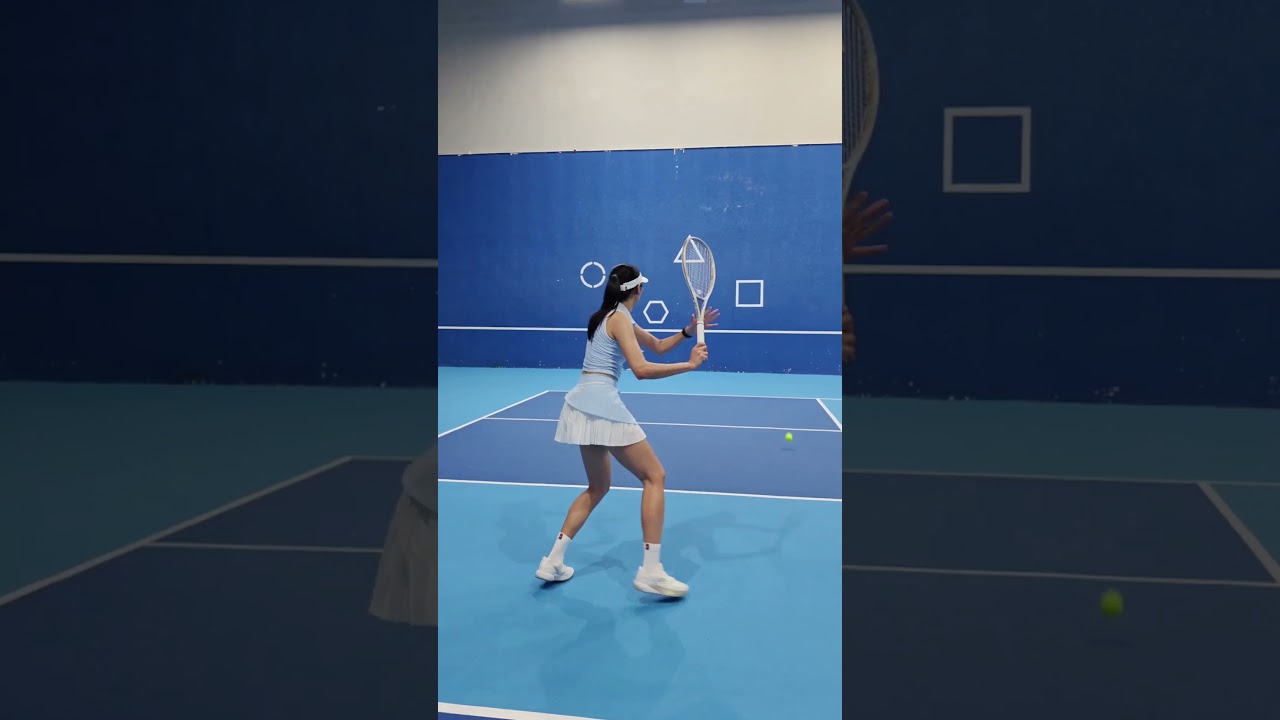
Why Tennis Players Grunt So Loudly: The Real Reason Explained


Why Tennis Players Grunt So Loudly: The Real Reason Explained

If you have ever watched a high-stakes match at Wimbledon or followed Indian tennis stars like Sania Mirza and Rohan Bopanna, you’ve likely noticed one thing: the loud, rhythmic grunting. To a casual observer, the screams might seem dramatic or even annoying, but in the professional world of tennis, grunting is more than just noise—it is a calculated physiological tool.

While legends like Monica Seles and Maria Sharapova famously brought the “grunt” into the spotlight, modern research suggests that these vocalisations serve a functional purpose. Let’s dive into the real reasons why tennis players grunt so loudly.

1. The Power of Forced Exhalation

The primary reason for grunting is related to breathing mechanics. When a player strikes the ball, they are performing an explosive movement. By grunting, players are essentially forcing a rapid exhalation. This action helps stabilise the core muscles. When the “inner core” is braced, it creates a solid foundation for the swing, allowing the player to transfer maximum power from their legs and torso into the racket. It is very similar to the “Kiai” shout used in martial arts like Karate.

2. Increased Ball Velocity

Scientific studies have backed the benefits of grunting. A study published in the Journal of Strength and Conditioning Research found that tennis players who grunt while hitting forehands and backhands increased their ball velocity by nearly 4% to 5%. In a professional match where every kilometre per hour counts, this “grunt-boost” can be the difference between a winner and a return.

3. Rhythm and Timing

Tennis is a sport of rhythm. Grunting helps players establish a breathing pattern. Exhaling (grunting) on the hit and inhaling during the recovery phase helps maintain oxygen flow to the muscles, reducing fatigue during long three-set or five-set matches. For many players, the sound serves as a personal internal timer for their strokes.

4. Psychological Distraction or Tactical Advantage?

There is a controversial side to the grunt. Some sports analysts argue that loud grunting masks the sound of the ball hitting the racket. Professional players use the “pop” sound of the ball to judge its spin and speed. A loud grunt can muffle this audio cue, giving the hitter a split-second advantage. While most players claim it is involuntary, the tactical benefit is undeniable.
The “Indian Perspective”: Tennis Culture in India

In India, where tennis academies are booming in cities like Bangalore, Hyderabad, and Delhi, coaches often teach young athletes to exhale audibly. It isn’t about being loud; it’s about ensuring the breath isn’t held. Holding one’s breath during a shot leads to muscle tension, which is a recipe for errors on the court.

Conclusion

While the loud shrieks may occasionally irritate the crowd, grunting is a deeply ingrained part of tennis biomechanics. It aids in core stabilisation, increases shot power, and helps maintain a consistent rhythm under pressure. So, the next time you hear a thunderous grunt during a Grand Slam, remember: it’s not just for show—it’s the sound of peak athletic performance.


Frequently Asked Questions (FAQs)

1. Is grunting in tennis against the rules?

Technically, no. However, the ATP and WTA have “hindrance” rules. If a player grunts excessively loud or long in a way that deliberately distracts the opponent, the empire can penalise them and award the point to the opponent.

2. Do all tennis players grunt?

No, not all. For example, Roger Federer was known for being a relatively “silent” player. However, the majority of modern baseline players use vocalisation to assist their power game.

3. Does grunting actually make you hit the ball harder?

Yes. Research indicates that the forced exhalation associated with grunting increases the force of muscle contraction, leading to higher ball speeds.

4. Is grunting involuntary or intentional?

For most professionals, it is a habit formed during childhood training. It becomes an involuntary part of their physical exertion, much like a weightlifter’s grunt.

5. Why is grunting louder in women’s tennis?

While often more commented upon in the women’s game, many male players (like Rafael Nadal or Novak Djokovic) grunt just as loudly. The pitch of the female voice may simply make the sound more noticeable to the audience.

🎥: @ATPTour @tennistv

Some tennis matches get so intense that players can’t hold back their emotions, and their grunts become longer, louder, and more dramatic! 🎾😤 In this video, we’ve compiled the most epic moments where players extended their grunts during high-pressure points. Get ready for passion, power, and unforgettable sounds on the court!

#tennis #alcaraz #tennishighlights #djokovic #edit #zverev #monfils #grunt

Tennis Rules: A Complete Guide to Scoring and Gameplay for Beginners


Tennis Rules: A Complete Guide to Scoring and Gameplay for Beginners

Tennis is one of the most popular individual sports in India, thanks to the legacy of legends like Leander Paes, Mahesh Bhupathi, and Sania Mirza. Whether you are heading to a local club in Mumbai or a public court in Delhi, understanding the tennis rules and the unique tennis scores system is the first step toward enjoying the game.
The Basics: Equipment and Court

Tennis is played on a rectangular court, which can be grass, clay, or hard court (the most common in India). The game is played as ‘Singles’ (one-on-one) or ‘Doubles’ (two-on-two). To start, you need a racket and a yellow felt-covered ball. The objective is simple: hit the ball over the net and into the opponent’s court in a way that they cannot return it.

Understanding Tennis Scores: The 15, 30, 40 System

The most confusing part for beginners is often the scoring. Unlike cricket or football, tennis uses a specific set of terms:

  • 0 Points: Referred to as “Love”.
  • 1st Point: 15
  • 2nd Point: 30
  • 3rd Point: 40
  • 4th Point: Game (End of the game)

If both players reach 40-40, it is called a Deuce. From here, a player must win two consecutive points to win the game. The first point won after deuce is called “Advantage.” If that player wins the next point, they win the game. If they lose it, the score returns to Deuce.

The Structure: Game, Set, and Match

To win a match, you need to navigate through three layers of scoring:

  1. Games: Usually, you need to win 6 games to win a set, but you must lead by at least 2 games (e.g., 6-4).
  2. Sets: Most matches are “Best of Three” sets. In Grand Slams, men’s matches are “Best of Five.”
  3. Tie-break: If the game score reaches 6-6 in a set, a tie-break is played to decide the winner of that set. In a tie-break, points are counted numerically (1, 2, 3…).

Basic Gameplay Rules

Every point starts with a Serve. The server must stand behind the baseline and hit the ball into the diagonal service box on the opponent’s side. You get two chances (First Serve and Second Serve). If both hit the net or land outside, it’s a “Double Fault,” and your opponent gets the point.

During a rally, the ball must stay within the boundary lines. If the ball touches the line, it is considered “In.” In singles, you use the inner side-lines; in doubles, the court “widens” to the outer lines (the alleys).

Conclusion

While the tennis rules might seem complex at first glance—especially the “Love” and “Deuce” terminology—they become second nature once you hit the court. Tennis is a fantastic way to stay fit and build mental discipline. Now that you understand how tennis scores work, grab a racket and start practicing your serve!

Frequently Asked Questions (FAQs)

1. Why is zero called “Love” in tennis?

While the exact origin is debated, many believe it comes from the French word “l’oeuf,” meaning egg, which represents the shape of a zero.

2. What is a “Let” in tennis?

A “Let” occurs if a serve hits the net but still lands in the correct service box. The point is replayed without any penalty.

3. How long does a typical tennis match last?

In a best-of-three format common in India, a match usually lasts between 1 to 2 hours, depending on the skill level of the players.

4. Can I play tennis if I am a complete beginner?

Absolutely! Tennis is highly accessible in India. Most sports complexes offer coaching for beginners to help master the basic strokes like the forehand and backhand.
Are you new to the game of tennis? Looking for a quick and easy guide to understanding how tennis scoring works? Coach Joseph has got you covered with this comprehensive video. You’ll benefit from his straightforward explanation of tennis scoring.

Visit The Play! Tennis Blog

Mansour Bahrami’s Magical Tennis Skills: The Ultimate Trick Shot Master!


Mansour Bahrami’s Magical Tennis Skills: The Ultimate Trick Shot Master!

In a sport often defined by intense discipline and robotic precision, Mansour Bahrami stands out as a breath of fresh air. Known globally as the “Court Jester” or the “Magician,” Bahrami has turned the tennis court into his personal theater. For tennis enthusiasts in India, who grew up watching the elegant touch of stars like Leander Paes and Mahesh Bhupathi, Bahrami’s style of play resonates deeply.

The Man Behind the Magic

Mansour Bahrami’s journey is as incredible as his trick shots. Born in Iran, he faced years of being unable to play tennis due to political restrictions in his home country. He eventually moved to France as a refugee with nothing but his passion. This hardship gave him a unique perspective on the game: for Bahrami, tennis isn’t just a competition; it’s a celebration of life.

Unbelievable Skills: Beyond the Rules of Physics

What makes Mansour Bahrami the ultimate trick shot master? It is his ability to invent shots that shouldn’t technically be possible. Here are a few hallmarks of his magical skills:

  • The Fake Smash: Bahrami is famous for leaping high for a powerful overhead smash, only to gently drop the ball over the net with a soft touch at the last millisecond.
  • Underarm Serves with a Twist: Long before it became a tactical weapon for modern players, Bahrami used the underarm serve to confuse opponents and entertain the crowd.
  • The “Invisible” Recovery: He can hit a winning shot while sitting on a chair, lying on the ground, or even while holding five tennis balls in one hand.
  • Backspin Mastery: Bahrami can hit the ball with so much backspin that it bounces on the opponent’s side and then hops back over the net to his own side.

Why Indian Tennis Fans Adore Him

India has a rich history of “touch” tennis. While the modern game is dominated by power and baseline grinding, Indian fans have always appreciated the art of the volley and the clever drop shot. Seeing Mansour Bahrami at exhibition matches, often playing alongside legends like Vijay Armitraj, has solidified his status as a cult hero in the Indian subcontinent. His charisma, sense of humour, and ability to connect with the audience transcend the scoreline.

The Spirit of Entertainment

While Bahrami did reach a French Open doubles final in 1989, his legacy isn’t measured in Grand Slam trophies. Instead, it is measured in the smiles and laughter of the thousands who watch him play on the ATP Champions Tour. He reminds us that at its core, tennis is a game meant to be enjoyed. He doesn’t just play tennis; he performs it.

Conclusion

Mansour Bahrami is more than just a tennis player; he is a living legend who proves that creativity has no limits. His magical skills and trick shots have inspired generations of players to experiment and find joy in the sport. Whether he is serving underarm or hitting a lob through his legs, the ultimate trick shot master continues to prove that magic is very much real on the tennis court.

Frequently Asked Questions (FAQs)

1. Did Mansour Bahrami ever win a Grand Slam?
While he never won a Grand Slam title, he reached the Men’s Doubles final at the French Open in 1989, which remains a career highlight.

2. Is Mansour Bahrami still playing tennis?
Yes, he is a regular fixture in the “Invitational” and “Legends” events at major tournaments like Wimbledon and the French Open.

3. Why is he called the “Court Jester”?
He earned this nickname because of his humorous antics, funny facial expressions, and his tendency to prioritize entertaining the crowd over winning the point.

4. Can I learn Bahrami’s trick shots?
While some shots require years of professional feel and “touch,” basics like the underarm serve or the fake smash can be practiced by any club player looking to add some fun to their game.

Mansour Bahrami creeps towards the service line in order to catch Mark Woodforde and Pat Cash out in an exhibition match at the Australian Open 2019. #Shorts

Subscribe to keep up with the latest from the Australian Open:

Welcome to the official Australian Open TV YouTube channel. The Australian Open is the first Grand Slam of the year and takes place in Melbourne. Novak Djokovic is the men’s singles reigning champion and Aryna Sabalenka is the women’s singles reigning champion. The tournament takes place on 25 hard courts, including Rod Laver Arena, Margaret Court Arena and John Cain Arena. Look out for highlights, press conferences, memorable moments and much more!
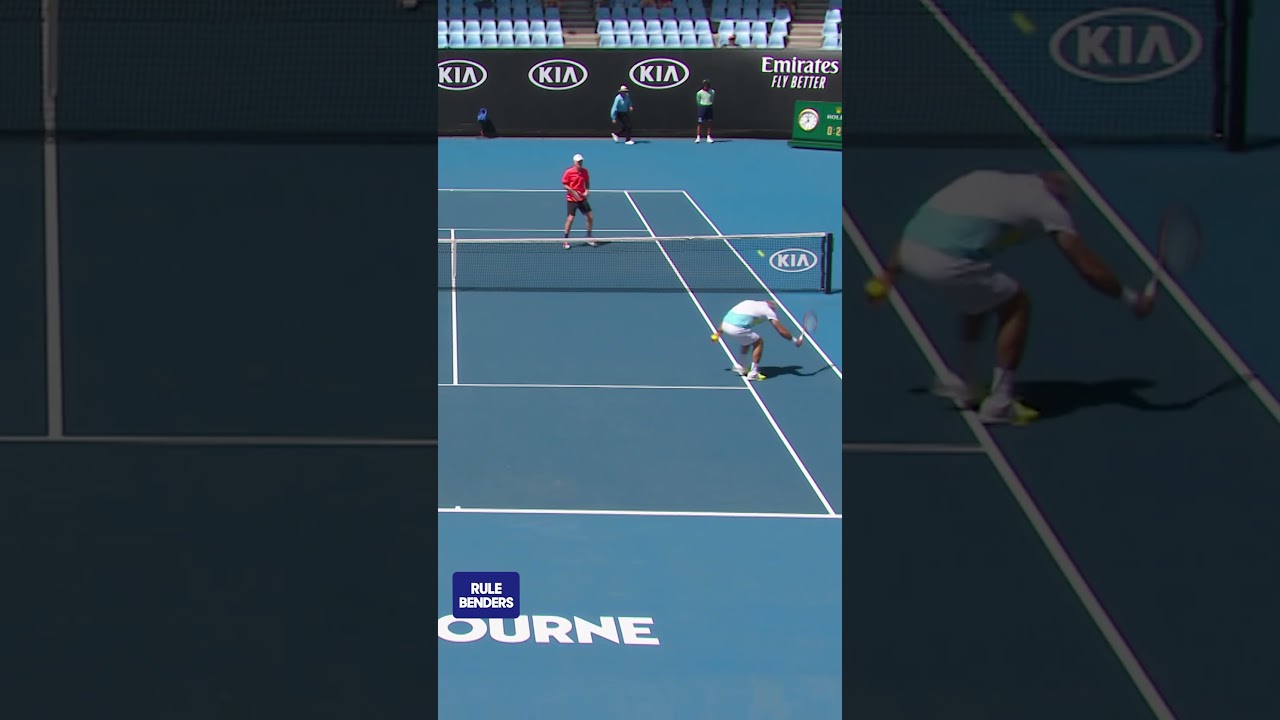
Facebook:
Twitter:
Instagram:
TikTok:
Website:

Follow breaking news, updates, highlights and more on:
Nine (Australia):
Eurosport (Europe):
ESPN (Americas):
beIN Sports (South East Asia, MENA):
And visit: for all our broadcast partners worldwide

Master Your Forehand Finish: Best Tennis Tips for Indian Players | Improve Your Game


Master Your Forehand Finish: Best Tennis Tips for Indian Players

In the vibrant world of Indian tennis, from the local clubs of Mumbai to the elite academies in Bangalore, the forehand remains the ultimate weapon. However, many Indian players struggle with consistency because they overlook the most crucial part of the swing: the finish. If you want to improve your tennis scores and dominate the baseline, mastering your forehand follow-through is non-negotiable.

Why the Finish Matters for Your Tennis Scores

In tennis, the finish is the roadmap of your swing. It dictates the ball’s trajectory, spin, and depth. For Indian players playing on varied surfaces—from dusty “cow-dung” courts to modern synthetic hard courts—a polished finish ensures the ball clears the net with enough topspin to stay in play, leading to fewer unforced errors and higher match scores.

Top Tips to Master the Forehand Finish

1. The “Catch the Racket” Technique

A common mistake among beginners is a “choppy” stroke that stops abruptly. To fix this, aim to catch the neck of the racket with your non-dominant hand over your opposite shoulder. This ensures a full range of motion, providing better control and safety for your joints.

2. Windshield Wiper Finish for Topspin

On the slower hard courts often found in India, generating topspin is key. Instead of a classic high finish, try the “windshield wiper” finish. Your racket should move across your body in an arc, similar to a car’s wiper. This creates heavy topspin, making the ball dip quickly and kick high, which is notoriously difficult for opponents to return.

3. Relaxed Shoulders and Fluidity

Indian summers can be grueling, leading to fatigue and muscular tension. Tension is the enemy of a good forehand. Keep your grip loose (think 4 out of 10 in terms of pressure) and ensure your finish is fluid. A relaxed follow-through prevents injuries like tennis elbow, which is common among club players in the circuit.

4. Eye on the Target

Don’t look up too early to see where the ball is going. Keep your head still and focus on the point of contact until your finish is complete. This stability ensures that your body weight transfers correctly into the shot, adding “put-away” power to your forehand.

Adapting to Indian Court Conditions

If you are playing on clay or smoother hard courts in cities like Delhi or Chennai, the ball might stay lower. In these cases, ensure your finish starts from a low-to-high path. Dropping the racket head below the ball before accelerating into the finish will help you handle lower bounces effectively without hitting the net.

Conclusion

Mastering your forehand finish is the quickest way to evolve from a defensive player to an aggressive baseliner. By focusing on a full, relaxed follow-through and incorporating topspin techniques, you will see a significant improvement in your consistency and power. Remember, the way you end your stroke determines how your point ends. Practice these tips, keep your footwork sharp, and watch your tennis scores climb in your next local tournament.

Frequently Asked Questions (FAQs)

1. Where should my racket end up after a forehand?

For a standard drive, your racket should finish over your opposite shoulder. For a heavy topspin shot, it may finish lower, near your opposite bicep or even your waist (the “buggy whip” finish).

2. How can I improve my tennis scores quickly?

The fastest way to improve scores is to reduce unforced errors. A consistent forehand finish ensures more balls land inside the lines, forcing your opponent to take more risks.

3. Is the windshield wiper finish better than the classical finish?

Neither is “better,” but the windshield wiper is more effective for modern baseline play and generating spin, whereas the classical finish offers more depth and linear drive.

4. How do I stop my forehand from going out of the court?

Ensure you are brushing up on the back of the ball and that your finish is high enough. If the ball is sailing long, you likely need more topspin, which comes from a more pronounced low-to-high swing path.

Tennis Scoring Rules Explained: A Complete Guide for Beginners


Tennis Scoring Rules Explained: A Complete Guide for Beginners

With the rising popularity of stars like Sumit Nagal and the legacy of legends like Leander Paes and Sania Mirza, more Indians are picking up tennis rackets than ever before. However, for a beginner, the tennis scores system can seem a bit cryptic. Why is the first point “15” and not “1”? What exactly is a “Deuce”?

In this guide, we break down the fundamental tennis scoring rules to help you follow the game on TV or compete on the local courts of Delhi, Mumbai, or Bangalore with confidence.

The Hierarchy of Tennis Scoring

Tennis scoring is divided into four main levels: Points, Games, Sets, and the Match. Think of it like a ladder where you must climb each rung to win.

1. Scoring Points in a Game

Instead of the traditional 1, 2, 3, 4, tennis uses a unique numerical system. The points progress as follows:

  • 0 Points: “Love”
  • 1st Point: 15
  • 2nd Point: 30
  • 3rd Point: 40
  • 4th Point: Game (Over)

When announcing the score, the server’s score is always mentioned first. For example, if the server has 30 and the receiver has 15, the score is “30-15”.

2. Deuce and Advantage

If both players reach 40-40, it is called a Deuce. To win a game from a deuce, a player must win two consecutive points:

  • Advantage In (Ad-In): The server wins the next point after deuce.
  • Advantage Out (Ad-Out): The receiver wins the next point after deuce.
  • If the player with the advantage loses the next point, the score returns to Deuce.

Winning a Set

To win a set, a player must win at least six games. However, there is a catch: you must win by a margin of at least two games (e.g., 6-4). If the score reaches 5-5, the set continues. If it reaches 6-6, a Tie-break is played.

The Tie-break

In a tie-break, the scoring switches to 1, 2, 3, etc. The first player to reach 7 points with a 2-point lead wins the game and the set (recorded as 7-6).

Winning the Match

In most professional tournaments and local Indian club matches, tennis is played in one of two formats:

  • Best of Three Sets: The first player to win two sets wins the match. This is the standard for women’s professional matches and most ATP tour events.
  • Best of Five Sets: The first player to win three sets wins. This format is primarily seen in Men’s Singles at Grand Slam events (like Wimbledon or the Australian Open).

Conclusion

While the tennis scoring rules may seem unusual at first glance, they provide the sport with its unique rhythm and high-stakes drama. Whether you are playing a friendly match at your local gymkhana or watching a Grand Slam final, understanding how tennis scores work enhances your appreciation for the tactical depth of the game. Now that you know the basics of Love, 15, 30, and 40, you are ready to hit the court!

Frequently Asked Questions (FAQs)

1. Why is zero called “Love” in tennis?

The most popular theory is that it comes from the French word “l’oeuf,” meaning “the egg,” because an egg looks like a zero. Over time, English speakers mispronounced it as “Love.”

2. What is “No-Ad” scoring?

In some amateur or doubles matches (common in India to save time), “No-Ad” scoring is used. At deuce, a single “sudden death” point is played to decide the game winner.

3. What does “Set Point” and “Match Point” mean?

A set point is a situation where the player leading needs only one more point to win the current set. A match point means they need only one more point to win the entire match.

4. How many sets are played in the Olympics?

In the Olympics, both men and women typically play a best-of-three-sets format to determine the winner.

How to keep score in tennis, explained by high school tennis players, Joellen and Rebecca. By JuniorTennisUSA.com – 100% free tennis, by junior players, for junior players. @JrTennisUSA.

You will learn Love – 15 -30 – 40 – Game; ad in and ad out; moving from side to side and when to change sides.

Please see our other instructional videos:

-How to Hit a Backhand
-How to Hit a Forehand
-How to Keep Score in Tennis
-How to Score a Tennis Tiebreaker
-Interviews with top pro players by junior players

Tennis Stars Alex Eala & Zeynep Sonmez: Bio, Ranking & Latest Matches of the Filipina & Turkish Sensations


Tennis Stars Alex Eala & Zeynep Sonmez: Bio, Ranking & Latest Matches of the Filipina & Turkish Sensations

The landscape of women’s professional tennis is shifting, with new powerhouses emerging from non-traditional tennis nations. Two names currently capturing the imagination of fans across Asia and Europe—and gaining significant traction among Indian tennis enthusiasts—are Alex Eala and Zeynep Sonmez. These young athletes represent the future of the WTA tour, blending raw talent with incredible resilience.

Alex Eala: The Pride of the Philippines

Alexandra “Alex” Eala is a name synonymous with history. Born on May 23, 2005, in Quezon City, Eala has been a prodigy since her junior days. A product of the prestigious Rafa Nadal Academy, she became the first Filipino to win a Grand Slam singles title at the junior level (US Open 2022).

Bio and Style of Play

Eala is a left-handed powerhouse known for her aggressive baseline play and exceptional court coverage. Her ability to dictate points with her forehand has made her a formidable opponent on hard courts.
As of mid-2024, Alex Eala’s ranking hovers around the WTA Top 150, making her the highest-ranked Filipino player in history. Her journey is closely watched in India, where fans draw parallels between her rise and the growth of tennis in developing sporting nations.

Latest Matches

Recently, Eala has been making deep runs in WTA 125 and 250 events. Her recent performances at the French Open qualifiers and various ITF W100 events show a player who is rapidly maturing. She recently secured a significant win against higher-ranked opponents in the Vitoria-Gasteiz tournament, proving she belongs on the elite stage.

Zeynep Sonmez: Turkey’s Rising Star

Zeynep Sonmez is currently spearheading the Turkish tennis revolution. Born on April 30, 2002, Sonmez has become a symbol of grit and determination. Unlike many who take the junior Grand Slam route, Sonmez has grinded her way through the ITF circuit to break into the WTA elite.

Ranking and Breakthrough

2024 has been a breakout year for Sonmez. Her WTA ranking recently surged into the Top 130 after a series of stunning upsets. She is currently the undisputed Number 1 player in Turkey. Indian fans, who appreciate tactical clay-court specialists, have taken note of Sonmez’s unique ability to vary pace and use the slice effectively.

Latest Matches

Sonmez made headlines Recently at the Berlin Ladies Open and during the Wimbledon qualifiers, where she showcased her ability to transition her game to grass. Her victory over top-seeded players in the WTA 250 circuit highlights her potential to break into the Top 100 before the end of the season.

Alex Eala vs. Zeynep Sonmez: A New Rivalry?

While they haven’t faced each other frequently, the professional trajectory of Eala and Sonmez is remarkably similar. Both are breaking barriers for their respective countries and are often competing for the same spots in Grand Slam main draws. For Indian viewers who follow the WTA circuit via platforms like SonyLIV or JioCinema, these two players offer a refreshing alternative to the established European and American stars.

Conclusion

Alex Eala and Zeynep Sonmez are more than just tennis players; they are ambassadors for the sport in the Philippines and Turkey. Their rise serves as an inspiration for aspiring athletes in India, proving that with the right training and mental toughness, players from any corner of the world can compete at the highest level. As they continue to climb the WTA rankings, expect to see both Eala and Sonmez becoming regular fixtures in the second week of Grand Slams.

Frequently Asked Questions (FAQs)

1. What is Alex Eala’s current WTA ranking?

As of recent updates, Alex Eala is ranked within the Top 150 globally, consistently reaching new career highs as she competes in more WTA-level tournaments.

2. Where does Alex Eala train?

Alex Eala has been a long-time student at the Rafa Nadal Academy in Mallorca, Spain, which has played a crucial role in her development.

3. Has Zeynep Sonmez won a WTA title?

While she has multiple ITF titles to her name, Zeynep Sonmez is currently chasing her first maiden WTA singles title, having made several impressive quarter-final and semi-final appearances in 2024.

4. Are these players expected to play in India?

Both players often participate in Asian swing tournaments. If the WTA Chennai Open or similar events return to the calendar, there is a high probability of seeing Eala or Sonmez competing on Indian soil.

5. What is the playing style of Zeynep Sonmez?

Sonmez is known for her defensive skills and counter-punching. She excels at extended rallies and possesses a very reliable backhand.

Watch the whole video at WTA YT

#alexeala #zeynepsonmez #tennis

Tennis Scoring System History Explained: Why Love, 15, 30, 40? | BBC Sport #Shorts


Tennis Scoring System History Explained: Why Love, 15, 30, 40?

Tennis is one of the most popular individual sports in India, with legends like Leander Paes, Mahesh Bhupathi, and Sania Mirza inspiring generations. However, for a newcomer watching the Australian Open or Wimbledon, the tennis scores can seem baffling. Why do we count in 15s? Why is 40 the third point? And why on earth is zero called “Love”?

Inspired by the insights from BBC Sport #Shorts, let’s dive into the quirky and historic origins of the tennis scoring system.

The Mystery of 15, 30, and 40

The most common theory regarding the 15, 30, and 40 sequence dates back to medieval France. It is widely believed that the score was originally tracked using a clock face.

The minute hand would be moved a quarter turn for every point scored: 15, 30, and 45. The game would end when the hand reached 60. But wait—why do we say 40 today instead of 45?

Historians suggest that “45” was eventually shortened to “40” simply because it was easier and quicker to call out during a fast-paced match. In the heat of a rally, two syllables are better than three!

Why is Zero Called “Love”?

The term “Love” in tennis has nothing to do with romance. There are two primary theories behind this terminology:

  • L’oeuf (The Egg): This is the most widely accepted theory. It comes from the French word for egg, l’oeuf, because an egg resembles the shape of a zero. Over time, English speakers mispronounced it as “Love.”
  • Playing for Love: Another theory suggests it comes from the phrase “to play for love,” meaning playing for the sake of the game rather than for money or stakes, signifying a score of zero.

The Concept of Deuce and Advantage

If the scoring was purely clock-based, a tie at 45 (or 40) would be problematic. This is where Deuce comes in. The word originates from the French “à deux le jeu,” meaning the game is “to two”—meaning a player must win two consecutive points to clinch the game.

In the Indian tennis circuit, from local club tournaments to national levels, the “Ad-court” and “Deuce-court” are fundamental terms every player learns on day one.

The Hand-Ball Theory

An alternative theory suggests that the scoring comes from a game called Jeu de Paume (the precursor to modern tennis). Players would move forward 15 feet, then another 15 feet (30), and finally 10 feet (40) to avoid being too close to the net. While less popular than the clock theory, it highlights how much the sport has evolved from its palm-striking origins.

Conclusion

The tennis scoring system is a beautiful blend of French tradition and centuries of evolution. While 15, 30, and 40 might seem illogical at first glance compared to 1, 2, and 3, they represent the rich heritage of the “Gentleman’s Game.” Whether you are playing at the RK Khanna Stadium in Delhi or watching a Grand Slam on your TV in Mumbai, understanding these tennis scores connects you to a history that spans over 500 years.

Frequently Asked Questions (FAQs)

1. Why is 40 used instead of 45 in tennis?

It is believed that “40” was adopted as a shorthand for “45” because it was easier for umpires to shout out quickly during matches.

2. What does “Deuce” mean in tennis?

Deuce occurs when the score is tied at 40-40. A player must then win two consecutive points (Advantage and then Game) to win the game.

3. What is a “Golden Set” in tennis?

A Golden Set is when a player wins every single point in a set (24 points to 0) without losing a single point to the opponent.

4. Do all tennis matches use the same scoring?

While the internal game scoring (15, 30, 40) is standard, the number of sets varies—men usually play best-of-five in Grand Slams, while women and ATP/WTA tour events play best-of-three.

SUBSCRIBE so you never miss out on our best videos
➡️➡️

=============

Find us here:

BBC Sport:
Facebook:
Twitter:
Instagram:
TikTok:

#bbcsport #tennis #wimbledon

Where does the tennis scoring system come from? | BBC Sport #shorts

Elena Rybakina vs Xinyu Wang Highlights | Qatar Open 2026 Round 2 | WTA Highlights


Elena Rybakina vs Xinyu Wang Highlights: Qatar Open 2026 Round 2 Showdown

The Qatar TotalEnergies Open 2026 continues to deliver high-octane tennis, and the Round 2 clash between the formidable Elena Rybakina and the rising Chinese star Xinyu Wang was no exception. For Indian tennis fans who missed the live action in Doha, the highlights showcase a tactical battle between raw power and defensive resilience.

Match Overview: Power vs. Precision

Elena Rybakina, the 2022 Wimbledon champion, entered the court as the heavy favourite. Known for her “ice-cool” demeanour and a serve that clocks among the fastest in the WTA circuit, Rybakina sought to dominate from the baseline. On the other side of the net, Xinyu Wang brought her signature agility and flat groundstrokes, looking to cause a major upset early in the tournament.

The match began with Rybakina asserting her dominance through her service games. The Indian audience, accustomed to watching stars like Sania Mirza excel in doubles at this venue, saw a different kind of masterclass in singles play. Rybakina’s ability to find the corners with her forehand left Wang scrambling in the opening set.

Key Highlights: Set-by-Set Breakdown

Set 1: The Rybakina Blitz
Rybakina started with an early break, showcasing why she is a top-tier contender in Doha. Her first-serve percentage was remarkably high, barely giving Wang a chance to enter the rallies. The set concluded quickly as Rybakina used her height and reach to dictate the tempo, winning 6-2.

Set 2: Wang’s Spirited Comeback Trail
The second set saw a more competitive version of Xinyu Wang. She began reading Rybakina’s serve better and forced the Kazakh star into longer rallies. The highlights show several exhilarating deuce games where Wang’s backhand down-the-line winners caught the crowd’s attention. However, Rybakina’s mental toughness—a hallmark of her 2026 season—helped her save crucial break points.

Turning Point: The Decisive Break

The momentum shifted back to the Kazakh powerhouse at 4-4 in the second set. A series of unforced errors from Wang, under pressure from Rybakina’s heavy hitting, led to a critical break of serve. Rybakina then stepped up to serve for the match, closing it out with an ace out wide—a fitting end to a clinical performance.

Why This Match Matters for Tennis Fans in India

Tennis has a massive following in India, particularly during the Middle Eastern swing of the WTA tour due to favourable time zones and historical successes of Indian players in these conditions. Watching Rybakina navigate the slow, windy courts of Doha provides a blueprint for aspiring Indian singles players on how to maintain composure and use power effectively on hard courts.

Conclusion

The Elena Rybakina vs Xinyu Wang highlights from the Qatar Open 2026 Round 2 reinforce Rybakina’s status as a title threat in Doha. While Xinyu Wang showed flashes of brilliance and a “never-say-die” attitude, the sheer consistency and serving prowess of Rybakina proved too much to handle. As the tournament progresses, the world #4 looks set to go deep into the draw, while Wang takes home valuable experience from competing against the very best.

Frequently Asked Questions (FAQs)

1. Who won the Rybakina vs Xinyu Wang match at Qatar Open 2026?

Elena Rybakina won the match in straight sets to advance to the next round of the Qatar Open 2026.

2. Where can I watch WTA highlights in India?

In India, you can watch WTA highlights on official platforms like WTA TV, Sony LIV, or the official WTA YouTube channel.

3. What is Elena Rybakina’s world ranking in 2026?

As of the 2026 Qatar Open, Elena Rybakina remains firmly within the Top 5 of the WTA world rankings.

4. Is the Qatar Open a WTA 1000 event?

Yes, the Qatar TotalEnergies Open is a prestigious WTA 1000 tournament, attracting the top players from around the globe.

5. How many titles has Rybakina won in the Middle East?

Rybakina has a strong record in the Middle East, having won titles in Abu Dhabi and reached multiple finals in Doha and Dubai previously.

Watch the Match Highlights from Xinyu Wang vs. Elena Rybakina at the 2026 Qatar Total Energies Open.

Subscribe to the WTA on YouTube:
Follow the WTA on TikTok:
Follow the WTA on Instagram:
Follow the WTA on X:
Follow the WTA on Facebook:
More WTA tennis videos and match highlights:

Sinner vs Alcaraz: Dramatic First Set Highlights & Key Moments


Sinner vs Alcaraz: Dramatic First Set Highlights & Key Moments

The rivalry between Jannik Sinner and Carlos Alcaraz has officially become the “Gold Standard” of modern tennis. Every time these two young titans clash, the sports world stops to watch. Their recent encounter was no different, providing a masterclass in power, agility, and mental fortitude. For Indian tennis fans who stayed up late to catch the action, the opening set was nothing short of a cinematic thriller.

The Explosive First Set: A Tactical Chess Match

From the first serve, it was clear that neither player was willing to give an inch. The first set was defined by incredibly high-intensity baseline rallies, with both players hitting the ball at speeds that seemed to defy physics. Sinner, known for his relentless ball-striking, pushed Alcaraz to the corners, but the Spaniard’s defensive “squash shots” kept him in the hunt.

The key moment of the first set came during the seventh game. Alcaraz unleashed a series of audacious drop shots, testing Sinner’s lateral movement. However, the Italian responded with precision passing shots that left the crowd in awe. The set eventually pushed into a tie-break—a fitting conclusion to a set where neither player deserved to lose.

Key Highlights: Power vs. Finesse

  • The Break Point Drama: Early in the set, Sinner faced three break points. His ability to serve his way out of trouble proved why he is currently the World No. 1.
  • Alcaraz’s Net Play: Carlos Alcaraz frequently charged the net, winning 80% of his serve-and-volley points in the opening frame, disrupting Sinner’s rhythm.
  • Baseline Explosiveness: Both players averaged over 125 km/h on their forehand returns, showcasing the modern “power-baseline” evolution.

Tennis Scores: How the Match Unfolded

While the first set was a marathon, the momentum shifted slightly as the match progressed. Here is a breakdown of the scoreline that kept fans on the edge of their seats:

PlayerSet 1Set 2Set 3
Jannik Sinner7 (7)46
Carlos Alcaraz6 (5)67

Conclusion: The Future of Tennis is Here

The Sinner vs Alcaraz clash lived up to the massive hype. While the final tennis scores reflect a winner and a loser on paper, the sport of tennis is the real winner. Sinner’s clinical accuracy and Alcaraz’s creative flair have created a rivalry reminiscent of the Federer-Nadal era, but with a faster, high-octane twist. For fans in India, where tennis popularity is surging thanks to stars like Sumit Nagal and the legacy of Rohan Bopanna, watching these two compete is an inspiration for the next generation of athletes.


Frequently Asked Questions (FAQs)

1. Who won the match between Sinner and Alcaraz?

In their most recent high-profile encounter (such as the China Open Final), Carlos Alcaraz emerged victorious in a grueling three-set battle, though the lead often swings between the two in various tournaments.

2. What is the head-to-head record between Sinner and Alcaraz?

As of late 2024, Carlos Alcaraz holds a slight edge in the head-to-head department, having won their last three encounters on the ATP tour.

3. Why is the Sinner vs Alcaraz rivalry so famous?

It is considered the premier rivalry because both players are under 24, hold multiple Grand Slams, and possess contrasting styles—Sinner’s robotic precision versus Alcaraz’s athletic creativity.

4. Where can I watch tennis highlights in India?

Indian fans can catch highlights on platforms like SonyLIV, JioCinema, or the official ATP Tour YouTube channel.

SUBSCRIBE to our channel for the best ATP tennis videos and tennis highlights:

– Watch live tennis streams from every ATP tournament:
– Download the Tennis TV app now:

Tennis TV is the OFFICIAL streaming service of the ATP Tour. Get live and on demand access to 2500+ matches each year from every ATP Masters 1000, ATP 500 and ATP 250 tournament plus the season-ending Nitto ATP Finals and an enormous archive of classic battles.

Enjoy the ‘Best Seat in Tennis’ at home or on the go with the Tennis TV app – watch live or catch up on what you’ve missed with highlights, replays and more available on all your favourite devices across PC, Mac, iOS & Android plus Apple TV, Roku, Amazon Fire TV, Samsung Smart TV, LG Smart TV, TCL TV and Android TV as well as AirPlay and Chromecast.

– Get help on Tennis TV with our virtual assistant:
– Buy Tennis TV merchandise in our store:

– Watch the ATP Tour via a TV broadcaster:
– Enquire about licensing ATP footage via IMG:

Juan Martín del Potro: The Kindest Heart in Tennis History ❤️ #Shorts #Tennis


Juan Martín del Potro: The Kindest Heart in Tennis History

In the high-stakes world of professional sports, where rivalries can often turn cold, one name stands out for warmth, resilience, and genuine sportsmanship: Juan Martín del Potro. Known affectionately as the “Tower of Tandil,” the Argentine giant didn’t just win Grand Slams; he won over the hearts of millions, especially in a sports-loving nation like India.

The viral hashtag #Shorts #Tennis recently brought Del Potro back into the spotlight, reminding fans of the emotional depth he brought to the court. While his thunderous forehand was feared by the “Big Three” (Federer, Nadal, and Djokovic), it was his gentle soul that defined his legacy.

The 2009 US Open: A Hero is Born

For Indian tennis enthusiasts who stayed up late into the night to watch the 2009 US Open final, Del Potro’s victory was nothing short of cinematic. Breaking Roger Federer’s five-year winning streak at Flushing Meadows, a 20-year-old Del Potro showed the world that a powerhouse game could coexist with a humble personality. This victory remains one of the most iconic moments in modern tennis history.

Resilience Against All Odds

Del Potro’s career was marred by recurring wrist and knee injuries that would have forced most players into early retirement. However, every time he fell, he rose again. His emotional comeback at the 2016 Rio Olympics, where he defeated Novak Djokovic and Rafael Nadal to secure a silver medal, moved fans to tears. His ability to weep openly on the court—whether in victory or defeat—showed a vulnerability that made him the most relatable athlete in the circuit.

Why India Loves ‘Delpo’

India has a deep-rooted culture of respecting “gentle giants.” Del Potro’s conduct on the court—hugging opponents at the net, checking on injured players, and interacting warmly with ball kids—resonated deeply with Indian values of humility and Atithi Devo Bhava. Whenever he played, he wasn’t just representing Argentina; he was playing for every fan who valued character over trophies.

Tennis Racket and Ball

A Legacy Beyond Titles

While injuries eventually led to his emotional farewell at the Buenos Aires Open in 2022, Del Potro’s impact remains. He proved that you can be a fierce competitor on the court while remaining the kindest person off it. In an era dominated by the terrifying consistency of the Big Three, Del Potro was the “People’s Champion.”

Conclusion

Juan Martín del Potro may have retired from the professional tour, but his journey continues to inspire aspiring tennis players in India and across the globe. He taught us that success is not just measured by the number of trophies in a cabinet, but by the lives you touch and the kindness you spread. Truly, he remains the kindest heart in tennis history.

Frequently Asked Questions (FAQs)

1. How many Grand Slams did Juan Martín del Potro win?

Juan Martín del Potro won one Grand Slam title: the 2009 US Open, where he defeated Roger Federer in an epic five-set final.

2. Why is Del Potro called the “Tower of Tandil”?

He is called the “Tower of Tandil” because of his impressive height (6’6″ or 198 cm) and his hometown of Tandil, Argentina.

3. Is Juan Martín del Potro officially retired?

While he played a farewell match in Buenos Aires in 2022 due to persistent knee injuries, he has occasionally teased a comeback, though he remains inactive on the ATP tour.

4. What was Del Potro’s highest ATP ranking?

Del Potro reached a career-high world ranking of No. 3 in August 2018.

5. Why is he considered the “kindest heart” in tennis?

He earned this reputation through his immense sportsmanship, his habit of consoling opponents (like his famous hug with a crying Nicolas Almagro), and his genuine connection with fans and staff.

Tennis Scoring Rules Explained: Simple Guide for Beginners in India


Tennis Scoring Rules Explained: A Simple Guide for Beginners in India

Tennis is rapidly gaining popularity across India. From the clay courts of local clubs to the iconic grass of Wimbledon watched on TV, the game is thrilling but can be confusing for a newcomer. If you have ever wondered why the commentator says “Love” instead of zero or why 40 isn’t the final point, this guide is for you.

Understanding tennis scores is the first step to enjoying the game, whether you are playing at a local academy in Delhi or tracking Sania Mirza and Rohan Bopanna’s legacy. Let’s break down the system into simple steps.

1. The Four Points: 15, 30, 40, and Game

In a standard game of tennis, the scoring doesn’t go 1, 2, 3. Instead, it follows a unique sequence:

  • Love: 0 points
  • 15: 1 point won
  • 30: 2 points won
  • 40: 3 points won
  • Game: 4 points won (and you win the game)

Note: The server’s score is always called out first. If the server has 30 and the receiver has 15, the score is “30-15”.

2. Deuce and Advantage

What happens if both players reach 40-40? This is called a Deuce. To win from a deuce, a player must win two consecutive points:

  1. Advantage: The player who wins the first point after deuce gets the “Advantage.”
  2. If that same player wins the next point, they win the Game.
  3. If they lose the point, the score goes back to Deuce.

3. From Games to Sets

Tennis scoring is hierarchical. Winning points helps you win a Game, and winning Games helps you win a Set.

  • To win a Set, a player must win at least six games.
  • There must be a margin of at least two games (e.g., 6-4).
  • If the set reaches a 6-6 tie, a Tie-break is played to decide the winner (7-6).

4. Winning the Match

In most professional tournaments (ATP/WTA) and local Indian tournaments:

  • Best of Three Sets: The first person to win two sets wins the match. Most women’s matches and regular men’s matches follow this format.
  • Best of Five Sets: Common in Men’s Grand Slams (like Wimbledon or the French Open), where the first to win three sets wins.

Conclusion

While tennis scores might seem complicated at first with terms like “Love” and “Deuce,” they follow a logical rhythm once you hit the court. Whether you are practicing your serve in Mumbai or watching a high-stakes match, knowing these rules makes the sport much more engaging. Tennis is a game of mental strength and physical endurance—now that you know the rules, it’s time to pick up a racket!

Frequently Asked Questions (FAQs)

1. Why is zero called “Love” in tennis?

The most popular theory is that it comes from the French word “l’oeuf,” meaning “the egg,” because an egg looks like a zero. Over time, it was anglicized to “Love.”

2. What is a “Golden Set” in tennis?

A Golden Set occurs when a player wins a set without losing a single point (24 points to 0). This is extremely rare in professional tennis.

3. Is a tie-break scored differently?

Yes. In a tie-break, points are counted simply as 1, 2, 3, etc. The first person to reach 7 points with a 2-point lead wins the set 7-6.

4. Are tennis rules the same in India as internationally?

Yes, the All India Tennis Association (AITA) follows the International Tennis Federation (ITF) rules, so the scoring is identical globally.

5. What does “All” mean (e.g., 15-All)?

If both players have the same number of points, the score is followed by “All.” Example: 15-15 is called “15-All.” However, 40-40 is exclusively called “Deuce.”

“Love, 15, 30, 40… wait, what?

Tennis scoring can feel confusing at first, but once you learn the system, it makes perfect sense.

In this video, I’ll walk you through how to keep score in tennis step by step:
– Points within a game (Love, 15, 30, 40, Deuce, Advantage)
– Games within a set
– How tiebreakers work
– When to switch sides
– The history behind tennis scoring and why it uses such unusual numbers

By the end, you’ll be able to follow any match—whether you’re just starting out, watching the pros, or playing your first match yourself.

Watch next: How to Play a Tiebreaker (coming soon)
————–
Want your own Pace S Pro Ball Machine?
Use my link below for a discount and to help support the channel:

Code for 5% off: Alfred

Goku vs Saitama: The Ultimate Anime Tennis Match 🎾 #AnimeIndia


Goku vs Saitama: The Ultimate Anime Tennis Match – Who Wins the Grand Slam?

In the vibrant world of #AnimeIndia, the debate over who is stronger—Goku or Saitama—has raged on for years. Usually, we imagine them trading planet-shattering punches. But what happens when you take these two powerhouses off the battlefield and put them on a tennis court?

With tennis legends like Rohan Bopanna making India proud on the global stage, we decided to reimagine the ultimate “Anime Grand Slam.” Here is how a tennis match between the Saiyan Warrior and the Caped Baldy would probably go down.

The Serve: Ultra Instinct vs. Casual Power

Imagine Goku stepping up to the baseline. He wouldn’t start at full power; he’d likely begin in his base form to test his opponent’s skills. However, as the match heats up, he’d transform into Super Saiyan Blue. His serve would be a literal streak of light, a “Kamehameha Ace” that would crack the court floor.

On the other side, Saitama would stand with his signature bored expression. To him, a 200 mph tennis ball is moving in slow motion. He wouldn’t need a fancy technique—just a “Normal Swing.” The result? The tennis ball would likely disintegrate into yellow fuzz before it even crossed the net due to the sheer kinetic force.

The Rally: Strategy vs. Speed

Tennis is a game of footwork and stamina. Goku, trained under King Kai’s heavy gravity, would be flying across the court using Instant Transmission. He could theoretically be at the net and the baseline simultaneously. For Indian fans who love high-octane action, this would be the ultimate spectacle.

Saitama, however, has never shown a limit to his speed. While Goku is using complex techniques and ki-control, Saitama would simply be walking to where the ball is. His “Serious Series: Side Hops” would create hundreds of afterimages, making it impossible for Goku to find a gap in the court.

The Breaking Point: The Equipment Problem

The biggest challenge in a Goku vs Saitama tennis match isn’t the skill—it’s the equipment. In India, we know that quality gear matters. But no racket made of carbon fiber or titanium could survive a “Serious Forehand.” Most likely, the match would end not with a trophy, but with both players holding broken racket handles and looking at a pile of melted rubber at the center of the court.

Conclusion: Who Wins?

If we go strictly by the rules of tennis, Goku might have the edge. Tennis requires finesse, spin, and tactical placement—things Goku has practiced through decades of martial arts training. Saitama tends to be too strong for his own good; he’d likely get disqualified for accidentally destroying the stadium or hitting the ball into another state!

Whether you are Team Z-Fighter or Team Hero Association, this crossover represents the growing love for anime culture in India. It’s about the spirit of competition and the “Never Give Up” attitude that both Indian sports fans and anime lovers share.


Frequently Asked Questions (FAQs)

1. Who is more popular in India, Goku or Saitama?

Goku has a legacy in India spanning decades thanks to TV broadcasts in the early 2000s. However, Saitama has a massive following among the younger Gen-Z audience and the #AnimeIndia social media community.

2. Can a tennis ball survive a punch from Saitama?

Realistically, no. A tennis ball is made of felt and rubber. A “Serious Punch” or even a serious tennis swing from Saitama would vaporize the ball instantly.

3. Has there ever been an official Anime Tennis crossover?

While Goku and Saitama haven’t met on court, “The Prince of Tennis” is a famous anime entirely dedicated to the sport, featuring superhuman moves similar to those seen in shonen battles.

4. Where can I watch Dragon Ball and One Punch Man in India?

You can legally stream Dragon Ball Super and One Punch Man on platforms like Crunchyroll and Netflix India, which offer a wide variety of anime content for Indian viewers.